
NEWS
CBN Sells N700bn Treasury Bills in Second August Auction

By Tony Obiechina, Abuja
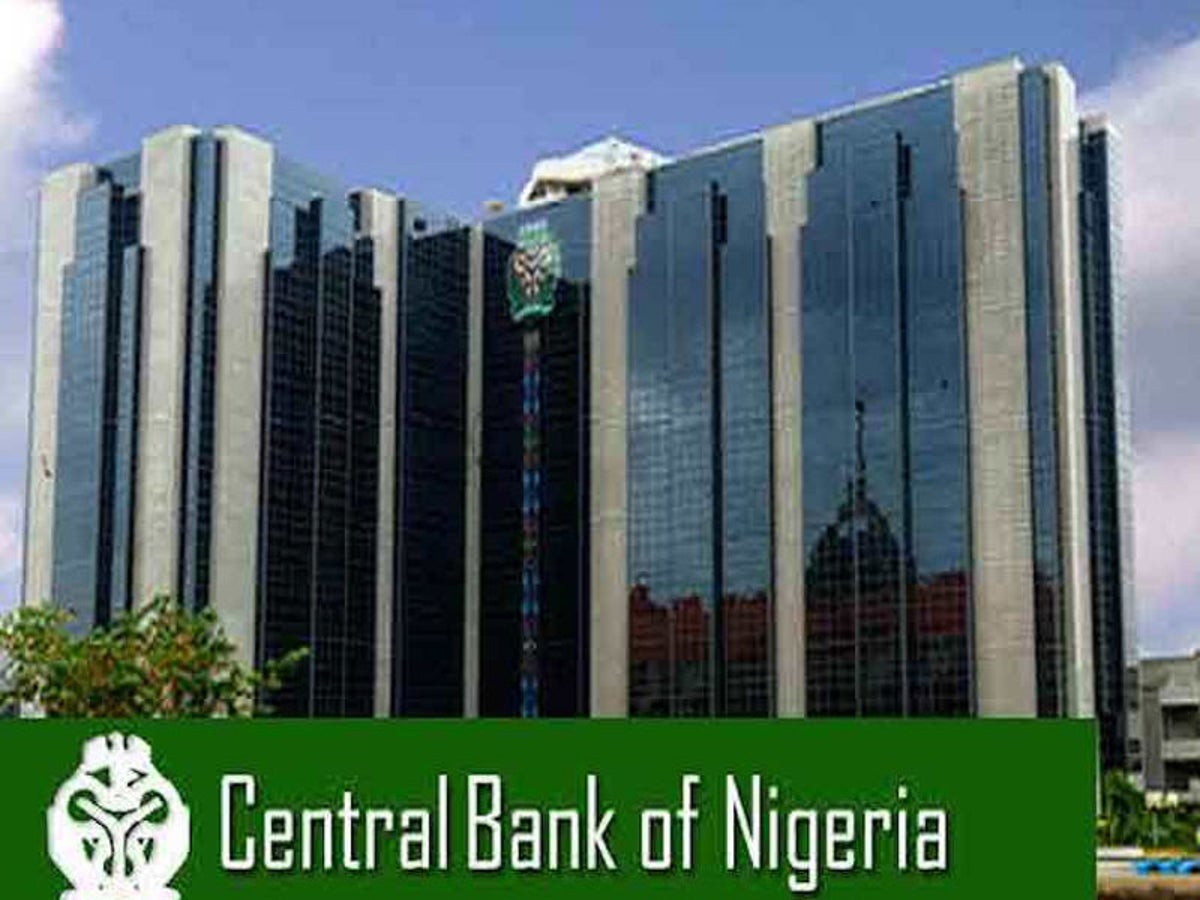
The Central Bank of Nigeria (CBN), on behalf of the Debt Management Office (DMO), has offered N700 billion across the 91-day, 182-day and 364-day Treasury Bills tenors in the second and final Treasury Bills (NTB) auction for August 2026.
The notice of an Invitation to Tender for Nigerian Treasury Bills (NTB) stated that All Money Market Dealers are required to submit bids through the CBN S4 Web Interface between 8:00 a.
m. and 11:00 a.m. on Wednesday, August 26, 2026.The offer is broken down as N100 billion for the 91-day bill, N100 billion for the 182-day bill, and N500 billion for the 364-day bill, and will be conducted through the Dutch auction, maintaining the CBN’s now-familiar preference for longer-dated paper that has defined its Treasury Bills strategy through much of Q3 2026.
Authorised Money Market Dealers are permitted to submit multiple bids for their own accounts, non-Money Market Dealers or interested members of the public.
Each bid must be in multiples of N1,000, subject to a minimum of N50,001,000, with dealers permitted to submit multiple bids on their own account or on behalf of non-Money Market Dealers and members of the public.
The auction result is expected to be announced on Wednesday, August 26, 2026, while allotment letters will be issued on Thursday, August 27, 2026.
Payment for successful bids is due to the CBN not later than 11:00 a.m. on the same day. The apex bank reserves the right to reject any bid or vary the amount on offer in line with prevailing market conditions.
This is the second scheduled Treasury Bills auction of August 2026, following a month that has already seen one cancellation and one unusually eventful sale.
The CBN had initially planned its first August auction for Thursday, August 6, offering N700 billion across the same three tenors, with bids due August 5.
However, that auction was abruptly withdrawn just days after the apex bank absorbed a combined N4.69 trillion from the banking system through back-to-back OMO auctions on August 3 and 4, prompting concerns that a fresh N700 billion Treasury Bills sale so soon after could over-tighten system liquidity.
The CBN returned to the primary market on August 12, offering N700 billion once again.
That auction drew N4.4 trillion in total subscriptions, well above the offer size, with the 364-day bill alone attracting N4.19 trillion in bids against its N500 billion offer, more than eight times oversubscribed.
Rather than ease the one-year stop rate as it had at the previous two auctions, the CBN raised it by 24 basis points to 17.59% from 17.35%, allotting N1.26 trillion on that tenor alone.
The 91-day and 182-day bills held steady at 16.30% and 16.50% respectively, with N148.57 billion and N47.48 billion allotted.
Combined, the August 12 auction saw the CBN allot approximately N1.456 trillion against its N700 billion offer, meaning that with the August 5/6 auction cancelled outright, August 12 stands as the only completed NTB auction of the month prior to today’s sale.
The August 12 rate hike marked a notable reversal from the trend seen through much of July, when the CBN eased the 364-day stop rate at both the July 15 and July 29 auctions despite similarly overwhelming demand, dropping it to as low as 17.35% by month-end.

From Dan Amasingha, Minna
Ten people have been killed and several others injured in a fatal road crash involving a trailer and a Sienna bus at Badeggi in Katcha Local Government Area of Niger State, further highlighting the growing road safety crisis on the state’s major highways.
The trailer, reportedly travelling from one of the northern states to Lagos, was said to be carrying both goods and passengers when it collided with the Sienna bus travelling in the opposite direction.
Two occupants of the Sienna bus died, while eight people in the trailer were killed.Although the Federal Road Safety Corps (FRSC) had yet to issue an official statement on the latest crash, eyewitnesses attributed the accident to the deplorable condition of the Badeggi-Bida section of the Lambata-Lapai-Bida highway, which they described as increasingly dangerous for motorists.
The incident occurred barely four days after another crash on the Bida-Mokwa section of the same highway claimed nine lives and left eight others critically injured. That accident involved a Mazda car and a commercial bus travelling in opposite directions.
The latest fatalities bring the death toll from the two crashes within days to at least 19, intensifying calls for urgent intervention on the increasingly hazardous highway.
In Bida, the Chairman of Bida Local Government Area, Alhaji Usman Mohammed Monko, organised a mass burial for victims of the latest accident following a funeral prayer at the Abdulrahman Bin Auf Juma’at Mosque. The prayer was led by the Chief Imam, Malam Hassan Taye.
Monko described the deaths as painful and prayed for Allah’s forgiveness for the deceased and strength for their families to bear the loss. He urged motorists, particularly trailer drivers, to exercise maximum caution while using the road.
He also appealed to the Federal Government to rehabilitate or completely reconstruct the affected section of the highway, warning that the road should otherwise be closed to prevent further loss of lives and property.
The crash comes against the backdrop of alarming road safety statistics released by the Niger State Command of the FRSC.
The Sector Commander, Aishat Sa’adu, disclosed that 110 people were killed in 234 road crashes across Niger State between January and July 2026, while 892 others sustained varying degrees of injuries. A total of 1,938 people were involved in the crashes.
Of the 234 crashes recorded during the seven-month period, 62 were fatal and involved 309 vehicles, while 169 were classified as serious and three as minor.
Sa’adu said the state had recorded a significant reduction in fatalities compared with 2025, when 233 crashes resulted in 229 deaths and 1,109 injuries. She attributed the improvement partly to sustained public awareness campaigns, sensitisation of road users and regular patrols by FRSC personnel.
Despite the decline, she said the number of casualties remained a major concern.
The FRSC commander identified wrongful overtaking, overloading, speeding and, particularly, the dangerous practice of loading passengers alongside goods in heavy-duty vehicles as some of the major causes of crashes.
She disclosed that the command had established mobile courts to prosecute heavy-truck drivers involved in mixed loading. According to her, 415 traffic offenders had been prosecuted in 14 mobile court sittings in 2026.
The latest Badeggi crash has therefore renewed concerns over the combined effect of unsafe driving practices, dangerous vehicle loading and deteriorating road infrastructure.
With 110 deaths already recorded in seven months and another 10 fatalities in the latest trailer crash, residents and road users are increasingly demanding stronger enforcement of traffic regulations alongside urgent repairs and reconstruction of critical sections of the state’s major highways.
For communities along the Lambata-Lapai-Bida and Bida-Mokwa corridors, the latest tragedy has once again turned calls for safer roads from a routine appeal into an urgent demand for action.
By David Torough, Abuja
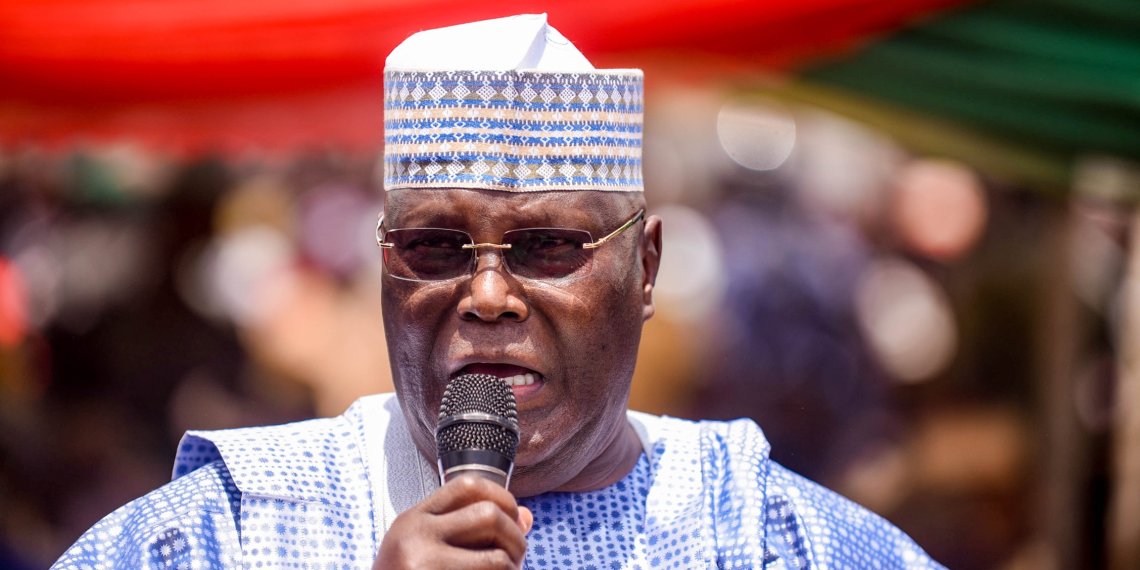
The political battle over Nigeria’s petrol subsidy regime has intensified, with the Presidency and former Vice-President Atiku Abubakar trading accusations over economic policy, accountability and the management of public resources.
The latest confrontation followed conflicting explanations from Atiku and his aides over his proposal to restore petrol subsidy if elected president in 2027.
The Presidency accused the African Democratic Congress presidential candidate of policy inconsistency and playing politics with the economic difficulties confronting Nigerians.In a statement on Wednesday, Special Adviser to President Bola Tinubu on Information and Strategy, Bayo Onanuga, said Atiku’s position had been presented in three different ways within one week.
According to Onanuga, Atiku’s spokesperson, Paul Ibe, initially said the former vice-president would restore petrol subsidy if elected and subsequently phase it out as a temporary intervention to ease pressure on Nigerians and businesses.
A subsequent clarification by another aide, Phrank Shaibu, however, described Ibe’s position as an “unauthorised and misleading characterisation” of Atiku’s policy. Shaibu said the subsidy would instead remain until domestic refining expanded, supply stabilised and competition deepened sufficiently to deliver affordable prices without government support.
Atiku later intervened, insisting that his position had not changed and declaring: “I will restore targeted subsidy and put purchasing power back in the hands of Nigerians.”
The Presidency said the differing explanations amounted to more than semantics, describing them as evidence of a serious policy contradiction.
Onanuga challenged Atiku to provide details of the proposed targeted subsidy, including its cost, beneficiaries, funding mechanism and the economic conditions that would determine its eventual removal.
He also rejected the argument that petrol prices alone were responsible for Nigeria’s cost-of-living crisis, pointing to insecurity, exchange rates, logistics, storage, flooding, agricultural input costs, money supply and supply constraints as other major factors affecting inflation and food prices.
The presidential aide further questioned Atiku’s proposal to link subsidy to crude oil prices, noting that crude oil produces several other petroleum products, including diesel, aviation fuel and kerosene.
Onanuga recalled that diesel was deregulated in 2004 under the administration in which Atiku served as vice-president, while kerosene and aviation fuel were deregulated at different times.
The Presidency maintained that Nigeria needed a comprehensive economic policy addressing the broader drivers of inflation rather than one focused predominantly on petrol prices.
But Atiku has turned the dispute into a broader challenge to the Tinubu administration, shifting attention from subsidy policy to accountability over government expenditure and alleged corruption.
In a separate statement issued through Shaibu, Atiku challenged the Federal Government to investigate and prosecute him if it had evidence connecting him to the alleged $16bn expenditure on power projects during his period in government.
Atiku said allegations concerning the power sector, privatisation and public assets had been repeatedly raised over the years without leading to his prosecution.
He maintained that although he chaired the National Council on Privatisation as vice-president, he disagreed with the concept of the power project and did not preside over its implementation.
The former vice-president said successive governments had had ample opportunity to investigate him since he left office in 2007.
“I have repeatedly asked to be investigated. I left office in 2007 and have spent much of the period since then opposing governments in power. If there is evidence that I stole public money, why has no government produced it before a court?” he said.
Atiku urged the Federal Government to investigate him, produce any evidence against him and prosecute him if a case could be established, arguing that propaganda could not substitute for evidence.
He also accused the Tinubu administration of reviving old allegations to divert attention from his demand for greater transparency over revenues generated following the removal of petrol subsidy.
Atiku argued that Nigerians had endured higher petrol, transportation and food prices on the promise that subsidy savings would be redirected towards development.
“Where is the people’s money?” he asked, alleging that government revenues had increased while fiscal incentives, tax credits, waivers and concessions remained available to powerful economic interests.
President Tinubu announced the removal of petrol subsidy shortly after assuming office in May 2023, arguing that the policy had become financially unsustainable and was placing severe pressure on government finances.
The decision triggered a sharp rise in petrol prices and contributed to increased transportation and living costs, making subsidy removal one of the most contentious issues of the administration.
While the Federal Government has introduced measures aimed at cushioning the impact of the reforms and has defended the policy as necessary for fiscal stability, Atiku has made the cost-of-living crisis and accountability for subsidy savings central to his criticism of the administration.
The emerging political contest therefore goes beyond the question of whether petrol subsidy should return. At its heart is a wider disagreement over how Nigeria should manage fuel prices, public finances and economic reforms, with both sides seeking to persuade Nigerians that their approach offers the better path out of the current hardship.
For the Presidency, Atiku must provide a clear, costed and workable explanation of his proposed targeted subsidy. For Atiku, the Federal Government must account for the revenues generated since subsidy removal and confront any evidence linking him to alleged financial wrongdoing.
The subsidy debate has thus evolved into a broader political showdown over economic credibility, public accountability and the direction of Nigeria’s economy ahead of the 2027 elections.
By David Torough, Abuja
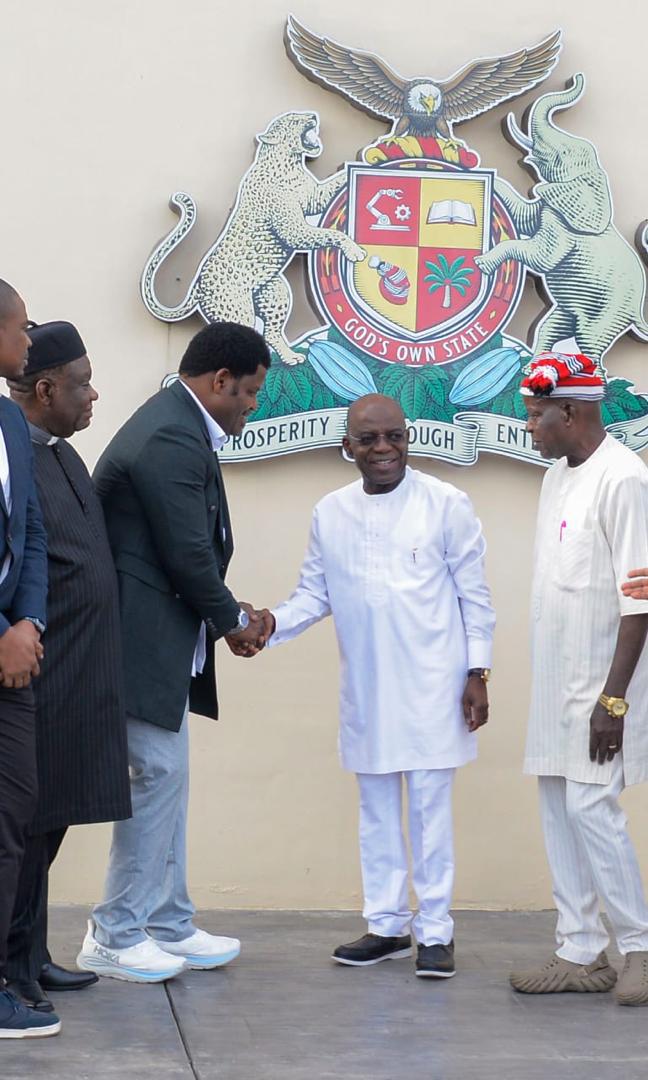
Ambassador Osita Offor, popularly known as “The Ultimate Commander,” is being celebrated today for his vision, entrepreneurial drive, philanthropy, mentorship and commitment to building people and communities.
In a birthday tribute issued on behalf of the Management Team of Aba Commercial Smart City (ACSC), Engr.
Mazen Kalassina and Mr. David Okoro described Offor as a man whose influence extends beyond his business and public engagements to the people and relationships he has built throughout his journey.The tribute noted that the title “The Ultimate Commander” has become closely associated with Offor, reflecting what it described as his determination, courage, resilience and ability to pursue ambitious visions despite challenges.
According to the tribute, Offor is a visionary who sees possibilities beyond present circumstances and continually seeks opportunities to develop businesses, institutions and projects capable of creating lasting impact.
He was also described as a fighter, not because he seeks conflict, but because he refuses to surrender in the face of obstacles.
“Once Ambassador Osita believes in something, he pursues it with extraordinary determination,” the tribute stated, highlighting his persistence in the face of uncertainty, resistance and setbacks.
The birthday message further celebrated Offor as a builder, emphasizing that his contributions go beyond businesses and physical structures to include people, relationships, opportunities and legacies.
His role as a mentor was equally highlighted, with the tribute noting his ability to encourage others to think bigger, work harder and believe in their own potential. It credited him with sharing experience, opening doors and offering guidance to those around him.
Beyond his professional and public life, Offor was celebrated as a father and family man, with the message stressing the importance of responsibility, sacrifice, protection and commitment in defining his character.
His philanthropic activities also received special recognition. The tribute observed that his giving extends beyond financial support to include introductions, opportunities, advice and encouragement.
“True philanthropy is the willingness to look beyond oneself and ask: ‘What can I do to make another person’s journey better?’” the message stated.
As an entrepreneur and businessman, Offor was praised for understanding business as more than buying and selling. The tribute described his entrepreneurial philosophy as one centered on creating value, solving problems, taking calculated risks, generating employment and building sustainable opportunities.
They described him as a friend and a man of relationships, emphasizing his appreciation for trust, loyalty, partnerships and collaboration.
According to the tribute, his leadership philosophy is rooted not in commanding people, but in inspiring them to voluntarily identify with and pursue a worthwhile vision.
“That is why ‘The Ultimate Commander’ is more than a name,” the tribute stated. “It represents the man who commands his vision, his courage, his determination and his capacity to dream.”
They expressed optimism that Offor’s most significant achievements may still lie ahead, pointing to more businesses to build, people to inspire, communities to impact and lives to touch.
The management team of Aba Commercial Smart City also offered prayers for greater wisdom, strength, favour, accomplishments and impact in the years ahead. They prayed for the preservation of his health, the strengthening of his family and continued blessings upon his work.
The tribute saluted Offor in his various roles as businessman, philanthropist, mentor, father, friend, visionary, fighter and builder, while emphasizing that, above all, the celebration was about the man behind the title.
“Happy Birthday, Sir,” the message concluded, expressing the hope that his vision would continue to inspire, his courage would continue to lead and his legacy would continue to speak long after the birthday celebration.




CBN Sells N700bn Treasury Bills in Second August Auction
ShareBy Tony Obiechina, Abuja The Central Bank of Nigeria (CBN), on behalf of the Debt Management Office (DMO), has offered...


Niger FRSC Records 234 Crashes, 110 Deaths in Seven Months
ShareFrom Dan Amasingha, Minna Ten people have been killed and several others injured in a fatal road crash involving a...

Fuel Subsidy War Deepens as Presidency, Atiku Clash Again over Policy
ShareBy David Torough, Abuja The political battle over Nigeria’s petrol subsidy regime has intensified, with the Presidency and former Vice-President...
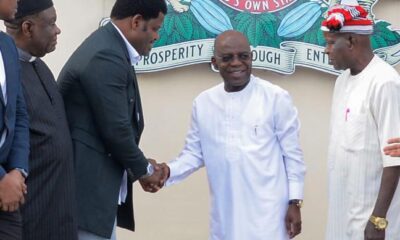

The Man Behind ‘The Ultimate Commander’: A Birthday Tribute to Ambassador Osita Offor
ShareBy David Torough, Abuja Ambassador Osita Offor, popularly known as “The Ultimate Commander,” is being celebrated today for his vision,...
Peace on Paper, Peril in Practice: Why 2027’s Elections Remain at Risk
ShareBy Dakuku Peterside There is something reassuring about the ritual of political rivals gathering beneath the same roof and signing...


2027: Bawa Urges APC Leaders, Supporters on Unity
ShareBy Tambaya Julius, Abuja The Senior Special Assistant (SSA) to the Nasarawa State Governor on Greater Karu Development Control Agency...
NCS Lilypond Export Command Gets New Acting CAC
ShareThe Nigeria Customs Service (NCS), Lilypond Export Command, has appointed Deputy Comptroller Olusola Salako as its Acting Customs Area Controller...
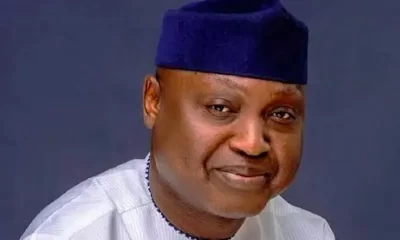

Oyebanji Reappoints Retired Ekiti Accountant-General
ShareEkiti State Governor, Biodun Oyebanji, on Tuesday approved the appointment of Titilayo Olayinka as the new Accountant General of the...
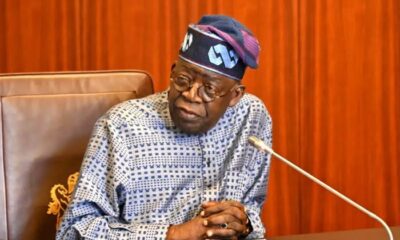

Eid-el-Maulud: Tinubu, Govs, Others Preach Peace, Compassion, Unity
ShareBy Laide Akinboade, Abuja President Bola Tinubu, state governors, traditional rulers and religious leaders have called on Nigerians to draw...

Niger Mosque Massacre: Tinubu Orders Rescue of over 60 Abductees
ShareFrom Dan Amasingha, Minna President Bola Ahmed Tinubu has ordered the Armed Forces, the Nigeria Police Force, the Department of...