
Metro
Nigerian Army at 163: Legacy of Sacrifice, Service and Transformation

By Sumaila Ogbaje
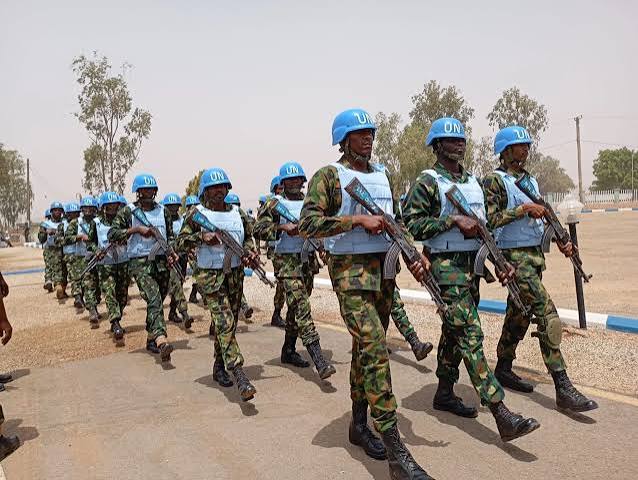
When officers, soldiers and defence stakeholders gathered in Port Harcourt for the Nigerian Army Day Celebration (NADCEL) 2026, the occasion represented far more than another military anniversary.
It provided an opportunity to reflect on 163 years of dedicated service and honour the sacrifices of fallen heroes.
It also highlighted the Nigerian Army’s operational achievements and efforts to reposition itself to confront a complex security environment.
Established in 1863 as the Glover Hausas, the Nigerian Army has evolved from a modest colonial force into one of Africa’s largest and most experienced land forces.
Its history mirrors Nigeria’s own evolution, spanning the civil war, peace support operations across Africa and the ongoing fight against terrorism, insurgency, banditry, kidnapping, oil theft and other emerging security threats.
Today, the Army operates across the country’s six geopolitical zones under various joint operations, confronting asymmetric threats that have continuously replaced conventional warfare.
In spite of these challenges, the Army says sustained offensive operations, improved intelligence and enhanced collaboration with sister services and other security agencies have continued to degrade criminal and terrorist networks while protecting lives and critical national assets.
The 163rd anniversary also underscored Nigeria’s growing role in regional security cooperation.
As part of NADCEL 2026, the Nigerian Army hosted the Third African Land Forces Forum, bringing together army chiefs and defence leaders from 17 African countries to deliberate on terrorism, insurgency and other transnational security threats confronting the continent.
The Chief of Army Staff (COAS), Lt.-Gen. Waidi Shaibu, said integrating the forum into NADCEL reflected the Nigerian Army’s commitment to strengthening military diplomacy, regional cooperation and collective security across Africa.
According to him, terrorism, insurgency, organised crime and other transnational threats have become increasingly complex, making collaboration among African armies imperative.
Shaibu said Nigeria’s experience in counter-terrorism and counter-insurgency operations had demonstrated the importance of adaptive strategies, effective air support, intensive training, intelligence-driven operations and regional cooperation.
He noted that the successes recorded by the Multinational Joint Task Force in degrading insurgent capabilities and reclaiming territories within the Lake Chad Basin further demonstrated the value of collective action.
The COAS expressed confidence that the forum would deepen interoperability, promote knowledge sharing and produce practical strategies capable of strengthening Africa’s collective security architecture.
For Shaibu, NADCEL 2026 also marked another milestone in the Nigerian Army’s transformation journey.
He said the nationwide activities reflected the institution’s commitment to professionalism, operational excellence and national cohesion while reinforcing its constitutional responsibility to protect the nation’s territorial integrity.
According to him, the theme of this year’s celebration, “Protecting the Nation and Serving the People: A Way Forward for the Nigerian Army,” captures the Army’s determination to balance operational effectiveness with improved service to Nigerians.
He paid tribute to fallen heroes whose sacrifices, he said, remain the foundation for building a safer and more secure nation, while reaffirming the Army’s commitment to personnel welfare and continuous enhancement of operational capabilities.
Speaking at the grand finale of NADCEL 2026, President Bola Tinubu, represented by Vice-President Kashim Shettima, said the Nigerian Army remains a strategic pillar of national security.
He noted that the Army’s professionalism and resilience have continued to preserve Nigeria’s unity while contributing to peace and stability across Africa.
The President said the changing security environment requires a modern, agile and highly motivated Army, assuring that his administration would continue to invest in personnel welfare, training, modern equipment and operational capabilities.
He also reaffirmed his administration’s commitment to improving the welfare of officers, soldiers and the families of fallen heroes, stressing that a well-motivated military remains indispensable to national peace, security and development.
Tinubu urged Nigerians to complement the efforts of the Armed Forces through patriotism, intelligence sharing and cooperation with security agencies, emphasising that national security is a shared responsibility.
Observers say the President’s commitment aligns with the Army’s “Soldier First” initiative introduced by Shaibu, which places personnel welfare at the centre of operational effectiveness through improved accommodation, healthcare, education, training and modern equipment.
Military analysts believe the initiative has boosted morale and reinforced the understanding that a motivated soldier is better equipped to accomplish demanding operational tasks.
Beyond combat operations, experts say the Army’s increasing emphasis on civil-military cooperation reflects the realities of contemporary warfare.
According to them, intelligence provided by local communities has become one of the most effective tools in combating terrorism, banditry and kidnapping.
Consequently, the Army has expanded medical outreaches, educational support, environmental sanitation campaigns and community development projects aimed at strengthening public confidence and fostering stronger civil-military relations.
Analysts argue that such engagements help bridge the gap between the military and civilians while reinforcing the Army’s constitutional responsibility to serve the people.
Notwithstanding these gains, the Army continues to confront significant challenges.
The changing character of warfare has seen terrorists and other criminal groups deploy drones, improvised explosive devices, encrypted communications and sophisticated propaganda to advance their activities.
Security experts say these developments demand sustained investment in emerging technologies, intelligence capabilities and specialised training.
They also advocate stronger collaboration among security agencies and regional partners to improve intelligence sharing and coordinated responses to transnational threats.
Beyond military operations, analysts maintain that addressing the root causes of insecurity remains critical to achieving lasting peace.
They identify poverty, unemployment, weak governance, limited educational opportunities and communal conflicts as conditions that continue to facilitate recruitment into criminal and extremist groups.
According to them, while military operations create the secure environment required for development, sustainable peace ultimately depends on good governance, economic opportunities and social inclusion.
Retired senior military officers also emphasise the importance of professionalism, accountability and strict adherence to the rules of engagement during internal security operations.
They argue that public confidence in the Armed Forces is strengthened when military operations are conducted with respect for human rights and the rule of law.
Nigeria’s contribution to regional and international peace support operations also remains one of the defining features of the Army’s history.
Over the decades, Nigerian troops have served under the mandates of the United Nations, the African Union and the Economic Community of West African States, earning recognition for professionalism while enhancing the country’s international standing and enriching the operational experience of its personnel.
As the Army marks 163 years of existence, defence experts say it must continue investing in modern equipment, digital technologies, intelligence capabilities and human capital to remain responsive to evolving security threats.
They also advocate stronger collaboration with research institutions, indigenous defence industries and international partners to promote innovation, self-reliance and technological advancement in defence production.
Equally important, they say, is sustained government support through adequate funding, timely procurement of equipment and continued investment in personnel welfare and leadership development.
For many Nigerians, NADCEL extends beyond colourful parades and ceremonial displays.
It is an opportunity to honour officers and soldiers who paid the supreme price in defence of the nation while recognising those who continue to serve under demanding and often dangerous conditions.
Families of fallen heroes and wounded personnel equally view the celebration as recognition of the enormous sacrifices made in preserving Nigeria’s unity, sovereignty and stability.
As the Nigerian Army marks 163 years of distinguished service, analysts say its ability to remain professional, adaptive and people-centred will determine its relevance in addressing Nigeria’s evolving security challenges.
They argue that President Tinubu’s message at NADCEL 2026 reinforces a shared national responsibility; while the government must continue to equip and support the military, citizens must equally contribute through patriotism, intelligence sharing and cooperation with security agencies.
They also believe the decision to host the African Land Forces Forum alongside NADCEL reflects Nigeria’s growing leadership role in promoting regional military cooperation against terrorism, insurgency and other transnational threats.
Ultimately, the Nigerian Army’s legacy is measured not only by its battlefield achievements but also by its enduring commitment to professionalism, constitutional responsibility and selfless service.
As new security threats continue to emerge, the Army’s sustained transformation, investment in personnel welfare, regional partnerships and commitment to serving the people will remain central to safeguarding Nigeria’s peace, unity and sustainable development. (NAN)
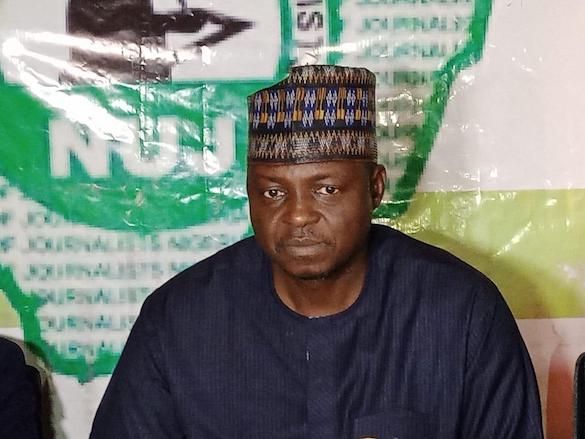
The National Chairman of the All Progressives Congress (APC), Prof. Nentawe Yilwatda, has said that the party is handling the grievances of the aggrieved governorship candidates in Oyo State as a family matter.
Yilwatda stated this on Wednesday in Ibadan during a meeting with party stakeholders, noting that disagreements among members are normal in politics.
He affirmed that members have expressed readiness to work together to ensure victory in 2027, emphasising that the reconciliation process is an ongoing effort rather than a one-day affair.
He stressed that the national leadership remains committed to bringing all aggrieved members on board ahead of the next general elections.
Addressing the recent Osun State governorship election, Yilwatda insisted the outcome was not a failure for the APC.
He noted that despite the state government deploying its full machinery, the APC put up a strong fight and conducted itself with maturity.
According to him, the peaceful conduct of the election and eventual commendation from the opposition demonstrated the party’s high level of sportsmanship.
He added that Osun State Governor, Ademola Adeleke, acknowledged this sportsmanship and even declared support for President Bola Tinubu’s re-election bid.
When asked if the APC had officially accepted the Osun election outcome, Yilwatda explained that no official position has been taken yet, as any final decision requires a formal review involving the National Working Committee and the candidate.
The Chairman of the APC Reconciliation Committee in Oyo State, Senator Olufemi Lanleyin, emphasised that the party must go into the 2027 elections united in order to reclaim power in the state.
Lanleyin acknowledged that while some members were disappointed with the primary outcomes, the party retains the strength, will, and capacity to unite.
He said that the committee is meeting with aggrieved aspirants to present their grievances to the national leadership for resolution.
On the lesson from Osun, Lanleyin noted that unity determines electoral success, promising that the committee will continue its work until Election Day.
He expressed absolute confidence that the APC will sweep Oyo State in 2027, winning the presidency, governorship, three senatorial seats, 14 federal constituencies, and 32 House of Assembly seats.
He appealed to leaders and stakeholders to embrace unity because members do not want to remain out of government for another day.
He added that the party would not take anything for granted and would continue the reconciliation process until Election Day.

The Federal Government has urged Nigerians to dial 112 during emergencies requiring urgent medical assistance, while releasing state emergency call centre numbers.
The National Emergency Medical Service and Ambulance System (NEMSAS), in an update on Wednesday, said 112 serves as a central contact for emergency medical assistance.
It said several states also had dedicated emergency call centre numbers to support faster responses to medical emergencies.
According to NEMSAS, the emergency response system provides fast response, professional care and life-saving services, with first responders available 24 hours daily.
The agency released emergency call centre numbers covering 35 states and the Federal Capital Territory, with most states using 112 alongside dedicated numbers.
For Abia, the listed emergency numbers are 112 and 08000000800, while Adamawa residents can call 112, 1755 or 07011111443.
Akwa Ibom residents can call 112, 08000022322 or 08000022422, while Anambra residents can use 112, 5111, 0800 220 0008 or 112.
For Bauchi, the listed numbers are 112 and 07038636433, while Bayelsa residents can call 112 or 0800 220 0223.
NEMSAS listed Benue’s emergency call centre as “Not Operational,” while Borno residents can call 112 or 08000000033.
Cross River has 112 as its listed emergency number, while Delta residents can call 112, 07041008130 or 07041008131.
For Ebonyi, the listed numbers are 112, 08086446891 and 08086445736, while Edo residents can call 112, 739 or 09037999871.
Ekiti residents can call 112, 08000606606, 08111111-22, -33, -44 or -55, while Enugu residents can use 112, 09074996090 or 07066466429.
Gombe residents can call 112 or 07033825646, while NEMSAS listed Imo’s emergency call centre as “Not Operational.”
Jigawa has 112 as its listed emergency number, while Kaduna residents can call 112 or 08064111599.
For Kano, the listed numbers are 112, 09019999920 and 09049999914, while Katsina and Kebbi each have 112 listed.
Kogi also has 112 as its listed emergency number, while Kwara residents can call 112, 09062010001 or 09062010002.
Lagos residents can call 112 or 767, while Nasarawa residents can use 112 or 08144911269 for emergency assistance.
For Niger, the listed numbers are 112, 0802 242 2953 and 0815 557 7513, while Osun residents can call 112, 08111110532 or 08111110561.
Ogun residents can call 112 or 08112000033, while Ondo residents can use 112 or 08055300300.
For Oyo, the listed emergency numbers are 112 and 615, while Plateau residents can call 112 or 09136982496.
Rivers residents can call 112, 09040222281, 09040222283 or 09040222285, while Sokoto residents can use 112, 07045963318 or 07071765080.
For Taraba, the listed numbers are 112, 07041122777 and 07041100777, while Yobe residents can call 112, 09169981792 or 08000090009.
Zamfara has 112 as its listed emergency number, while residents of the FCT can call 112, 09157892931 or 09157892932.
NEMSAS advised members of the public to save the emergency numbers and use them whenever urgent medical assistance was required.
The agency said its first responders were ready to provide quick response and professional care to help save lives during emergencies.
It urged Nigerians to dial 112 during emergencies, describing the service as available 24 hours daily, seven days weekly.
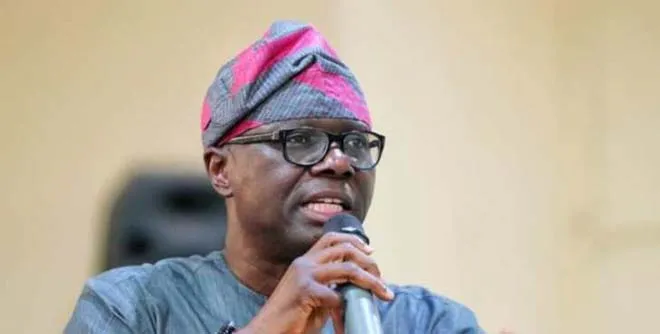
Lagos State Governor, Babajide Sanwo-Olu, on Wednesday awarded N20 million each to LASU’s best graduating students for the 2024-2025 and 2025-2026 sessions.
Sanwo-Olu announced the awards during Lagos State University’s 29th and 30th combined convocation ceremonies at the Buba Marwa Auditorium, Ojo.
Ayilara Olawale, from the Department of Project Management, emerged overall best graduating student for 2024-2025.
Olawale recorded an impressive Cumulative Grade Point Average (CGPA) of 4.96 to emerge top of the graduating cohort.
Similarly, Adebanjo Samuel, from the Department of Aerospace Engineering, emerged overall best graduating student for 2025-2026.
Adebanjo achieved a CGPA of 4.97, earning recognition as the university’s overall best graduating student for the academic session.
Sanwo-Olu congratulated the 20,604 graduands from both academic sessions, describing the cohort as the largest graduating class in LASU’s history.
He noted that the graduands included 494 First Class students, attributing their achievements to their parents, guardians, sponsors and lecturers.
“Your achievements reflect the commitment of your parents, guardians, sponsors and lecturers who supported you throughout your academic journey,” he said.
The governor also congratulated 3,383 postgraduate graduands, including Doctor of Philosophy graduates, urging them to expand knowledge and mentor younger scholars.
He said LASU had recorded remarkable growth since its establishment 43 years ago, describing the institution as a product of Lateef Jakande’s vision.
Sanwo-Olu said LASU had emerged as Nigeria’s most subscribed university for two consecutive years, attracting more than 84,000 first-choice applications.
He added that Times Higher Education ranked LASU Nigeria’s best state university and fourth-best university overall.
According to him, LASU was also rated West Africa’s best university for four consecutive years, from 2022 to 2025.
He noted that the recognition came through the UI GreenMetric World University Ranking, further demonstrating the university’s growing international profile.
Sanwo-Olu said LASU’s selection as South-West host of the N3 billion TETFund Centre for Artificial Intelligence, Robotics and Cyber Sciences reinforced its rising profile.
The governor said his administration prioritised education and technology under the THEMES Plus agenda because both remained central to Lagos’ development.
He listed the Babajide Sanwo-Olu Library Complex, student union building, accommodation facilities, lecture theatres and other infrastructure among achievements recorded at LASU.
Describing the ceremony as his final convocation as Visitor, Sanwo-Olu urged graduands to represent Lagos and Nigeria with competence, character and courage.
“Use your education to serve humanity. Degrees open doors, but service builds lasting legacies,” the governor told the graduands.
He congratulated LASU Vice-Chancellor, Prof. Ibiyemi Olatunji-Bello, on her final convocation and commended her contributions during her five-year tenure.
Sanwo-Olu said Olatunji-Bello had elevated LASU’s profile, adding that history would remember her contributions to the institution’s development.
He also congratulated LASU Chancellor, Oba Olufolarin Ogunsanwo, who presided over his first convocation after recently obtaining a Doctor of Business Administration degree.
Olatunji-Bello said LASU was graduating 20,604 students across diploma, first-degree and higher-degree programmes from the two academic sessions.
She described the ceremony as her fifth and final convocation as vice-chancellor and expressed gratitude to Sanwo-Olu for supporting her administration.
The vice-chancellor said LASU successfully elevated its standing among Nigerian and African universities despite challenges encountered during her five-year tenure.
The university conferred honorary doctorate degrees on Akin Kekere-Ekun, Bola Adesola and Aliko Dangote for contributions to national development, scholarship, business and humanity.
The Pro-Chancellor and Chairman of LASU Governing Council, Babatunde Ogala, said the university would sustain partnerships, research and programmes aligned with Lagos’ strategic position.
He specifically highlighted aviation and maritime studies as areas requiring continued development because of their importance to Lagos’ economy and future.
Ogala announced a strategic partnership between LASU and the University of Illinois Chicago to promote collaboration among students, lecturers and researchers.
He urged the graduands to regard their degrees as a call to deeper intellectual engagement and greater responsibility to society.
The combined convocation marked a significant milestone for Sanwo-Olu and Olatunji-Bello as they prepare to leave their respective positions as Visitor and Vice-Chancellor, respectively.




JAMB Breaks New Ground, Allows Home Upload of O’Level Results
ShareCandidates seeking admission into Nigerian tertiary institutions can now upload and verify their O’Level results from the comfort of their...

Tinubu Mourns Ogogo, Extols His Creative Legacy
SharePresident Bola Tinubu has condoled with the family, friends and colleagues of veteran Nollywood actor, filmmaker and screenwriter Taiwo Hassan,...


Nigeria Upgrading its Digital, Intelligence-led Border Management System — NIS
ShareNigeria is strengthening its border management architecture through digital technology, biometric identity systems, intelligence sharing and stronger collaboration with border...
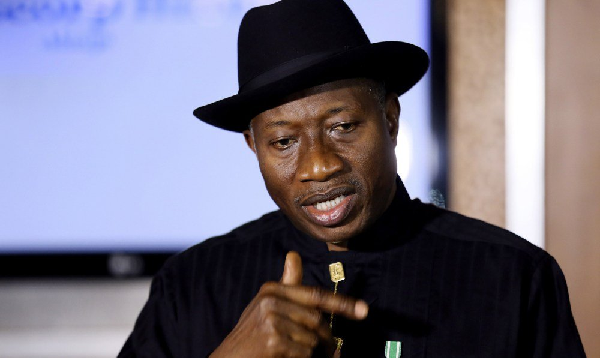
ShareGoodluck Jonathan Advises Leaders to Invest in Youths, Industry Former President of Nigeria, Dr. Goodluck Jonathan, has called on leaders...


First Quarter Pension Contributors Rise by 143,248 – PenCom
ShareThe National Pension Commission (PenCom) said cumulative Retirement Savings Account (RSA) registrations under the Contributory Pension Scheme (CPS) rose by...


Police Honour 10 Fallen Officers, Disu Vows to Crush Banditry
ShareBy Elijah Oguche, Abuja The Nigeria Police Force (NPF) on Monday honoured 10 officers of the Special Intervention Squad (SIS)...


Petrol Imports Rise as Local Supply Plunges 21 Per Cent
ShareBy Tony Obiechina, Obiechina Nigeria’s reliance on imported petrol increased in July as domestic refinery supplies fell sharply, reversing some...


NCS, WCO, UK Intensify Anti-Corruption Drive, Strengthen Customs Integrity
Share By Tambaya Julius, Abuja The Nigeria Customs Service (NCS), in collaboration with the World Customs Organisation (WCO) and the...
Bayelsa Receives Twon-Brass Draft Constitution
ShareFrom Mike Tayese, Yenagoa The Bayelsa State Government has received the final draft copy of the constitution of Twon-Brass Kingdom...
Nigeria’s Reforms Must Now Deliver Jobs, Higher Incomes – CPPE
ShareCentre for the Promotion of Private Enterprise (CPPE) has urged the Federal Government to shift its economic reform focus from...