
BUSINESS
NDPHC Commends NPA over Cargo Recovery


The Niger Delta Power Holding Company Ltd. (NDPHC) has commended the Nigerian Ports Authority (NPA) for facilitating the recovery of abandoned company cargoes.
The company said the NPA’s intervention covered several seaports across the country and helped avert substantial financial losses.
NDPHC Managing Director and Chief Executive Officer, Jennifer Adighije, gave the commendation in a statement on Sunday after a courtesy visit to NPA management.
The visit, held at the NPA headquarters in Marina, Lagos, was aimed at strengthening the strategic partnership between both organisations.
Adighije expressed appreciation to the NPA Managing Director, Dr. Abubakar Dantsoho, and his management team for their intervention.
She said the support facilitated the recovery of NDPHC’s abandoned cargoes at different seaports across the country.
According to her, the intervention helped prevent significant financial losses and saved NDPHC several billions of naira.
Adighije stressed that efficient logistics and timely clearance of critical equipment were essential to implementing power infrastructure projects successfully.
She also called for sustained collaboration among agencies and organisations operating across Nigeria’s energy and maritime sectors.
The NDPHC chief said the company valued the NPA’s support and looked forward to strengthening their relationship further.
She said stronger cooperation would benefit Nigeria’s power sector and contribute to broader economic development.
The NDPHC delegation included its Executive Director, Corporate Services, Chukwuma Umeoji, and Executive Director, Finance and Accounts, Omololu Agoro.
Others were the company’s Head of Expediting and Logistics, Rufai Ahmed, and other management officials.
Responding, Dantsoho expressed delight at the visit and reaffirmed NPA’s commitment to partnerships promoting national development.
He said the Authority remained committed to initiatives capable of improving the lives of Nigerians through effective inter-agency cooperation.
Dantsoho congratulated NDPHC on its contributions to developing Nigeria’s power sector and assured the company of continued NPA support.
He added that the Authority remained open to meaningful engagements with NDPHC on issues of mutual interest.
Dantsoho assured the delegation that his doors would remain open for productive discussions and partnerships between both organisations.
He also wished NDPHC continued success in delivering projects capable of strengthening Nigeria’s electricity infrastructure.
The engagement highlighted the importance of inter-agency collaboration in removing logistical bottlenecks that could delay major infrastructure projects.
For the power sector, timely movement and delivery of equipment remain critical to accelerating project execution and improving electricity supply nationwide. (NAN)
Centre for the Promotion of Private Enterprise (CPPE) has urged the Federal Government to shift its economic reform focus from macroeconomic stabilisation to productivity, job creation and improved living standards.
The Chief Executive Officer of CPPE, Dr.
Muda Yusuf, made the call on Sunday in the centre’s assessment of the government’s economic reform scorecard released by the Minister of Finance.Yusuf said the reforms had delivered measurable gains, including stronger government revenues, improved foreign exchange stability, higher external reserves and increased investor confidence.
He said real Gross Domestic Product growth also strengthened to 3.89 per cent in the first quarter of 2026, from 3.13 per cent in the corresponding period of 2025.
“Macroeconomic stability is a means, not an end,” he said.
He said the real test of the reforms was their ability to deliver higher productivity, stronger investment, more jobs, lower poverty and improved living standards.
According to him, purchasing power remains under pressure, while businesses continue to face high energy, financing, logistics and regulatory costs.
Yusuf said the next phase of reforms should therefore prioritise productivity, competitiveness and household welfare.
He also urged state governments to translate increased statutory allocations and internally generated revenues into visible development outcomes.
He listed roads, healthcare, transportation, education, agricultural infrastructure, security, power and enterprise support as areas requiring greater investment.
“Higher revenues must produce a visible development and welfare dividend, rather than simply finance higher recurrent expenditure and prestige projects,” he said.
Yusuf identified electricity, logistics, insecurity, agricultural productivity, infrastructure, regulatory costs and high cost of capital as major structural constraints to economic growth.
He said the 15.3 per cent contraction in the electricity sector in the first quarter of 2026 underscored the urgency of addressing supply side constraints.
He said manufacturing and agriculture grew by 3.29 per cent and 3.15 per cent, respectively, during the period.
Yusuf called for trade policies that protected industries and agricultural producers with credible local capacity against unfair import competition.
He however, said producers should retain competitive access to critical inputs that were not adequately available locally.
He also advocated stronger fiscal and monetary coordination to enable a gradual reduction in financing costs as inflation moderates.
The CPPE chief executive cautioned against reversing the economic reforms, describing such a move as potentially damaging to investor confidence and fiscal stability.
He said policy makers should instead sustain the reform trajectory, while continuously refining its implementation based on evidence and its impact on businesses and households.
Yusuf said: ‘’Nigeria’s next reform phase must move from stabilisation to productivity; from higher government revenues to better development outcomes.
‘’Also, it must move from improving macroeconomic indicators to tangible gains in jobs, incomes and living standards.’’ (NAN)
The National Institute of Credit Administration (NICA) has called for the immediate capitalisation of the Nigerian Credit Guarantee Company (NCGC) with two trillion naira.
The Registrar and Chief Executive Officer of NICA, Prof.
Chris Onalo, made the call on Sunday in a statement on the state of Nigeria’s credit economy.Onalo said stronger banks from the recent recapitalisation would not translate into economic growth without deliberate measures to expand credit to productive sectors.
He said private sector credit stood at 28 per cent of the Gross Domestic Product as of June 2026, far below the 60 per cent to 80 per cent average recorded in emerging economies.
According to him, high lending rates of between 32 per cent and 35 per cent have priced key sectors out of formal credit.
He listed manufacturing, agriculture, housing and education among sectors struggling to access affordable financing.
He said banks had become increasingly risk averse in spite of improved liquidity following the recapitalisation exercise.
He attributed the situation to weak credit infrastructure, limited credit bureau coverage, weak collateral enforcement and slow judicial recovery.
Onalo warned that the credit gap was pushing millions of Nigerians toward informal lenders and digital loan platforms.
He said this could worsen household debt and weaken the capital base of small businesses.
The NICA boss described the situation as a “credit paradox”, where funds existed within the banking system, but were not sufficiently circulating in the productive economy.
He said the government must, therefore, create mechanisms to de-risk lending and encourage banks to finance businesses capable of creating jobs and expanding production.
Onalo urged the Federal Government to empower the NCGC with two trillion naira to provide broad-based guarantees for lending to micro, small and medium enterprises.
He said the guarantee scheme would serve as a bridge between stronger banks and increased financing for businesses.
“Given the recent robust bank recapitalisation, the Federal Government should immediately capitalise the Nigerian Credit Guarantee Company (NCGC) with N2 Trillion.
“This broad-based guarantee will de-risk lending, unlock bank balance sheets, and upscale credit to MSMEs nationwide. It is the bridge between strong banks and a strong economy,” he said.
Onalo also called for single-digit intervention funds for agriculture, manufacturing, housing and the creative economy through relevant government institutions.
He advised the government to establish an Office of the National Chief Credit Officer to coordinate federal credit policies, intervention funds and guarantee programmes.
Onalo also recommended mandatory credit reporting by fintechs, cooperatives and other lenders to strengthen Nigeria’s credit infrastructure.
He called for the full digitisation of the National Collateral Registry to reduce lending risks and improve access to credit.
He insisted on regulation of digital lenders to protect borrowers from predatory interest rates and unethical debt recovery practices.
Onalo also proposed reforms allowing pension and insurance funds to invest more in corporate bonds and infrastructure debt.
He urged all 36 states to establish Credit Access Departments to work with financial institutions and the NCGC to fund grassroots enterprises.
“Bank recapitalisation has given us stronger banks. What Nigeria needs now is coordinated, guaranteed and disciplined credit,” he said.
He added that such measures would enable credit to become a catalyst for enterprise, employment and sustainable economic growth.
Onalo said NICA was ready to provide policy support, technical guidance and executive training for implementing the proposed reforms. (NAN)

From Ene Asuquo, Calabar
A fire outbreak weekend occurred at the SPAR Calabar Mall in Cross River State, biggest shopping Mall in the state following a reported explosion within the shopping complex, and a section of the mall was engulfed in towering plumes of dark smoke and fierce flames disrupting activities at the complex
According to information from the scene, the fire was preceded by what was described as a minor gas or fuel explosion, which reportedly sparked the subsequent blaze.
Images from the scene showed flames consuming a section of the mall, while thick smoke billowed from the upper part of the building.
Members of the public were also seen gathered around the premises as efforts were made to contain the fire and prevent it from spreading to other sections of the facility.The incident caused panic among people within and around the shopping complex, as attention shifted to containing the fire and ensuring the safety of those in the vicinity.
The extent of damage to shops, goods and other property could not be immediately ascertained as of the time of filing this report. Similarly, information on possible casualties was not immediately available.
The circumstances surrounding the reported explosion and the subsequent fire are expected to be established by relevant emergency and safety authorities following a detailed assessment of the scene.




NCS, WCO, UK Intensify Anti-Corruption Drive, Strengthen Customs Integrity
Share By Tambaya Julius, Abuja The Nigeria Customs Service (NCS), in collaboration with the World Customs Organisation (WCO) and the...
Bayelsa Receives Twon-Brass Draft Constitution
ShareFrom Mike Tayese, Yenagoa The Bayelsa State Government has received the final draft copy of the constitution of Twon-Brass Kingdom...
Nigeria’s Reforms Must Now Deliver Jobs, Higher Incomes – CPPE
ShareCentre for the Promotion of Private Enterprise (CPPE) has urged the Federal Government to shift its economic reform focus from...
NICA Seeks N2trn Credit Guarantee Fund to Unlock Nigeria’s Economy
ShareThe National Institute of Credit Administration (NICA) has called for the immediate capitalisation of the Nigerian Credit Guarantee Company (NCGC)...
Aiyedatiwa Won’t Support Candidate against APC – Aide
ShareSteve Otaloro, the Senior Special Assistant (SSA) on Public Engagement to Gov. Lucky Aiyedatiwa of Ondo State, has dismissed rumours...

2027: NDC Affirms Sule-Garo as Kano North Senatorial Candidate
ShareThe Nigeria Democratic Congress (NDC) has affirmed Nasiru Sule-Garo as its senatorial candidate for Kano North Senatorial District in the...
Insecurity: Sokoto Gov’s Aide Urges Unity against Banditry
ShareThe Special Adviser on Security Matters to Sokoto State Governor Ahmed Aliyu, Col. Ahmed Usman (retd.), has called on political...
Lagos Community Seeks Intervention over Lingering Refuse
ShareSome residents and shop owners in Orile, Iganmu, Lagos, have appealed for urgent intervention over persistent refuse accumulation. They said...
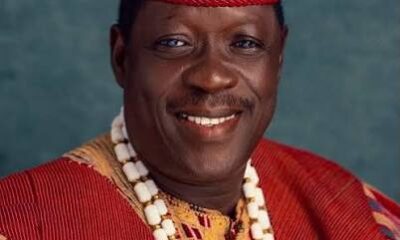

Nollywood Actor, Taiwo Hassan ‘Ogogo’ Dies
SharePopular Nollywood actor, Taiwo Hassan, better known as Ogogo, is dead. The news of the actor’s death was confirmed by...


FRSC Evacuates 15 to Hospital in Kano-Zaria Road Crash
ShareThe Federal Road Safety Corps (FRSC), Kano Sector Command, has rescued 15 persons following a lone road traffic crash involving...