
POLITICS
2027 Election: CAN Warns Politicians, Supporters to Leave ‘Jesus’ out of Political Struggles


By Laide Akinboade, Abuja
The Christian Association of Nigeria (CAN), on Wednesday, warned politicians, and their supporters against dragging the name of Jesus Christ into partisan political battles ahead of the 2027 general elections.
This was contained in a statement by the CAN President, Archbishop Daniel Okoh, in Abuja.
CAN President, said while he recognised that political discourse can be passionate and such remarks may be intended to make a point, but there is need to remind politicians and especially Christians, to exercise restraint in the way they invoke the name of Jesus Christ in political debates.
Making reference to Precious Oruche, popularly known as Mama Pee, in which she referenced Jesus Christ while making a political point about Peter Obi and the 2027 elections.
Okoh said, “Jesus Christ is not a political candidate, a campaign slogan or a weapon to advance one politician against another. His name is sacred and should not be dragged into partisan contests in ways that elevate human beings, however popular or admired, to a place that belongs to God alone.
“We are free to support Peter Obi, Atiku Abubakar, Bola Tinubu or any other candidate. We are equally free to criticise them. But our political loyalty must never become so intense that we begin to speak of politicians in terms that diminish the reverence due to Christ”.
He noted, “Let us argue about competence, character, policies, performance and the future of Nigeria. Let us disagree passionately if necessary, but let us leave Jesus Christ out of our partisan quarrels.
“No politician is the Messiah. No political party represents the salvation of the human spirit that Christ epitomizes. And no electoral victory is worth compromising the honour due to His name.
“As we approach another crucial electoral season, I urge politicians, their supporters and all Nigerians to conduct our political conversations with responsibility, restraint and respect for what we hold sacred”, he stressed.
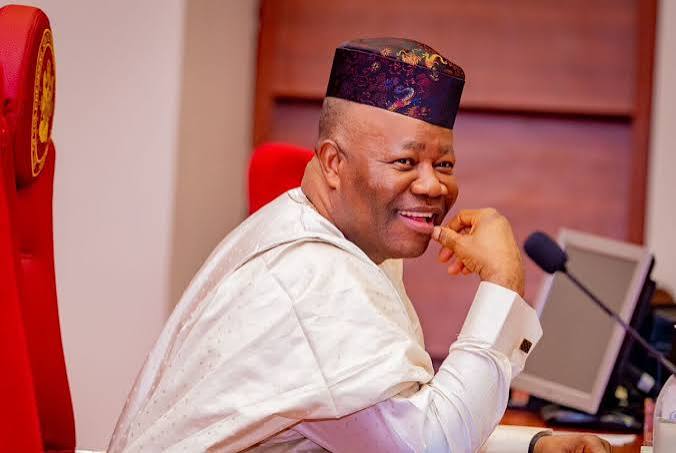
President of the Senate, Godswill Akpabio has felicitated Vice President Kashim Shettima on the occasion of his 60th birthday.
Akpabio conveyed his felicitation in a congratulatory message issued by his Special Assistant on Media, Mr Jackson Udom in Abuja on Wednesday.
Akpabio in the message said:”Birthdays are milestones in the journey of life but for those entrusted with the service of a nation, they are also moments to celebrate the footprints they have left along the way.
“Today, I celebrate one such journey,that of an accomplished public servant, steadfast patriot and Vice President of the Federal Republic of Nigeria, His Excellency, Sen Kashim Shettima.
“Your Excellency, your journey through public service from Commissioner to Governor, Senator and now Vice President has been distinguished by courage in adversity, intellectual depth, loyalty to country and an abiding conviction in the promise of Nigeria.”
“You governed Borno State at one of the most difficult periods in its history, when terror tested the resilience of its people and challenged the authority of the Nigerian state.
“Yet you remained at your duty post, providing leadership in the face of danger and demonstrating that adversity must never be permitted to extinguish hope.”
He said the vice President brings the same resilience, experience and patriotic commitment to the service of the nation.
Akpabio said his partnership with President Bola Tinubu in advancing the “Renewed Hope Agenda” demonstrates the importance of unity of purpose at the highest levels of government in confronting challenges of the present and laying the foundations for a more prosperous future.
“On this special day, I celebrate not merely the addition of another year to your life but the years you have invested in the service of our fatherland.
“On behalf of my family, my constituents and the Senate of the Federal Republic of Nigeria, I wish you many more years of good health, wisdom, strength and fulfilment.”
“May Almighty God continue to guide you, strengthen you and grant you the grace to serve our nation with distinction.
“Happy Birthday, Mr. Vice President.
May God bless you, and may God bless the Federal Republic of Nigeria.”Akpabio said.
By David Torough, Abuja
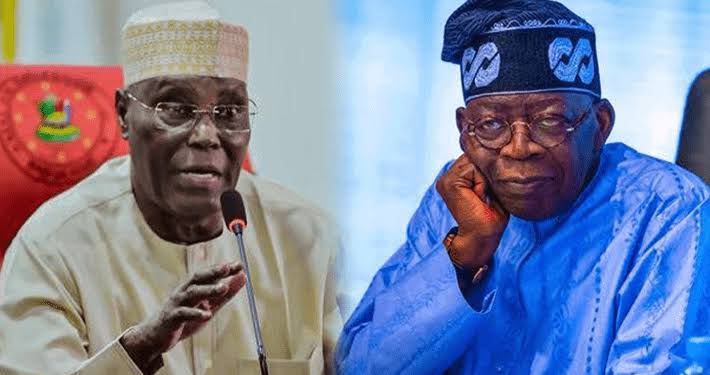
The political contest ahead of Nigeria’s 2027 general elections has intensified, with former Vice President Atiku Abubakar and President Bola Tinubu trading accusations over economic policy, the cost of living and the use of foreign lobbying in the emerging opposition campaign.
The latest confrontation followed President Tinubu’s declaration that his administration’s economic reforms were beginning to yield measurable results, with the economy recording 4.
43 per cent growth in the second quarter of 2026.In a statement issued through his Senior Special Assistant on Public Communication, Phrank Shaibu, Atiku accused the President of offering what he described as “Political anaesthesia” to Nigerians while failing to adequately address rising living costs.
The former vice president challenged the administration over petrol prices, revenue management, subsidy savings and import-duty exemptions, arguing that economic growth figures would mean little unless they translated into lower costs and improved household welfare.
Atiku’s camp specifically questioned the government’s handling of nearly ₦30 trillion in Federation Account-related revenues and deductions, about ₦15.8 trillion which the government says was mobilised following the removal of the petrol subsidy between June 2023 and December 2025, and approximately ₦34 trillion in imports covered by Import Duty Exemption Certificate approvals in 2025.
The opposition figure also criticised petrol prices, citing lower pump prices in several oil-producing countries. His camp argued that a Nigerian earning the ₦70,000 minimum wage would need ₦56,000 to purchase 40 litres of petrol at ₦1,400 per litre.
Atiku said his proposed Atiku Economic Recovery Plan would seek to reduce energy and transportation costs through targeted support for domestically supplied crude under what his camp described as a capped, transparent and independently audited framework.
His spokesman also criticised the student-loan system, arguing that education should not saddle young Nigerians with long-term debt, and proposed reviewing existing loans and forgiving qualifying student debts.
But the Presidency has maintained that the reforms introduced by the Tinubu administration were necessary to stabilise the economy after years of structural distortions.
In a statement on his X account, Tinubu said Nigeria’s economy grew by 4.43 per cent in Q2 2026, compared with 4.23 per cent in the corresponding period of the previous year.
He said growth was recorded across agriculture, manufacturing, oil and gas and services, while nominal GDP rose to ₦119.27 trillion from ₦100.7 trillion in Q2 2025.
The President pointed to improved foreign reserves, stronger oil and gas production, trade surpluses, an improved credit rating and renewed investor interest as evidence that the government’s reforms were taking effect.
He also cited the absence of university strikes and the expansion of student loans through NELFUND as part of what he described as the administration’s broader reform agenda.
Tinubu nevertheless acknowledged that economic growth must eventually be reflected in household welfare. He promised measures aimed at providing cheaper transportation, increasing food production and delivering relief programmes to vulnerable Nigerians.
The President warned that his administration would not reverse the reforms, despite opposition calls for changes to some of the policies.
Washington lobbying controversy
The economic disagreement has been accompanied by a separate political dispute over the activities of a Washington-based lobbying firm reportedly engaged by Atiku.
A Presidency-linked account, citing U.S. Department of Justice filings under the Foreign Agents Registration Act, alleged that Atiku contracted Von Batten-Montague-York, L.C. on a reported $1.2 million, 12-month retainer.
The Presidency characterised the firm’s activities as partisan lobbying designed to influence perceptions of Nigerian political developments in Washington, particularly ahead of the 2027 elections.
It also rejected claims attributed to the lobbyist concerning alleged classified U.S. intelligence, insisting that the statements should not be interpreted as representing the position of the U.S. government or President Donald Trump.
The Presidency further argued that ongoing U.S. Freedom of Information Act proceedings concerning historical records should not be conflated with the President’s official activities or foreign travels.
It cited comments by Senior Advocate of Nigeria Wole Afolabi on Channels Television, who reportedly explained that the withholding of portions of historical records could be connected to U.S. legal protections for investigative methods and confidential sources.
The Presidency maintained that the existence of historical investigations or records did not, by itself, establish criminal liability, arguing that any allegation of wrongdoing must be determined through due process and competent judicial authorities rather than political statements or media releases.
The dispute has consequently widened beyond Nigeria’s economic policy into a contest over the credibility and purpose of foreign lobbying in domestic politics.
The Presidency has accused the opposition of seeking foreign validation and diverting attention from the administration’s economic programme, while Atiku’s camp has positioned its campaign around the argument that Nigerians are yet to experience sufficient relief from the reforms.
With 2027 approaching, the competing narratives point to the central question likely to dominate the political contest: whether the government’s improving macroeconomic indicators can translate into tangible relief for households before voters make their choice—or whether the opposition can convince Nigerians that an alternative economic strategy would deliver faster and broader benefits.
For now, Tinubu is betting on the continuation of his reforms and the gradual transmission of economic growth into household welfare. Atiku, meanwhile, is pressing the government for greater transparency and lower living costs while presenting his own economic proposals as an alternative.
The battle for 2027, increasingly, is therefore being fought not only over political personalities but over competing interpretations of Nigeria’s economic direction—and over who Nigerians believe should be trusted to deliver the next phase of national recovery.
Meanwhile, a Federal High Court sitting in Abuja, on Tuesday, postponed the suit filed against President Bola Tinubu’s participation in the 2027 Presidential election by the former Vice President, Atiku Abubakar.
This is just as the counsel to the former Vice President, Joseph Onu Silas, lamented that he has not been able to reach President Tinubu for personal delivery of Originating Summons on him in line with the provisions of the law.
Atiku had dragged Tinubu, who is the All Progressives Congress (APC) and the Independent National Electoral Commission (INEC) before the Court, praying for 1st defendant’s disqualification from the 2027 presidential election on various eligibility grounds.
Atiku, who is the Presidential candidate of the African Democratic Congress ADC), had deposed to an affidavit in support of his suit challenging the qualification of Tinubu to contest the 2027 presidential election.
The opposition politician in the Court process, is urging the Court to invoke Sections 137(1)(j), 139(1)(a)(i) and 285(14)(c) of the 1999 Constitution (as amended), as well as provisions of the Electoral Act, 2026 to determine whether Tinubu can participate in the election.
The three defendants in the suit are: Tinubu, the All Progressives Congress APC and the Independent National Electoral Commission INEC.
Atiku claimed that Section 137(1)(j) of the Constitution, provides that a person shall not be qualified for election to the office of President if he has presented a forged certificate to INEC, and asked the court to determine whether Tinubu and the APC should be disqualified from the 2027 presidential election over the NYSC certificate presented to INEC in connection with the 2023 and 2027 presidential elections.
In his affidavit, Atiku alleged that Tinubu submitted to INEC an NYSC discharge certificate bearing the name “Tinubu Bola Adekunle”, which, according to him, is different from the President’s name, Bola Ahmed Tinubu.
The affidavit further alleged that the same NYSC certificate was submitted in connection with the 2027 presidential election and alleged that the document is not a certificate obtained by Tinubu.
Atiku also placed INEC on notice to produce Tinubu’s Form CF001 submitted in connection with the 2023 and 2027 presidential elections.
Atiku and the ADC are also challenging provisions of the Electoral Act, 2026, which restrict who may challenge the qualification of a candidate at pre-election stage and the removal of qualification as a ground for questioning an election as envisaged by Section 139(a)(i) of the Constitution, which empowers the National Assembly to make laws allowing the questioning of whether a person elected into the office of President is qualified.
According to Atiku and ADC, the legislation cannot be used to shut the door against enforcement of an express constitutional provision on the ground that where an Act of the National Assembly conflicts with the Constitution, the Constitution must prevail.
The originating summons asks the Federal High Court to determine whether the statutory restrictions complained of can prevent the plaintiffs from invoking Section 137(1)(j), and ultimately whether Tinubu and the APC should be disqualified from participating in the 2027 presidential election if the plaintiffs’ case is established.
The substantive reliefs sought is an order disqualifying Tinubu and the APC from participating in the election on the grounds pleaded by the plaintiffs.
Counsel to ADC and Atiku are Edwin Inegedu, a Senior Advocate of Nigeria, and Joseph Onu Silas respectively.
When the proceedings came up on Tuesday, Silas told Justice Inyang Ekwo that he needed an order of the Court for a substituted service for the suit to formally proceed without obstacles.
Drama, however, erupted when Omosanya Popoola, a Senior Advocate of Nigeria, who stood for President Tinubu, announced his decision to accept the Court process on behalf of his client.
Popoola urged Justice Ekwo to order Atiku’s lawyer to make the Court process available to him in the open Court for delivery to Tinubu.
However, rather than complying, Atiku’s lawyer insisted that Popoola must make a written undertaking that he has the mandate of Tinubu to represent him before he would deliver the Court process to him.
At this point, the Judge in the bid to resolve the logjam resolved to adjourn the matter to enable Atiku put his house in order.
Attempts by Alex Izinyon, a Senior Advocate of Nigeria, to convince the Court to order the service of Court process on Tinubu through his lawyer for proceedings to continue did not yield fruitful results.
At the end of the proceedings, Justice Ekwo postponed the suit to September 28.
The Independent National Electoral Commission (INEC) has challenged the Nigeria Democratic Congress (NDC) to provide evidence that the commission replaced ANY of its nominated candidates for 2027 general elections.
Chief Press Secretary to the INEC Chairman, Adedayo Oketola, stated this in an interview with newsmen on Monday in Abuja.
Oketola said that the attention of INEC has been drawn to allegation by the NDC that the commission replaced some of the candidates purportedly nominated by the party with names alleged unknown to the party.
The allegation according to NDC is particularly in respect of some State House of Assembly constituencies in Anambra.
In his reaction, Oketola described the allegation that INEC went behind the NDC to obtain Form EC9 directly from individual aspirants and thereafter, uploaded their particulars as candidates without the authority of the party as serious.
He noted that such an allegation was capable of objective verification from the commission’s electronic and documentary records.
“Rather than make categorical assertions on matters that can readily be established from those records, the commission will examine the relevant records relating to the constituencies identified by the NDC.
“If the party has evidence implicating any official of the Commission in any unauthorised interference with its candidate nomination process, it should make such evidence and the particulars of the officials concerned available to the commission.
“Any credible allegation of misconduct by an official of the commission will be investigated in accordance with established procedures,” he said.
Oketola added that the allegations required some clarification regarding the role of INEC and the procedure for the nomination and submission of candidates by political parties.
“For the avoidance of doubt, INEC does not nominate candidates for political parties.
“The nomination of candidates is the responsibility of political parties, subject to compliance with the Constitution, the Electoral Act 2026 and other applicable laws, Regulations and Guidelines,” he said.
Oketola explained that the commission did not possess the legal authority to select a candidate for a political party or substitute its own preferred candidate for a person validly nominated by a political party in accordance with the law.
He further said that the candidate nomination portal provided by INEC was the platform through which political parties submit the particulars of their candidates using access credentials issued for that purpose.
He added that the activities carried out in relation to the submission of candidates through the portal were electronically recorded and were capable of verification from the commission’s records and audit trail.
Oketola said it was therefore possible to establish objectively the history and source of entries relating to any candidate whose name appears on the portal.
“Accordingly, the allegation that officials of the commission introduced or “smuggled” candidates into the NDC’s list is not a matter that should be determined by speculation.
“The electronic and documentary records relating to the affected constituencies are capable of establishing the relevant facts.
“It is equally necessary to clarify the distinction between INEC’s responsibility to monitor political party primaries and the responsibility of political parties to nominate and submit their candidates,” he said.
Oketola said that INEC’s monitoring of a political party primary did not amount to nomination of a candidate by INEC.
He also added that a report made by officials who monitor a primary did not confer upon the commission the power to choose a candidate for the political party.
He explained that the monitoring process served the statutory purposes prescribed by law and did not transfer the party’s responsibility for nomination to the commission.
“Where questions arise as to the person validly emerged from a political party primary, the effect of an appeal arising from that primary, or the validity of any subsequent attempt to alter the outcome of the nomination process.
“Those questions must be resolved strictly within the framework of the Electoral Act 2026 and other applicable laws.
“INEC cannot assume the role of a political party in choosing its candidates, nor can it disregard applicable statutory requirements governing the nomination and submission of candidates,” he said.
Oketola, however, emphasised that INEC had no institutional interest in the choice of candidate made by any political party.
He stressed that INEC’s responsibility is to administer the electoral process impartially and in accordance with the Constitution, the Electoral Act and applicable Regulations and Guidelines.
“Political parties also have a corresponding responsibility to ensure that their nomination processes, internal appeals, submission of candidates and use of the commission’s candidate nomination portal are undertaken strictly in accordance with the law and within the prescribed timelines,” he said.
Oketola reiterated that INEC would continue to discharge its responsibilities transparently, impartially and in accordance with the rule of law.
“Where legitimate concerns are raised concerning the candidate nomination process, the commission will address them on the basis of its records and the applicable law.
“The commission will neither nominate candidates for political parties nor lend itself to the imposition of candidates on any political party,” he said.(NAN)


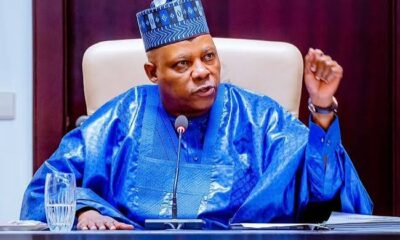

A Birthday Tribute to His Excellency Senator Kashim Shettima, Vice President of The Federal Republic Of Nigeria
ShareYour Excellency, On behalf of the National Executive Council, National Executive Committee and the entire membership of the Alumni Association...

Tax Reforms: Kaduna IGR Hits N10bn Monthly — Uba Sani
ShareFrom Agbo Emmanuel, Kaduna Kaduna State Governor, Uba Sani, has said recent tax reforms have significantly improved Nigeria’s revenue mobilisation,...


ADC Inaugurates Reconciliation Committee, Seeks Unity Ahead 2027
ShareThe African Democratic Congress (ADC) has inaugurated a national reconciliation and peace committee to strengthen unity, rebuild trust and resolve...

Akpabio Celebrates Shettima at 60
SharePresident of the Senate, Godswill Akpabio has felicitated Vice President Kashim Shettima on the occasion of his 60th birthday. Akpabio...


2027 Election: CAN Warns Politicians, Supporters to Leave ‘Jesus’ out of Political Struggles
ShareBy Laide Akinboade, Abuja The Christian Association of Nigeria (CAN), on Wednesday, warned politicians, and their supporters against dragging the...

NSCDC Arrests Two Armed Suspects for Terrorizing Legitimate Miners in Cross River
Share From Ene Asuquo, Calabar The Nigeria Security and Civil Defence Corps (NSCDC), Cross River State has disclosed that the command...

2027: Wike Raises the Alarm Over APC Govs, Backs Tinubu
ShareBy Laide Akinboade, Abuja The Federal Capital Territory (FCT) Minister, Nyesom Wike, has accused some governors of the All Progressives...

PFIPC Scandal: Reps Trace 58 Accounts to ‘Fake Agency’
ShareBy David Torough, Abuja The House of Representatives ad hoc committee investigating the purported Presidential Foreign Investment Promotion Council (PFIPC)...


10 Years. N1.2bn. 40+ Tertiary Institutions by 2026. OPay Is Here to Stay
ShareFor a Nigerian student, a scholarship can mean more than money. It can mean staying in school when a family...


NCS Sets Physical Screening for 2024/2025 Recruitment, Warns Candidates Against Absence
ShareBy Tambaya Julius, Abuja The Nigeria Customs Service (NCS) has fixed physical screening and documentation for successful candidates shortlisted in...