
view point
Nigeria’s Doctor Deficit and Surplus Unplaced Medical Graduates

By Abujah Racheal
Every morning, Dr Adamu Inusa checks his phone, hoping to find the email that will define the next phase of his medical career.
For 18 months, he has scanned the recruitment portals of federal teaching hospitals for a residency position, but the offer he worked for years to secure has yet to arrive.
He spent six gruelling years in medical school, endured prolonged strike, and completed the one-year housemanship.
After taking the Hippocratic Oath, he expected to begin building a career in Nigeria.Instead, he works 12-hour night shifts as a locum doctor in a private clinic in the Federal Capital Territory (FCT), while struggling to meet his financial obligations.
“To keep from starving, I work 12-hour night shifts as a locum doctor at a makeshift private clinic in the FCT, earning less per hour than a rideshare driver, while treating complex cases without basic equipment,” he said.
Inusa’s experience is shared, to varying degrees, by other young doctors seeking specialist training after housemanship.
It exposes a less-discussed dimension of Nigeria’s health workforce crisis: the country is losing doctors to migration, while some qualified doctors who want to remain are unable to find a clear pathway into specialist training.
Data from the Nigerian Association of Resident Doctors (NARD) indicates the severity of the country’s doctor shortage, with the doctor-to-patient ratio remaining far below what is required to adequately serve the population.
Yet alongside the shortage is another contradiction: Nigeria has doctors who are qualified and available to work, but many face fierce competition for limited residency positions.
After medical school and housemanship, doctors can practise as general practitioners. Those seeking specialisation in paediatrics, surgery, oncology, orthopaedics, or anaesthesia must secure residency positions at accredited tertiary hospitals.
Residency is a critical stage in the medical career pathway. But passing the necessary examinations does not guarantee admission.
According to registry data from recent examination cycles, more than 900 Nigerian candidates sat for the West African College of Surgeons (WACS) primary examinations across major centres including Ibadan, Abuja and Enugu, with about 73 per cent recorded as successful.
Similarly, the National Postgraduate Medical College of Nigeria (NPMCN) regularly clears hundreds of general practitioners who are academically and professionally qualified to proceed with specialist training.
At major training institutions such as the Lagos University Teaching Hospital (LUTH) and University College Hospital (UCH), Ibadan, hundreds of doctors compete for positions across numerous specialities.
LUTH, for instance, opens applications across several specialised fields, including anaesthesia and maxillofacial surgery.
In highly competitive recruitment cycles, a single teaching hospital can receive between 400 and 600 applications from qualified doctors seeking residency positions.
However, experts say the number of available places could be dramatically smaller.
Because of budget ceilings, structural underfunding and stagnant departmental quotas, funded positions across specialities may be between 30 and 50.
In some departments, including paediatrics and orthopaedics, only two or three doctors may be admitted in an entire recruitment cycle.
Dr Judith Nalukwago, a dental surgeon who advocates for young medical professionals affected by health-sector funding cuts, said hundreds of qualified applicants could be turned away because there were simply not enough training places.
“The country needs more specialists, yet its major training institutions are often unable to absorb the doctors seeking to become those specialists,” she said.
Dr Mohammad Suleiman, National President of NARD, said the situation had created a serious mismatch between demand for healthcare and opportunities for young doctors to progress professionally.
“We have a situation where the demand for care is astronomical, yet young doctors are being locked out of training.
“When the system creates administrative bottlenecks around the Medical Residency Training Fund (MRTF) and slot allocations, it leaves brilliant minds completely stranded,” he said.
Doctors waiting outside the residency system must keep applying, paying examination and application fees, and looking for ways to survive while their professional progression remains uncertain.
A doctor may complete years of training, housemanship and professional examinations, yet access to postgraduate training can ultimately depend on whether a hospital has an accredited and funded vacancy.
Doctors may be qualified to practise as general practitioners while remaining unable to enter the specialist programmes they need to advance their careers.
The problem is therefore larger than unemployment in the conventional sense. It is a question of whether Nigeria’s medical education system, postgraduate training capacity and workforce planning are moving in the same direction.
Medical schools produce graduates; housemanship prepares them for independent practice; residency develops the specialists Nigeria needs.
But when residency places fail to keep pace with the number of qualified doctors seeking them, a gap opens between graduation and professional advancement.
The Federal Government says it is investing in healthcare infrastructure, recruitment and workforce development.
The Minister of State for Health and Social Welfare, Dr Iziaq Salako, announced a N43 billion release for health-sector reforms, including N10.6 billion earmarked for the 2025/2026 MRTF.
Under the Nigeria Health Sector Renewal Investment Initiative, the government granted special recruitment waivers that added more than 20,000 healthcare personnel to the public-sector payroll.
Funding doctors already admitted into residency is different from creating additional accredited positions for doctors waiting outside the system.
With limited access to residency, some doctors turn to private facilities for locum work.
Stakeholders estimate that doctors working in parts of Lagos and Abuja may be earning between N80,000 and N150,000 monthly, depending on the facility, workload and number of shifts.
A clinical psychologist, Mr Phillip Dimka, said some private hospitals, aware of the desperation among young doctors, employed them on poor terms.
“Private hospitals, acutely aware of the desperation brewing in the medical community, recruit these overqualified general practitioners to run their entire facilities for a fraction of standard pay.”
Dimka said some doctors worked long shifts with inadequate equipment and limited access to consultant supervision.
“In these underregulated settings, young doctors face immense medical and legal risks,” he said.
Behind the statistics are graduates who invested years of their lives and significant family resources in becoming doctors.
Mr John Umoh, a civil servant and father of a 200-level medical student, said parents often sacrificed savings and other opportunities in the belief that their children would eventually become financially independent professionals.
“For some graduates, that expectation is delayed indefinitely. They continue to depend on ageing parents, struggle with rent and transportation, and accept whatever locum work is available,” Umoh said.
Mrs Martha Yohanna, a human resources manager, said the impact was also professional.
“Doctors who remain outside residency may continue to gain clinical experience through locum work, but they lack the structured progression, supervision and specialist development provided by formal training programmes.
“The longer they remain outside the system, the more difficult it can become to plan their careers. For a country already struggling to retain doctors, which represents another form of loss,” she said.
Stakeholders say the situation is worrisome as doctors continue leaving for the UK, the U.S., Canada and other countries in search of better opportunities.
Records indicate that more than 10,000 Nigerian-trained doctors are registered with the UK General Medical Council, while NARD has documented the continuing departure of resident doctors from Nigeria.
A doctor who cannot secure residency may eventually look abroad not because the desire to build a career has disappeared, but because the opportunity to build one at home has.
NARD has repeatedly linked migration to poor remuneration, difficult working conditions, manpower shortages and inadequate career prospects.
Dr Augustine Uchenna, a health entrepreneur, said the country needed accurate workforce projections showing how many doctors were graduating, entering housemanship and seeking residency, as well as how many specialists would be required.
“Recruitment processes must be transparent and predictable so that doctors understand how positions are allocated and why applications succeed or fail.”
He said private hospitals that depended heavily on locum doctors also needed stronger oversight to ensure temporary employment did not become a substitute for safe staffing and fair professional conditions.
“The objective should not be to force every doctor to remain in Nigeria. Rather, it should be to ensure that leaving is a choice, not the consequence of a system that has left qualified professionals with no viable route forward,” he said.
Recently, Inusa received information about registering for the Professional and Linguistic Assessments Board (PLAB) examination, a key requirement for doctors seeking to practise in the UK.
He said the message was not the residency offer he had been waiting for. It represented a different future.
It is about whether Nigeria can provide a professional future for someone it has spent years training.
For outside observers, Inusa’s departure from Nnamdi Azikiwe International Airport would likely be categorised as just another statistic in the country’s medical brain drain.
However, that label oversimplifies his journey. Leaving wasn’t his initial goal; his first instinct was to find a reason to remain in Nigeria.
This highlights the true gravity of the nation’s healthcare workforce crisis.
Analysts say Nigeria is not just losing doctors to only active emigration—it is losing them because systemic delays leave them waiting so long that departure becomes their only viable path forward.(NAN)
By Folasade Akpan
With Nigeria’s imported Bundibugyo Ebola patient now evacuated to Switzerland, the country’s health response has pivoted from active patient care to long-term monitoring, community engagement, and systemic readiness.
Nigeria confirmed its first imported case of Ebola (Bundibugyo strain) from a traveler arriving from Uganda on Oct.
20; the patient was stabilised before the evacuation.It is worth noting that the Nigeria Centre for Disease Control and Prevention (NCDC) says suspected cases reported in Yola, Adamawa, on Oct.
30, turned out negative for EVD after two rounds of testing.In spite of having no active cases left in the country, experts say public health authorities must maintain rigorous contact tracing, evaluate new alerts, and ensure the healthcare network remains equipped to detect any potential infections immediately.
The Coordinating Minister of Health and Social Welfare, Prof. Muhammad Pate, said Nigeria could potentially declare the outbreak over by Dec. 7, provided no further confirmed or probable cases emerge.
He said the date remained provisional, subject to validation of the 42-day countdown by the NCDC and the World Health Organisation (WHO).
“Any further case would require a fresh countdown in accordance with those criteria,” Pate said in a post on his official X handle.
The countdown therefore represents more than a date on the public health calendar.
It places continued contact monitoring, prompt investigation and the ability to detect new cases at the centre of Nigeria’s response.
The WHO Regional Director for Africa, Dr Mohamed Janabi, said Nigeria would continue monitoring 52 contacts, while Switzerland would manage the patient and follow up her husband.
The husband, who travelled with the patient during the medical evacuation, was placed in isolation at University Hospital Zurich, while she received treatment at Geneva University Hospitals.
The transfer followed clinical improvement after Nigerian health workers managed the patient through the acute phase of the illness.
However, the Academy of Medical Sciences of Nigeria (AMedS) cautioned that clinical improvement did not necessarily mean the patient was no longer infectious.
Its President, Prof. Osato Giwa-Osagie, urged the authorities to sustain contact monitoring and complete the prescribed 21-day follow-up for exposed persons, including health workers and domestic staff.
The academy’s position underscores a central feature of infectious disease control: removing a patient from the country does not remove the need to investigate potential exposures.
The NCDC Director-General, Dr Jide Idris, said public health teams had identified people who might have been exposed and monitoring them for 21 days after their last possible exposure.
“Being identified as a contact does not mean that you have Ebola,” Idris said.
The Minister of Information and National Orientation, Alhaji Mohammed Idris, has also directed agencies under his ministry to intensify public education on Ebola.
He said accurate information should reach communities in languages they understood, with clear guidance on transmission, prevention and where to report suspected cases.
The minister directed the National Orientation Agency, Nigerian Television Authority, Federal Radio Corporation of Nigeria, Voice of Nigeria and the News Agency of Nigeria to work with health authorities on public information.
He also urged Nigerians to rely on official information and avoid spreading unverified claims.
“The Federal Government is taking every necessary step to protect Nigerians.
“Accurate and timely information is one of our strongest defences,” the minister said.
Health observers say there is a need for a response system that enables healthcare workers to recognise possible exposure risks, separate suspected cases from other patients, and notify public health authorities without waiting for laboratory confirmation.
To this end, the NCDC has also mobilised Infection Prevention and Control (IPC) professionals and media fellows to support preparedness and improve communication.
Idris stressed the need for active rather than passive containment.
“We want active containment. We don’t want to be passive at all. We want to go at it with all that we have,” he said.
Prof. Sade Ogunsola, Vice-Chancellor of the University of Lagos, said infection prevention needed to remain part of routine healthcare practice rather than an emergency measure.
“IPC is really about the routine, I would say the boring work we do in healthcare facilities every day, where, like soldiers, you prepare for war in peacetime,” she said.
Her observation points to the importance of maintaining trained personnel, protective equipment, safe waste management and functional isolation arrangements before another suspected case arrives.
Medical laboratory expert Stephen Oricha also called for adequate protective equipment in health facilities, including those at the grassroots.
Oricha who is the Deputy Director, Medical Laboratory, University of Abuja Teaching Hospital, warned that healthcare workers could be exposed if protective equipment and infection prevention measures were inadequate.
“As a healthcare worker we must exercise caution when attending to patients, we must ensure that preventive measures are taken,” Oricha said.
He said protective equipment should not be limited to major government hospitals because workers in local facilities also needed protection.
Medical laboratory expert Stephen Oricha also called for adequate protective equipment in health facilities, including those at the grassroots.
Oricha, who is the Deputy Director, Medical Laboratory, University of Abuja Teaching Hospital, warned that healthcare workers could be exposed if protective equipment and infection prevention measures were inadequate.
“As a healthcare worker we must exercise caution when attending to patients, we must ensure that preventive measures are taken,” Oricha said.
Experts say the laboratory system is another part of the response that must remain functional beyond the immediate emergency.
In addition, stakeholders say community-based surveillance may also contribute to early detection.
To buttress this, the Association of Community Pharmacists of Nigeria urged the federal government to adopt a nationwide “Pharmacy First” protocol.
The association’s National Chairman, Mr Ezeh Ambrose, said community pharmacies could help identify suspected cases and refer patients promptly to designated facilities.
“We cannot afford to repeat past missteps where delayed grassroots surveillance allowed outbreaks to spiral out of control,” he said.
The proposal would require clear clinical guidance, referral pathways, surveillance procedures and coordination with public health authorities.
Its effectiveness would depend on how well these arrangements were designed and implemented.
Nigeria’s eventual success depends not just on treating the initial patient, but on maintaining long-term surveillance and reacting swiftly to new data.
While the tentative Dec. 7 countdown sets a timeline, it does not lessen the need for constant alertness.
To retain public trust, health officials must communicate transparently, support monitored individuals, and prove their readiness through action rather than rhetoric.
The imported case tested the nation’s defense; the upcoming challenge is keeping these response systems well-funded, effective, and trusted.
All in all, stakeholders say the patient’s evacuation must signal a shift into tighter containment, not the conclusion of preventive efforts.(NAN)
view point
Attempted Suicide in Nigeria: Legislative Reform, Economic Hardship and the Right to Human Dignity
By Oluwaleye Adedoyin Grace
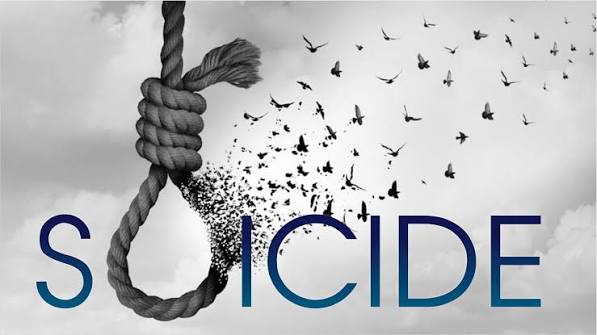
Should a person who survives a suicide attempt be punished or helped? This question challenges Nigeria’s continued criminalization of attempted suicide under section 327 of the Criminal Code Act and section 231 of the applicable Penal Code.
In a society grappling with economic hardship, unemployment, poverty and limited access to mental-health services, the appropriateness of criminal punishment deserves serious reconsideration.
Although these challenges do not explain every suicide attempt, they highlight the need to examine the circumstances in which people experience severe distress.This article argues that Nigeria should replace criminal punishment for attempted suicide with a support-centered approach that prioritizes prevention, medical care and rehabilitation, while maintaining appropriate safeguards and accountability.
THE HUMAN COST OF ECONOMIC HARDSHIP
Behind the debate on attempted suicide lies a painful reality that the law must not ignore: the struggle to survive. Imagine a father who wakes up every morning wanting to provide for his family but has been laid off and can no longer afford their basic needs. Imagine a single mother who spends the entire day selling pepper by the roadside, yet returns home unable to provide enough food for her four children. Imagine a graduate who spent years studying, holding on to the promise of a better future, only to face endless job applications, rejection and uncertainty. Imagine people sleeping under bridges, not because they have chosen such a life, but because they have nowhere else to go.
For some Nigerians, survival has become a daily struggle against hunger, homelessness and hopelessness. Behind closed doors, people carry burdens that are invisible to the public: unpaid bills, empty kitchens, disappointed children and the painful feeling of being unable to provide for those who depend on them. Although economic hardship does not explain every suicide attempt, its possible contribution to severe emotional distress cannot be dismissed.
This raises a fundamental question: when a person reaches a point of despair, should the law respond primarily with punishment, or should it also examine the circumstances in which that person has been struggling to survive? Criminalizing attempted suicide without adequately addressing the need for medical care, psychological support and social protection risks treating the visible crisis while neglecting some of the conditions that may have contributed to it.
A society must ask itself whether it is doing enough to help people survive before it punishes those who have lost the strength to keep fighting. Protecting human life requires more than prohibiting suicide; it requires building a society in which people in distress can access meaningful support, dignity and hope.
LEGAL FRAMEWORK GOVERNING ATTEMPTED SUICIDE IN NIGERIA
Section 327 of the Criminal Code Act criminalizes attempted suicide as a misdemeanor punishable by imprisonment for up to one year. Section 231 of the applicable Penal Code also criminalizes attempted suicide, prescribing imprisonment, a fine, or both.
The Constitution of the Federal Republic of Nigeria 1999, particularly sections 33 and 34, protects the right to life and human dignity. Although these provisions do not automatically invalidate the criminalization of attempted suicide, they are relevant to debates about whether punishing a person in distress is consistent with a humane approach to protecting life.
The National Mental Health Act 2021 provides an important framework for mental-health care in Nigeria. However, its existence does not by itself resolve the conflict between criminal punishment and a healthcare-centered response.
Reforming the law therefore requires reviewing the relevant criminal provisions and strengthening mental-health services, and an improved economic system so that decriminalization is accompanied by practical support.
ECONOMIC HARDSHIP AND THE CIRCUMSTANCES BEHIND SUICIDE ATTEMPTS
Economic hardship, unemployment, homelessness and food insecurity may contribute to severe distress for some individuals. In Nigeria, the rising cost of living has intensified concerns about access to basic necessities, particularly among vulnerable households and children living on the streets.
However, suicide attempts do not have a single cause. Mental-health conditions, personal experiences and social circumstances may also play significant roles. It would therefore be inaccurate to attribute every attempt to poverty or economic hardship.
The important legal question is whether criminal punishment adequately addresses the circumstances surrounding suicidal distress. Where a person needs medical attention, psychological support or social assistance, prosecution alone may fail to address those needs.
Nigeria should consequently consider a broader response that combines appropriate healthcare with effective social protection, while recognizing that each person’s circumstances require individual assessment.
CRIMINAL PUNISHMENT OR MEDICAL INTERVENTION?
Supporters of criminalization may argue that punishment discourages suicide attempts and reinforces the value of human life. However, the effectiveness of imprisonment as a deterrent requires evidence, and protecting life should involve more than prohibiting harmful conduct.
Criminal prosecution may also expose vulnerable individuals to stigma and discourage them from seeking help. These are important concerns when considering whether the criminal justice system is the most appropriate response to a person who survives a suicide attempt.
A healthcare-centered approach would priorities medical assessment, crisis intervention, counselling and rehabilitation according to individual needs. Decriminalization, however, must not mean abandoning people in distress. It should be accompanied by accessible mental-health services and appropriate safeguards for personal liberty and dignity.
Nigeria should therefore reconsider whether criminal punishment achieves its intended purpose more effectively than a properly funded system of prevention and support.
DECRIMINALIZATION AND THE RISK OF ABUSE
One concern about decriminalization is that individuals might attempt to exploit government assistance programmes. However, without reliable evidence, it would be speculative to conclude that removing criminal penalties would encourage suicide attempts for financial gain.
Nigeria can address potential abuse through transparent eligibility criteria, proper verification and accountability in the administration of public assistance. Emergency medical care should remain separate from eligibility for financial benefits, ensuring that people in crisis receive appropriate treatment without automatically qualifying for cash assistance.
The possibility of fraud should not overshadow the need to protect vulnerable individuals. A well-designed system can safeguard public resources while ensuring that people experiencing suicidal distress receive appropriate care and support.
RECOMMENDATIONS AND THE WAY FORWARD
Nigeria should review the Criminal Code Act and the applicable Penal Code provisions to replace criminal punishment for attempted suicide with a support-centered approach.
Government should strengthen mental-health services, emergency care, counselling and social protection for vulnerable individuals. Clear institutional responsibilities, adequate funding and safeguards against the misuse of public resources are also essential.
The government must look beyond criminal punishment and confront the economic conditions that leave many Nigerians struggling to survive. Tackling unemployment, reducing poverty, improving access to affordable food and housing, and creating sustainable employment opportunities should form part of a broader suicide-prevention strategy. A father who has lost his job, a mother struggling to feed her children and a graduate unable to secure employment need more than laws that punish suicidal behavior; they need practical opportunities and support to rebuild their lives.
Finally, reliable research and public awareness should guide policy decisions and help evaluate the effectiveness of suicide-prevention measures. Decriminalization must be accompanied by practical support to ensure that people in distress are not left without assistance.
CONCLUSION
Nigeria should reconsider the criminalization of attempted suicide and priorities prevention, medical care, rehabilitation and improved economic condition over punishment. Although protecting human life remains essential, criminal prosecution alone cannot adequately address the complex circumstances surrounding suicidal distress.
A support-centered approach, backed by accessible mental-health services, effective social protection and appropriate safeguards, would provide a more humane response. Ultimately, protecting life requires not merely punishing those who attempt to end theirs, but ensuring that help is available when they need it most.
Oluwaleye Adedoyin Grace, LLB. (Hons.)Join Rights Groups.
By Chidi Odinkalu
Nearly 20 years ago, while stumping for his party, the Peoples’ Democratic Party, out-going president, Olusegun Obasanjo, decided to confront head-on morbid rumours about the health of his hand-picked successor.
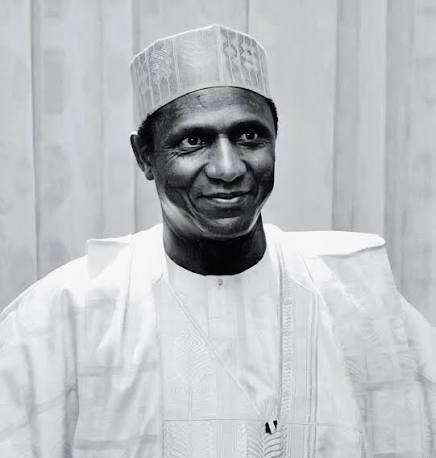
Umaru Musa Yar’Adua, then governor of Katsina State and the president’s man for the job, was said to be stricken in a hospital in Germany. From the podium, Obasanjo dialled before bellowing, “Umoru, are you dead?!” It was obviously not a question for a dead man.Yar’Adua was mercifully alive. He returned in time to be announced winner of a presidential election in 2007 widely described as “a charade”.
His tenure was dogged by concerns about ill-health until his death in May 2010.Presidential infirmity was not unknown to Nigeria.
Ibrahim Babangida was only 46 when he was flown out of the country for medical attention in 1986. The cause, Nigerians were informed, was “Radiculopathy”, a multi-syllabic tongue-twister that sent many newsrooms consulting diagnostic standard manuals.
In November 2009, President Yar’Adua required overseas hospitalization for “Acute Pericarditis.”
In the first 46 months of his first term as civilian president from 2015 to 2019, Muhammadu Buhari spent 407 days outside Nigeria, with about 242 days or nearly 60% of that devoted to health tourism overseas. He was 72 when he was inaugurated as civilian president, an age at which infirmity is not unknown in the ordinary course of human events.
Four things emerge from these instances. First, the wellbeing of a president is a legitimate matter of public and civic concern.
Second, like all human beings, Presidents can and do from time to time take ill. Babangida and Yar’Adua were much younger than President Tinubu is today, whatever his age may be.
Third, there was a time when presidential handlers believed they owed the country the benefit of some disclosure about the wellbeing of the President or lack of it. That, it seems, is history.
Fourth, irrespective of the health status of the president, the country must always avoid a leadership vacuum.
The twin crises of power and succession that accompanied the final months of the Umaru Musa Yar’Adua presidency brought this last point home with urgency.
In response, the National Assembly enacted a constitutional amendment designed to keep the country running when a president needs to take time off for running repairs. All it requires is for the president to temporarily transfer power to his Vice and notify the National Assembly appropriately.
On-going concerns about the health status of the incumbent suggest a presidency deeply enamoured of déjà vu or, as the Punch newspaper says, invested in treating constitutional provisions as an “ornamental” inconvenience.
In office for 41 months so far, President Bola Ahmed Tinubu has spent over 270 days (about 22%) outside the country, including over 100 days spent on 13 different trips of varying descriptions to France alone. The reason for the frequency of his visits to France is credibly suspected to be medical.
Rather than a temporary transfer of power as the constitution allows, it seems he may prefer instead to outsource it. To whom is not clear, but examples from other places could help.
In a study published in 1999, Herbert Abrams, writing about the United States, recounts that “Presidential infirmity, accompanied by a failure to fully inform the public, has been stamped indelibly on our history during the past two hundred years. Fourteen of the eighteen American presidents in the twentieth century had significant illnesses while in office….that were either concealed from the American people or underreported.”
Take for instance the case of Dr. Woodrow Wilson, the Nobel Prize-winning 28th president, who took the United States through the First World War and inspired the League of Nations. Returning home from Europe in July 1919 from signing the Treaty of Versailles which ended World War 1, Wilson preoccupied himself with the ultimately futile effort to persuade his country into the League.
In the middle of this effort, on October 2, 1919, President Wilson suffered a stroke. According to medical records released only in 1991, the stroke was so massive that it would have been “impossible for him ever to achieve more than a minimal state of recovery.”
Yet, as narrated by Christopher Andrew in his 1995 history of U.S. secret intelligence, For the President’s Eyes Only, Wilson’s second wife (the first died in 1914), Edith Galt, helped to “suppress accurate information about his health and to ensure that he continued as president for the remainder of his second term” until 1921.
On the other side of the Atlantic, the health of President Wilson’s contemporary and ideological adversary, Vladimir Ilich Lenin, was the subject of equally intense scheming between a shrewd wife and ruthless usurper. In 1922, Lenin elevated Josef Stalin to the position of General Secretary of the Central Committee of the Communist Party with sweeping powers over party matters. Shortly thereafter, Stalin drew Lenin’s ire when he (and another senior Central Committee member also from Georgia, Sergo Ordzonikidze) annexed Georgia.
Ill-health stayed in the hand of an angry Lenin who was struck down by a massive stroke in December 1922. To preserve the life of the Party’s greatest asset, the Politburo under Stalin’s influence restricted Lenin to working for a mere 10 minutes daily. Upon learning that Lenin was doing more, Stalin accosted Lenin’s wife, Nadezhda Krupskaya, warning her rather darkly, as recounted by Stalin’s biographer, Simon Sebag Montefiore, that if she did not ensure compliance “the Central Committee would appoint someone else as Lenin’s wife.”
In France, President Georges Pompidou repeatedly denied that he had anything less worrisome than a common cold until his death in office of cancer in 1974.
In 1981, Pompidou’s successor, Valéry Gisgard d’Estaing, lost in a close election to the inscrutable Francois Mitterrand. In the same year, President Mitterrand learnt that he had prostate cancer that had metastasized to the bones. Mitterrand promptly declared this a State Secret. Hiding it even from his wife, he ran for and won a second seven-year term in 1988, promising France that he was in robust health. In his debate with Jacques Chirac in 1988, Mitterrand infamously faced a more formidable challenge from an overwrought bladder in desperate need of relief.
As the Washington Post reported in January 1996, “Mitterrand’s cancer reached such a critical state in late 1994 that he was no longer able to carry out his duties and spent most of his time resting in bed.” The week after Mitterrand’s death in January 1996, his doctor, Claude Gubler, published a book, Le Grand Secret, detailing this grand deception. French authorities promptly banned the book because it allegedly breached medical confidentiality.
Closer home, Tunisia’s founding president for 32 years, Habib Bourgiba, chose to stay in office after being diagnosed with arteriosclerosis in 1983. In November 1987, Bourgiba, already enfeebled by dementia, gave his shocked compatriots a prime-time disquisition on the state of his testicles. His once-loyal prime-minister, General Zine Abdine Ben-Ali mercifully moved to confine Bourgiba under medical detention in the appropriately-named Monastir, where he died in 2000.
When he went on trial in 1994, shortly after his overthrow at the end of 31 years as Malawi’s leader, the court ruled Dr. Hastings Banda physically and mentally unfit to attend his own trial. He had in fact been “senile for years”. Yet, for 31 years until his ouster earlier in the same year, Dr. Banda held Malawians in thrall as the all-knowing Ngwazi. Real power had been outsourced to his “Official Hostess”, Mama Cecilia Kadzamira and her uncle, John Tembo.
In Malawi also, a dead president was wilfully mis-represented as merely unwell. After he died on 5 April 2012, Malawi’s presidency contrived to export the dead remains of President Bingu wa Mutharika to South Africa to enable them buy time for an unconstitutional succession by his brother and then foreign minister, Peter Mutharika. They mis-led Malawians with the announcement that the president “had…taken ill and had been flown to South Africa for specialist treatment.”
Whatever the medical dictionaries may say, the lesson of history is quite clear: infirmity can outsource the presidency under cover of “a bodyguard of lies.” Nigeria was supposed to have made this history in 2010, but the lessons do not seem to have been learnt.
A lawyer and a teacher, Odinkalu can be reached at chidi.odinkalu@tufts.edu




2027: Tompolo Deploys 50 Vehicles in Enugu, Cross River for Tinubu’s Re-election
ShareGrand Patron of the PBAT Door-to-Door Movement, High Chief Oweizidei Government Ekpemupolo, has donated 50 vehicles for President Bola Tinubu’s...


Customs Generates N1.4tn Revenue in Two Months
ShareBy Julius Tambaya, Abuja The Nigeria Customs Service (NCS) generated a total of N1.419 trillion in revenue between September and...

Tegbe Assures Nigerians of Swift Restoration of Power Supply
ShareThe Minister of Power, Joseph Tegbe, has assured Nigerians experiencing reduced electricity supply in parts of the country of a...


WAHO Leads Drive to Harmonise Subspecialty Training Across ECOWAS
ShareBy David Torough, Abuja Accredited health professional colleges, training institutions and regulatory bodies across the Economic Community of West African...


Bishop Oyedepo Re-affirms strong support for Pastor Ibiyeomie, Pastor Komaiya’s Ministry
ShareBy David Torough, Abuja The Founder and Presiding Bishop of Living Faith Church Worldwide, Bishop David Oyedepo, has reaffirm strong...


West Africa: How WAHO Successfully Harmonized Procedure Manuals for Health Disciplines and Professions
ShareBy David Torough After three days of serious brain-storming sessions in Abuja, the West African Health Organization (WAHO), has successfully...


2027: CAN Seeks Return of Sacked Traditional Rulers in Kaduna
ShareFrom Shabanyan Kantiok, Kaduna The Christian Association of Nigeria in Chikun Local Government Area of Kaduna State has urged Christian...


OPay Opens New Kano Office, Strengthens Commitment to Nigeria’s Financial Inclusion
ShareOPay, Nigeria’s leading digital bank, has opened a new office in Kano State, strengthening its presence in Nigeria and bringing...

Rigging Years Before Elections: Why Tinubu, Parliament Favours Staggered Balloting
Share Silhouette of Donald Andoor e‐mail; doandoor@gmail.com There is a growing need for Nigerians to look beyond the ballot box and...

Akpabio Congratulates Nigeria’s Golden Girls, Flamingos
ShareThe President of the Senate, Godswill Akpabio has sent a hearty congratulations to the Nigerian Under-17 Women’s National Team on...