
NEWS
Tinubu’s Return: An Update

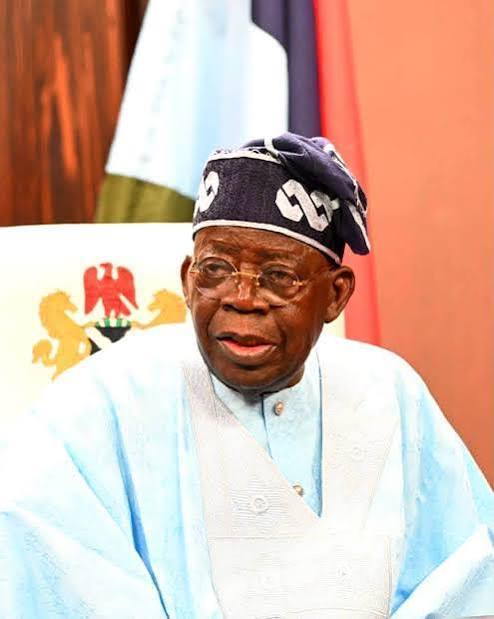
By Reuben Abati
Exactly a week ago, President Bola Ahmed Tinubu, now jokingly renamed a citizen of Kano with a Northern-sounding name Ashiru Bala Ahmadu Tanimu, whatever that means by former Governor Abdullahi Danguje, returned to Nigeria after a controversial 30-day so-called working leave in Europe.
His 30-day working leave was in every sense a violation of the 1999 Constitution, the idea of “a working leave” in itself being a misnomer, the failure to obey the provisions of Sections 145 (1) and (2) an affront, and historically a reminder of similar acts of contempt under the Umar Yar’Adua and Buhari administrations. The bigger scandal is that the President returned and there has been no attempt either on his part or his government, to show remorse or a capacity to learn any lessons from their acts of omission.When the President arrived at the Murtala Muhammad International Airport last Tuesday, a large crowd of political bootlickers and fortune seekers were on hand to welcome him, and in a moment of excitement the President remarked that whatever had been said in his absence was nothing more than mere rumour which should be expected during a political season, but he was back, “ready to kick, ready to work”, and “nothing was wrong”.
He may have been referring to speculations about the state of his health but he was also dismissing concerns about his prolonged absence and accustomed non-appearance at the United Nations General Assembly (UNGA), which fell within the same period. He was literally telling the people, signature style: “e lo fo’kan bale” (don’t worry, everything is under control).
Since then, the President has been kicking, and as predicted, Nigerians have behaved as if their concerns no longer matter, kept aside until the President travels again, and the people begin, all over again to quote the Constitution, the most abused totem in Nigeria’s democracy.
A day after his arrival at his private Ikoyi residence, the President went to the Wole Soyinka Centre for Arts and Culture (formerly known as Nigeria’s National Theatre) to watch the premiere of a documentary on the late Chief MKO Abiola, martyr of the June 12 election struggle.
The movie curated by Ose Oyamendan, ex-Weekend Concord, ex-journalist turned American-based movie-maker is a tribute to the art of remembering, memory as culture and the signification of history. Tinubu’s endorsement and presence evoked afresh the connections between the past and the present at both personal and political levels. MKO Abiola was the other Yoruba man who wanted to be President who was sabotaged, before him was Chief Obafemi Awolowo who was similarly denied, and Tinubu is the kinsman who fulfilled the ambition.
MKO Abiola preached a message of hope, Hope ’93, and Farewell To Poverty. Tinubu is preaching a message of Renewed Hope and Prosperity. His identification with MKO Abiola’s symbolism, in the city of Lagos, before he embarks on a nationwide campaign for his bid for a second term in office is perhaps a fitting invocation and libation to an ancestral spirit that preceded his dance in the complex arena of Nigerian presidential politics.
On Thursday, 1 October, Tinubu at 7 a.m., addressed Nigerians on the occasion of the country’s 66th Independence Anniversary, a customary duty that he needed to perform. It was a well-written, stylishly toned speech, which did the needful, but avoided any drama or long promises. In other words, it was carefully measured.
The president paid tribute to the hopes and aspirations, the background of the country’s independence and “the indomitable spirit” of the people which has kept us together through the thick and thin of “military rule, economic crises, insecurity, and political upheaval”.
He saluted the people’s belief that the country will be better, their enduring faith, the farmer, the trader, the teacher, men and women of the Armed Forces and Security Services.
He spoke about the difficult circumstances in which he met Nigeria when he assumed office in 2023: a sick patient in a diseased state, cancer to be specific which was being treated with morphine and prayers for a miracle. “When this administration assumed office, we resolved to do things differently. We chose to exercise the cancer… Our reforms did not create weaknesses in our economy. They confronted them”, he said.
The President proceeded to list the achievements of his administration in three and a half years, which he said “are not idle claims.” but concrete achievements which have taken Nigeria to “a turning point”. He then promised to take Nigeria from the age of reforms to the “age of prosperity.” He intoned: “We have passed through our own Red Sea…The Promised Land before us is a Nigeria of abundance and opportunity; a nation where prosperity is broadly shared… Our destination is in sight. Our foundations are strong. Our direction is clear…”
Thus, the President spoke in broad, exhortatory terms. There were no specifics, just a reaffirmation of commitment to the Nigerian project. He made no mention of the challenge of insecurity in the land and what he intends to do differently. He spoke about the rising cost of living, and the need to replace poverty with prosperity.
The broadcast studiously avoided the all-important subject of the forthcoming 2027 general elections which would be conducted by the Tinubu administration. Whoever wrote that speech did not consider these or any other concrete policy declarations important enough, not even least of all, the nationwide reduction in transport fares through the deployment of CNG and EV vehicles which the President had earlier directed should come into effect on 1 October.
The speech fed us with an additional dosage of hope and promises. We got a good rhetorical, enjoyable flow, without much substance. Those who expected the President to say more were disappointed. But no one could fault the President’s recognition of “the indomitable spirit” of the Nigerian people, also praised by his spouse, the First Lady, Chief Oluremi Tinubu in a statement as the journey of “a resilient nation”, and by the Chief Justice of the Nation, Justice Kudirat Kekere-Ekun as “the Nigerian spirit” which “has remained a source of strength.”
Like Mrs Tinubu and the CJN, other leaders, especially state Governors, preached the message of unity, love, accountability, patriotism, progress, optimism, peace, and responsible citizenship. This was reflected in the sentiments expressed by the majority of Nigerians at home and the diaspora.
At home, many of us wore the green and white national colours, concert parties were staged, a Chaos in the Ring celebrity boxing event was organised by Balmoral Promotions at the Federal Palace Hotel at which Carter Efe knocked out Speed “Akpi” Darlington and Phyna (Josephina Otabor) pushed breathless, exhausted Nkechi Blessing to the canvas. In the United Kingdom, the Nigeria-Britain Association, the Nigeria High Commission, and First Bank UK held special cultural events. In New York, United States, the Nigerian community held a cultural parade which was attended by the Mayor of New York City, the Uganda-born Zohran Mamdani. Across Canada and Asia, Nigerians celebrated – further underscoring the point made in this column last week, about the capacity of the average Nigerian to forever forage for faith, and embrace hope in the midst of life’s toughest challenges.
But politics, and this is a political season, is also Nigeria’s problem. We play politics with everything. This is a country blessed with great potential and human assets, but when it comes to politics, Nigerians do not know where to draw the line. We do not have thresholds of caution when restraint and modesty are required. We love the game of one-upmanship.
Politics for the average Nigerian office-seeker means selfish interest and not what is best for the nation. While Nigerians celebrated, last weekend, opposition political leaders chose to focus on the negative. They dismissed Tinubu’s reforms as ineffectual, and the promise of prosperity as delusional. Presidential candidate of the African Democratic Congress (ADC), Atiku Abubakar who held a parallel broadcast asked: “Bola, where is this prosperity?” He in fact kept calling the president by his first name, to show his disregard for the incumbent, which was unnecessary. He condemned the ruling government’s removal of petrol subsidies.
The Makinde/Daura leadership of the Allied Peoples Movement (APM) dismissed the President’s speech as a “rhetorical exercise, bereft of solutions”. Ini Ememobong, spokesperson of the Tanimu Turaki-led branch of the People’s Democratic Party (PDP) described the Tinubu administration as the Pharaoh chasing Nigerians, while Nigerians are in the Red Sea of “economic pain”. Atiku says “Bola Tinubu calls it prosperity but Nigerians can hardly afford to live”, a sentiment echoed by other opposition leaders including Mr Peter Obi, presidential candidate of the Nigeria Democratic Congress (NDC), who focused on what he called “worsening poverty, insecurity, unemployment, hunger and other socio-economic challenges facing Nigerians.”
The Nigeria Labour Congress (NLC) through its president, Comrade Joe Ajaero, also complained that Tinubu’s declared “age of prosperity” is yet to reach Nigerian workers. The NLC therefore demanded: a new national minimum wage for workers without further delay, reduction in the pump price of petrol, and transportation costs, as well as the cost of governance, tax relief, and improvement in the living conditions of workers.
On Friday, 2 October, public sector workers under the auspices of the Joint National Public Service Negotiating Council (JNPSNC) embarked on a three-day nationwide warning strike. They want fuel price to be reduced to N500 per litre, salary adjustments and payment of allowances, and action on rising living costs, inflation and electricity tariffs. Thus, President Tinubu may have had a four-week leave from Nigeria’s pressing problems, amid the objections of the opposition, he has now returned to meet the same problems in full force.
A President going on leave does not necessarily eliminate a country’s problems, he will return to carry the same load that he abandoned. Tinubu says he is ready to kick, and ready to work. He will have a lot to worry about as he kicks and works.
Since he returned, the London-based The Economist newspaper has published that despite the proclaimed hardship in Nigeria, growing public discontent and the best efforts of the opposition, he may still likely win the presidential election in 2027 considering the power of incumbency, the likely poor voter turnout, the inability of the opposition parties to forge a coalition, the acceptance of a Muslim-Muslim ticket, and superior financial capacity.
The ADC has pooh-poohed the story, stating that “a forecast is not a verdict” and that in any case, the projection is not based on any scientific poll. Tinubu has also been received by familiar patterns. Prospective NYSC candidates, about 20 of them, have been kidnapped on their way to NYSC Orientation camps in Abia and Akwa Ibom states. A military aircraft, NGR 931, has also crashed near the Naval Airbase in Igbokoda, Ondo State, resulting in the death of all the 32 persons on board.
There have also been worries and speculations about the Presidents’ health, with the opposition watching his every step, looking for ready stuff for propaganda.
Yesterday, he returned to Abuja, after spending six days in Lagos, and five weeks out of Abuja. As he settles down again in his office, one of the first things he needs to do, is to put his party, the APC in order, call his associates to order, restore order in the polity, and not be deceived into thinking that all is well, especially as the Senate President has promised him that the National Assembly will continue to be “worthy partners” of the Federal Executive.
Senate President Godswill Akpabio and his colleagues may make a joke out of the recent violation of the Constitution, thinking that their work is a joke, but the President needs to be reminded that even if the National Assembly forgets, the people will remember his recent abuse of the Constitution.
In Edo State, the APC Party Chairman, Jarret Tenebe has been shown in a video threatening that “AK-47 fire” would be the most appropriate response to anybody who votes or works against the APC. He also warned Atiku and Peter Obi or any other political leader not to take the risk of coming to Edo State for campaigns, without the governor’s permission or else. Or else, what? He and his likes must be restrained.
In parts of the country, the security agencies are also said to be harassing those who wear “Tinubu Must Go” T-shirts. Nobody should be arrested or detained just because they are anti-Tinubu. Democracy is about choice and other basic freedoms.
The President must come out publicly and decry violence. Festus Keyamo, the Minister of Aviation and Aerospace Development has provided some balance by indicating that opposition party members have also been aggressive towards the ruling APC party, pulling down and defacing posters of its members, and pretending to be the ones under siege. It is unfortunate that politicians are not respecting the terms of the Peace Accord that they signed.
The first task before the President is to champion the cause of peace. His own ambition and that of others, To Whom It May Concern, is not worth the threats of violence and mayhem overtaking the on-going 2027 process. Tinubu must lead. Leaders of the opposition parties must also restrain their supporters. Politics must not become war. Nigeria must not implode because of the 2027 elections. Politicians should be made to remember that when the elections are over, won and lost, there must still be a country to govern.
Reuben Abati, a former presidential spokesperson, writes from Lagos.

By Tony Obiechina, Abuja
The Monetary Policy Committee (MPC) of the Central Bank of Nigeria (CBN) has retained the benchmark interest rate at 23 per cent, citing the need to consolidate gains in inflation moderation amid emerging risks from election-related spending, increased festive season expenditure and global energy price uncertainties.
The CBN Governor, Olayemi Cardoso, announced the decision on Tuesday at the end of the committee’s 308th meeting, held on November 23 and 24, 2026, in Abuja, with 10 members in attendance.
Cardoso said, “The Committee decided as follows: retain the Monetary Policy Rate at 23 per cent.
”The committee also retained the Standing Facilities Corridor at plus 50 and minus 300 basis points around the Monetary Policy Rate (MPR). It maintained the Cash Reserve Requirement (CRR) for deposit money banks at 45 per cent, merchant banks at 16 per cent and non-Treasury Single Account public sector deposits at 75 per cent.
The decision follows the 350-basis-point reduction in the benchmark interest rate from 26.5 per cent to 23 per cent in September 2026. The apex bank had earlier reduced the rate by 50 basis points in February before retaining it at subsequent meetings ahead of the September adjustment.
Explaining the decision, Cardoso said although headline inflation had moderated for five consecutive months, the committee considered prevailing economic developments and potential inflationary pressures that could undermine the progress recorded.
He said the anticipated increase in spending associated with the end-of-year festive season and election-related activities could stimulate aggregate demand and exert upward pressure on prices.
The committee also expressed concern over the ongoing conflict in the Middle East, which could sustain pressure on global energy prices, as well as adverse weather conditions that could disrupt food production and supply.
According to the latest Consumer Price Index report released by the National Bureau of Statistics (NBS), Nigeria’s headline inflation rate declined to 14.06 per cent in October 2026 from 14.63 per cent in September, representing a reduction of 0.57 percentage points.
Core inflation also fell to 10.78 per cent from 12.95 per cent, while food inflation moderated to 19.13 per cent from 19.59 per cent, reflecting easing price pressures on processed food and farm produce following the commencement of the harvest season.
Cardoso attributed the sustained moderation in inflation to exchange rate stability, improved monetary policy transmission and the impact of the CBN’s restrictive monetary policy stance.
He also disclosed that economic activities had continued to expand, with the Composite Purchasing Managers’ Index rising from 53 points in September to 53.2 points in October, indicating improved performance across the industrial, agricultural and services sectors.
Responding to questions from journalists, the governor said the September interest rate adjustment was yielding the intended results, noting that interbank lending rates were moving closer to the lower band of the Standing Facilities Corridor.
He added that rates on Open Market Operations instruments and Treasury bills had moderated, while the gap between the benchmark interest rate and prevailing market rates had narrowed considerably.
Cardoso also disclosed that credit to the private sector was gradually recovering, expressing satisfaction with the improvement in lending activities.
He explained that the September adjustment was designed to align the benchmark interest rate with prevailing market realities and improve monetary policy transmission, rather than signal a departure from the bank’s restrictive monetary policy stance.
On concerns over recent pressure on the naira and the decline in external reserves, the CBN governor described the developments as temporary and largely seasonal, expressing confidence in the sustainability of exchange rate stability.
Nigeria’s gross external reserves stood at $54.02 billion as of November 17, 2026, providing cover for 10.26 months of imports of goods and services.
Cardoso attributed the recent foreign exchange market volatility to year-end portfolio adjustments by foreign investors, increased demand for foreign exchange by domestic businesses seeking to hedge against future risks and rising election-related expenditure.
He further disclosed that diaspora remittances exceeded $900 million in the preceding month, adding that Nigeria’s current account surplus and sustained remittance inflows would strengthen the country’s external buffers.
The governor assured Nigerians that the apex bank would continue to deploy available policy measures to preserve exchange rate stability.
On the recently signed Memorandum of Understanding between the CBN and the Nigerian National Petroleum Company Limited (NNPCL), Cardoso said the agreement followed months of consultations between both institutions.
He explained that the partnership was designed to improve transparency in the management of oil-related foreign exchange inflows, deepen the foreign exchange market, strengthen external reserves and support the financing of energy projects.
According to him, the CBN would also deploy its advisory expertise and convening power to support the operations of the national oil company.
Looking ahead to 2027, Cardoso reaffirmed the apex bank’s commitment to policy consistency, stronger coordination between fiscal and monetary authorities, sustained banking sector stability and further improvements in monetary policy transmission.
He reiterated that achieving single-digit inflation remained the bank’s overriding objective.
The committee projected a positive outlook for the domestic economy, supported by improved crude oil production and sustained expansion across the agricultural, industrial and services sectors.
However, it cautioned that elevated global energy prices, trade policy uncertainty, supply chain disruptions, cyber threats and diminishing fiscal space remained significant risks to the global economic outlook.
The committee maintained that sustaining the gains in price stability would require continued policy discipline and vigilance against emerging domestic and external inflationary pressures.

By Orjime Moses, Abuja
A concerned son of the Urhobo Nation, Austin Obule Emovworho, has warned political leaders in Delta State against using Urhobo and Isoko youths as instruments of political violence ahead of the 2027 general elections.
Emovworho, who expressed concern over recent killings and attacks involving youths during political activities in the state, said no political ambition or public office was worth the loss of young lives.
He urged Delta State Governor, Sheriff Oborevwori, to ensure a thorough and impartial investigation into the incidents and bring those responsible to justice.
He also called on political leaders and aspirants to discourage political thuggery, intimidation and the exploitation of youths for partisan interests.
Emovworho appealed to the Urhobo Progress Union (UPU), Isoko Development Union (IDU), traditional rulers and community leaders to promote unity and strengthen relations between the two ethnic groups.
He urged Urhobo and Isoko youths at home and in the diaspora to reject political violence and embrace dialogue, tolerance and peaceful political participation.
He said his appeal was not against any political party but aimed at protecting lives and preventing partisan politics from dividing communities.
“Our youths are not political weapons, and their lives must never become the price of political ambition. Enough of political killings and youth exploitation,” he said.
He commiserated with families who lost loved ones, wished the injured speedy recovery and called for lasting peace and unity across Urhobo and Isoko communities.
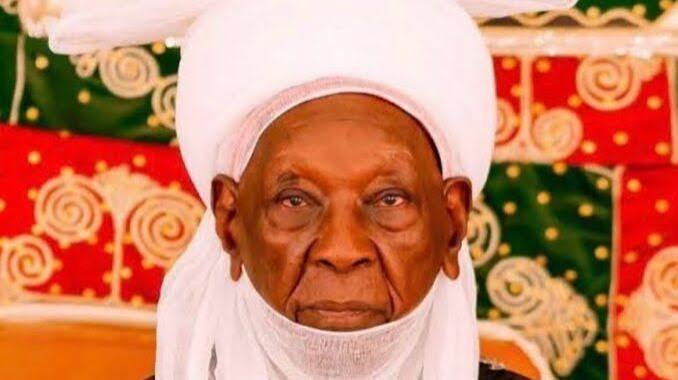
By David Torough, Abuja
The Katsina State Government has suspended all official engagements and travels of the Emir of Daura, Alhaji Umar Faruk Umar, following allegations of sexual assault levelled against the traditional ruler by a Polish tourist, Mirka Czee.
The government also announced the constitution of an investigative committee to establish the facts surrounding the incident and recommend appropriate action.
The decision was announced on Tuesday in a statement issued by the state Commissioner for Information and Culture, Dr Bala Salisu-Zango, on behalf of Governor Dikko Umaru Radda.
According to the statement, the governor expressed serious concern and displeasure over the allegations, which have generated widespread reactions following the circulation of a video on social media.
Radda subsequently directed the immediate establishment of a committee to investigate the claims and advise the state government on the appropriate course of action.
As part of the measures pending the conclusion of the investigation, the government ordered the suspension of the Emir’s official engagements and travels.
The statement assured residents that the government would take the matter seriously and fully implement the committee’s findings and recommendations.
It added that justice would be served, while urging members of the public to remain calm, law-abiding and continue their normal activities to avoid any breakdown of public peace.
The controversy followed the circulation of a video in which Czee accused the Emir of touching her breasts without her consent during a visit to his palace in Daura.
The tourist, who was born in the Czech Republic, alleged that she was left alone with the monarch after being shown around the palace and its surroundings.
She claimed that during the encounter, the Emir held her hand, hugged her and kissed her on the cheek before allegedly touching her breasts without her consent.
Czee reportedly captured part of the encounter using Meta smart glasses and subsequently released the footage on social media, explaining that she decided to speak publicly about her experience to raise awareness about unwanted touching and sexual misconduct.
However, the Daura Emirate Council said it was reviewing the viral footage to establish its authenticity and determine whether it had been manipulated or artificially generated.
The council’s spokesperson, Ibrahim Daura, said the video would be examined before the traditional institution made an official pronouncement.
An unnamed source at the Emir’s palace also denied the allegation, insisting that no such incident occurred during the tourist’s visit.
Meanwhile, Amnesty International Nigeria has called on the Katsina State Government and the police to ensure a transparent and independent investigation into the allegation.
The rights organisation’s position underscores growing calls for an impartial inquiry capable of establishing the facts and ensuring accountability.
Although the state government has pledged to implement the committee’s recommendations, it has yet to disclose the membership of the investigative panel or specify when its report will be submitted.
The investigation is expected to determine the next steps by the state government as public attention remains focused on the allegations involving one of the most prominent traditional institutions in Katsina State.



Court Nullifies Omo-Agege’s NDC Senatorial Candidacy
ShareFrom Francis Sadhere, Delta The Federal High Court sitting in Warri, Delta State, has nullified the nomination of former Deputy...


APC Mourns 15 Supporters Killed In Zamfara Road Accident
ShareBy Orjime Moses, Abuja The All Progressives Congress (APC) has mourned 15 of its members and supporters reportedly killed in...
Ortom ‘Ranched’ Benue People in IDP Camps Instead of Cattle – Tondo
ShareFrom Attah Ede, Makurdi Former Benue State Commissioner for Lands and Survey, John Tondo, has criticised former Governor Samuel Ortom...

2027: INEC Chairman Seeks Stronger Security Cooperation Ahead Of Elections
ShareBy Orjime Moses, Abuja The Chairman of the Independent National Electoral Commission (INEC), Prof. Joash Ojo Amupitan, SAN, has called...


CBN Retains Interest Rate at 23 Per Cent
ShareBy Tony Obiechina, Abuja The Monetary Policy Committee (MPC) of the Central Bank of Nigeria (CBN) has retained the benchmark...


2027: Emovworho Warns Delta Politicians Against Exploiting Youths
ShareBy Orjime Moses, Abuja A concerned son of the Urhobo Nation, Austin Obule Emovworho, has warned political leaders in Delta...

Katsina Suspends Daura Emir, Orders Probe into Sexual Assault Allegation
ShareBy David Torough, Abuja The Katsina State Government has suspended all official engagements and travels of the Emir of Daura,...

Makarfi Chairs DAILY ASSET 10th Anniversary, Awards
ShareBy David Torough, Abuja Former Kaduna State Governor, Senator Ahmed Mohammed Makarfi, has accepted the invitation to chair the 10th...

Customs Unveils Novara to Spotlight Officers’ Challenges
ShareBy Tambaya Julius, Abuja The Nigeria Customs Service (NCS) has unveiled a 79-episode television drama series, Novara, to showcase the...

FCT Upgrades 20 PHCs Under World Bank-supported IMPACT Project
ShareBy Laide Akinboade, Abuja The Federal Capital Territory Administration (FCTA) has upgraded 20 Primary Health Centres (PHCs) across the territory...