
NEWS
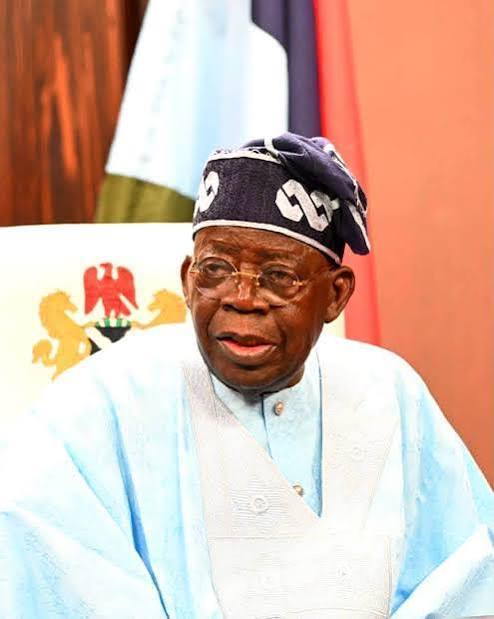
Tinubu’s Return: An Update

By Reuben Abati
Exactly a week ago, President Bola Ahmed Tinubu, now jokingly renamed a citizen of Kano with a Northern-sounding name Ashiru Bala Ahmadu Tanimu, whatever that means by former Governor Abdullahi Danguje, returned to Nigeria after a controversial 30-day so-called working leave in Europe.
His 30-day working leave was in every sense a violation of the 1999 Constitution, the idea of “a working leave” in itself being a misnomer, the failure to obey the provisions of Sections 145 (1) and (2) an affront, and historically a reminder of similar acts of contempt under the Umar Yar’Adua and Buhari administrations. The bigger scandal is that the President returned and there has been no attempt either on his part or his government, to show remorse or a capacity to learn any lessons from their acts of omission.When the President arrived at the Murtala Muhammad International Airport last Tuesday, a large crowd of political bootlickers and fortune seekers were on hand to welcome him, and in a moment of excitement the President remarked that whatever had been said in his absence was nothing more than mere rumour which should be expected during a political season, but he was back, “ready to kick, ready to work”, and “nothing was wrong”.
He may have been referring to speculations about the state of his health but he was also dismissing concerns about his prolonged absence and accustomed non-appearance at the United Nations General Assembly (UNGA), which fell within the same period. He was literally telling the people, signature style: “e lo fo’kan bale” (don’t worry, everything is under control).
Since then, the President has been kicking, and as predicted, Nigerians have behaved as if their concerns no longer matter, kept aside until the President travels again, and the people begin, all over again to quote the Constitution, the most abused totem in Nigeria’s democracy.
A day after his arrival at his private Ikoyi residence, the President went to the Wole Soyinka Centre for Arts and Culture (formerly known as Nigeria’s National Theatre) to watch the premiere of a documentary on the late Chief MKO Abiola, martyr of the June 12 election struggle.
The movie curated by Ose Oyamendan, ex-Weekend Concord, ex-journalist turned American-based movie-maker is a tribute to the art of remembering, memory as culture and the signification of history. Tinubu’s endorsement and presence evoked afresh the connections between the past and the present at both personal and political levels. MKO Abiola was the other Yoruba man who wanted to be President who was sabotaged, before him was Chief Obafemi Awolowo who was similarly denied, and Tinubu is the kinsman who fulfilled the ambition.
MKO Abiola preached a message of hope, Hope ’93, and Farewell To Poverty. Tinubu is preaching a message of Renewed Hope and Prosperity. His identification with MKO Abiola’s symbolism, in the city of Lagos, before he embarks on a nationwide campaign for his bid for a second term in office is perhaps a fitting invocation and libation to an ancestral spirit that preceded his dance in the complex arena of Nigerian presidential politics.
On Thursday, 1 October, Tinubu at 7 a.m., addressed Nigerians on the occasion of the country’s 66th Independence Anniversary, a customary duty that he needed to perform. It was a well-written, stylishly toned speech, which did the needful, but avoided any drama or long promises. In other words, it was carefully measured.
The president paid tribute to the hopes and aspirations, the background of the country’s independence and “the indomitable spirit” of the people which has kept us together through the thick and thin of “military rule, economic crises, insecurity, and political upheaval”.
He saluted the people’s belief that the country will be better, their enduring faith, the farmer, the trader, the teacher, men and women of the Armed Forces and Security Services.
He spoke about the difficult circumstances in which he met Nigeria when he assumed office in 2023: a sick patient in a diseased state, cancer to be specific which was being treated with morphine and prayers for a miracle. “When this administration assumed office, we resolved to do things differently. We chose to exercise the cancer… Our reforms did not create weaknesses in our economy. They confronted them”, he said.
The President proceeded to list the achievements of his administration in three and a half years, which he said “are not idle claims.” but concrete achievements which have taken Nigeria to “a turning point”. He then promised to take Nigeria from the age of reforms to the “age of prosperity.” He intoned: “We have passed through our own Red Sea…The Promised Land before us is a Nigeria of abundance and opportunity; a nation where prosperity is broadly shared… Our destination is in sight. Our foundations are strong. Our direction is clear…”
Thus, the President spoke in broad, exhortatory terms. There were no specifics, just a reaffirmation of commitment to the Nigerian project. He made no mention of the challenge of insecurity in the land and what he intends to do differently. He spoke about the rising cost of living, and the need to replace poverty with prosperity.
The broadcast studiously avoided the all-important subject of the forthcoming 2027 general elections which would be conducted by the Tinubu administration. Whoever wrote that speech did not consider these or any other concrete policy declarations important enough, not even least of all, the nationwide reduction in transport fares through the deployment of CNG and EV vehicles which the President had earlier directed should come into effect on 1 October.
The speech fed us with an additional dosage of hope and promises. We got a good rhetorical, enjoyable flow, without much substance. Those who expected the President to say more were disappointed. But no one could fault the President’s recognition of “the indomitable spirit” of the Nigerian people, also praised by his spouse, the First Lady, Chief Oluremi Tinubu in a statement as the journey of “a resilient nation”, and by the Chief Justice of the Nation, Justice Kudirat Kekere-Ekun as “the Nigerian spirit” which “has remained a source of strength.”
Like Mrs Tinubu and the CJN, other leaders, especially state Governors, preached the message of unity, love, accountability, patriotism, progress, optimism, peace, and responsible citizenship. This was reflected in the sentiments expressed by the majority of Nigerians at home and the diaspora.
At home, many of us wore the green and white national colours, concert parties were staged, a Chaos in the Ring celebrity boxing event was organised by Balmoral Promotions at the Federal Palace Hotel at which Carter Efe knocked out Speed “Akpi” Darlington and Phyna (Josephina Otabor) pushed breathless, exhausted Nkechi Blessing to the canvas. In the United Kingdom, the Nigeria-Britain Association, the Nigeria High Commission, and First Bank UK held special cultural events. In New York, United States, the Nigerian community held a cultural parade which was attended by the Mayor of New York City, the Uganda-born Zohran Mamdani. Across Canada and Asia, Nigerians celebrated – further underscoring the point made in this column last week, about the capacity of the average Nigerian to forever forage for faith, and embrace hope in the midst of life’s toughest challenges.
But politics, and this is a political season, is also Nigeria’s problem. We play politics with everything. This is a country blessed with great potential and human assets, but when it comes to politics, Nigerians do not know where to draw the line. We do not have thresholds of caution when restraint and modesty are required. We love the game of one-upmanship.
Politics for the average Nigerian office-seeker means selfish interest and not what is best for the nation. While Nigerians celebrated, last weekend, opposition political leaders chose to focus on the negative. They dismissed Tinubu’s reforms as ineffectual, and the promise of prosperity as delusional. Presidential candidate of the African Democratic Congress (ADC), Atiku Abubakar who held a parallel broadcast asked: “Bola, where is this prosperity?” He in fact kept calling the president by his first name, to show his disregard for the incumbent, which was unnecessary. He condemned the ruling government’s removal of petrol subsidies.
The Makinde/Daura leadership of the Allied Peoples Movement (APM) dismissed the President’s speech as a “rhetorical exercise, bereft of solutions”. Ini Ememobong, spokesperson of the Tanimu Turaki-led branch of the People’s Democratic Party (PDP) described the Tinubu administration as the Pharaoh chasing Nigerians, while Nigerians are in the Red Sea of “economic pain”. Atiku says “Bola Tinubu calls it prosperity but Nigerians can hardly afford to live”, a sentiment echoed by other opposition leaders including Mr Peter Obi, presidential candidate of the Nigeria Democratic Congress (NDC), who focused on what he called “worsening poverty, insecurity, unemployment, hunger and other socio-economic challenges facing Nigerians.”
The Nigeria Labour Congress (NLC) through its president, Comrade Joe Ajaero, also complained that Tinubu’s declared “age of prosperity” is yet to reach Nigerian workers. The NLC therefore demanded: a new national minimum wage for workers without further delay, reduction in the pump price of petrol, and transportation costs, as well as the cost of governance, tax relief, and improvement in the living conditions of workers.
On Friday, 2 October, public sector workers under the auspices of the Joint National Public Service Negotiating Council (JNPSNC) embarked on a three-day nationwide warning strike. They want fuel price to be reduced to N500 per litre, salary adjustments and payment of allowances, and action on rising living costs, inflation and electricity tariffs. Thus, President Tinubu may have had a four-week leave from Nigeria’s pressing problems, amid the objections of the opposition, he has now returned to meet the same problems in full force.
A President going on leave does not necessarily eliminate a country’s problems, he will return to carry the same load that he abandoned. Tinubu says he is ready to kick, and ready to work. He will have a lot to worry about as he kicks and works.
Since he returned, the London-based The Economist newspaper has published that despite the proclaimed hardship in Nigeria, growing public discontent and the best efforts of the opposition, he may still likely win the presidential election in 2027 considering the power of incumbency, the likely poor voter turnout, the inability of the opposition parties to forge a coalition, the acceptance of a Muslim-Muslim ticket, and superior financial capacity.
The ADC has pooh-poohed the story, stating that “a forecast is not a verdict” and that in any case, the projection is not based on any scientific poll. Tinubu has also been received by familiar patterns. Prospective NYSC candidates, about 20 of them, have been kidnapped on their way to NYSC Orientation camps in Abia and Akwa Ibom states. A military aircraft, NGR 931, has also crashed near the Naval Airbase in Igbokoda, Ondo State, resulting in the death of all the 32 persons on board.
There have also been worries and speculations about the Presidents’ health, with the opposition watching his every step, looking for ready stuff for propaganda.
Yesterday, he returned to Abuja, after spending six days in Lagos, and five weeks out of Abuja. As he settles down again in his office, one of the first things he needs to do, is to put his party, the APC in order, call his associates to order, restore order in the polity, and not be deceived into thinking that all is well, especially as the Senate President has promised him that the National Assembly will continue to be “worthy partners” of the Federal Executive.
Senate President Godswill Akpabio and his colleagues may make a joke out of the recent violation of the Constitution, thinking that their work is a joke, but the President needs to be reminded that even if the National Assembly forgets, the people will remember his recent abuse of the Constitution.
In Edo State, the APC Party Chairman, Jarret Tenebe has been shown in a video threatening that “AK-47 fire” would be the most appropriate response to anybody who votes or works against the APC. He also warned Atiku and Peter Obi or any other political leader not to take the risk of coming to Edo State for campaigns, without the governor’s permission or else. Or else, what? He and his likes must be restrained.
In parts of the country, the security agencies are also said to be harassing those who wear “Tinubu Must Go” T-shirts. Nobody should be arrested or detained just because they are anti-Tinubu. Democracy is about choice and other basic freedoms.
The President must come out publicly and decry violence. Festus Keyamo, the Minister of Aviation and Aerospace Development has provided some balance by indicating that opposition party members have also been aggressive towards the ruling APC party, pulling down and defacing posters of its members, and pretending to be the ones under siege. It is unfortunate that politicians are not respecting the terms of the Peace Accord that they signed.
The first task before the President is to champion the cause of peace. His own ambition and that of others, To Whom It May Concern, is not worth the threats of violence and mayhem overtaking the on-going 2027 process. Tinubu must lead. Leaders of the opposition parties must also restrain their supporters. Politics must not become war. Nigeria must not implode because of the 2027 elections. Politicians should be made to remember that when the elections are over, won and lost, there must still be a country to govern.
Reuben Abati, a former presidential spokesperson, writes from Lagos.

By David Torough
After decades of frustration in accessing telephone services, Nigerians were relieved when in 2001, the then President Olusegun Obasanjo took a decision that would later transform the nation’s telephone landscape and connectivity ecosystem.
In January that year, the regulator, the Nigerian Communications Commission auctioned GSM licences.
It was a good business for Nigeria’s economy as the Federal Government racked in excess of $1.2 billon having sold the licences to MTN, Glo, Econet (Airtel) and Etisalat 9mobile) at $208 million each.
By May that year, Econet had made history as the company to make the first GSM call Nigeria with MTN following later in August before the indigenous Globacom (glo) and the rest joined.
At a public event in Lagos Obasanjo juxtaposes the pre-GSM torture Nigerians went through and what is obtainable today: “People had to queue at telephone kiosks to make calls. It was a far cry from the seamless communication we enjoy today but then came the mobile telephone revolution.
“Needless to say that mobile communication has become a powerful tool for liberating Nigerians from the shackles of the once powerful, but now extinct, national telecoms monopoly, popularly known as the Nigerian Telecommunication (NITEL); it has significantly contributed positively in boosting economic activities in all sectors in Nigeria,” said Prof. Abiodun Musa Aibinu, a mechatronic engineer at Federal University of Technology, Minna.
According to data released by Global System for Mobile Communications Association (GSMA) there are approximately 192.2 million active telephony subscriptions as of mid-2026, with national teledensity reaching around 86.6% of the population.
The GSMA intelligence further estimates total cellular mobile connections at about 183 million (roughly 74.9% of the population), with broadband subscriptions standing at at 123.1 million, translating to a broadband penetration rate of the population.
However, in spite of its success story, challenges remain as acknowledged by Aibinu.
“There is increasing poor quality of service experienced by subscribers which manifests in the forms of: call failure, call drops, and low received signal strength. These problems have continuously been raising a great deal of worries and uncertainty among the populace and the network providers,” said the scholar.
However, one silent but major challenge faced by telephone subscribers in Nigeria both in the past and now remains the high cost of international calls.
Available data shows that on a standard Pay as You Go (PAYG) tariff, the rates range for international calls from N30 to N1,500 per minute depending on the destination of the call.
Mr Austine Ugbebor, Chief Executive Officer of ESDIAC, an indigenous new entrant into the Voice over Internet Protocol (VoIP) calls market says the platform was designed to address the challenges of expensive international calls and limited connectivity options, particularly for people travelling abroad, with promised international calls of as low as N13.000
He spoke at the unveiling and media engagement on Friday in Abuja, ESDIAC which, he said, integrates Voice over Internet Protocol (VoIP) calling, electronic SIM (eSIM), mobile airtime and data top-up services.
It is an all-in-one mobile platform designed to make international calls more affordable and improve connectivity for travellers, businesses and Nigerians both in the diaspora and at home.
ESDIAC was registered in 2011, with first product inaugurated in 2016, with the company spending the intervening years developing its operational structures and securing regulatory and compliance arrangements ahead of its market entry.
“ESDIAC is an all-in-one solution, offering international and local calls, eSIM services and data packages through a single platform.
“With our platform, subscribers can make calls to Canada, United Kingdom, US, Germany, Australia for as low as N13.
“ESDIAC’s VoIP technology enables subscribers to call people who do not have the ESDIAC application or an internet connection, and calls can be made directly to regular telephone numbers,” he said.
He said the service also allows users to retain their phone numbers when making calls, making it easier for recipients to identify callers.
The CEO added that the platform provided mobile airtime and data top-ups, while its eSIM service enabled travelers to access connectivity in supported destinations without necessarily purchasing a physical SIM card.
He further said that the company was committed to offering affordable services and improving the calling experience by addressing connectivity challenges associated with internet-based communication platforms.
On concerns about tariff stability and consumer protection, the CEO said the company had adopted a policy of respecting subscribers’ money by avoiding hidden connectivity charges.
“Subscribers will not be charged additional fees merely for initiating calls, and unused balances will remain available to customers.”
He said subscribers who believed they had been wrongly charged could contact the company’s customer service team for investigation.
“If you are right and there is an error, we promise to refund your money,” he said.
The CEO said ESDIAC operated under the regulatory requirements of the Nigerian Communications Commission (NCC) and the Federal Communications Commission (FCC) of the U.S.
He, however, noted that changes in telecommunications tariffs could sometimes result from regulatory directives, adding that operators were required to comply with applicable regulations.
As the highest policy level, addressing challenges faced by Nigerians on international calls is a priority and the Presidency has thrown its weight behind the ESDIAC project.
Mr Tope Fasua, Special Adviser to the President on Economic Matters, Office of the Vice-President, described the platform as a promising development for Nigeria’s telecommunications sector.
Fasua said his experience with an expensive eSIM purchased during an international trip, which failed to provide connectivity across all his destinations, underscored the need for more reliable and affordable services.
He expressed hope that ESDIAC would provide better value to travellers through its services.
One major area of concern for Nigerians is data protection. There is no area this is concern is more pronounced than in the telecom sector where Nigerians share their data with either deliberately or otherwise.
The company’s Legal Adviser, Mr Aja Nwaani, has allayed that fear saying the protection of subscribers’ personal information was central to ESDIAC’s operations.
“ESDIAC has put measures in place to ensure that subscribers’ information are not improperly accessed, disclosed or used, including when shared with third-party carriers and service providers,” he said.
He said the company was committed to complying with the Nigeria Data Protection Act and applicable regulations, warning against the unlawful sale or misuse of subscribers’ personal information.
Mr Muhammed Sani, the company’s Human Resources representative, said ESDIAC was established to address the high cost of international calls and connectivity challenges confronting Nigerians.
Sani said the platform was particularly useful to travellers and Nigerians seeking to maintain affordable communication with family members and business associates abroad.
He added that the company’s business solution was also designed to support organisations requiring reliable communication services.
The ESDIAC is another bold step by an indigenous entrepreneur. It aligns with President Bola Tinubu administration’s commitment encouraging private sector investment in the telecom industry and offering Nigerian’s wider telephone options.
“Sustained investment in telecommunications infrastructure is essential to expanding broadband access, improving network capacity, and supporting businesses, education, and economic opportunities across Nigeria,” the President said at a recent public event in Abuja.
Tinubu said the initiative aligns with his administration’s commitment to encouraging private-sector investing, improving digital infrastructure and ensuring Nigerians benefit from more reliable and accessible telecommunications services,” the statement quoted him as saying during the event.

From Attah Ede, Makurdi
The Aids Healthcare Foundation (AHF) Nigeria, has revealed that nearly 2 billion people menstruate, with 500 million experiencing period poverty globally.
The Foundation disclosed this during the unveiling of a magazine that focuses on the girl child’s menstrual education and hygiene in Abuja, Thursday.
The 26-page comic magazine, produced by the AHF, depicted the challenges that the girl child faces in Nigeria regarding menstrual education and the stigma attached to it in communities across the country.
The Foundation noted that one of the things needed to change the tide is the provision of easily relatable information that can attract attention of young women and girls.
It further stated that in many communities, taboos prevent open discussion about menstruation, limit access to accurate sexual and reproductive health information, and discourage people from seeking care.
Speaking during the event, Mr. Steve Aborisade, Senior Advocacy & Marketing Manager, AHF Nigeria, intimated that there is need to spread the awareness on menstrual education among the adolescence and young women in the country, especially with a view to removing the stigmatisation that has posed challenges to the campaigns over the years.
He insisted that addressing menstrual health must go hand in hand with efforts to normalize periods, which this book is set to achieve.
“This book takes readers through some salient issues in menstrual health management, particularly as it concerns access to accurate information and correcting the misinformation which is at the root of the stigma associated with menstruation in our society.
“The book provides the basic steps to keeping healthy and well during periods, while also making boys and men allies of menstrual health management.
“We reckon that the target audience for the comic magazine would find the message in it interesting and easily embrace it for their benefits and they too can help share the message accordingly,” Dr. Aborisade said.
The AHF Nigeria Country Programme Director, Dr. Echey Ijezie, who presided over the launch at the Abuja office, said efforts would be geared towards producing the magazine in many Nigerian languages in order to further broaden the core message to the targeted audience.
“It is imperative to ensure that our target audience are reached in no distant future. We would work with the Federal Ministry of Education and explore the outreaches to use them as education and awareness tools,” Dr. Ijezie said.
Mrs. Osaro Osa-Jarikre of the Child Development Department at the Federal Ministry of Women Affairs, who represented the Minister of Women Affairs, disclosed that the ministry would capture the AHF programmes in its elaborate policy to be launched soon, stressing that the ministry had found the foundation as a worthy partner in furthering the cause of the girl child in Nigeria.
“Our ministry has resolved to carry the AHF along in the various programmes we have designed for the girl child in Nigeria, and we are also ready to offer needed support to the foundation in its quest to upgrade the Nigerian young generation,” Mrs. Osa-Jarikre said.
Among those who attended the magazine launch include Dr. Charity Awunor, Nursing Manager, AHF; Dr. Ugochi Ajaero, State Clinical Coordinator, AHF; Binta Suleiman Jalo, Programme Officer, Kids & Teens Resource Centre, Abuja; Taiwo Ajani of the Lawyers Alert, Abuja; representatives of civil society organisations and members of the Girls Act.

Singer Peruzzi has narrated how a charm was planted in his jacket during his stay at Davido’s house.
Peruzzi was signed to Davido’s record label, DMW, in 2017.
Davido dissolved the label in April 2024.
However, discussing his experience during his stay at Davido’s house, Peruzzi narrated how a charm was planted in his jacket.
Speaking in a video interview online, he said, “I took a shower one evening, like at 6 pm. Just a shower and then went to go and meet them back downstairs because I was chilling there before I went upstairs in David house when I was still living there.
“And then I was done taking the shower. I go to my wardrobe to get my clothes, and then one of my jackets is just telling me, ‘Pull me, wear me, wear me, wear me.’ I don’t know how to explain it, but I was just having the urge to wear it.”So, I carry am (the jacket), and something just dropped inside, and when I looked, it was jaz, better juju inside my room. A jacket that just came from the laundry.”




Will new entrant, ESDIAC, ease Nigerians’ international call worries?
ShareBy David Torough After decades of frustration in accessing telephone services, Nigerians were relieved when in 2001, the then President...


AHF Launches Comic Book on Menstrual Health Education in Abuja
ShareFrom Attah Ede, Makurdi The Aids Healthcare Foundation (AHF) Nigeria, has revealed that nearly 2 billion people menstruate, with 500...


BBNaija’s Dorathy Begins Breast Reduction Journey
ShareFormer Big Brother Naija housemate, Dorathy Bachor, has taken the first step towards breast reduction surgery, three years after first...


They Planted Juju in my Jacket at Davido’s House – Peruzzi
ShareSinger Peruzzi has narrated how a charm was planted in his jacket during his stay at Davido’s house. Peruzzi was...


Withdraw all Charges within Two Weeks, Speed Darlington Appeals to Burna Boy, Apologises
ShareControversial Nigerian singer Speed Darlington has appealed to Grammy-winning artiste Burna Boy to withdraw all charges against him within two...
AFSNET Business Conference Kicks off in Calabar
ShareFrom Ene Asuquo, Calabar The 6th African sub – sovereign Governments Network Investment Conference has started in Calabar the cross...
NAFOWA Empowers 18 Widows, Donates Tricycles in Bayelsa
ShareFrom Mike Tayese, Yenagoa The Nigerian Air Force Officers’ Wives Association (NAFOWA), Mobility Command, Yenagoa, has empowered 18 widows of...


RMAFC Advocates Fair Share of 13 Per Cent Revenue Derivation Among Oil Producing States
ShareBy Tony Obiechina, Abuja The Revenue Mobilisation Allocation and Fiscal Commission (RMAFC) has advocated a fair distribution of the 13...


Customs CG Tasks Officers on Discipline, Integrity
ShareBy Tambaya Julius, Abuja The Comptroller-General of the Nigeria Customs Service (NCS), Bashir Adewale Adeniyi, has called on officers and...


2027: ADC Asks EFCC, INEC to Probe Alleged APC Cash Distribution
ShareBy Mvendaga Orjime, Abuja The African Democratic Congress (ADC) has called on the Economic and Financial Crimes Commission (EFCC) and...