
NEWS
DSIRS Threatens Prosecution of Fake Tax Collectors, Warns Taxpayers

From Francis Sadhere, Delta
The Delta State Internal Revenue Service (DSIRS) has warned individuals and groups issuing fake tax demand notices and collecting money from taxpayers to desist or face prosecution.
The Chairman of the Service, Hon.
(Chief) Solomon Ighrakpata, gave the warning in a statement issued on Tuesday, describing the activities of the fraudsters as a serious criminal offence capable of causing huge revenue losses to the state and undermining confidence in its tax administration system.Ighrakpata said the DSIRS had not authorised any individual or agent to issue tax demand notices or collect taxes on its behalf outside the established and approved channels.
He urged taxpayers, businesses and members of the public to be wary of unsolicited tax demands, assessment notices, payment requests and other correspondence purportedly issued by the Service.
According to him, taxpayers should verify the authenticity of such documents with the DSIRS before making any payment.
“The DSIRS wishes to categorically state that it has not authorised any individual or unauthorised agent to issue tax demand notices or collect taxes on its behalf outside established and approved channels,” he said.
The chairman warned that fraudulent tax collection not only exposes unsuspecting taxpayers to financial losses but also results in revenue leakages and disrupts the state’s revenue administration.
He disclosed that the Service was working with relevant law enforcement agencies to identify and apprehend persons involved in the issuance of fake demand notices, impersonation of tax officials and fraudulent collection of taxes.
Ighrakpata said those found culpable would be prosecuted to the fullest extent of the law, stressing that the DSIRS would not allow fraudsters to compromise the integrity of the state’s revenue system.
He urged members of the public to report suspicious tax demand notices or anyone claiming to be an authorised tax official to the Service for immediate verification.
The DSIRS chairman further advised taxpayers to make payments only through officially approved government channels and to contact the Service through its recognised communication platforms whenever they are in doubt about the authenticity of any tax-related document.
He assured taxpayers that the Service remained committed to maintaining a transparent, accountable, efficient and credible tax administration system.
Ighrakpata added that legitimate taxes paid to the Delta State Government remained vital to the provision of public infrastructure and essential services, stressing that the Service would continue to take measures to safeguard government revenue and protect taxpayers from fraudulent operators.
The Ekiti State Government said on Tuesday that exposing students to civic education played a vital role in preparing them for leadership roles and active citizenship.
The Commissioner for Education, Dr Olabimpe Aderiye, reaffirmed the state government’s commitment to promoting civic awareness and democratic values among young people to raise responsible and informed future leaders.
The commissioner, represented by the Permanent Secretary in the ministry, Bayode Ogunmola, spoke in Ado Ekiti during the 11th National Secondary School Quiz Competition on the Legislature and Democracy, organised by the National Institute for Legislative and Democratic Studies.
She hailed NILDS for sustaining the initiative, describing it as an important platform for deepening students’ understanding of democracy, governance and the legislature.
She added, “An informed and civically conscious young population is essential to sustaining peace, orderliness and good governance. The programme aligns with the state government’s commitment to equipping students with not only academic knowledge, but also the values and civic understanding required to contribute meaningfully to society.”
The commissioner urged the participating students to take advantage of the competition to broaden their knowledge of democratic principles and the workings of government.
She encouraged them to remain good ambassadors of their schools and the state, stressing that “exposure to civic education would prepare them for responsible leadership and active citizenship.”
The NILDS Director-General, Prof Abubakar Suleiman, said democracy could only thrive when citizens, particularly young people, understood the roles and responsibilities of democratic institutions.
The DG, represented by Ibrahim Suleiman, said the legislature, as the people’s assembly, required an informed citizenry that understood its powers, functions and limitations.
Suleiman, who described the competition as a deliberate investment in the future of Nigeria’s democracy, said participating students had, over the years, gained knowledge of law-making, representation and the importance of the rule of law.
Six secondary schools — Banji Akintoye Model College, Ado Ekiti; Alamoye Comprehensive High School, Aramoko Ekiti; St Mary’s Grammar School, Ikole Ekiti; St Michael Secondary School, Ifaki Ekiti; Ujilogun High School, Ilupeju-Ijan Ekiti; and Irepodun Community High School, Ikere-Ekiti — participated in the competition.
The schools performed creditably and received cash prizes and other gifts at the end of the competition.
From Ayinde Akintade, Osogbo
A revered traditional ruler in Osun State, the Alabere of Abereland, Oba Obafemi Adelakin Mutalib Abiade II, has urged members of the 2026 Batch C Stream I to value, preserve and promote Yoruba culture while upholding good character wherever they find themselves.
The Monarch gave the charge while delivering a traditional lecture at the NYSC Permanent Orientation Camp, Ede, where he spoke extensively on Yoruba customs and traditions, language, greetings, respect, dressing, marriage and the responsibilities of young people.
Oba Adelakin emphasised the importance of greetings and respect in Yoruba culture, noting that the language reflects differences in age, gender and social status through its expressions and forms of address.
He said respect and honour remained fundamental values that should not be lost to changing lifestyles.Speaking on traditional dressing, the monarch described Yoruba attire and adornments as expressions of cultural identity and urged Corps Members, particularly the female, to dress decently and appreciate the cultural significance of traditional accessories.
He expressed concern over changing social values among young people, including what he described as indecent dressing, and urged the Corps Members to uphold values that promote dignity and responsible living.
On marriage and family life, Oba Adelakin attributed some contemporary family challenges to the neglect of traditional marriage processes and values. He urged young people to respect marriage and family institutions while maintaining peaceful relationships across religious and cultural differences.
The Monarch stressed the need for religious tolerance and peaceful coexistence, saying religious beliefs should not lead to the abandonment of the people’s indigenous cultural heritage.
Oba Adelakin also encouraged the Corps Members to make positive impressions at their Places of Primary Assignment (PPAs), stressing that their service year should be an opportunity to learn, serve and build a foundation for the future.
Sharing his personal journey, the Monarch said he had worked as a driver and farmer and had served in different communities before ascending the throne. He urged the Corps Members not to despise humble beginnings, noting that experiences gained through honest work could contribute significantly to personal growth and future success.
He further encouraged them to explore entrepreneurship and other productive ventures rather than limiting their ambitions to government employment. He urged them to be good to others and wish people well, saying positive character and goodwill could open doors of opportunity.
The Monarch commended the NYSC Osun State Coordinator, Ekeng Ita Kubiangha, for promoting culture and tradition. He later offered traditional prayers for the Corps Members, praying for a peaceful and successful service year.
Earlier, Kubiangha expressed delight at the Monarch’s presence and commended the Corps Members for their conduct, describing the 2026 Batch C Stream I as a “truly wonderful Stream.”
The State Coordinator urged the Corps Members to listen attentively to the traditional rulers, noting that they had much to learn from their wealth of knowledge, experience and wisdom.
The lecture featured a question-and-answer session, a vote of thanks, three hearty cheers and a Yoruba panegyric in honour of the royal father.
By Reuben Abati
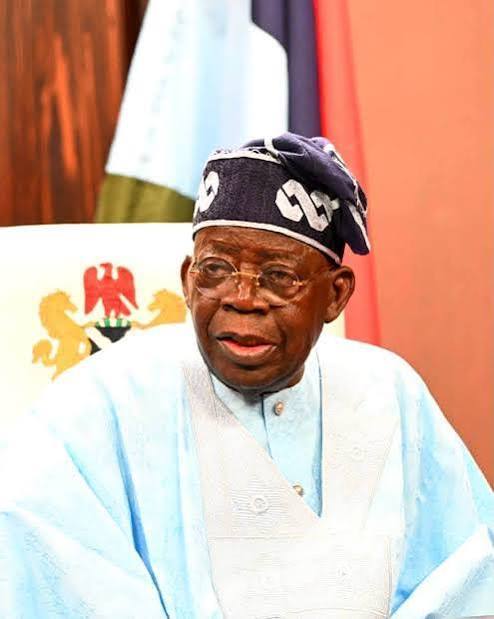
Exactly a week ago, President Bola Ahmed Tinubu, now jokingly renamed a citizen of Kano with a Northern-sounding name Ashiru Bala Ahmadu Tanimu, whatever that means by former Governor Abdullahi Danguje, returned to Nigeria after a controversial 30-day so-called working leave in Europe.
His 30-day working leave was in every sense a violation of the 1999 Constitution, the idea of “a working leave” in itself being a misnomer, the failure to obey the provisions of Sections 145 (1) and (2) an affront, and historically a reminder of similar acts of contempt under the Umar Yar’Adua and Buhari administrations. The bigger scandal is that the President returned and there has been no attempt either on his part or his government, to show remorse or a capacity to learn any lessons from their acts of omission.When the President arrived at the Murtala Muhammad International Airport last Tuesday, a large crowd of political bootlickers and fortune seekers were on hand to welcome him, and in a moment of excitement the President remarked that whatever had been said in his absence was nothing more than mere rumour which should be expected during a political season, but he was back, “ready to kick, ready to work”, and “nothing was wrong”.
He may have been referring to speculations about the state of his health but he was also dismissing concerns about his prolonged absence and accustomed non-appearance at the United Nations General Assembly (UNGA), which fell within the same period. He was literally telling the people, signature style: “e lo fo’kan bale” (don’t worry, everything is under control).
Since then, the President has been kicking, and as predicted, Nigerians have behaved as if their concerns no longer matter, kept aside until the President travels again, and the people begin, all over again to quote the Constitution, the most abused totem in Nigeria’s democracy.
A day after his arrival at his private Ikoyi residence, the President went to the Wole Soyinka Centre for Arts and Culture (formerly known as Nigeria’s National Theatre) to watch the premiere of a documentary on the late Chief MKO Abiola, martyr of the June 12 election struggle.
The movie curated by Ose Oyamendan, ex-Weekend Concord, ex-journalist turned American-based movie-maker is a tribute to the art of remembering, memory as culture and the signification of history. Tinubu’s endorsement and presence evoked afresh the connections between the past and the present at both personal and political levels. MKO Abiola was the other Yoruba man who wanted to be President who was sabotaged, before him was Chief Obafemi Awolowo who was similarly denied, and Tinubu is the kinsman who fulfilled the ambition.
MKO Abiola preached a message of hope, Hope ’93, and Farewell To Poverty. Tinubu is preaching a message of Renewed Hope and Prosperity. His identification with MKO Abiola’s symbolism, in the city of Lagos, before he embarks on a nationwide campaign for his bid for a second term in office is perhaps a fitting invocation and libation to an ancestral spirit that preceded his dance in the complex arena of Nigerian presidential politics.
On Thursday, 1 October, Tinubu at 7 a.m., addressed Nigerians on the occasion of the country’s 66th Independence Anniversary, a customary duty that he needed to perform. It was a well-written, stylishly toned speech, which did the needful, but avoided any drama or long promises. In other words, it was carefully measured.
The president paid tribute to the hopes and aspirations, the background of the country’s independence and “the indomitable spirit” of the people which has kept us together through the thick and thin of “military rule, economic crises, insecurity, and political upheaval”.
He saluted the people’s belief that the country will be better, their enduring faith, the farmer, the trader, the teacher, men and women of the Armed Forces and Security Services.
He spoke about the difficult circumstances in which he met Nigeria when he assumed office in 2023: a sick patient in a diseased state, cancer to be specific which was being treated with morphine and prayers for a miracle. “When this administration assumed office, we resolved to do things differently. We chose to exercise the cancer… Our reforms did not create weaknesses in our economy. They confronted them”, he said.
The President proceeded to list the achievements of his administration in three and a half years, which he said “are not idle claims.” but concrete achievements which have taken Nigeria to “a turning point”. He then promised to take Nigeria from the age of reforms to the “age of prosperity.” He intoned: “We have passed through our own Red Sea…The Promised Land before us is a Nigeria of abundance and opportunity; a nation where prosperity is broadly shared… Our destination is in sight. Our foundations are strong. Our direction is clear…”
Thus, the President spoke in broad, exhortatory terms. There were no specifics, just a reaffirmation of commitment to the Nigerian project. He made no mention of the challenge of insecurity in the land and what he intends to do differently. He spoke about the rising cost of living, and the need to replace poverty with prosperity.
The broadcast studiously avoided the all-important subject of the forthcoming 2027 general elections which would be conducted by the Tinubu administration. Whoever wrote that speech did not consider these or any other concrete policy declarations important enough, not even least of all, the nationwide reduction in transport fares through the deployment of CNG and EV vehicles which the President had earlier directed should come into effect on 1 October.
The speech fed us with an additional dosage of hope and promises. We got a good rhetorical, enjoyable flow, without much substance. Those who expected the President to say more were disappointed. But no one could fault the President’s recognition of “the indomitable spirit” of the Nigerian people, also praised by his spouse, the First Lady, Chief Oluremi Tinubu in a statement as the journey of “a resilient nation”, and by the Chief Justice of the Nation, Justice Kudirat Kekere-Ekun as “the Nigerian spirit” which “has remained a source of strength.”
Like Mrs Tinubu and the CJN, other leaders, especially state Governors, preached the message of unity, love, accountability, patriotism, progress, optimism, peace, and responsible citizenship. This was reflected in the sentiments expressed by the majority of Nigerians at home and the diaspora.
At home, many of us wore the green and white national colours, concert parties were staged, a Chaos in the Ring celebrity boxing event was organised by Balmoral Promotions at the Federal Palace Hotel at which Carter Efe knocked out Speed “Akpi” Darlington and Phyna (Josephina Otabor) pushed breathless, exhausted Nkechi Blessing to the canvas. In the United Kingdom, the Nigeria-Britain Association, the Nigeria High Commission, and First Bank UK held special cultural events. In New York, United States, the Nigerian community held a cultural parade which was attended by the Mayor of New York City, the Uganda-born Zohran Mamdani. Across Canada and Asia, Nigerians celebrated – further underscoring the point made in this column last week, about the capacity of the average Nigerian to forever forage for faith, and embrace hope in the midst of life’s toughest challenges.
But politics, and this is a political season, is also Nigeria’s problem. We play politics with everything. This is a country blessed with great potential and human assets, but when it comes to politics, Nigerians do not know where to draw the line. We do not have thresholds of caution when restraint and modesty are required. We love the game of one-upmanship.
Politics for the average Nigerian office-seeker means selfish interest and not what is best for the nation. While Nigerians celebrated, last weekend, opposition political leaders chose to focus on the negative. They dismissed Tinubu’s reforms as ineffectual, and the promise of prosperity as delusional. Presidential candidate of the African Democratic Congress (ADC), Atiku Abubakar who held a parallel broadcast asked: “Bola, where is this prosperity?” He in fact kept calling the president by his first name, to show his disregard for the incumbent, which was unnecessary. He condemned the ruling government’s removal of petrol subsidies.
The Makinde/Daura leadership of the Allied Peoples Movement (APM) dismissed the President’s speech as a “rhetorical exercise, bereft of solutions”. Ini Ememobong, spokesperson of the Tanimu Turaki-led branch of the People’s Democratic Party (PDP) described the Tinubu administration as the Pharaoh chasing Nigerians, while Nigerians are in the Red Sea of “economic pain”. Atiku says “Bola Tinubu calls it prosperity but Nigerians can hardly afford to live”, a sentiment echoed by other opposition leaders including Mr Peter Obi, presidential candidate of the Nigeria Democratic Congress (NDC), who focused on what he called “worsening poverty, insecurity, unemployment, hunger and other socio-economic challenges facing Nigerians.”
The Nigeria Labour Congress (NLC) through its president, Comrade Joe Ajaero, also complained that Tinubu’s declared “age of prosperity” is yet to reach Nigerian workers. The NLC therefore demanded: a new national minimum wage for workers without further delay, reduction in the pump price of petrol, and transportation costs, as well as the cost of governance, tax relief, and improvement in the living conditions of workers.
On Friday, 2 October, public sector workers under the auspices of the Joint National Public Service Negotiating Council (JNPSNC) embarked on a three-day nationwide warning strike. They want fuel price to be reduced to N500 per litre, salary adjustments and payment of allowances, and action on rising living costs, inflation and electricity tariffs. Thus, President Tinubu may have had a four-week leave from Nigeria’s pressing problems, amid the objections of the opposition, he has now returned to meet the same problems in full force.
A President going on leave does not necessarily eliminate a country’s problems, he will return to carry the same load that he abandoned. Tinubu says he is ready to kick, and ready to work. He will have a lot to worry about as he kicks and works.
Since he returned, the London-based The Economist newspaper has published that despite the proclaimed hardship in Nigeria, growing public discontent and the best efforts of the opposition, he may still likely win the presidential election in 2027 considering the power of incumbency, the likely poor voter turnout, the inability of the opposition parties to forge a coalition, the acceptance of a Muslim-Muslim ticket, and superior financial capacity.
The ADC has pooh-poohed the story, stating that “a forecast is not a verdict” and that in any case, the projection is not based on any scientific poll. Tinubu has also been received by familiar patterns. Prospective NYSC candidates, about 20 of them, have been kidnapped on their way to NYSC Orientation camps in Abia and Akwa Ibom states. A military aircraft, NGR 931, has also crashed near the Naval Airbase in Igbokoda, Ondo State, resulting in the death of all the 32 persons on board.
There have also been worries and speculations about the Presidents’ health, with the opposition watching his every step, looking for ready stuff for propaganda.
Yesterday, he returned to Abuja, after spending six days in Lagos, and five weeks out of Abuja. As he settles down again in his office, one of the first things he needs to do, is to put his party, the APC in order, call his associates to order, restore order in the polity, and not be deceived into thinking that all is well, especially as the Senate President has promised him that the National Assembly will continue to be “worthy partners” of the Federal Executive.
Senate President Godswill Akpabio and his colleagues may make a joke out of the recent violation of the Constitution, thinking that their work is a joke, but the President needs to be reminded that even if the National Assembly forgets, the people will remember his recent abuse of the Constitution.
In Edo State, the APC Party Chairman, Jarret Tenebe has been shown in a video threatening that “AK-47 fire” would be the most appropriate response to anybody who votes or works against the APC. He also warned Atiku and Peter Obi or any other political leader not to take the risk of coming to Edo State for campaigns, without the governor’s permission or else. Or else, what? He and his likes must be restrained.
In parts of the country, the security agencies are also said to be harassing those who wear “Tinubu Must Go” T-shirts. Nobody should be arrested or detained just because they are anti-Tinubu. Democracy is about choice and other basic freedoms.
The President must come out publicly and decry violence. Festus Keyamo, the Minister of Aviation and Aerospace Development has provided some balance by indicating that opposition party members have also been aggressive towards the ruling APC party, pulling down and defacing posters of its members, and pretending to be the ones under siege. It is unfortunate that politicians are not respecting the terms of the Peace Accord that they signed.
The first task before the President is to champion the cause of peace. His own ambition and that of others, To Whom It May Concern, is not worth the threats of violence and mayhem overtaking the on-going 2027 process. Tinubu must lead. Leaders of the opposition parties must also restrain their supporters. Politics must not become war. Nigeria must not implode because of the 2027 elections. Politicians should be made to remember that when the elections are over, won and lost, there must still be a country to govern.
Reuben Abati, a former presidential spokesperson, writes from Lagos.


Civic Education Vital for Future Leaders – Ekiti Commissioner
ShareThe Ekiti State Government said on Tuesday that exposing students to civic education played a vital role in preparing them...
DSIRS Threatens Prosecution of Fake Tax Collectors, Warns Taxpayers
ShareFrom Francis Sadhere, Delta The Delta State Internal Revenue Service (DSIRS) has warned individuals and groups issuing fake tax demand...
Alabere Urges Corps Members to Preserve Yoruba Culture, Uphold Good Character
ShareFrom Ayinde Akintade, Osogbo A revered traditional ruler in Osun State, the Alabere of Abereland, Oba Obafemi Adelakin Mutalib Abiade...
Nigeria Since 1999: When will the Years Begin to Count?
ShareBy Dakuku Peterside Think of a Nigerian born in 1999, the year civilian rule came back. That person is twenty-seven...

Tinubu’s Return: An Update
ShareBy Reuben Abati Exactly a week ago, President Bola Ahmed Tinubu, now jokingly renamed a citizen of Kano with a...

NDLEA Seizes over 10 Tonnes of Illicit Drugs, Recover Firearms in Kogi
ShareBy Elijah Oguche, Abuja The National Drug Law Enforcement Agency (NDLEA) in Kogi said it has seized more than 10...


CAN Mourns Victims of NAF Aircraft Crash in Ondo
ShareBy Laide Akinboade, Abuja The Christian Association of Nigeria (CAN) on Tuesday, mourned the crash involving a Nigerian Air Force...

Trust is Democracy’s Invisible Currency, Says Akpabio
ShareThe National Assembly remains the bridge through which the hopes and aspirations of ordinary Nigerians must translate into government decisions,...

Why Women Must Equip Themselves – Minister
ShareBy Laide Akinboade Abuja The Minister of Women Affairs and Social Development, Imaan Suleiman-Ibrahim, on Tuesday, tasked Nigerian women to...

Horrors Must Never be Repeated, Says UN Chief
ShareUN Secretary General António Guterres on Monday called for a peaceful future for Israelis and Palestinians ahead of the third...