
view point
Tinubu’s $700 Billion Mineral Resources Deal With America at Whose Interest?

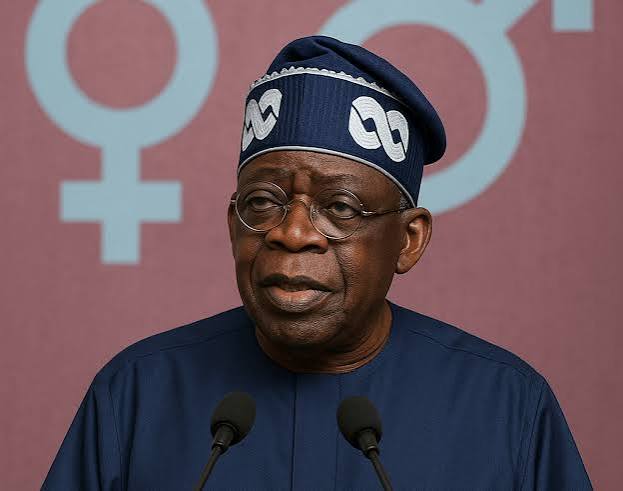
By Hajia Hadiza Mohammed
For some time now the hottest issue of debate in the Nigeria media space has been the proposed release of the American FBI files on Asiwaju Bola Tinubu, with Tinubu fighting and lobbying intensely against the release of the said files that allegedly had criminal contents.
While the debate on the issue rages, Tinubu jetted out of the country on three-week vacation in France, refusing to attend the 81st United Nations General Assembly (UNGA) event in New-York, something his critics attributed to fear of arrest by the American authorities over his involvement in narcotics trafficking in the past.Then came the news shortly after that a person close to Tinubu offered a bribe of $3 million to Dr. Karl Von Batten, the founder of Von Batten-Montague-York, L.C., a Washington, D.C.-based lobbying firm working for the release of the Tinubu FBI files.
Then suddenly a few days ago the news came that the government of Nigeria and the United States has signed have signed an agreement to attract American investment into Nigeria’s solid minerals sector and unlock an estimated $700 billion in mineral resources; strategic framework agreement to boost American investment in Nigeria’s solid minerals sector, raising suspicions about the purpose of the said deal and the intention of Tinubu to accent to the deal. Yes the timing, the circumstances are fueling speculations that Tinubu is trading off Nigerians common wealth for his personal protection and inordinate ambition.
The framework, signed in New York on Wednesday September 24, 2026 at Nigeria’s Mission House in New York by Nigeria’s Minister of Solid Minerals Development, Dele Alake, and US Deputy Secretary of State Christopher Landau, is said to target cooperation in mineral exploration, development, processing, infrastructure and technical capacity.
Speaking at the occasion Alake said among other things that: “Our goal is to turn potential into lasting value at home through stronger local processing, new skills, quality jobs, and new opportunities for Nigerian businesses”.
If the agreement was borne out of genuine desire by the Federal Government to attract investment into Nigeria’s mining industry, diversify government revenue and reduce dependence on oil through the development of the country’s solid mineral resources I have no problem with it in any way, but the timing and the manner of execution of the pact without due process leaves much to be desired.
First, we need to understand that this is not a $700 billion investment by the US in Nigeria. The $700 billion figure is the estimated value of Nigeria’s mineral resources. The agreement is expected to provide a framework for US-backed investment and partnership across Nigeria’s mining value chain. Alake’s words that the two countries would identify viable projects, mobilize investments and develop commercial partnerships capable of delivering measurable benefits indicates that the said deal was hurriedly packaged without the necessary technical details. How then did they come about the $700 billion value of the deal?
Many critics and concerned Nigerians have raised questions about the relevance of the deal, the purpose and detail taking into consideration Tinubu’s penchant for taking arbitrary decisions on things that are of general concern.
The cases of Tinubu’s unilateral decision and use of our common resources is endless: from the off-budget expenditure, to awarding contract without due process, using our public funds to lobby for image laundry, bribery, diverting public funds from source without passing through the federation account, arbitrary siting of government projects in a particular, lopsided appointments and uncontrolled borrowing and wasteful spending.
One of the major problems of Nigeria is the attitude of those in power over the use of public wealth. Some have wrong notions about governance and representation. Some think that they own the people and that the people should serve them instead of serving the people. Some people in power erroneously think that they are the state.
All the resources of the state are for them to use as it pleases them; to deploy at will. They forgot that they are only a temporary caretaker. They are wielding power in trust for the people. It is absolutely wrong to deploy resources for personal reasons. It is an abuse of office.
Our natural resources are public assets and our collective wealth and not the private property of the president or government officials and so any deal involving our common wealth must be properly handled transparently for the general good. The issues are that Nigerians need to know what we are committed to in this mineral resources deal with America.
What minerals are covered by the agreement? How is our national interest protected under the agreement? What binding provisions guarantee Nigerian jobs, local content, technology transfer and value addition? How will disputes be settled? Has the NASS that has the regulatory approval for such international pact been formally informed?
The truth is that the Nigerian public is skeptical about this deal. The suspicion is that Tinubu has mortgaged our common wealth for his freedom and his personal ambition. Yes Nigeria wants the exploration and utilization of our abundant mineral resources to reduce dependence on oil. But the exploitation should be for the benefit of Nigerians.
It should not be mortgaged to pursue personal ambition. I recommend total investigation and review of the deal. Let due process be observed. If there is any breach anywhere, the deal should be terminated.
Hajia Hadiza Mohammed, Hajiahadizamohammed@gmail.com An actress, a social activist, politician, London, UK
By Dakuku Peterside
Think of a Nigerian born in 1999, the year civilian rule came back. That person is twenty-seven now. They have never lived under a military government. But they may have finished school and not found a job.
They have probably learnt to plan trips around insecurity, and they almost certainly run a generator at home. Democracy has been part of their whole lives. Whether it has given them any real say over that life is another matter.That is the strange thing about Nigeria’s Fourth Republic. Civilian government has lasted, but citizens’ power over it remains uncertain.
We count elections, administrations and anniversaries. We should also count how often institutions protect ordinary people, public money becomes public benefit, and those who abuse power face consequences.Continuity matters. Our earlier republics were cut short by soldiers. The system established in 1999 has survived successive handovers, including 2015, when President Goodluck Jonathan lost and conceded. That achievement deserves protecting. But survival is the beginning of democratic development, not proof of its completion.
Democratic continuity means civilian rule keeps going. Democratic consolidation means its limits can be relied upon. Presidents accept restraint. Opposition parties can compete. Judges can rule without political intimidation. Citizens can obtain justice without a godfather. Democracy matures when those protections hold precisely when powerful people would prefer to ignore them.
The test often comes after an election. Can winners tolerate scrutiny? Can supporters acknowledge their leaders’ wrongdoing? Can losers accept a credible result without feeling excluded from the country? Consolidation requires rules that prevent loyalty from becoming immunity.
Time alone cannot deliver that. Institutions can grow older without growing stronger. Repeated elections may teach politicians to respect competition, or simply to manipulate it more effectively. What matters is what the system learns, and who benefits.
That is the continuity trap. A system that keeps rewarding its insiders gives them little reason to change it. Politicians who benefit from expensive nomination forms, opaque campaign funding and weak oversight have scant incentive to widen access. Each election that returns them to influence confirms that the arrangement works. What citizens experience as dysfunction, insiders may regard as a successful bargain.
The trap survives because its costs are scattered while its rewards are concentrated. One community loses a clinic, another loses a road, and a third loses confidence in voting. Those benefiting from the arrangement know exactly what they stand to lose if reform happens. Citizens need to connect these separate disappointments into a sustained demand for better government.
This explains how we can have so much politics and so little service. Parties organise lavish conventions, while hospitals lack medicines. Legislatures approve budgets, while communities cannot identify the contractor behind an abandoned project. The machinery for renewing power receives more attention than the machinery for making it answerable.
Institutions should correct that imbalance. Electoral bodies protect voters’ choices; legislatures scrutinise executives; courts defend rights; anti-corruption agencies investigate misconduct. Their independence has a practical test: Can they act when doing so inconveniences those who appoint or fund them?
The 2023 presidential election exposed the stakes. Results did not appear on INEC’s Results Viewing Portal as promptly as expected. European Union observers reported that upload failures and poor communication weakened trust. The failure did not, by itself, establish that every disputed result was fraudulent. It did leave citizens struggling to verify the connection between their ballots and the announced outcome. Technology creates confidence only when institutions explain failures and make verification possible.
Courts have a legitimate role in resolving disputes. But litigation cannot replace an electoral process that voters can understand and check. Nor can anti-corruption agencies retain credibility if party affiliation appears to determine who faces investigation. Institutions must explain their decisions and apply consistent standards.
Low participation should concern us. Insecurity, logistical failures and distrust can all discourage voting. Yet staying at home carries a cost: organised political machines do not withdraw alongside disappointed citizens. Disengagement can strengthen the networks that people distrust. Rebuilding confidence and sustaining participation therefore go hand-in-hand.
Nigerians can remain committed to democracy while losing faith in those governing in its name. That distinction leaves room for reform. Public frustration is not necessarily a demand to abandon democracy; often, it is a demand that democracy finally delivers.
Economic hardship makes that demand urgent. A parent choosing between food and school fees, a farmer afraid to reach his land, or a graduate trapped in insecure work needs citizenship to mean something in daily life. Security and functioning services give democratic promises substance.
Still, prosperity cannot excuse repression, and hardship alone does not invalidate an elected government. Difficult reforms may be necessary. Their legitimacy depends on honest explanation, fair burdens, protection for vulnerable households, and a willingness to correct mistakes.
The 2023 naira redesign offers a concrete lesson. In his February broadcast, President Muhammadu Buhari acknowledged the difficulties citizens faced during implementation. Whatever the policy’s stated aims, the shortage of usable cash exposed the distance between an official timetable and people’s capacity to cope. Reform must be tested against everyday transactions: buying food, paying transport fares, keeping a small business open. Announcing a policy is easier than making it workable.
Trust also depends on visible restraint. Leaders asking citizens to sacrifice should curb their own excesses. Criticism should prompt answers, not accusations of disloyalty. Admitting that a policy needs adjustment is part of governing responsibly.
The “japa” debate reflects this wider crisis of confidence. Migration has many causes. But when young people see their best prospects elsewhere, patriotic appeals are insufficient. Staying must become a sensible choice, supported by safety, opportunity and institutions that reward effort fairly.
Elite capture makes that harder. Defection can be legitimate, but parties that revolve around proximity to power offer voters little dependable policy choice. Open finances, credible internal contests and clear programmes would help turn parties into vehicles for representation rather than bargaining platforms.
Women, young people and candidates without wealthy sponsors must have a realistic route into office. Excluding them narrows the experience informing public decisions. Inclusion improves government and makes it fairer.
Our diversity also requires secure citizenship. Representation matters, but ethnic and religious loyalties should not shield poor performance. People must be able to criticise leaders from their own communities without being treated as traitors.
Federalism remains unfinished business. Bringing authority closer to citizens can improve responsiveness, but proximity does not guarantee accountability. Governors can abuse power too. Any transfer of money or security responsibilities needs enforceable safeguards and remedies ordinary people can use.
Public spending offers both a warning and a possibility. The Second Niger Bridge, commissioned in May 2023 after years of planning and development, shows that civilian government can deliver substantial infrastructure. The democratic lesson is to make completion routine and maintenance dependable. Citizens should not have to wait for a departing administration’s legacy ceremony to see their needs addressed.
Two specific reform demands follow. First, amend electoral law to require publication of polling-unit result images and corresponding collation records within defined deadlines, with a documented procedure for technical failures. INEC should publish an independent technical audit after every general election. Breaches should trigger enforceable sanctions, subject to due process. Voters deserve a verifiable chain from ballot to declaration.
Second, require every federally funded capital project to carry a public identifier linking its appropriation, contractor, contract value, payments and independently verified completion status. Publish the records on a searchable portal, updated quarterly, with penalties for withholding or falsifying information. Citizens should be able to follow a project from budget approval to a working service.
These demands make accountability practical. They also give journalists, professional bodies and communities evidence with which to challenge official claims between elections. Public service must become the measure of political success.
Accountability should also be something people can practise close to home. A residents’ association asking why a funded borehole remains dry is doing democratic work. So is a professional body examining a ministry’s spending. These ordinary acts matter because they turn frustration into questions officials must answer and make public pressure harder to dismiss as partisan noise.
Authoritarian rule offers no dependable shortcut. Removing scrutiny also removes the tools for correcting failure. Nigeria must repair democratic government while protecting the freedoms that make that repair possible.
Reform must outlast a government’s honeymoon. Leaders need to accept safeguards that may constrain them later. Citizens need to defend those safeguards when their preferred party holds office. Otherwise, accountability remains something we demand only of opponents.
Twenty-seven years have given Nigeria experience, institutional memory and repeated opportunities to improve. They have also exhausted the excuse that our democracy is too young to face serious standards.
The generation born in 1999 deserves more than a life without soldiers in power. It deserves a government it can influence, institutions it can trust, and a country where hard work leads to a real future. We should judge the next Democracy Day by how far we have moved towards that. Nigeria has kept the clock running. Now it must make the years count.
Dakuku Peterside, a leadership and management expert, wrote Leading in a Storm.
By Isah Aliyu Chiroma
In a move that has sent clear ripples across Nigeria’s financial landscape, the Central Bank of Nigeria’s Monetary Policy Committee (MPC) has taken the bold step of resetting the Monetary Policy Rate (MPR) to 23 percent.
This significant decision, reached at the MPC’s 307th meeting on September 21 and 22, 2026, is not just a technical adjustment, but a profound statement of intent, a recalibration designed to reinforce the primacy and effectiveness of monetary policy in steering the nation’s economic direction.
The MPC’s action to reset the Monetary Policy Rate and recalibrate the Standing Facilities Corridor (+50/-300 basis points) around the MPR marks a strategic operational realignment, aimed at enhancing the transmission of monetary policy throughout the economy.
While the Committee was clear that this recalibration does not constitute a shift in the overall monetary policy stance, it is an unmistakable signal of the CBN’s resolve to strengthen its policy toolkit and support Nigeria’s transition towards an inflation-targeting framework.
For years, the effectiveness of Nigeria’s monetary policy transmission had been challenged by a divergence between the MPR and prevailing market rates. This disconnect weakened the capacity of the CBN to influence market outcomes, dulled the signaling power of the MPR, and threatened the credibility of monetary policy as a whole.
The Committee’s decision to reset the MPR, therefore, is a bold acknowledgement of these challenges and a determined effort to restore the MPR as the anchor of the country’s monetary policy framework.
The timing of this move is as significant as the decision itself. The MPC cited a host of positive macroeconomic indicators that provided the necessary “headroom” for this operational reset. Among these is the steady moderation in inflation, headline inflation slowed to 15.39 percent in August 2026, marking three consecutive months of decline, and food inflation fell to 19.57 percent.
On a broader scale, the 12-month moving average for headline inflation has declined for twenty consecutive months, a testament to the sustained easing of underlying price pressures.
Alongside this, Nigeria’s external sector has shown robust improvement. The balance of payments recorded a surplus of US$3.51 billion in Q2 2026, up from US$2.38 billion in the first quarter, and the current account surplus surged by nearly 68 percent.
These trends have been bolstered by strengthening external reserves, which stood at US$55.25 billion as of mid-September enough to finance over 11 months of imports, the highest level in 18 years.
Real GDP growth has also accelerated, reaching 4.43 percent in Q2 2026, up from 3.89 percent in the previous quarter. Both the oil and non-oil sectors have contributed to this growth, with the non-oil sector expanding by over 4 percent, driven by information and communications technology, agriculture, real estate, and trade. Importantly, the banking sector has strengthened further following the successful recapitalisation programme, enhancing the sector’s resilience and capacity to finance long-term projects.
The recalibration of the MPR also comes at a time of improved policy coordination. The Committee welcomed the recent Memorandum of Understanding between the Federal Government and the CBN on fiscal-monetary coordination, providing a structured framework for policy harmonisation and the pursuit of low and stable inflation.
Measures such as the Presidential Initiative on National Affordable CNG Transit Programme are expected to further support the disinflation process by reducing transportation costs a major input in Nigeria’s price structure.
Investor confidence has been buoyed by these positive developments, as reflected in a strengthening naira, robust external reserves, and improving macroeconomic fundamentals. The MPC’s bold action serves to reinforce this confidence, signaling to both domestic and international stakeholders that the CBN is proactively addressing structural impediments to policy effectiveness.
The MPC’s decision takes place against the backdrop of a challenging global environment. While global growth is projected to slow to 3.0 percent in 2026 due to Middle East conflict, persistent trade uncertainty, and elevated energy prices, Nigeria’s economy has demonstrated increasing resilience.
Domestic output growth is set to remain robust, supported by improved oil production, expanding agriculture, and positive business sentiment as indicated by a rising Purchasing Managers’ Index.
Risks to global inflation remain, with supply chain disruptions, commodity price volatility, and geopolitical tensions posing upside risks. However, the MPC remains confident that Nigeria’s policy environment and recent operational adjustments will help buffer the domestic economy against external shocks.
The recalibration of the MPR and policy corridor is not a one-off event but part of a broader commitment to data-dependent policymaking. The MPC has pledged to closely monitor the effectiveness of these adjustments, ensuring that they deliver the intended outcome of reinforcing monetary policy transmission.
Future decisions, the Committee assures, will remain grounded in empirical evidence and responsive to evolving macroeconomic realities.
This strategic decision to reset the Monetary Policy Rate is a bold and necessary step one that acknowledges both the progress made and the challenges that remain. By realigning its operational framework, the CBN is taking decisive action to fortify the credibility of monetary policy, enhance its effectiveness, and position Nigeria’s economy for sustained growth and stability.
As the dust settles, what is clear is that the CBN has not merely changed a number; it has charted a new, confident course for Nigeria’s economic future.
By Chido Onumah
The Federal Government is strengthening the connection between national security and food security through the AgriShield Initiative, led by the National Counter Terrorism Centre in the Office of the National Security Adviser, in partnership with TAG International.
The Borno State pilot focuses on a concern that reaches every Nigerian household: farmers must be able to reach their land, cultivate it and bring in the harvest without fear. By explaining the protection being provided and bringing community concerns into government planning, AgriShield supports agricultural recovery, safer livelihoods and a more secure national food supply.AgriShield is a creative campaign under the NCTC strategic communication programme for counter-terrorism and countering violent extremism. Its central message, “Our Presence is Your Peace,” translates security from operational statistics into everyday outcomes.
For a farming family, security means an open road to the farm, crops tended through the season and produce reaching the market. The campaign measures progress by threats removed, harvests secured and ordinary life restored.
This approach is grounded in research. Between June and July, a baseline survey covered 1,409 residents in 18 wards across Maiduguri Metropolitan Council, Jere and Mafa Local Government Areas. Only 17 per cent of respondents were aware of any local action to counter violent extremism, and only about one-third of that group could identify a security-related intervention. Awareness of the NCTC itself was about two per cent. Yet 86 per cent expressed strong interest in information about how government protects them. The findings point to a serious visibility gap: substantial work is being done, but too little of it is understood by the communities it is meant to serve.
The survey also showed why food security provides the right frame for engagement. Unemployment concerned 81 per cent of respondents, the cost of living 70 per cent and food insecurity 57 per cent, while terrorism was named by 29 per cent. About 83 per cent rejected extremist groups and the harm they cause. Government therefore need not convince these communities that violent extremism is destructive. It must demonstrate a credible alternative built around protection, livelihoods, visible delivery and hope, particularly for young people vulnerable to recruitment, irregular migration, drugs and despair.
AgriShield will run initially from October to December in Maiduguri Metropolitan Council, Jere and Mafa. It will combine radio programmes, community town halls, locally performed drama, recorded testimony from farmers and frontline officers, and carefully selected national media content. Four radio stations will carry 24 talk shows and 80 jingle slots in Hausa and Kanuri. Six town hall meetings, two in each local government area, will enable farmers, traditional and religious leaders, young people, women and security representatives to discuss practical concerns directly. An endline survey in December will return to the same wards to measure changes in awareness, trust and public understanding.
The channel mix reflects local evidence. Radio reaches 67 per cent of respondents and is the single most trusted source for 41 per cent. Community and religious leaders form the next most trusted category, while Facebook and TikTok are important for people under 30. AgriShield will therefore use radio for broad reach, credible local voices for trust and short-form digital content for younger audiences. It will also incorporate SMS and telephone engagement so that subsistence farmers are not excluded by limited internet access. Communication will remain two-way: questions and criticism from communities will inform weekly editorial decisions and subsequent messages.
A major strength of the initiative is the breadth of federal institutions that have committed their capabilities to it. At the first inter-agency coordination meeting convened by the NCTC-ONSA on 17 September, the Nigeria Police Force offered its state commands and public-relations network; Defence Headquarters offered its strategic communication structures, monthly briefings, Armed Forces Radio and service platforms; and the Nigeria Security and Civil Defence Corps brought its Agro-Rangers mandate and field presence for the protection of farmers. The State Security Service committed intelligence support and early warning, while the Nigeria Immigration Service highlighted the cross-border dimensions of recruitment and youth migration.
The Federal Radio Corporation of Nigeria offered its nationwide broadcast capacity in more than 25 Nigerian languages. The National Orientation Agency placed its 818 structures and over 4,000 personnel at the service of community mobilisation, dialogue, drama and local-language outreach. The Institute for Peace and Conflict Resolution offered state-level peace structures, trained dispute-resolution stakeholders and an early-warning volunteer network. NIRSAL Plc also committed institutional support. These bodies join the NCTC-ONSA in an emerging whole-of-government platform that connects security operations, agricultural resilience, public information, community participation and conflict prevention.
The pilot also relies on partners with strong local knowledge. The Network of Civil Society Organisations in Borno State, which brings together about 200 organisations, will support mobilisation and community delivery. Its grassroots reach complements the NCTC’s continuing engagement with the Partnership Against Violent Extremism network. TAG International provides technical partnership in research, campaign design, content support, monitoring and evaluation. The initiative is also enabled by the Federal Government’s partnership with the United Kingdom Government in strengthening strategic communication, community resilience and counter-terrorism cooperation.
Inter-agency cooperation is itself part of the message. Communities often interpret contradictory statements or isolated agency publicity as evidence of disorganisation. AgriShield establishes a common message platform, nominated communication focal points and a single NCTC clearing house. Operational claims will be verified by the responsible agency before publication, and sensitive information will be escalated through agreed channels. Agencies will appear together at community engagements and amplify verified campaign material through their existing platforms. This arrangement preserves accuracy, protects operations and allows citizens to see a coordinated Federal Government response.
The safeguards are equally important. The campaign will communicate verified operations and results without disclosing itineraries, compromising intelligence or exposing farmers and community messengers to retaliation. Planning will take account of possible extremist backlash, and field engagements will be limited to accessible locations agreed with the responsible security agencies. Local voices will be selected with care because formal gatekeepers are not equally trusted in every ward. Above all, the campaign will avoid exaggerated claims. Public confidence grows when official communication is accurate, timely and matched by visible action on the ground.
AgriShield reflects the Federal Government’s understanding that food security cannot be separated from human security. Military, intelligence and law-enforcement operations create the protective space; agricultural and financial institutions support production; communicators make verified progress visible; and civil society ensures that policy hears the people it affects. Each element reinforces the others. Farmers who feel protected are more likely to return to their fields. Communities that receive credible information are better placed to resist rumours, cooperate with authorities and report threats. Safe cultivation and harvests, in turn, strengthen livelihoods and reduce the economic pressures that violent groups exploit.
Through the NCTC-ONSA, TAG International, participating federal agencies, civil society and local leaders, AgriShield places the farmer at the centre of the national security conversation. The initiative recognises that every safely cultivated field contributes to stability and every protected harvest strengthens Nigeria’s food supply. That is the standard by which the campaign should be judged: credible information, responsive institutions, safer communities and more Nigerians able to produce food without surrendering their land or future to fear.
Chido Onumah is special adviser to the National Security Adviser on Strategic Communication and Civil Society Liaison.



Tinubu’s $700 Billion Mineral Resources Deal With America at Whose Interest?
ShareBy Hajia Hadiza Mohammed For some time now the hottest issue of debate in the Nigeria media space has been...

Atiku’s Production Subsidy: Has politics overtaken economics?
ShareBy Kayode Oladele Alhaji Atiku Abubakar, former Vice President of Nigeria and presidential candidate of the African Democratic Congress, (ADC),...

2027: Governors’ Backing Boosts Tinubu’s Chances, says Presidency
ShareBy Tambaya Julius, Abuja The Presidency has said the growing number of governors backing President Bola Tinubu has strengthened his...
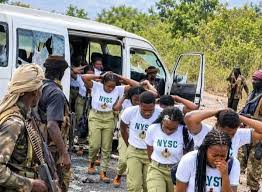

Security Operatives Rescue 20 Abducted NYSC Members in Imo
ShareBy Tambaya Julius, Abuja Security operatives have rescued 20 members of the National Youth Service Corps (NYSC) who were abducted...

Nigeria’s Oil Reforms will Unlock $50bn Deep Offshore Investments – Tinubu
SharePresident Bola Tinubu said recent reforms in Nigeria’s oil and gas sector are designed to unlock up to 50 billion...
Ododo Condoles Families of NAF Personnel, Armed Forces Over Ondo Crash
ShareFrom Joseph Amedu, Lokoja Kogi State Governor, Ahmed Ododo has commiserated with the families of the Nigerian Air Force personnel...
WUEDA Tasks Journalists on Verification, Development Reporting
ShareFrom Francis Sadhere, Delta The Warri, Uvwie and Environs Special Area Development Agency (WUEDA) has urged journalists to strengthen investigative...
Dauda Joins FG’s Delegation for Nigeria- Ethiopia Leadership Exchange, Learning Visit
ShareFrom Ifeanyichukwu Nwannah, Gusau President Bola Tinubu has approved a high-level Nigerian delegation to Addis Ababa for a leadership exchange...
Civic Education Vital for Future Leaders – Ekiti Commissioner
ShareThe Ekiti State Government said on Tuesday that exposing students to civic education played a vital role in preparing them...
DSIRS Threatens Prosecution of Fake Tax Collectors, Warns Taxpayers
ShareFrom Francis Sadhere, Delta The Delta State Internal Revenue Service (DSIRS) has warned individuals and groups issuing fake tax demand...