
view point
Advancing Food Security through ONSA AgriShield Initiative

By Chido Onumah
The Federal Government is strengthening the connection between national security and food security through the AgriShield Initiative, led by the National Counter Terrorism Centre in the Office of the National Security Adviser, in partnership with TAG International.
The Borno State pilot focuses on a concern that reaches every Nigerian household: farmers must be able to reach their land, cultivate it and bring in the harvest without fear. By explaining the protection being provided and bringing community concerns into government planning, AgriShield supports agricultural recovery, safer livelihoods and a more secure national food supply.AgriShield is a creative campaign under the NCTC strategic communication programme for counter-terrorism and countering violent extremism. Its central message, “Our Presence is Your Peace,” translates security from operational statistics into everyday outcomes.
For a farming family, security means an open road to the farm, crops tended through the season and produce reaching the market. The campaign measures progress by threats removed, harvests secured and ordinary life restored.
This approach is grounded in research. Between June and July, a baseline survey covered 1,409 residents in 18 wards across Maiduguri Metropolitan Council, Jere and Mafa Local Government Areas. Only 17 per cent of respondents were aware of any local action to counter violent extremism, and only about one-third of that group could identify a security-related intervention. Awareness of the NCTC itself was about two per cent. Yet 86 per cent expressed strong interest in information about how government protects them. The findings point to a serious visibility gap: substantial work is being done, but too little of it is understood by the communities it is meant to serve.
The survey also showed why food security provides the right frame for engagement. Unemployment concerned 81 per cent of respondents, the cost of living 70 per cent and food insecurity 57 per cent, while terrorism was named by 29 per cent. About 83 per cent rejected extremist groups and the harm they cause. Government therefore need not convince these communities that violent extremism is destructive. It must demonstrate a credible alternative built around protection, livelihoods, visible delivery and hope, particularly for young people vulnerable to recruitment, irregular migration, drugs and despair.
AgriShield will run initially from October to December in Maiduguri Metropolitan Council, Jere and Mafa. It will combine radio programmes, community town halls, locally performed drama, recorded testimony from farmers and frontline officers, and carefully selected national media content. Four radio stations will carry 24 talk shows and 80 jingle slots in Hausa and Kanuri. Six town hall meetings, two in each local government area, will enable farmers, traditional and religious leaders, young people, women and security representatives to discuss practical concerns directly. An endline survey in December will return to the same wards to measure changes in awareness, trust and public understanding.
The channel mix reflects local evidence. Radio reaches 67 per cent of respondents and is the single most trusted source for 41 per cent. Community and religious leaders form the next most trusted category, while Facebook and TikTok are important for people under 30. AgriShield will therefore use radio for broad reach, credible local voices for trust and short-form digital content for younger audiences. It will also incorporate SMS and telephone engagement so that subsistence farmers are not excluded by limited internet access. Communication will remain two-way: questions and criticism from communities will inform weekly editorial decisions and subsequent messages.
A major strength of the initiative is the breadth of federal institutions that have committed their capabilities to it. At the first inter-agency coordination meeting convened by the NCTC-ONSA on 17 September, the Nigeria Police Force offered its state commands and public-relations network; Defence Headquarters offered its strategic communication structures, monthly briefings, Armed Forces Radio and service platforms; and the Nigeria Security and Civil Defence Corps brought its Agro-Rangers mandate and field presence for the protection of farmers. The State Security Service committed intelligence support and early warning, while the Nigeria Immigration Service highlighted the cross-border dimensions of recruitment and youth migration.
The Federal Radio Corporation of Nigeria offered its nationwide broadcast capacity in more than 25 Nigerian languages. The National Orientation Agency placed its 818 structures and over 4,000 personnel at the service of community mobilisation, dialogue, drama and local-language outreach. The Institute for Peace and Conflict Resolution offered state-level peace structures, trained dispute-resolution stakeholders and an early-warning volunteer network. NIRSAL Plc also committed institutional support. These bodies join the NCTC-ONSA in an emerging whole-of-government platform that connects security operations, agricultural resilience, public information, community participation and conflict prevention.
The pilot also relies on partners with strong local knowledge. The Network of Civil Society Organisations in Borno State, which brings together about 200 organisations, will support mobilisation and community delivery. Its grassroots reach complements the NCTC’s continuing engagement with the Partnership Against Violent Extremism network. TAG International provides technical partnership in research, campaign design, content support, monitoring and evaluation. The initiative is also enabled by the Federal Government’s partnership with the United Kingdom Government in strengthening strategic communication, community resilience and counter-terrorism cooperation.
Inter-agency cooperation is itself part of the message. Communities often interpret contradictory statements or isolated agency publicity as evidence of disorganisation. AgriShield establishes a common message platform, nominated communication focal points and a single NCTC clearing house. Operational claims will be verified by the responsible agency before publication, and sensitive information will be escalated through agreed channels. Agencies will appear together at community engagements and amplify verified campaign material through their existing platforms. This arrangement preserves accuracy, protects operations and allows citizens to see a coordinated Federal Government response.
The safeguards are equally important. The campaign will communicate verified operations and results without disclosing itineraries, compromising intelligence or exposing farmers and community messengers to retaliation. Planning will take account of possible extremist backlash, and field engagements will be limited to accessible locations agreed with the responsible security agencies. Local voices will be selected with care because formal gatekeepers are not equally trusted in every ward. Above all, the campaign will avoid exaggerated claims. Public confidence grows when official communication is accurate, timely and matched by visible action on the ground.
AgriShield reflects the Federal Government’s understanding that food security cannot be separated from human security. Military, intelligence and law-enforcement operations create the protective space; agricultural and financial institutions support production; communicators make verified progress visible; and civil society ensures that policy hears the people it affects. Each element reinforces the others. Farmers who feel protected are more likely to return to their fields. Communities that receive credible information are better placed to resist rumours, cooperate with authorities and report threats. Safe cultivation and harvests, in turn, strengthen livelihoods and reduce the economic pressures that violent groups exploit.
Through the NCTC-ONSA, TAG International, participating federal agencies, civil society and local leaders, AgriShield places the farmer at the centre of the national security conversation. The initiative recognises that every safely cultivated field contributes to stability and every protected harvest strengthens Nigeria’s food supply. That is the standard by which the campaign should be judged: credible information, responsive institutions, safer communities and more Nigerians able to produce food without surrendering their land or future to fear.
Chido Onumah is special adviser to the National Security Adviser on Strategic Communication and Civil Society Liaison.
By Uddin Ifeanyi
Against the backdrop provided by the incumbent government’s professed ambitions for the country, the 4.43 per cent by which the economy grew on an annualised basis in the second quarter of this year is far from the kind of high-productivity growth trajectory that the country needs.
As further evidence, though, of the economy’s continued return to normalcy, it is a more than welcome outcome. In this latter sense, it reinforces the messaging from the 3.89 per cent growth recorded in the first three months of this year. And it is also the strongest second quarter performance recorded by the economy in the last three years, up from the 4.23 per cent recorded in the same period, last year.In the last twenty years, the economy has skittered between the low (about 2—3 per cent average annual growth rates) of the last decade, in which growth was too tepid to raise living standards, even as population growth pressures prevailed, and periods before that, when high oil prices and investment booms produced bursts of 6—7 per cent average annual growth rates. The lessons from the limited reforms put in place by the Tinubu administration go beyond the fact that they have been able to nudge the economy towards a semblance of recovery from yesterday’s economic lassitude. These lessons matter more in our present circumstances as an admonitory codicil to the government’s current medium-term aspiration of a 7 per cent trend growth rate for the economy.
While this higher growth rate is necessary if the economy is to get ahead of population growth and raise living standards, our policy establishment cannot forget that successive governments in the country have struggled to convert growth episodes into sustained, productivity-driven expansion. Against The Renewed Hope Development Plan’s (2026—2030) goals of diversification, productivity, human capital, and private sector-led growth, therefore, the most encouraging part of the second quarter 2026 growth numbers is the extent to which the economy has moved beyond crude oil-led growth. The National Bureau of Statistics (NBS) reports that the non-oil economy (up 4.31 per cent in Q2 this year) accounted for 95.84 per cent of real domestic output.
Yet, the fact that the economy is no longer waiting for crude oil production to rescue aggregate output, does not mean that it has been transformed. What to make of the fact that industry growth slipped from 7.46 per cent in the second quarter of last year to 3.96 per cent in the same period this year? Or that manufacturing was up 3.24 per cent in real terms in the second three months of this year, while its share of domestic output fell from 7.81 per cent to 7.72 per cent year-on-year? Or that real electricity, gas, steam output contracted by 10.63 per cent?
There are two possible responses to these questions. The first one invites us to recognise a major dilemma confronting efforts to reform this economy. And that is that an economy cannot sustainably grow at a trend rate of 6—7 per cent annually if one of its fundamental productive inputs — reliable electricity — is shrinking. The second describes the main deliverable of successful reforms to the way this economy is run: if the Nigerian economy is to transit from its current low-income/low-productivity level to the sort of place envisaged by Nigeria Agenda 2050, industry must become the main transmission mechanism between agriculture and the services sector.
Which of these (the dilemma confronting and the goal of reforms) does the decomposition of the growth story told by the Q2 2026 GDP numbers help? Here, if you separated the beautiful parts of the growth narrative, especially telecommunications and information services from the rest, the picture you are left with is more of an economy recuperating across a broad front with a few highly dynamic modern sectors pulling the average up, rather than one going through a dramatic productivity boom.
The fact that despite its impressive growth outcomes in the most recent report on the economy’s performance, a quarter of the economy (in agriculture) continues to produce at relatively low productivity levels, while employing a large proportion of Nigerians is worrisome. To boost per capita income, agricultural output must not only grow faster than 4 per cent annually, but we must also raise agricultural productivity dramatically and move the labour freed up by this process into economic sectors with higher returns to invested funds.
If nothing else, therefore, the domestic output numbers for the second quarter of this year show that the structural transformation problem that the economy has long faced, and which the Nigeria Agenda 2050 pays eloquent lip-service to has not been resolved. Thus, while there are three reasons from the report to remain upbeat about the economy’s trajectory (acceleration of growth, strengthening of the non-oil economy, and oil production recovery), there are four arguably weightier reasons for worry (growth is still beyond the trend rate that we all know is necessary for the economy’s sustainable development, industry is losing momentum, the manufacturing sector’s underperformance is worrying, and we cannot ignore the fact that electricity is shrinking).
All of this leads to the one question that accompanied me through every page of the report: Is Nigeria’s economy now growing faster because the reforms put in place by the incumbent federal government have removed the macroeconomic constraints on growth, or is it growing faster because the economy is recovering from the extraordinary disruption of the Buhari/Emefiele diarchy?
Uddin Ifeanyi, a journalist manqué and retired civil servant, can be reached @IfeanyiUddin.

By Chijioke Okoronkwo
The recurring headline, “Another Nigerian Killed in South Africa”, has become a staple of both local and international news bulletins.
Most of these deaths result from xenophobic attacks, allegations of crime/drug dealing, and excessive use of force by the law enforcement agencies.
There are also reports of Nigerians killing Nigerians owing to criminal, cult and gang rivalries as well as business and personal disputes.
Available data from the Nigerian Union South Africa (NUSA) and the Nigerian Citizens Association South Africa (NICASA) indicates that between 2000 and 2020, more than 127 Nigerians were killed in South Africa.
Latest reports indicate that these killings continued in the subsequent years.
On Nov. 9, 2025, Mr Chikamnene Eddie Mmuonagorom, an indigene of Anambra, was stabbed to death in his home in Floville, Kimberley; On Feb. 8, Emeka Uzor, an indigene of Enugu State, was shot dead while in his vehicle at a Caltex filling station in Windsor East, Randburg, Johannesburg.
Most recently, on Feb. 11, Isaac Satlat, an indigene of Plateau, who was an e-hailing driver, was strangled to death in Pretoria by passengers (a man and a woman) who requested a ride via the Bolt app.
In the aftermath of each incident, statements and condemnations are issued and diplomatic engagements are initiated—oftentimes inconclusively. Then, another incident occurs.
The Nigerians in Diaspora Commission (NIDCOM) has consistently flayed the reoccurring menace.
NIDCOM Chief Executive Officer, Abike Dabiri-Erewa, in a statement by the commission’s Director of Media, Public Relations and Protocols, Abdur-Rahman Balogun, described the incidents as disturbing and urged South African authorities to ensure justice was served.
She also called for improved protection of Nigerians and other non-indigenes residing in the country.
Dabiri-Erewa said that that Nigeria and South Africa shared longstanding ties and expressed concern over recurring violent crimes against Nigerians.
In a similar vein, NUSA described the killings as “senseless acts of violence” and urged the South African Police Service to ensure that those responsible were promptly and fully prosecuted.
On his part, NICASA President, Mr Frank Onyekwelu, said the association condemned the killings in the strongest terms, adding that no individual or group had the right to take the law into their hands or deprive another person of life.
He urged members of the Nigerian community in South Africa to remain calm, peaceful and law-abiding as engagements continued with the Nigerian Consulate, South African authorities and human rights institutions.
While South African authorities often make arrests, the issues of diligent prosecution and conviction are not always clearly addressed.
It is worth noting that three of the accused—Dikeledi Mphela (25), Gotseone Machidi (26), and McClaren Mushwana (30)—are appearing before the Pretoria Magistrate’s Court in connection with the murder of Isaac Satlat.
In retrospect, Nigeria-South Africa relations date back to 1960, with Nigeria positioned in the vanguard of the anti-apartheid and liberation struggles.
In 1960 to 1990s, after the 1960 Sharpeville Massacre, Nigeria championed the anti-apartheid cause, funding liberation movements like the ANC and providing passports to South African activists, according to The Africa Report and Wikipedia.
In 1976, Nigeria established the Southern Africa Relief Fund (SARF) to support the anti-apartheid struggle.
More importantly, the “Mandela Tax”, a compulsory deduction from Nigerian civil servants’ salaries and voluntary donations by citizens in the 1970s, was introduced to support the anti-apartheid struggle in South Africa.
In 1994, formal, diplomatic, and economic ties were established after the end of apartheid and the start of democracy in South Africa in 1994, culminating in a Bi-national Commission (BNC) inaugurated in 1999 to manage relations.
Recall that xenophobic attacks on Nigerians and other African migrants occurred in 2008, 2015, and 2019, leading to injuries and fatalities among Nigerians in South Africa.
While xenophobic attacks seem to be abating, the killings of Nigerians under various guises are cyclical.
The disturbing trend has drawn the attention of perceptive pan-Africanists.
The President, Africa Development Study Centre (ADSC), Victor Oluwafemi, said it had become expedient for the Federal Government to summon South Africa’s High Commissioner to Nigeria over recurrent attacks on Nigerians in the country.
Oluwafemi recommended a formal engagement for clear assurances regarding the safety of Nigerian nationals in South Africa.
According to him, the safety of Nigerian citizens abroad was not a diplomatic courtesy but a sovereign obligation.
Oluwafemi said that incidents involving the killing or violent targeting of Nigerians abroad must trigger visible diplomatic action within 24 hours.
According to him, delayed responses weaken deterrence and embolden repetition.
Julius Malema, South African opposition leader and founder and leader of the Economic Freedom Fighters (EFF), denounced the killings and xenophobic attacks, applauding Nigeria’s contributions to South Africa’s freedom.
He described xenophobia as “a betrayal of African unity”.
Malema spoke recently at the opening of the 2025 Annual General Conference of the Nigerian Bar Association (NBA) held at the International Conference Centre, Enugu.
He said Nigeria was one of the countries that stood firmly by South Africa, during that country’s darkest hour.
He recalled that when South Africa was fettered by apartheid and its people were murdered, imprisoned, and denied basic humanity, Nigeria rose as a giant for justice, placing the country squarely at the centre of its corridors.
He said that Nigeria set up the Southern African Relief Fund and mobilised its citizens to contribute to the liberation struggle.
He added that Nigerian students did not only contribute through Mandela Tax, but also, through protests in opposition to apartheid.
Ultimately, while Nigerians living in South Africa are obligated to engage in legitimate business and shun criminality, pan Africanists say the authorities must fulfill their responsibility to protect foreign nationals. (NAN)
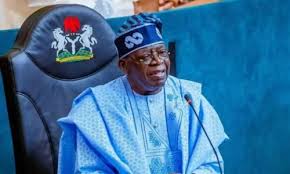
By Bola Ahmed Tinubu
Africa is paying too much to borrow.
How and on what basis the continent’s governments can secure financing should not be based on external discretion.
Calls to end the “Africa premium” — the gap between how Africa is assessed and the reality of its economies — can no longer be ignored.
Fitch, Moody’s and S&P Global Ratings, the three dominant global credit rating agencies, wield outsized influence over Africa’s access to international capital.
Their judgments shape investor behaviour, yet they consistently misjudge African risk.
Just three African countries are rated investment grade, even as the IMF projects the continent to be the world’s fastest-growing region this year.Africa is now establishing its own credit rating agency; it is a necessary corrective.
Detractors claim Africa wants to mark its own homework. The evidence suggests otherwise: a 2023 UN Development Programme report notes that “idiosyncrasies” in credit ratings cost Africa $75bn annually in excess interest and foregone lending.
An African credit rating agency would address the greatest weakness of the “Big Three”: limited on-the-ground presence.
In their models, quantitative data is weighed against subjective judgments on political risk, institutional strength and policy durability. How those judgments are reached — and how much they count — is left to opaque “analyst discretion”.
Conclusions drawn from afar fail to capture local realities. Relying on such judgments means global market cycles trump individual states’ economic fundamentals.
Many countries across the continent have export-led economies based on commodities. When prices fall or markets tighten, African nations are downgraded swiftly and broadly — even when their reserves are strong, fiscal buffers are intact and debt profiles remain manageable.
Downgrades then become self-fulfilling, raising borrowing costs and straining public finances.
But an African credit rating agency will not suffice on its own. The agency must earn the confidence of global capital with assessments anchored in the sort of timely, comprehensive data to which international markets respond.
Better data has been partly responsible for Nigeria’s recent upgrades: improving the timeliness and breadth of economic statistics; bringing previously off-balance-sheet central bank lending on to the official public debt register; rebasing GDP to reflect economic reality more accurately; publishing more budget documents to strengthen fiscal transparency.
The rest reflects hard policy choices, such as the removal of a wasteful fuel subsidy and the liberalisation of the exchange rate.
Non-oil growth has helped diversify the economy as the Naira, for the first time, decouples from global crude prices.
Even so, Nigeria’s ratings still lag behind reforms and market sentiment. Our November dollar-denominated bonds were oversubscribed 5.5 times.
Slow upward adjustments are commonplace across Africa, especially when set against the speed of downgrades. Smaller countries, lacking Nigeria’s scale and analyst coverage, bear the cost of this delay most.
A continent-wide credit rating agency will capture reform momentum in real time.
Delayed upgrades cost money: African countries cannot afford to wait years to access markets after implementing hard reforms.
Nations must stand on their own feet — especially in the wake of aid cuts. But they should be able to do so on a level playing field.
We understand that global capital will still look to the established agencies for validation. However, if an African agency can identify progress earlier, later corroborated by the Big Three, it will gain credibility while serving as an early signal to both markets and those agencies.
It is not a replacement, but a complement.
Affordable access to credit will determine whether Africa becomes the growth engine that its demographic boom promises.
By mid-century, the continent will account for a quarter of the world’s working-age population. Africa’s success is not a regional concern, but a global opportunity.
Tinubu is the President of the Federal Republic of Nigeria.(NAN)




UBA Wins N156bn Debt Recovery Case Against Stallion Group
ShareThe Court on Friday ruled in the Bank’s favour on all issues and granted all its prayers. United Bank for...


Senator Abba Moro: It is Time to Go Home
ShareBy Cleopas Agada For seven years in the National Assembly, what has Benue South actually felt? For a man who...

NCDs Fastest-growing Disease Burden in Nigeria — Pate
ShareThe Coordinating Minister of Health and Social Welfare, Prof. Muhammad Pate, said Non-Communicable Diseases (NCDs) have become one of the...

2027: Adeleke Inaugurates Aare Asejere’s Campaign Council
ShareFrom Ayinde Akintade, Osogbo The Governor of Osun State, Senator Ademola Adeleke, yesterday charged newly inaugurated members of the Osun...

INEC Seeks Stakeholders’ Collaboration for Credible, Peaceful Elections
ShareThe Independent National Electoral Commission (INEC) has reaffirmed its commitment to strengthen collaboration with the National Orientation Agency (NOA), security...

Reps Reject Child Marriage, Demand Protection of Girl Child
ShareBy Ubong Ukpong, Abuja The House of Representatives on Thursday unanimously called for urgent and coordinated actions to protect Nigerian...


Court Awards N125, 000 Cost against Odumodublvck
ShareAn Abuja High Court on Wednesday awarded N125, 000 against a rapper, Tochukwu Ojogwu, popularly known as “Odumodublvck”, for asking...


Hunger Changed My Mind, Timini Egbuson on Embracing YouTube movies
ShareNollywood actor Timini Egbuson has reflected on his changing perception of YouTube movies, joking that he might have struggled financially...


Peller Announces Livestream with Peter Obi
SharePopular Nigerian TikTok streamer, Hamzat Adelaja, popularly known as Peller, has announced an upcoming livestream with the presidential candidate of...

Nigeria’s inflation drops from 15.39 Per Cent to 14.63 Per Cent in September
ShareBy Tony Obiechina, Abuja The National Bureau of Statistics (NBS) on Thursday disclosed that Nigeria’s inflation has eased from 15.39...