
NEWS
INEC Seeks Stakeholders’ Collaboration for Credible, Peaceful Elections

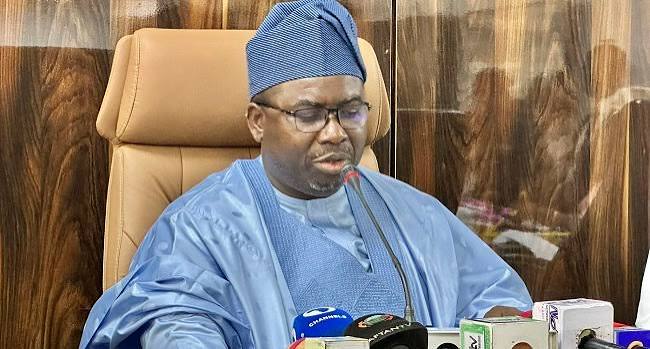
The Independent National Electoral Commission (INEC) has reaffirmed its commitment to strengthen collaboration with the National Orientation Agency (NOA), security agencies and other relevant stakeholders to ensure credible, peaceful and transparent general elections in 2027.
The Chairman of INEC, Prof.
Joash Amupitan, gave the assurance on Thursday in Abuja at the commencement of the Nationwide Grassroots Mobilisation for the 2027 General Election, organised by NOA.The theme of the campaign was, “Your Vote, Your Voice, Our Future: Say No to Apathy, Vote Buying and Violence”.
Amupitan said the forthcoming general election offered the country an opportunity to demonstrate its democratic progress and establish its readiness to conduct elections that would command national and international confidence.
“The upcoming 2027 general election presents us with an opportunity to demonstrate to Africa and the world that Nigerian democracy has matured beyond measure.
According to him, Nigeria must use the election to demonstrate its preparedness in electoral administration, technological development and operational transparency.
Amupitan said INEC was committed to strengthening its institutional capacity and improving the systems required to deliver credible elections across the country.
He said that achieving the objective would require cooperation between the electoral commission, NOA, security agencies, civil society organisations and patriotic Nigerians.
The INEC chairman identified technology as a critical component of the electoral process, explaining that the commission is strengthening its technical infrastructure to protect electoral data and improve the efficiency of election administration.
He said that the large number of registered voters and the geographical challenges associated with conducting elections across Nigeria made the effective application of technology indispensable.
Amupitan said that there had been occasions when Nigerians waited several days for election results to be announced, adding that INEC is working to prevent such delays through improved technological arrangements.
He said the commission had secured the procurement of additional bimodal voter accreditation systems to strengthen its capacity to accredit voters during the 2027 general election.
He said that INEC was also expanding hardware redundancy and deploying additional equipment to ensure that technological challenges did not disrupt electoral operations.
The chairman said the equipment was being delivered, tested and configured ahead of the elections as part of measures to strengthen the commission’s operational readiness.
Amupitan acknowledged public concerns over the technological challenges experienced during the 2023 general elections, saying INEC is taking steps to address the issues and improve its systems.
He said the commission was working to ensure that accreditation equipment and other technological facilities were sufficiently available across the country before the next presidential election.
According to him, improving the reliability of electoral technology remains central to the commission’s efforts to strengthen public trust and ensure that every eligible voter can participate without unnecessary difficulties.
The INEC chairman also identified the protection of polling-unit results as a non-negotiable aspect of the commission’s transparency framework.
He said that the commission was strengthening the electronic transmission and publication of polling-unit results, including the uploading of Form EC8A, to promote transparency and allow citizens to verify electoral outcomes.
Amupitan said comprehensive cybersecurity measures were being deployed to protect INEC’s networks, data transmission channels and digital systems against cyberattacks and unauthorised interference.
He said that technological advancement had introduced new challenges, particularly with the emergence of artificial intelligence and other sophisticated digital tools that could potentially be exploited to undermine electoral credibility.
The chairman said that the proper use of Form EC8A would help safeguard the accuracy, authenticity and reliability of results recorded at polling units.
He said the initiative was being implemented in compliance with Section 29 of the Electoral Act 2026 and was designed to improve the transparency and integrity of political parties’ candidate nomination procedures.
According to him, the digital process will help prevent discrepancies between candidates who emerged from party primaries and the names subsequently submitted to the commission for elections.
He said that following the conclusion of party primaries, the details of nominated candidates were being uploaded to the portal to ensure that the commission maintained accurate records of candidates selected through the recognised party processes.
Amupitan said the digital system would also allow INEC to reflect changes arising from successful appeals after party primaries, thereby ensuring that only duly recognised candidates are included in the nomination process.
He said that the initiative was intended to address past challenges involving the substitution of candidates, arbitrary exclusions and disputes over party nominations.
The INEC chairman said strengthening digital nomination procedures would improve accountability, reduce administrative errors and reinforce confidence in the electoral system.
In his keynote address, Malam Lanre Issa-Onilu, Director-General of NOA, said the agency was committed to helping Nigerians understand the electoral process and appreciate their responsibilities as citizens.
According to him, civic education must be presented in ways that make participation in elections understandable and relevant to the everyday lives of Nigerians.
He said that voter apathy weakened democratic representation by allowing a smaller proportion of citizens to determine decisions that affected the wider population.
The NOA boss also condemned electoral violence, noting that it threatens lives, silences voters and damages relationships within communities long after elections have ended.
He said that political competition should never be allowed to result in the loss of lives or the destruction of peaceful relationships among Nigerians.
He further cautioned against allowing political disagreements to destroy the bonds between neighbours, emphasising that peaceful coexistence remains essential to national unity and democratic development.
Issa-Onilu also urged Nigerians to reject financial inducements capable of influencing their electoral choices, stressing that the country’s collective future should not be determined by temporary personal benefits.
He said that convictions would guide the grassroots mobilisation campaign as the agency intensified efforts to educate citizens on the importance of responsible political participation.
The NOA director-general called on stakeholders, community leaders and other relevant institutions to support the campaign by promoting peaceful conduct, voter awareness and respect for democratic principles.
He said that the success of the 2027 general elections would depend on INEC’s preparedness, and also on the willingness of citizens to participate responsibly and reject practices capable of undermining electoral credibility.(NAN)

Popular Nigerian TikTok streamer, Hamzat Adelaja, popularly known as Peller, has announced an upcoming livestream with the presidential candidate of the Nigeria Democratic Congress (NDC), Peter Obi
He disclosed this in a TikTok livestream, saying Obi’s team had reached out to him.
Peller, however, clarified that the planned session was purely for content and platform engagement, and not a political endorsement of Obi’s 2027 presidential ambition.
According to Peller, he would only be livestreaming with the former Anambra governor and not endorsing his presidential ambition.
He said he was not supporting any presidential candidate or asking Nigerians to vote for Obi, adding that the proposed session would be limited to a question-and-answer interaction with Obi.
“Peter Obi’s people want to stream with me on TikTok. They want to do a stream with me on TikTok.
“Guys, listen, because una dey quick to judge a person. I don’t tell una make una vote anybody. I am not a presidential supporter.
“Me, I just want stream with them on my livestream on TikTok, question and answer.
“Make una give me questions to ask them and I go ask them. E no concern me,” he said.
Peller said his followers would submit questions for the proposed livestream, which he would ask during the session.
He explained that the questions would come from his followers and that he would not use the platform to raise personal issues. (NAN)
By Tony Obiechina, Abuja
The National Bureau of Statistics (NBS) on Thursday disclosed that Nigeria’s inflation has eased from 15.39 percent in August to 14.
63 percent in September 2026.According to NBS “On a year-on-year basis, the headline inflation rate for September 2026 stood at 14.
63%, when compared to 15.39% and 20.98% recorded in August 2026 and September 2025, respectively.“The month-on-month headline inflation rate in September 2026 was 0.06%, which was 0.65% lower than the rate recorded in August 2026 (0.
71%).According to a statement signed by the Statistical General of the Federation, Prince Adeyemi Adeniran, NBS explained that at the divisional level, the three major contributors to the headline inflation were Food and non-alcoholic Beverages: 5.85%, Restaurants & Accommodation Services: 1.89%, and Transport: 1.56%; while the least contributors were Recreation, Sport, and Culture: 0.05%, Alcoholic Beverages, Tobacco, and Narcotics: 0.05%, and Insurance and Financial Services: 0.07%.
“The Food inflation rate in September 2026 was 19.59% on a year-on-year basis, lower than 20.16% recorded in September 2025. Also, on a month-on-month basis, the Food Inflation rate in September 2026 was -1.55%, down by 2.57 percentage points from August 2026 (1.02%).
“This can be attributed to the rate of change in the average prices of Guinea corn flour, sold loose, Maize (Corn) Flour White (sold loose), Rice Local, short-Grained, Egg, Onion Fresh, Palm oil, Green Beans Fresh, Irish Potatoes, Okra, Tomatoes Fresh, Green Peas (Dried), Plantain, among others.
“Core Inflation, which excludes the prices of volatile agricultural produce and energy, stood at 12.95% in September 2026 on a year-on-year basis. On a month-on-month basis, the core inflation rate was 1.11% in September 2026, up by 1.17% compared to August 2026 (-0.06%).
NBS further stated that the inflation rate of the sub-indices for September 2026 shows that the monthly changes recorded were Farm Produce (-2.86%), Energy (5.38%), Services (0.41%), Goods (0.10%), and Imported Food (0.04%).
Meanwhile, the inflation rates on a year-on-year basis were as follows: Farm Produce (18.85%), Energy (10.85%), Services (14.51%), Goods (14.31%), and Imported Food (9.18%).
“On a year-on-year basis, the urban inflation rate in September 2026 was 15.64%. On a month-on-month basis, the urban inflation rate was 0.53% in September 2026, up by 0.25% compared to August 2026 (0.28%).
“The rural inflation rate in September 2026 was 12.46% on a year-on-year basis. On a month-on-month basis, the rural inflation rate in September 2026 was -0.89%, down by 2.68% compared to August 2026 (1.79%).
“In analysing price movements under this section, it should be noted that CPI is weighted by consumption expenditure patterns that differ across States and locations. Accordingly, the weight assigned to a particular Food or Non-Food item may differ from State to State making interstate comparisons of consumption baskets inadvisable and potentially misleading”.
The statement further noted that “in September 2026, the All-Items inflation rate on a Year-on-Year basis was highest in Imo (30.04%), Enugu (22.38) and Niger (22.05%), while Taraba (1.78%), Bauchi (2.84%) and Adamawa (3.66%) recorded the lowest rise in Headline inflation on a Year-on-Year basis. On a Month-on-Month basis, however, September 2026 recorded the highest increases in Imo (8.64%), Kaduna (4.46%), and Sokoto (3.01%), while Adamawa (-6.10%), Bauchi (-5.31%), and Kano (-4.49%) recorded the lowest rise in the Month-on-Month inflation.
“In September 2026, Food inflation on a Year-on-Year basis was highest in Lagos (34.40%), Imo (33.79%), and Ondo (31.49), while Taraba (-7.47%), Yobe (-0.37%), and Borno (2.18%) recorded the slowest rise in Food inflation on a Year-on-Year basis. On a Month-on-Month basis, however, September 2026 Food inflation was highest in Imo (5.15%), Ondo (4.46%), and Oyo (3.82), while Adamawa (-13.84%), Kano (-11.01%), and Bauchi (-10.21%) recorded the slowest rise in Food inflation on a Month-on-Month basis.
The NBS said the report is centred on a new CPI base year of 2024 and a weight reference period of 2023. Hence, the Consumer Price Index (CPI) increased to 146.38 in September 2026 and reflects a 0.08-point increase from the preceding month.
By Tony Obiechina, Abuja
The National Bureau of Statistics (NBS) on Thursday disclosed that Nigeria’s inflation has eased from 15.39 percent in August to 14.63 percent in September 2026.
According to NBS “On a year-on-year basis, the headline inflation rate for September 2026 stood at 14.63%, when compared to 15.39% and 20.98% recorded in August 2026 and September 2025, respectively.
“The month-on-month headline inflation rate in September 2026 was 0.06%, which was 0.65% lower than the rate recorded in August 2026 (0.71%).
According to a statement signed by the Statistical General of the Federation, Prince Adeyemi Adeniran, NBS explained that at the divisional level, the three major contributors to the headline inflation were Food and non-alcoholic Beverages: 5.85%, Restaurants & Accommodation Services: 1.89%, and Transport: 1.56%; while the least contributors were Recreation, Sport, and Culture: 0.05%, Alcoholic Beverages, Tobacco, and Narcotics: 0.05%, and Insurance and Financial Services: 0.07%.
“The Food inflation rate in September 2026 was 19.59% on a year-on-year basis, lower than 20.16% recorded in September 2025. Also, on a month-on-month basis, the Food Inflation rate in September 2026 was -1.55%, down by 2.57 percentage points from August 2026 (1.02%).
“This can be attributed to the rate of change in the average prices of Guinea corn flour, sold loose, Maize (Corn) Flour White (sold loose), Rice Local, short-Grained, Egg, Onion Fresh, Palm oil, Green Beans Fresh, Irish Potatoes, Okra, Tomatoes Fresh, Green Peas (Dried), Plantain, among others.
“Core Inflation, which excludes the prices of volatile agricultural produce and energy, stood at 12.95% in September 2026 on a year-on-year basis. On a month-on-month basis, the core inflation rate was 1.11% in September 2026, up by 1.17% compared to August 2026 (-0.06%).
NBS further stated that the inflation rate of the sub-indices for September 2026 shows that the monthly changes recorded were Farm Produce (-2.86%), Energy (5.38%), Services (0.41%), Goods (0.10%), and Imported Food (0.04%).
Meanwhile, the inflation rates on a year-on-year basis were as follows: Farm Produce (18.85%), Energy (10.85%), Services (14.51%), Goods (14.31%), and Imported Food (9.18%).
“On a year-on-year basis, the urban inflation rate in September 2026 was 15.64%. On a month-on-month basis, the urban inflation rate was 0.53% in September 2026, up by 0.25% compared to August 2026 (0.28%).
“The rural inflation rate in September 2026 was 12.46% on a year-on-year basis. On a month-on-month basis, the rural inflation rate in September 2026 was -0.89%, down by 2.68% compared to August 2026 (1.79%).
“In analysing price movements under this section, it should be noted that CPI is weighted by consumption expenditure patterns that differ across States and locations. Accordingly, the weight assigned to a particular Food or Non-Food item may differ from State to State making interstate comparisons of consumption baskets inadvisable and potentially misleading”.
The statement further noted that “in September 2026, the All-Items inflation rate on a Year-on-Year basis was highest in Imo (30.04%), Enugu (22.38) and Niger (22.05%), while Taraba (1.78%), Bauchi (2.84%) and Adamawa (3.66%) recorded the lowest rise in Headline inflation on a Year-on-Year basis. On a Month-on-Month basis, however, September 2026 recorded the highest increases in Imo (8.64%), Kaduna (4.46%), and Sokoto (3.01%), while Adamawa (-6.10%), Bauchi (-5.31%), and Kano (-4.49%) recorded the lowest rise in the Month-on-Month inflation.
“In September 2026, Food inflation on a Year-on-Year basis was highest in Lagos (34.40%), Imo (33.79%), and Ondo (31.49), while Taraba (-7.47%), Yobe (-0.37%), and Borno (2.18%) recorded the slowest rise in Food inflation on a Year-on-Year basis. On a Month-on-Month basis, however, September 2026 Food inflation was highest in Imo (5.15%), Ondo (4.46%), and Oyo (3.82), while Adamawa (-13.84%), Kano (-11.01%), and Bauchi (-10.21%) recorded the slowest rise in Food inflation on a Month-on-Month basis.
The NBS said the report is centred on a new CPI base year of 2024 and a weight reference period of 2023. Hence, the Consumer Price Index (CPI) increased to 146.38 in September 2026 and reflects a 0.08-point increase from the preceding month.
By Tambaya Julius, Abuja
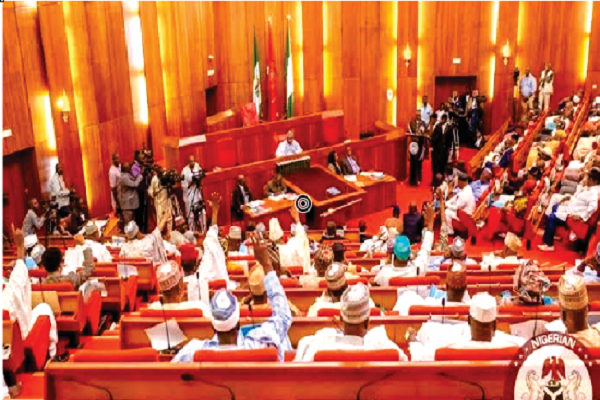
The Senate has ordered an investigation into the death of a National Youth Service Corps (NYSC) member, Etimbuk Daniel, at the Enugu State orientation camp, following concerns over medical care and emergency response services in camps across the country.
The investigation is expected to establish the circumstances surrounding Daniel’s death and determine whether there were lapses in the medical attention provided to him.
The probe will be handled by the Senate Committees on Police Affairs, Judiciary, Human Rights and Legal Matters, Ethics, Code of Conduct and Public Petitions, Youth Development, and Health, in collaboration with the Nigeria Police Force and the Department of State Services (DSS).
The resolution followed the adoption of a motion of urgent public importance sponsored by Senator Aniekan Bassey, who called for a review of medical services in NYSC orientation camps nationwide.
> Bassey expressed concern over Daniel’s death, describing him as a patriotic young Nigerian who had gone to serve his country with hopes of contributing to national development.
>
> He said the incident had raised questions about the quality of healthcare available to corps members during their mandatory national service.
>
> According to the senator, the circumstances surrounding Daniel’s death highlighted concerns about inadequate medical facilities, a shortage of qualified emergency personnel and delays in referring corps members to hospitals when necessary.
>
> He stressed that the government had a responsibility to protect young graduates deployed away from their homes for national service.
>
> Bassey warned that the incident pointed to wider problems in the healthcare arrangements at orientation camps, including allegations of negligence and ineffective emergency response systems
> He maintained that corps members deserved prompt and adequate medical attention throughout their service year.
>
> Citing Section 14(2)(b) of the 1999 Constitution, as amended, Bassey said the security and welfare of citizens remained the primary purpose of government.
>
> He added that Daniel’s death had plunged his family, friends, the student community and the people of Akwa Ibom State into mourning, making a thorough investigation necessary.
>
> The Senate Chief Whip, Mohammed Tahir Monguno, representing Borno North Senatorial District, seconded the motion.
>
> Also speaking, Senator Abdul Ningi, representing Bauchi Central, sympathised with Daniel’s family, Senator Bassey and the people of Akwa Ibom State and Nigeria over the loss.
>
> Ningi urged the relevant committees to come up with practical recommendations that would help prevent similar incidents in the future.
>
> The Senate subsequently observed a minute of silence in honour of the deceased.
>
> Daniel, who was the immediate past President of the Students’ Union Government of Akwa Ibom State University, reportedly died at the Enugu State NYSC orientation camp following allegations that he was given fake medication and did not receive timely medical attention.
>
> Reports indicated that he initially complained of a headache and was given medication, but his condition reportedly worsened afterwards.
>
> In a statement issued a few days ago, the President of the National Association of Nigerian Students (NANS), Akinteye Afeez, said Daniel had asked to be taken to a hospital after his condition deteriorated.
>
> Afeez alleged that approval for further medical attention came too late, and Daniel died before he could be taken to the hospital.
>
> The allegations have heightened calls for accountability and improved healthcare services at NYSC orientation camps.
>
> Thousands of graduates pass through the camps every year, taking part in drills, physical exercises and other activities before being deployed to their places of primary assignment.
>
>




INEC Seeks Stakeholders’ Collaboration for Credible, Peaceful Elections
ShareThe Independent National Electoral Commission (INEC) has reaffirmed its commitment to strengthen collaboration with the National Orientation Agency (NOA), security...

Reps Reject Child Marriage, Demand Protection of Girl Child
ShareBy Ubong Ukpong, Abuja The House of Representatives on Thursday unanimously called for urgent and coordinated actions to protect Nigerian...


Court Awards N125, 000 Cost against Odumodublvck
ShareAn Abuja High Court on Wednesday awarded N125, 000 against a rapper, Tochukwu Ojogwu, popularly known as “Odumodublvck”, for asking...


Hunger Changed My Mind, Timini Egbuson on Embracing YouTube movies
ShareNollywood actor Timini Egbuson has reflected on his changing perception of YouTube movies, joking that he might have struggled financially...

Peller Announces Livestream with Peter Obi
SharePopular Nigerian TikTok streamer, Hamzat Adelaja, popularly known as Peller, has announced an upcoming livestream with the presidential candidate of...


Nigeria’s inflation drops from 15.39 Per Cent to 14.63 Per Cent in September
ShareBy Tony Obiechina, Abuja The National Bureau of Statistics (NBS) on Thursday disclosed that Nigeria’s inflation has eased from 15.39...


Senate Oders Investigation into Corps Member’s Death in Enugu
ShareBy Tambaya Julius, AbujaThe Senate has ordered an investigation into the death of a National Youth Service Corps (NYSC) member,...


Tinubu Seeks Sweeping Reforms in Drug Laws, Presents Three Bills
Share By Tambaya Julius, Abuja President Bola Tinubu has sent three executive bills to the House of Representatives, seeking to reform...


2027: Group Rejects Alleged Rainbow Coalition Plot in Benue, Warns Wike, Akume Of Any Attempt To Thwart Alia’s Reelection.
ShareFrom Attah Ede, Makurdi The Benue Alliance for Good Governance and Accountability (BAGA), has raised concerns over an alleged political...


Economic Independence: CDS Empowers Veterans with Skills
ShareThe Chief of Defence Staff (CDS), Gen. Olufemi Oluyede, has reaffirmed the commitment of the Defence Headquarters (DHQ) to improving...