
Foreign News
UN Chief Urges Member States, Others to Scale Up Investment on Girl Child

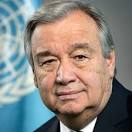
UN Secretary General Antonio Guterres has called on governments, the private sector, civil society, and community leaders to scale up investment in proven solutions, and ensure they reach every girl, everywhere.
Guterres made the call in his message to mark the 2026 International Day of the Girl Child under the theme “End child marriage and invest in girls’ rights!”
International Day of the Girl, celebrated annually on October 11, is a global moment to celebrate girls everywhere, amplifying their voices, actions and leadership.
The UN chief, however, used the 2026 celebration to call for end to child marriage.
“Together, let us defend the right of all girls to a childhood, and ensure every daughter, every sister, grows up free to shape her own future,’’ he said.
According to him, every three seconds, child marriage cuts a girl’s childhood short and one in five girls worldwide is married before the age of 18.
“Child marriage compromises the education, health, and safety of millions of girls across the globe. Fundamentally, it is rooted in poverty.
“The risk goes up in times of conflict, climate shocks, and displacement, leaving families with fewer options for their daughters.”
Guterres said educating girls and providing economic opportunities for their families would halt the harmful practice.
“But we know how to halt this harmful practice. Keeping girls in school, improving economic opportunities for families, enhancing social and legal protections, and challenging discriminatory gender norms all help girls reclaim their agency.
“Over the past 25 years, such solutions have prevented an estimated 68 million child marriages.
“Yet recent funding cuts threaten progress. At the rate we’re going, it will take centuries to eliminate child marriage,’’ he said.
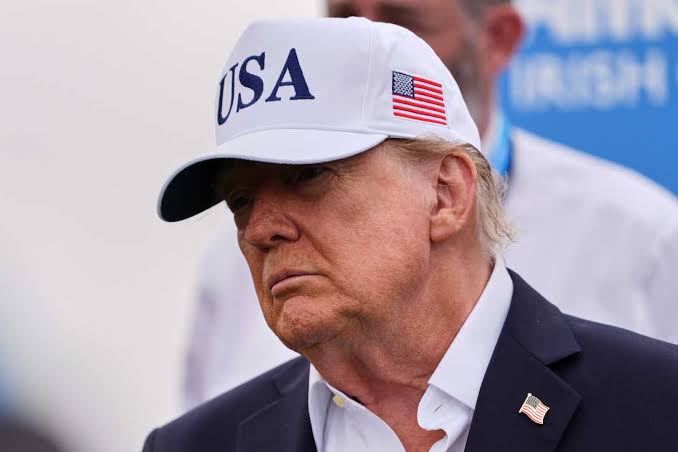
US President Donald Trump is facing a growing backlash over plans to import diesel from Russia as the Iran war continues to impact global energy prices.
Trump on Friday announced that Russian President Vladimir Putin had agreed to release 300,000 tonnes of diesel immediately “to the American and global marketplace” followed by several other shipments.
That is despite signing legislation to authorise fresh US sanctions and tariffs on nations that import Russian oil and gas just weeks ago.
The move has been criticised by some Republican and Democratic lawmakers, who believe the deal violates US laws.
As well as the initial release of 300,000 tonnes of diesel, Trump said Russia would then supply 500,000 tonnes in November and one million more after that.
This would be followed by a further three million tonnes, which would be delivered “within a short period” dependent on the condition of its refineries, which have been attacked by Ukraine during the ongoing war between the two countries.
“Lower prices for Americans, especially our Great Farmers, Ranchers, and Truckers, is my Greatest Priority,” Trump wrote in a Truth Social post.
Russia’s Deputy Prime Minister Alexander Novak confirmed these numbers to Tass, the country’s state-owned news agency, saying the export volume could reach three million tonnes per month in future.
Ukrainian President Volodymyr Zelensky has called the deal a gift to Putin that amounts to “an investment in a war that must be ended”.
It is understood the US Treasury is suspending sanctions on Russian diesel exports until 7 April as part of the deal, but other assets like those in American banks are still frozen.
A group of seven senators – four Republicans and three Democrats on Sunday said the deal violated US laws, urging Trump to “reverse course”.
“The United States should not provide Putin with a financial lifeline while Russia continues to kill Ukrainian civilians,” the lawmakers said.
They added that Congress had “explicitly banned Russian energy imports in 2022 to prevent American dollars from financing Putin’s brutal war against Ukraine”.
The statement was signed by Republicans Susan Collins, Lisa Murkowski, Thom Tillis and John Curtis, as well as Democrats Jeanne Shaheen, Richard Blumenthal and Ron Wyden.
Not everyone is opposed to the deal. Republican Thomas Massie, who has sparred with Trump a number of issues, said the US should lift sanctions on all petroleum products.
Trump’s Treasury Secretary Scott Bessent told Fox News the agreement would work through existing legal channels the US has to help bring prices down and that anyone in Congress who said it would not was wrong.
Global fuel prices have soared since the US-Israel war with Iran began at the end of February, with the fighting severely disrupting supplies of crude oil – a key ingredient in petrol and diesel.
The rising prices have become a key issue for Americans ahead of next month’s midterms elections, which will determine if Trump’s Republican Party maintains control of Congress.
Polls show a majority of Americans disapprove of his handling of the economy and the war in Iran and he has been searching for ways to ease his party’s political pain.
The toll the war is taking has been acutely felt by US agricultural states, which rely heavily on diesel to operate farming machinery and to transport their products to market.
The average diesel price in the US is currently $6.28 (£4.74) a gallon, according to the AAA, down from the record high of $6.53 recorded at the end of September.
Analysts have questioned whether Russia is capable of providing that quantity of diesel and the extent to which doing so will ease prices for American consumers.
The US uses approximately 3.6 million barrels of diesel a day, so even if Russia delivers its promised 300,000 tonnes this month, it amounts to approximately half of the US daily consumption.
It is not only at home that Trump is facing opposition to his diesel deal with Russia. A number of international leaders have criticised it, including Canadian Prime Minister Mark Carney and UK Defence Secretary Wes Streeting, who said the US and other allies of Ukraine should focus on ramping up pressure on Russia to end the war.
Meanwhile, Trump announced on Sunday that Russia and Ukraine had reached an “energy ceasefire” but did not give more details. Ukrainian President Volodymyr Zelensky welcomed this but there was no response from Moscow.
By Ebuka Ukoh
This columnist explores African public health, institutions, and governance, connecting global lessons to local challenges to promote systemic reform and investment in Nigeria’s human capital.
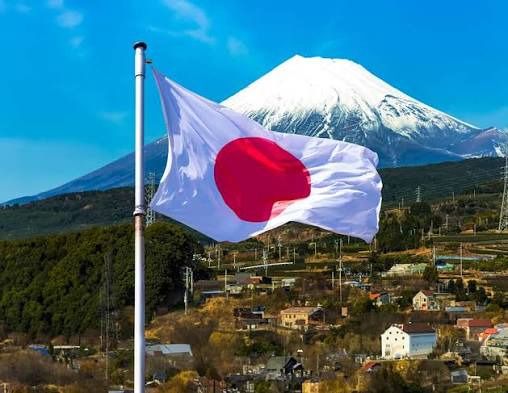
Japan has just crossed an extraordinary threshold.
As of September 1, the country had 107,677 people aged 100 or older, the first time its centenarian population has exceeded 100,000.
In 1963, Japan counted only 153 centenarians. The number has now risen for 56 consecutive years. Women account for nearly 88 per cent of the total today.One hundred and seven thousand, six hundred and seventy-seven people have lived for at least a century. I read that number and marvelled. Then, as a Nigerian, another thought entered my mind. Who will build the health systems that will enable our own people to grow old?
Not merely hospitals. Systems. Because perhaps one of the greatest differences between nations is not whether their citizens dream of longevity. We all do. It is whether their institutions make long life more possible.
Longevity Isn’t an accident
We should be careful not to romanticise Japan.
Its extraordinary longevity isn’t due to hospitals alone. Diet, genetics, sanitation, education, income, social conditions, public health, lifestyle and community all matter. An ag(e)ing population also presents Japan with enormous challenges, including rising healthcare needs, pension pressures, and a shrinking workforce.
But 107,677 centenarians do not emerge from nowhere. Somewhere along the journey from birth to 100, a society has to work. Children must survive infancy.
Mothers must survive childbirth. Vaccines must reach people. Clean water must flow. Diseases must be detected. Doctors must be trained. Nurses must be retained. Medicines must be available. Emergency services must function. And when people grow old, a system must still be able to care for them.
Longevity is therefore not simply a biological achievement. It is partly an institutional achievement. That is what Nigeria should think about.
We have the young people
Nigeria has something many ageing societies increasingly wish they had: youth. Most of our population is young. That is routinely described as our demographic advantage. And it can be. But a young population is not automatically a demographic dividend. It is only potentially so.
The dividend arrives when young people are educated, healthy, productive, skilled, and able to build institutions stronger than those they inherited. Otherwise, an unplanned demographic dividend can be disappointing. The question, therefore, is not simply how many young Nigerians we have.
It is: What are we preparing them to build? Who among today’s children will become the epidemiologists who stop the next outbreak? Who will become the nurses who transform maternal care? Who will design our emergency-response systems? Who will build diagnostic laboratories in communities where people currently travel hours for basic tests? Who will develop Nigerian medical technologies? Who will modernise primary healthcare? Who will research diseases that disproportionately affect Africans? Who will build the hospitals in which Nigerians will one day turn 100?
They are probably already here.
Some are sitting in overcrowded classrooms. Some are studying by generators. Some are brilliant children whose parents cannot afford university fees. Some are medical students wondering whether the future they want exists in Nigeria. And some of the doctors and nurses we have already trained are preparing to leave our shores for greener pastures.
We cannot keep training other people’s health systems
Nigeria’s health workforce problem should trouble us.
The WHO’s 2025 health-system profile says Nigeria’s supply of doctors, nurses, and midwives remains below recommended levels, with shortages compounded by uneven distribution, poor working conditions and the movement of health professionals abroad.
This is painfully ironic. Nigeria can educate a child from primary school. Subsidise parts of that child’s education. Train that child to become a doctor or nurse. Then create working conditions so frustrating that another country receives the mature product of that investment.
The Nigerian professional is not wrong for seeking a better life. People have families. They have ambitions. They want functioning equipment, professional development, reasonable compensation, and environments where doing their jobs doesn’t require daily heroism.
So perhaps the better question is not: Why are they leaving?
It is: What have we built that should persuade them to stay? Patriotism cannot substitute indefinitely for functioning institutions. A surgeon cannot operate with patriotism. A laboratory cannot run on patriotism. An ambulance cannot be fuelled with patriotism. And a nurse cannot feed a family with applause.
A hospital is built long before brick and mortar arrive
When politicians speak about healthcare infrastructure, we often see buildings. A new hospital is commissioned. There are cameras. There is a ribbon. There are speeches. But a health system is neither concrete nor brick and mortar. A beautiful building without nurses is architecture. An intensive-care unit without working equipment is just a room. An ambulance without an emergency network is a mere vehicle. A medical school without research investment is an incomplete promise. A hospital’s most important infrastructure is ultimately human. That human infrastructure takes decades to build. The consultant physician of 2050 may be sitting in a secondary school today. The biomedical engineer who will design equipment suited to Nigerian hospitals may currently be a child taking apart broken electronics somewhere in Aba.
The public-health specialist who will prevent an epidemic may be sitting in a classroom in Kano. The nurse who will hold a 99-year-old’s hand may not yet have been born. Nation-building requires the imagination to invest in people whose contributions may mature long after the politicians making today’s decisions have left office.
Real meaning of centenarian
Japan’s milestone should therefore not make us ask whether Nigerians can live to 100. Some already do. Nor should we turn longevity into a competition between countries. The better question is whether an ordinary Nigerian child born today can reasonably expect to live, supported by institutions that value survival.
Will pregnancy be safer? Will childbirth be safer? Will infancy be safer? Will cancer be detected earlier? Will emergency care arrive faster? Will people treat the elderly as human beings rather than burdens? Will quality healthcare depend less on whether your surname opens doors or your bank account can purchase treatment abroad? That is the journey from birth to 100.
And we must understand something else. The health system we refuse to build today is the one we will desperately need tomorrow, and won’t have.
Politicians grow old too. Civil servants grow old. Business leaders grow old. Presidents grow old. Governors grow old. The body eventually makes everyone equal.
Our young are the infrastructure
Nigeria’s youth are frequently described as a problem to be managed. Too many are unemployed. Many more are leaving. So are the frustrated. Countless have lost faith in their nation. Perhaps we should see them differently. They are the people who must build what does not yet exist.
Our responsibility is to give them the education, healthcare, laboratories, mentorship, research funding, employment opportunities, and functioning institutions that let their abilities become national assets.
Japan’s 107,677 centenarians tell one story about a country growing older. Nigeria’s millions of young people tell another story about a country still extraordinarily young. Neither youth nor longevity guarantees prosperity. Both require planning.
One country must ask how it will care for an ageing population. Nigeria must ask whether it will prepare its young population to build a country where growing old is worthwhile. That is our assignment. Because somewhere in Nigeria today is a child who could transform African medicine.
Somewhere is tomorrow’s surgeon. Tomorrow’s nurse. Tomorrow’s scientist. Tomorrow’s hospital administrator. Tomorrow’s biomedical engineer. Tomorrow’s public-health leader. The question is whether we will find them, educate them, equip them, and give them a country where they can do their best work.
Japan has more than 107,000 people who have reached 100. I celebrate them.
But in Nigeria, I think about the future. Who will build the health systems that will carry our children safely into old age? The answer is already among us. We have to stop wasting them.
Ukoh, a PhD student and coauthor of Built By The Ancestors, writes from his base in New York, the United States.
Iran has urged rival Saudi Arabia to pursue a diplomatic solution to its escalating conflict with the Houthi militia in Yemen.
Iran warned that continued military action would only worsen the situation.
Iranian Foreign Minister Abbas Araghchi told his Saudi counterpart, Faisal bin Farhan, during a telephone call that “Insisting on a military approach and disregarding a political solution would only further complicate the situation”.
Iran was prepared to “provide any form of support” to help initiate talks, the Iranian Foreign Ministry said.
The conflict between Saudi Arabia and the Iran-allied Houthi militia escalated sharply over the weekend.
More than a dozen people were killed and hundreds injured in the most serious attack to date on Riyadh’s international airport, according to officials.
The Houthis claimed responsibility and warned that Saudi airports and airspace were “legitimate targets.”
The militia said it had launched ballistic missiles, cruise missiles and drones at airports and energy facilities, including sites belonging to state-owned oil giant Aramco.
The Houthis also accused Saudi Arabia of carrying out more than 120 airstrikes on the Yemeni capital, Sana’a, and other provinces within 24 hours.
The claims could not be independently verified.
The Houthis have been fighting the Saudi-backed internationally recognized government in Yemen for more than a decade.
A truce reached in 2022 largely froze the conflict, but fighting has flared again against the backdrop of the wider war involving Iran.




Russell Brand Arrives at Court for Start of Rape Trial
ShareThe 51-year-old comedian and actor is facing several charges of rape and sexual assault against six women, which are alleged...

UN Chief Urges Member States, Others to Scale Up Investment on Girl Child
ShareUN Secretary General Antonio Guterres has called on governments, the private sector, civil society, and community leaders to scale up...


Trump Faces Growing Backlash over Plans to Import Diesel from Russia
ShareUS President Donald Trump is facing a growing backlash over plans to import diesel from Russia as the Iran war...

What Japan’s milestone centenarians teach Nigeria about future-building
ShareBy Ebuka Ukoh This columnist explores African public health, institutions, and governance, connecting global lessons to local challenges to promote...
Iran Urges Saudi Arabia to Pursue Diplomacy as Attacks Escalate
ShareIran has urged rival Saudi Arabia to pursue a diplomatic solution to its escalating conflict with the Houthi militia in...
Beijing’s 12345 Hotline Sets Pace in Citizen-centred Urban Governance
ShareChina’s Beijing 12345 Hotline Citizen Service Centre is emerging as a model of technology-driven urban governance, placing residents’ needs at...
Saudi Minister Vows Serious Response to Houthi Attacks on Airports
ShareSaudi Arabia’s energy minister has vowed a “serious” response to the deadly attacks on the kingdom’s airports and oil and...


Imo Woman Gets N500k Court Bail after Assaulting Minor
ShareFrom Wins Charity, Owerri A woman, Peace Jonah has been granted N500, 000 bail by a chief Magistrate in Imo...


SEC Seeks Investor Education, Partnership with Nasarawa
ShareBy Tony Obiechina, Abuja The Securities and Exchange Commission (SEC), Nigeria, has intensified efforts to promote financial literacy, strengthen investor...
Bauchi NAPTIP Records 70 Cases in 10 Months
ShareThe National Agency for the Prohibition of Trafficking in Persons (NAPTIP) in Bauchi State has recorded 70 cases and secured...