
NEWS
Can the Media Announce Election Results Before INEC’s Official Declaration?

By Samson Itodo
To address this issue, it is important to understand the election results management process. Election results are first announced at the polling unit level and immediately made public through verbal declaration and the posting of result sheets.
The purpose of this public announcement is to promote transparency. Once results are announced at the polling unit, they become public information.Furthermore, the introduction of the INEC Result Viewing Portal (IReV) was designed to deepen transparency in the electoral process. The objective is to make results accessible to citizens and stakeholders, enabling them to follow the results management process, while reducing opportunities for manipulation during collation.
In that context, the media can report results that have already been officially announced at polling units because those results are already in the public domain.This is particularly important given the widespread concerns and distrust surrounding the results management process. Historically, the collation stage has often been viewed as the weakest link in the electoral process and the point at which political actors may seek to compromise outcomes. Media and citizen oversight therefore serve several important purposes:
It protects INEC from political pressure.
There is no doubt that electoral management bodies can come under pressure from powerful political interests. When results have already been publicly announced, documented, and aggregated by independent observers and media organisations, it becomes more difficult for any attempt to alter them to succeed. Public awareness of the results strengthens INEC’s ability to resist undue pressure and uphold the integrity of the process.
It strengthens the integrity and credibility of the electoral process.
Independent reporting, monitoring, and aggregation of officially announced polling unit results create an additional layer of transparency and accountability. This helps build public confidence in the process and discourages attempts at manipulation.
At the same time, it is important to distinguish between announcing results and declaring a winner. INEC is the constitutional authority empowered to declare election results and return a candidate as duly elected. Declaration goes beyond publishing polling unit outcomes; it is the formal legal pronouncement that a candidate has won an election and has been returned as the winner. Until INEC makes that declaration, no candidate can legally be regarded as having won the election.
However, reporting or aggregating results that have already been officially announced at polling units does not amount to declaring a winner. The media may report and analyse such publicly available results, provided this is done responsibly, accurately, and within established professional and ethical standards. That said, media organisations must remain conscious of the realities of the results management process. During collation, several factors can affect the final outcome. INEC may cancel results where there is confirmed over-voting, while adjustments may also arise from polling units where elections did not hold, were postponed, or were disrupted by violence or other incidents. These considerations are taken into account during the collation process and can ultimately influence the final results.
For instance, there are constitutional thresholds that candidates must satisfy before they can be declared and returned as winners. It is therefore possible for election results to be announced without an immediate declaration and return of a winner, if those constitutional requirements have not been met. In presidential and governorship elections, for example, the Constitution requires not only that a candidate secure the highest number of lawful votes cast, but also that s/he obtain at least 25 per cent of the votes cast in no fewer than two-thirds of the states in a presidential election, or two-thirds of the local government areas in a governorship election.
Determining whether these conditions have been satisfied requires a comprehensive assessment of the final collated results, a responsibility that rests exclusively with INEC. This underscores the distinction between reporting results and declaring a winner. While the media may responsibly share and aggregate results that have already been officially announced at polling unit, ward, local government, and state levels, only INEC has the constitutional authority to determine whether all legal thresholds have been met and to formally declare and return a candidate as the winner of an election.
This is precisely why all actors, including the media, should avoid declaring winners before INEC completes the collation process and makes its official declaration. Reporting results that have already been announced by INEC at the polling unit, ward, local government, or state level is entirely different from declaring an electoral outcome. The former promotes transparency and public oversight, while the latter remains the exclusive constitutional responsibility of INEC.
Therefore, media organisations can responsibly share and aggregate officially announced results as part of their public information role, but they must be careful not to present such reporting as a final declaration of the election outcome. Until INEC officially declares and returns a winner, all reported figures should be understood as part of an ongoing results management process. Ultimately, all actors, including the media, civil society organisations, and observers, must operate in accordance with the principles of integrity, professionalism, accuracy, and ethical conduct.
The publication of false, inaccurate, or misleading results can undermine public trust and attract legitimate institutional sanctions. However, where the media responsibly reports and analyses results that have already been officially announced by INEC, such reporting enhances transparency, strengthens public oversight, and contributes to democratic accountability without encroaching on INEC’s exclusive constitutional mandate to declare and return a winner.
Samson Itodo is an election, democracy, and public policy enthusiast. Itodo serves as the Executive Director of Yiaga Africa, Principal Partner of the Election Law Center and Chairperson of the African Union Advisory Group on AI in Peace, Security and Governance. He is also a member of the Kofi Annan Foundation board and the Board of Advisers of the International Institute for Democracy and Electoral Assistance (IDEA).
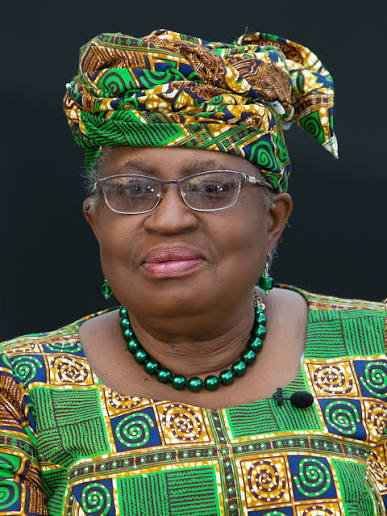
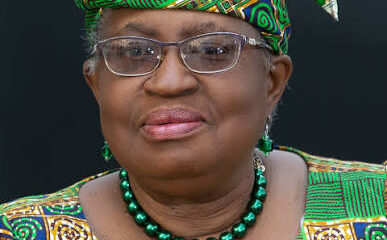
The Director-General of the World Trade Organisation, Dr Ngozi Okonjo-Iweala, has paid tribute to her mother, Prof. Kamene Okonjo, who died last Friday at the age of 96.
The former Minister of Finance described her late mother as a woman who lived a quality life until the end.
In a post on her official X handle on Sunday, Okonjo-Iweala thanked friends and followers for their messages of condolence and support to her family.
She wrote, “Today, I have been overwhelmed with messages of condolences and tributes to my wonderful mother. I just want to thank all my friends and followers and let you know how appreciative my entire family and I are of your support.
“My mother lived a quality life till the end and we are very grateful we had her for so long. May her soul rest in perfect peace.”
The 96-year-old was the matriarch of the Umu Obi Obahai Royal Family and mother of the Obi of Ogwashi-Uku, Obi Ifechukwude Okonjo II.
She was also the wife of the immediate past traditional ruler of Ogwashi-Uku, Delta State, late Obi (Prof.) Chukwuka Okonjo, with whom she shared 66 years of marriage.
Her death was announced in a statement issued on Sunday by Palace Secretary of Ogwashi-Uku, Ifeakanachukwu Emordi, on behalf of the royal family.
The statement described the late Okonjo as an extraordinary woman whose life was defined by intellectual brilliance, humility, compassion, dignity and an unwavering commitment to the advancement of humanity.
“An internationally recognised and foremost sociologist, Prof. Kamene Okonjo distinguished herself through her outstanding academic accomplishments, intellectual contributions and lifelong advocacy for women’s rights and empowerment.
“She was a woman of exceptional intellect, yet possessed a rare gentleness of spirit, humility and grace that endeared her to everyone privileged to know her.
“Her achievements transcended the boundaries of Ogwashi-Uku and Nigeria, earning her admiration and respect within academic and intellectual circles internationally,” the statement read.
The statement further described her as a devoted mother, grandmother, great-grandmother and a cherished pillar of the royal family.
“Her wisdom, kindness, quiet strength and exemplary character will remain an enduring inspiration to generations yet unborn,” it said.
The family added, “While we mourn her passing, we celebrate a life exceptionally well lived.”
It noted that at 96, the late scholar left behind an enduring legacy of scholarship, service, family values and advocacy for the dignity and advancement of women.
“We take comfort in our Christian faith and the assurance that she is resting peacefully with the Lord, having completed her earthly journey with grace and distinction,” the statement said.
The Umu Obi Obahai family extended its condolences to the Obi of Ogwashi-Uku and the deceased’s children, including Ngozi Okonjo-Iweala, Dr Njideka Okonjo-Udochi, Onyema Okonjo and Chichi Okonjo, as well as their spouses, grandchildren, great-grandchildren and the wider Okonjo royal family.
The family also called on the people of Ogwashi-Uku to join in celebrating the life and enduring legacy of the late scholar and matriarch, whose contributions to humanity, it said, would never be forgotten.
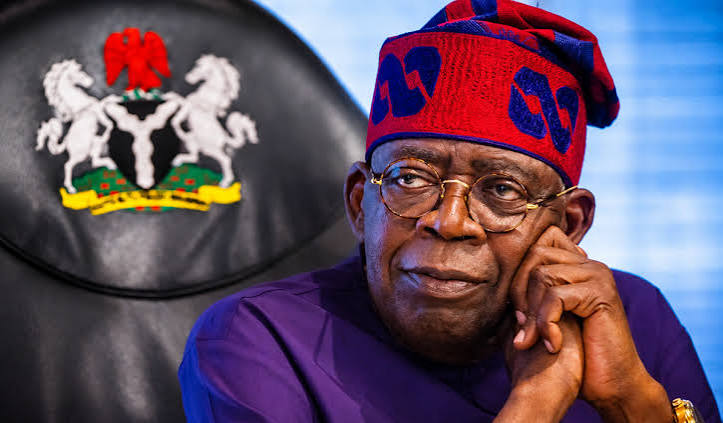
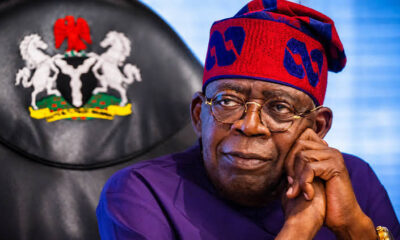
President Bola Tinubu on Saturday blamed opposition leaders for Nigeria’s hunger and poverty, accusing them of creating problems they now exploit against his administration.
“I hear my opponents talking about hunger and poverty.
Who created it? They did. They created hunger; they created poverty. We are trying to eradicate it,” Tinubu said.He spoke at the flag-off of his presidential campaign for the 2027 general elections at Ranchers Bees Stadium in Kaduna.
In a statement by Presidential Spokesperson Bayo Onanuga in Kaduna, Tinubu’s remarks appeared directed at opposition leaders, including former Vice-President Atiku Abubakar.
Abubakar served as vice-president between 1999 and 2007, when several state-owned enterprises were privatised.
Thousands of affected workers were reportedly left without their gratuities and pensions following the privatisation exercises.
The Tinubu administration has been paying outstanding entitlements to some of the affected workers.
At the rally, Tinubu also inaugurated an 81-kilometre section of the Abuja-Kaduna highway through a symbolic ribbon-cutting ceremony.
He recalled Kaduna’s historical significance as a city of leaders and the former Northern Region’s political headquarters.
The President said his administration was working to eradicate poverty and thanked Kaduna residents for supporting him in the 2023 presidential election.
He urged them to renew his mandate in 2027, citing investments in critical economic infrastructure across Kaduna State and the wider Northern region.
The rally attracted APC National Chairman, Prof. Nentawe Yilwatda, Vice-President, Kashim Shettima, and First Lady, Oluremi Tinubu.
Others included the Vice-President’s wife, Nana Shettima; 32 APC governors; former National Chairman Sen. Abdullahi Adamu; and former Governor, Abdullahi Ganduje.
Speaking at the rally, Shettima reaffirmed Tinubu’s commitment to national unity, democratic stability and economic development. He urged Nigerians to support the administration for continuity.
The Vice-President recalled Tinubu’s support for Northern presidential candidates in previous elections, including former President, Muhammadu Buhari.
Buhari won the 2015 and 2019 presidential elections.
Shettima also cited Tinubu’s support for other Northern political leaders in earlier presidential contests, including Atiku Abubakar and Mallam Nuhu Ribadu.
He described these gestures as evidence of political loyalty, mutual respect and Tinubu’s commitment to national unity.
Shettima said such relationships had strengthened the APC and underscored the need for Nigerians to work towards a united and prosperous country.
He urged party members and supporters to sustain their solidarity with Tinubu as the APC seeks another mandate.
In his welcome address, Kaduna State Governor, Sen. Uba Sani, commended Tinubu for supporting state governments in implementing development programmes.
Sani said Federal-State collaboration was essential to sustainable development, particularly in infrastructure, agriculture and citizens’ welfare.
He also acknowledged First Lady Oluremi Tinubu’s contributions to the welfare of women, children and families.
The governor urged APC supporters to remain vigilant against misinformation during the electioneering period.
He specifically warned against misleading social media materials and content allegedly generated using artificial intelligence.
Director-General of the APC Presidential Campaign Council, Abdulaziz Yari, expressed confidence in the party’s ability to mobilise support for Tinubu.
Yari commended Sani, party leaders and other stakeholders for organising the campaign flag-off.
He described their participation as evidence of commitment to the party’s political objectives.
Yari defended the administration’s economic reforms, citing developments in the foreign exchange market.
The former Zamfara governor also cautioned supporters against misinformation, expressing confidence in the APC’s political organisation, electoral experience and track record.
Speaking during the virtual commissioning of Lot 1 of the Abuja-Kaduna-Zaria-Kano Dual Carriageway, Works Minister, Dave Umahi, highlighted infrastructure projects across the North-West and Nigeria.
The commissioned section covers 81 kilometres. (NAN)
Nearly 83 per cent of Nigerians without formal education are living in poverty, according to the World Bank, highlighting the widening economic divide between educated and uneducated citizens.
An analysis of the World Bank’s October 2026 Poverty and Equity Brief for Nigeria showed that 82.
9 per cent of Nigerians aged 16 and above without education lived below the poverty threshold of $4. 20 per person per day, compared with 26.6 per cent of those with tertiary or post-secondary education.The figures, based on a 2022 household survey, revealed a poverty gap of 56.
3 percentage points between individuals without education and those who attained higher education, underscoring the relationship between educational attainment and living standards.poverty declined progressively as educational attainment increased, with 60.9 per cent of Nigerians who completed primary education living below the poverty line, compared with 51.6 per cent of those with secondary education.
This means that Nigerians without formal education were more than three times as likely to live in poverty as those with tertiary qualifications.
The analysis further showed that the poverty rate among individuals without education exceeded that of primary school graduates by 22 percentage points, while the difference between those with secondary and tertiary education stood at 25 percentage points.
However, the findings indicated that educational attainment did not guarantee financial security, as more than half of Nigerians with secondary education and over one-quarter of those with tertiary qualifications remained poor.
Beyond education, the report showed that children faced the highest poverty burden, with 73 per cent of Nigerians aged between zero and 14 years living below the $4.20 daily threshold.
This compared with 58.1 per cent among working-age Nigerians between 15 and 64 years and 47.1 per cent among those aged 65 years and above.
The figures also revealed a marginal gender disparity, with 64.3 per cent of females living in poverty compared with 63.7 per cent of males.
On educational deprivation, the World Bank reported that 19.4 per cent of Nigerians lived in households where no adult had completed primary education, while seven per cent lived in households with at least one school-aged child who was not enrolled in school.
The report further showed that 41.5 per cent of Nigerians lacked access to electricity, 34 per cent lacked limited-standard sanitation facilities, and 21.5 per cent lacked limited-standard drinking water.
The findings came as the World Bank estimated that Nigeria’s national poverty rate had risen from 40.1 per cent in 2019 to 56.2 per cent in 2023 and 63 per cent in 2026.
The bank stated, “This trend extended beyond monetary poverty, with multidimensional poverty increasing from 43.5 percent to 47.4 percent between 2019 and 2023, reflecting both rising monetary poverty and worsening access to basic infrastructure and essential services.”
The report also highlighted regional disparities, with poverty in northern Nigeria increasing from 44.7 per cent in 2019 to 57.4 per cent in 2023, compared with an increase from 14.9 per cent to 21.2 per cent in the South.
In a separate October 2026 Macro Poverty Outlook obtained by The PUNCH, the World Bank projected that 69.5 per cent of Nigerians would live below the $4.20 daily poverty threshold in 2026, marginally lower than the 69.6 per cent estimated for 2025.
The bank also estimated that 50.8 per cent of Nigerians would live in extreme poverty, defined as surviving on less than $3 daily, despite improvements in economic growth and inflation.
It noted that employment remained concentrated in low-productivity sectors, with agriculture accounting for more than 30 per cent of jobs and informal retail services accounting for about 25 per cent.



Can the Media Announce Election Results Before INEC’s Official Declaration?
ShareBy Samson Itodo To address this issue, it is important to understand the election results management process. Election results are...

Okonjo-Iweala Pays Tribute to Late Mother
ShareThe Director-General of the World Trade Organisation, Dr Ngozi Okonjo-Iweala, has paid tribute to her mother, Prof. Kamene Okonjo, who...

Tinubu blames Opposition for Nigeria’s Challenges
SharePresident Bola Tinubu on Saturday blamed opposition leaders for Nigeria’s hunger and poverty, accusing them of creating problems they now...

Nearly 83 Per Cent Uneducated Nigerians Live in Poverty – W’Bank
Share Nearly 83 per cent of Nigerians without formal education are living in poverty, according to the World Bank, highlighting...
Ebola: NCDC Tracks 53 Contacts, Offers Each N100,000 Weekly
ShareBy Elijah Oguche, Abuja The Nigeria Centre for Disease Control and Prevention (NCDC) has stepped up efforts to contain the...
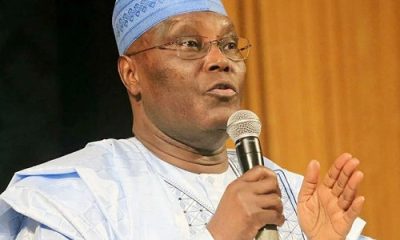

2027: Atiku Challenges Tinubu Over Alleged Ministerial Bribes
ShareBy Elijah Oguche, Abuja Former Vice President Atiku Abubakar has challenged President Bola Tinubu to identify those who allegedly collected...
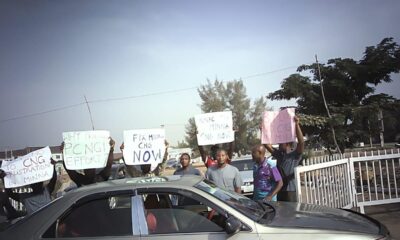

Motorists Storm Minna NNPC Mega Station, Threaten Mass Protest Over CNG Scarcity
Share From Dan Amasingha, Minna. Angry vehicle owners on Sunday staged a peaceful protest at the NNPC Mega Station along...
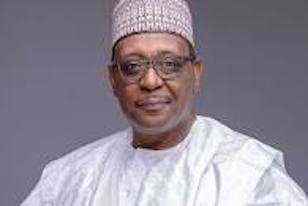

Lokoja CMD Seeks More Investments in Healthcare Delivery
ShareFrom Joseph Amedu, Lokoja The Chief Medical Director of the Federal Teaching Hospital, Lokoja, Professor Abdulrahman Shehu, has called for...


Enugu CP Orders investigation into Man’s Death During Police Operation
ShareFrom Sylvia Udegbunam Enugu The Commissioner of Police, Enugu State Command, CP Mamman Bitrus Giwa, has ordered a thorough investigation...


Police Officer Shoots Female Colleague to Death, Kills Self in Kogi
ShareFrom Joseph Amedu, Lokoja Kogi State Police Command has confirmed a tragic incident that claimed the lives of two police...