
NEWS
Tinubu blames Opposition for Nigeria’s Challenges

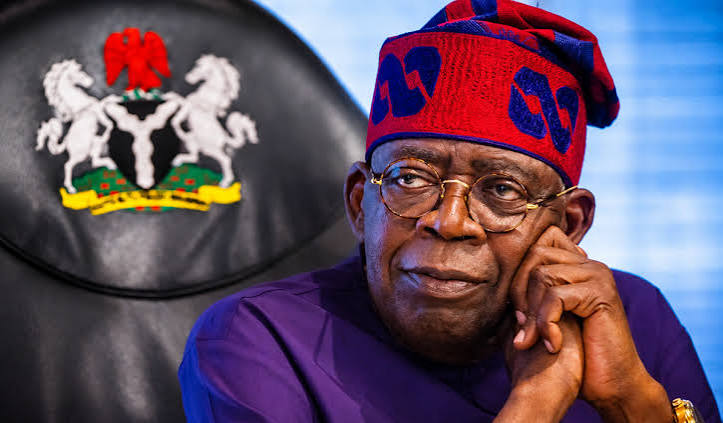
President Bola Tinubu on Saturday blamed opposition leaders for Nigeria’s hunger and poverty, accusing them of creating problems they now exploit against his administration.
“I hear my opponents talking about hunger and poverty.
Who created it? They did. They created hunger; they created poverty. We are trying to eradicate it,” Tinubu said.He spoke at the flag-off of his presidential campaign for the 2027 general elections at Ranchers Bees Stadium in Kaduna.
In a statement by Presidential Spokesperson Bayo Onanuga in Kaduna, Tinubu’s remarks appeared directed at opposition leaders, including former Vice-President Atiku Abubakar.
Abubakar served as vice-president between 1999 and 2007, when several state-owned enterprises were privatised.
Thousands of affected workers were reportedly left without their gratuities and pensions following the privatisation exercises.
The Tinubu administration has been paying outstanding entitlements to some of the affected workers.
At the rally, Tinubu also inaugurated an 81-kilometre section of the Abuja-Kaduna highway through a symbolic ribbon-cutting ceremony.
He recalled Kaduna’s historical significance as a city of leaders and the former Northern Region’s political headquarters.
The President said his administration was working to eradicate poverty and thanked Kaduna residents for supporting him in the 2023 presidential election.
He urged them to renew his mandate in 2027, citing investments in critical economic infrastructure across Kaduna State and the wider Northern region.
The rally attracted APC National Chairman, Prof. Nentawe Yilwatda, Vice-President, Kashim Shettima, and First Lady, Oluremi Tinubu.
Others included the Vice-President’s wife, Nana Shettima; 32 APC governors; former National Chairman Sen. Abdullahi Adamu; and former Governor, Abdullahi Ganduje.
Speaking at the rally, Shettima reaffirmed Tinubu’s commitment to national unity, democratic stability and economic development. He urged Nigerians to support the administration for continuity.
The Vice-President recalled Tinubu’s support for Northern presidential candidates in previous elections, including former President, Muhammadu Buhari.
Buhari won the 2015 and 2019 presidential elections.
Shettima also cited Tinubu’s support for other Northern political leaders in earlier presidential contests, including Atiku Abubakar and Mallam Nuhu Ribadu.
He described these gestures as evidence of political loyalty, mutual respect and Tinubu’s commitment to national unity.
Shettima said such relationships had strengthened the APC and underscored the need for Nigerians to work towards a united and prosperous country.
He urged party members and supporters to sustain their solidarity with Tinubu as the APC seeks another mandate.
In his welcome address, Kaduna State Governor, Sen. Uba Sani, commended Tinubu for supporting state governments in implementing development programmes.
Sani said Federal-State collaboration was essential to sustainable development, particularly in infrastructure, agriculture and citizens’ welfare.
He also acknowledged First Lady Oluremi Tinubu’s contributions to the welfare of women, children and families.
The governor urged APC supporters to remain vigilant against misinformation during the electioneering period.
He specifically warned against misleading social media materials and content allegedly generated using artificial intelligence.
Director-General of the APC Presidential Campaign Council, Abdulaziz Yari, expressed confidence in the party’s ability to mobilise support for Tinubu.
Yari commended Sani, party leaders and other stakeholders for organising the campaign flag-off.
He described their participation as evidence of commitment to the party’s political objectives.
Yari defended the administration’s economic reforms, citing developments in the foreign exchange market.
The former Zamfara governor also cautioned supporters against misinformation, expressing confidence in the APC’s political organisation, electoral experience and track record.
Speaking during the virtual commissioning of Lot 1 of the Abuja-Kaduna-Zaria-Kano Dual Carriageway, Works Minister, Dave Umahi, highlighted infrastructure projects across the North-West and Nigeria.
The commissioned section covers 81 kilometres. (NAN)
Nearly 83 per cent of Nigerians without formal education are living in poverty, according to the World Bank, highlighting the widening economic divide between educated and uneducated citizens.
An analysis of the World Bank’s October 2026 Poverty and Equity Brief for Nigeria showed that 82.
9 per cent of Nigerians aged 16 and above without education lived below the poverty threshold of $4. 20 per person per day, compared with 26.6 per cent of those with tertiary or post-secondary education.The figures, based on a 2022 household survey, revealed a poverty gap of 56.
3 percentage points between individuals without education and those who attained higher education, underscoring the relationship between educational attainment and living standards.poverty declined progressively as educational attainment increased, with 60.9 per cent of Nigerians who completed primary education living below the poverty line, compared with 51.6 per cent of those with secondary education.
This means that Nigerians without formal education were more than three times as likely to live in poverty as those with tertiary qualifications.
The analysis further showed that the poverty rate among individuals without education exceeded that of primary school graduates by 22 percentage points, while the difference between those with secondary and tertiary education stood at 25 percentage points.
However, the findings indicated that educational attainment did not guarantee financial security, as more than half of Nigerians with secondary education and over one-quarter of those with tertiary qualifications remained poor.
Beyond education, the report showed that children faced the highest poverty burden, with 73 per cent of Nigerians aged between zero and 14 years living below the $4.20 daily threshold.
This compared with 58.1 per cent among working-age Nigerians between 15 and 64 years and 47.1 per cent among those aged 65 years and above.
The figures also revealed a marginal gender disparity, with 64.3 per cent of females living in poverty compared with 63.7 per cent of males.
On educational deprivation, the World Bank reported that 19.4 per cent of Nigerians lived in households where no adult had completed primary education, while seven per cent lived in households with at least one school-aged child who was not enrolled in school.
The report further showed that 41.5 per cent of Nigerians lacked access to electricity, 34 per cent lacked limited-standard sanitation facilities, and 21.5 per cent lacked limited-standard drinking water.
The findings came as the World Bank estimated that Nigeria’s national poverty rate had risen from 40.1 per cent in 2019 to 56.2 per cent in 2023 and 63 per cent in 2026.
The bank stated, “This trend extended beyond monetary poverty, with multidimensional poverty increasing from 43.5 percent to 47.4 percent between 2019 and 2023, reflecting both rising monetary poverty and worsening access to basic infrastructure and essential services.”
The report also highlighted regional disparities, with poverty in northern Nigeria increasing from 44.7 per cent in 2019 to 57.4 per cent in 2023, compared with an increase from 14.9 per cent to 21.2 per cent in the South.
In a separate October 2026 Macro Poverty Outlook obtained by The PUNCH, the World Bank projected that 69.5 per cent of Nigerians would live below the $4.20 daily poverty threshold in 2026, marginally lower than the 69.6 per cent estimated for 2025.
The bank also estimated that 50.8 per cent of Nigerians would live in extreme poverty, defined as surviving on less than $3 daily, despite improvements in economic growth and inflation.
It noted that employment remained concentrated in low-productivity sectors, with agriculture accounting for more than 30 per cent of jobs and informal retail services accounting for about 25 per cent.
By Elijah Oguche, Abuja
The Nigeria Centre for Disease Control and Prevention (NCDC) has stepped up efforts to contain the confirmed Ebola case in the Federal Capital Territory (FCT), tracking 53 primary contacts and approving a weekly stipend of N100,000 for each eligible person requiring support during isolation or quarantine.
The agency has also directed hospitals nationwide to promptly isolate suspected Ebola cases and report them to public health authorities without waiting for laboratory confirmation, warning that delays could expose healthcare workers, patients and other members of the public to infection.
The Director-General of the NCDC, Dr Jide Idris, disclosed these measures during a press briefing in Abuja on Sunday, saying contact tracing, timely isolation and strict infection prevention and control remained critical to preventing further transmission.
Nigeria confirmed an imported case of Ebola disease caused by the Bundibugyo virus in the FCT on October 20, following investigations into the illness of a 42-year-old woman who travelled to Nigeria from Uganda through Addis Ababa on October 3.
According to the NCDC’s Ebola Disease Situation Report dated October 24, the patient’s condition had improved remarkably while receiving treatment in isolation.
Idris said 53 primary contacts had been identified for monitoring, comprising 44 people associated with the health facility where the patient was treated and nine others identified outside the facility.
The additional contacts include members of the patient’s household, healthcare workers and people who may have been exposed to her during an earlier visit to an emergency room.
The NCDC said investigations were continuing to establish the full chain of possible exposure, with public health teams interviewing identified contacts to determine whether other people might also require monitoring.
Contacts are being categorised according to their level of exposure and followed up for 21 days after their last possible exposure, in line with the monitoring period for Ebola.
Idris explained that the agency was extending its investigations beyond the immediate contacts to identify anyone who might have been exposed through the initial group.
He said the exercise was essential to identifying potential infections early and interrupting possible chains of transmission.
In a related development, the NCDC has approved N100,000 per week for each person requiring financial assistance while under isolation or quarantine as part of the outbreak response.
Idris said the intervention followed concerns raised by some individuals under monitoring over the costs of feeding, accommodation and providing for their families while complying with public health restrictions.
“We are paying for their accommodation; we are paying for their feeding. Some of them are asking for a stipend to maintain their families,” he said.
The NCDC boss added that the agency had approved the weekly payment to help eligible individuals meet essential needs and encourage cooperation with health officials.
“We are providing N100,000 per person per week just to maintain their comfort and feeding, because they were complaining,” he said.
He described the intervention as an emergency measure that was not initially included in the response plan, adding that the arrangement would be reviewed as the situation evolved.
Idris also called on state governments to strengthen their financial and logistical preparedness for public health emergencies, stressing that the responsibility for supporting affected individuals should not rest solely on the FCT authorities.
He said other states must be prepared to provide comparable assistance should they experience similar outbreaks, while ensuring adequate resources for contact tracing, isolation and other emergency response activities.
Beyond contact tracing and financial assistance, the NCDC has directed healthcare facilities nationwide to maintain effective screening and triage systems and immediately separate suspected Ebola patients from other patients.
Idris warned that healthcare workers must not wait for laboratory results before implementing appropriate protective measures whenever Ebola is suspected.
“Any suspected case must be promptly separated from other patients and reported to the relevant public health authorities. Healthcare workers should not wait for laboratory confirmation before taking appropriate precautions,” he said.
He emphasised that healthcare workers were particularly vulnerable when suspected infections were not promptly recognised and managed.
“Protecting healthcare workers is essential to protecting the communities they serve,” he added.
The agency said infection prevention measures should include regular hand hygiene, environmental cleaning, injection safety, safe handling of sharps, proper waste management and the appropriate use of personal protective equipment.
It is also strengthening surveillance, laboratory investigations, risk communication and preparedness across health facilities in collaboration with the Federal Ministry of Health and Social Welfare, FCT authorities and other partners.
The NCDC has activated its national incident management system at the highest level, with response activities coordinated through its Emergency Operations Centre.
Idris said the detection of the case underscored the importance of surveillance systems and the vigilance of healthcare workers in identifying and reporting unusual illnesses.
Patient’s Movements under Investigation
The confirmed case followed an alert from a private health facility on October 19. According to the NCDC’s situation report, the patient developed symptoms on October 7, four days after arriving in Nigeria.
Her symptoms included fever, diarrhoea, generalised body aches and sore throat. She first presented at a private health facility on October 10 and was admitted to another private facility on October 11.
The NCDC was notified on October 19, and laboratory testing confirmed the infection the following day. No bleeding was reported in the case details contained in the situation report.
Investigations are focusing on people who may have come into contact with the patient at the different locations she visited, including healthcare personnel involved in her treatment and sample collection.
The agency has also deployed infection prevention and control teams to assess healthcare facilities, identify gaps and recommend corrective measures.
Idris acknowledged the need to improve technical capacity among health workers at state and local government levels, noting that effective outbreak management depends on trained personnel and functional infection prevention systems.
He said training and capacity building remained priorities in strengthening the country’s response to infectious disease emergencies.
As part of the investigation, genomic sequencing was completed by the NCDC’s National Reference Laboratory and the African Centre of Excellence for Genomics of Infectious Diseases.
Meanwhile, a suspected Ebola case reported in Rivers State on October 23 tested negative, according to the NCDC’s situation report.
The result meant the alert had not produced another confirmed case in the report, although health authorities continue to stress the importance of prompt reporting, investigation and testing of suspected infections.
The agency has urged members of the public to cooperate with contact-tracing teams and avoid stigmatising people identified as contacts.
Idris clarified that being listed as a contact did not mean that an individual had contracted the disease.
“Being identified as a contact does not mean that you have Ebola,” he said.
He also cautioned against misinformation, warning that false reports could create panic, discourage people from reporting symptoms and undermine public cooperation.
Nigeria’s experience in containing the 2014 Ebola outbreak, he said, was informing current preparedness and containment efforts.
The NCDC reiterated that prompt reporting of suspected cases, effective surveillance, timely isolation, strict infection prevention measures and cooperation from affected individuals remained essential to containing the confirmed case and detecting any further infections.
From Dan Amasingha, Minna.
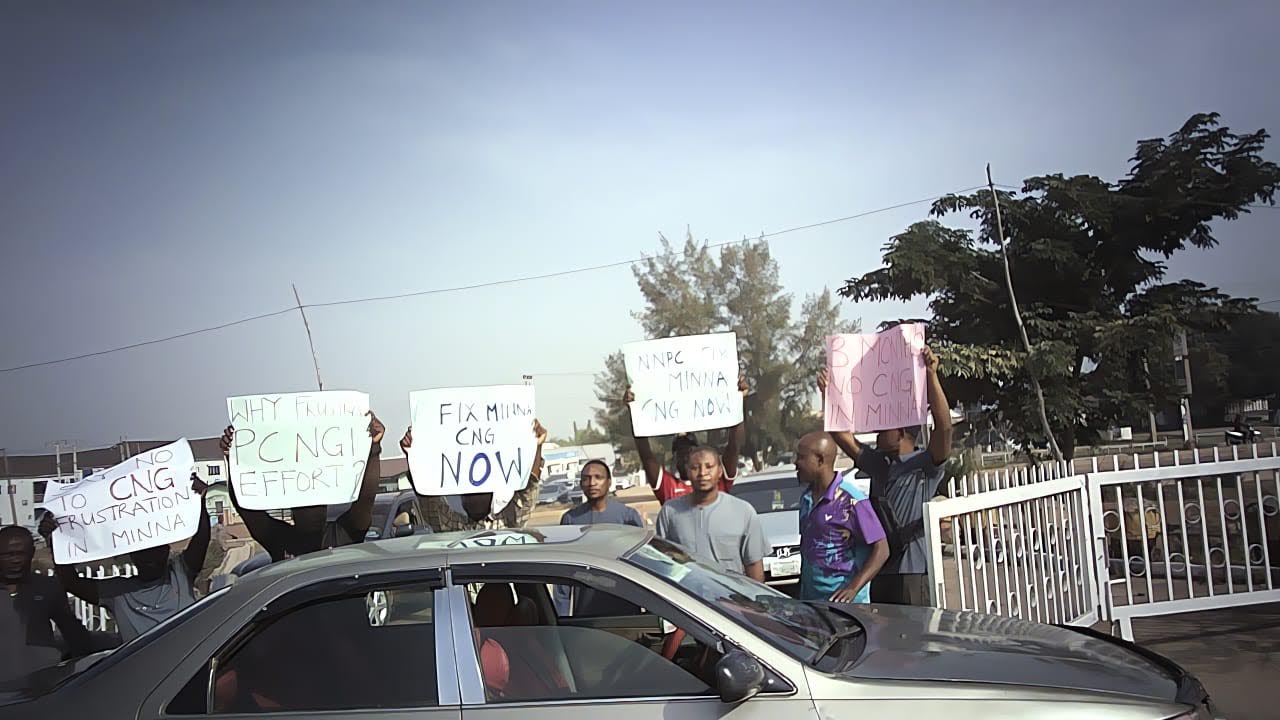
Angry vehicle owners on Sunday staged a peaceful protest at the NNPC Mega Station along the Western Bypass in Minna, Niger State, over the alleged three-month shutdown of the facility’s Compressed Natural Gas (CNG) dispensing service.
The protesters, who accused the station’s management of failing to address the persistent shortage, said the development had frustrated the Federal Government’s initiative to promote CNG as a cheaper alternative to Premium Motor Spirit (PMS), popularly known as petrol.
They lamented that despite investing hundreds of thousands of naira and, in some cases, over ₦1 million to convert their vehicles to run on CNG, they had been unable to access the product in the state capital for months.
Findings indicated that a component of the station’s CNG dispensing equipment had reportedly developed a fault but had allegedly remained unrepaired, leaving motorists who rely on the alternative fuel with little choice but to return to the more expensive petrol.
The persistent outage, the protesters said, had not only undermined the economic benefits of converting their vehicles but had also imposed additional financial burdens on vehicle owners already grappling with rising transportation and fuel costs.
Speaking during the protest, one of the motorists, Engr. Israel Ogbonnaya, described the situation as discouraging, alleging that repeated visits to the station to obtain explanations from the management had yielded no meaningful response.
“It is so discouraging that for three months now, the CNG station at NNPC Minna has not functioned. Imagine that since January, some people did conversion and have not recovered their money,” he said.
Ogbonnaya expressed disappointment that motorists had allegedly received no satisfactory explanation regarding the prolonged breakdown.
“The CNG broke down, nobody has spoken to us. We have come here several times demanding answers from the management, and nobody is talking.
“So, for now, we want to bring the attention of Nigerians and those in authority to the situation in Minna.
CNG is the heartbeat of the President. He commissioned a committee to look into this scheme, and these people are taking us for granted,” he added.
Another protester, Mohammed Doko Saidu, questioned the rationale behind encouraging motorists to convert their vehicles to CNG without ensuring the availability of adequate dispensing facilities to meet demand.
Saidu disclosed that he had spent more than ₦1 million converting his vehicle, only to discover that the product was unavailable in Minna.
“The frustrating aspect of all is that I just installed CNG, spending over a million naira, without a single gas in Minna; hoping that it is going to be fixed today, it is going to be fixed tomorrow, and up till this moment, there is nothing.
“Nobody is saying anything. The station is just lying fallow. In short, I had to disconnect some of the cylinders installed in my car because there is no gas.
What kind of government are we in? It is frustrating,” he said.
The protesters called on the NNPC Mega Station’s management and other relevant stakeholders to urgently repair the faulty equipment and restore CNG supply to Minna.
They warned that failure to resolve the problem could trigger another protest involving a larger number of aggrieved motorists, including commercial tricycle operators who also depend on CNG to reduce their operating costs.
The motorists maintained that the prolonged unavailability of the product had defeated the purpose of the conversion programme, forcing them to bear the cost of installing CNG systems while continuing to spend more on petrol.
The development raises concerns among affected motorists over the reliability of CNG supply infrastructure and the need for prompt maintenance of facilities established to support the Federal Government’s alternative-fuel initiative.
Efforts to obtain comments from the manager of the NNPC Mega Station were unsuccessful as of press time, while attendants on duty declined to speak on behalf of the management.


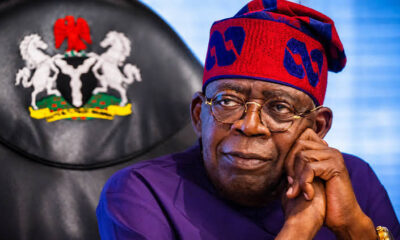

Tinubu blames Opposition for Nigeria’s Challenges
SharePresident Bola Tinubu on Saturday blamed opposition leaders for Nigeria’s hunger and poverty, accusing them of creating problems they now...


Nearly 83 Per Cent Uneducated Nigerians Live in Poverty – W’Bank
Share Nearly 83 per cent of Nigerians without formal education are living in poverty, according to the World Bank, highlighting...
Ebola: NCDC Tracks 53 Contacts, Offers Each N100,000 Weekly
ShareBy Elijah Oguche, Abuja The Nigeria Centre for Disease Control and Prevention (NCDC) has stepped up efforts to contain the...
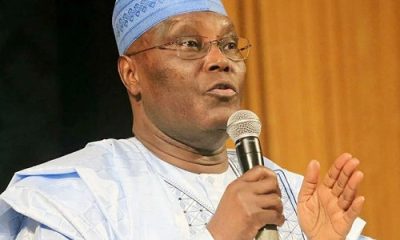

2027: Atiku Challenges Tinubu Over Alleged Ministerial Bribes
ShareBy Elijah Oguche, Abuja Former Vice President Atiku Abubakar has challenged President Bola Tinubu to identify those who allegedly collected...
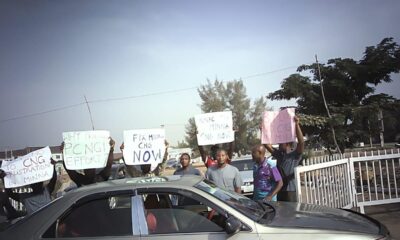

Motorists Storm Minna NNPC Mega Station, Threaten Mass Protest Over CNG Scarcity
Share From Dan Amasingha, Minna. Angry vehicle owners on Sunday staged a peaceful protest at the NNPC Mega Station along...

Lokoja CMD Seeks More Investments in Healthcare Delivery
ShareFrom Joseph Amedu, Lokoja The Chief Medical Director of the Federal Teaching Hospital, Lokoja, Professor Abdulrahman Shehu, has called for...


Enugu CP Orders investigation into Man’s Death During Police Operation
ShareFrom Sylvia Udegbunam Enugu The Commissioner of Police, Enugu State Command, CP Mamman Bitrus Giwa, has ordered a thorough investigation...


Police Officer Shoots Female Colleague to Death, Kills Self in Kogi
ShareFrom Joseph Amedu, Lokoja Kogi State Police Command has confirmed a tragic incident that claimed the lives of two police...
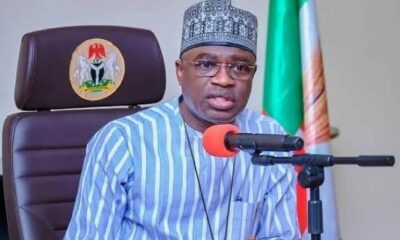

2027: Benue People Are Not ‘Shenanigans’, Alia Owes You No Apology, Ex-Ambassador Tells Ortom
ShareFrom Attah Ede, Makurdi A former Nigerian Ambassador to Namibia, Terhemen Tarzoor, has criticized former Benue State Governor Samuel Ortom...

JPMorgan’s Entry into Nigeria: Turning Global Finance into a National Development Opportunity
ShareBy Uche Joe Uwaleke The proposed establishment of JPMorgan Merchant Bank Nigeria Limited presents Nigeria with an important opportunity to...