
NEWS
Commissioner Hails Akwa Ibom Governor over Peace Initiatives


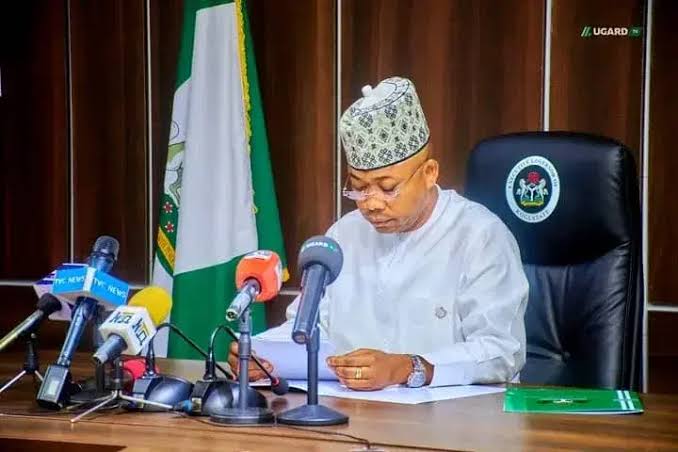
Veteran Sports Journalist and Commissioner for Sports Development in Akwa Ibom State, Paul Bassey, has hailed the state Governor, Pastor Umo Eno over what he described as the prevailing peace in the state.
“ If naysayers pretend they cannot see anything Governor Umo Eno has done, can they deny the peace we are witnessing in Akwa Ibom today, Unprecedented peace?” Bassey in a goodwill message delivered at the 25th Annual Convention of the Apostolic Church, Atabong Area in Eket Local Govt.
“ It is a coincidence that the Theme of this Convention is “ The Peace of God” and it reminds me of the peace God has used our Governor to bear on our state.
“ Before now, you cannot even worship in peace as bandits raided churches on Sunday mornings, shot and killed, abducted worshippers, threatened oppositions.
“ Please let us tell our Children and family members that in the past, at times like this, houses and cars were burnt, terror everywhere and you can hardly sleep with your two eyes closed “ the Eket ward 2 Urban leader said.
The Elder of the Apostolic Church reminded the congregation that “this governor is not only a son of Eket, he is a spiritual son of The Apostolic Church and must be embraced and supported for a second term “ and this drew a thunderous “Amen” from the mammoth crowd.
Elder Bassey said without peace there would be no development and as a member of His the Governor’s “First Eleven” he was better placed to talk about “this grass roots Governor, whose programs are tailored towards the welfare of the less privileged in society especially in the areas of health, education and in my case, the empowerment of youth through sports .“
In his sermon, the Eket Field Superintendent of The Apostolic church Pastor(Dr) B. E. Okon enjoined Christians to embrace the peace of God that eliminates fear and life’s challenges.
Drawing his text from Mathew 5:9 the Deputy Territorial Chairman of The Apostolic Church insisted that “blessed are the peace makers for they shall be called children of God”
Elder Bassey in company of other dignitaries including Pastor Etangkanga, vice chairman Esit Eket Local government, village head of Atabong Dr Ikwang later joined the Field Superintendent and the host Area Superintendent Pastor O. D James to cut the 25th anniversary Convention cake.



From Joseph Amedu, Lokoja
The Kogi State Government has commenced investigation into the fire incident that gutted Pee Links, a major electronic store in Lokoja, destroying goods worth millions of naira.
The State Consultant on Safety Standards, Regulations and Compliance, Elder Dr.
Friday Sani, disclosed this over the weekend, during an on-the-spot assessment of the scene of the inferno in Lokoja, the state capital.Sani said preliminary findings had identified alleged non-compliance with safety standards as one of the factors that may have contributed to the extent of the damage.
He explained that the investigation was aimed at establishing the actual cause of the fire and identifying measures to prevent a recurrence.
“We were immediately deployed by the state government to ascertain the root cause of this fire incident. Our preliminary findings indicate that there were lapses in compliance with safety standards, which may have contributed to the extent of the damage,” Sani said.
He added that a comprehensive report would be released at the conclusion of the investigation to guide future safety measures and strengthen compliance among businesses operating in the state.
“At the end of our investigation, we will make our findings public so that the appropriate lessons can be learnt. Business owners must understand that compliance with safety regulations is not optional; it is essential to protecting lives, property and investments,” he stated.
Sani urged owners and managers of commercial establishments to prioritise workplace safety by adhering to prescribed standards and ensuring that appropriate fire-prevention and emergency-response measures were in place.
He also commended the state government for its prompt response to the incident, particularly the deployment of fire trucks to contain the blaze and salvage some of the goods in the store.
“An incident of this nature immediately puts the government on its toes, and the response we witnessed demonstrates the importance of preparedness in managing emergencies,” he said.
“We must commend Governor Usman Ododo and his deputy for their proactive approach to emergency management. The swift deployment of fire-service personnel helped contain the situation and prevent further damage.”
Sani expressed gratitude that no lives were lost in the incident, adding that the government would continue to support businesses contributing to the state’s economic development.
“We thank God that there was no loss of life or reported injuries. Our prayer is that incidents of this nature will not happen again. This is why every business owner must take safety regulations seriously,” he added.
Responding, the owner of Pee Links electronic store, Peter Emeka Onujeme, popularly known as Pee Links, attributed the fire to a power surge.
Onujeme expressed appreciation to the Kogi State Government and the fire-service personnel for their swift intervention, saying their response helped salvage the situation and prevent further losses.
He also dismissed suggestions that the incident had any spiritual connection, insisting that attention should be focused on establishing the actual cause of the fire.
The latest incident has renewed concerns about fire-safety compliance among commercial establishments, particularly businesses dealing in electrical and electronic equipment.
It will be recalled that a similar fire incident occurred at the same electronic store in 2020, when goods in the premises were reportedly completely destroyed.
The ongoing investigation is expected to establish the circumstances surrounding the latest inferno and determine what additional safety measures may be required to prevent a recurrence.

An 18-year-old woman, Fatima Dalha, has allegedly stabbed her 30-year-old husband in the stomach in Lirr Bajar, Dass Local Government Area of Bauchi State.
She stabbed the husband during a disagreement over wrappers, a phone and some money she claimed belonged to her.
Police Public Relations Officer (PPRO), Nafi’u Habib, who confirmed the incident to journalists in Bauchi, said it occurred on Sunday, 25th October, 2026 at about 06:00 o’clock.
He said the argument between the couple turned violent after the wife took a knife and stabbed the husband in the stomach.
Habib explained that trouble started after the wife confronted the husband and demanded her money, wrappers and a phone she claimed were with him.
“In a moment of rage and desperation, Fatima reached for a knife lying close by and stabbed her husband in the stomach. The husband fell, bleeding. The neighbourhood erupted. An angry mob gathered, ready to lynch the young woman.
“Police operatives from Dass Division raced to the scene and saved her from instant jungle justice, while the wounded husband was rushed to a Hospital, where he is now receiving treatment.
“Behind the uniform, behind the case file, are two young lives, a marriage of barely months, now shattered by anger that could have been resolved with words.”
Habib said the suspect had been detained while the knife allegedly used in the attack was recovered, adding that the case will be transferred to the State Criminal Investigation Department (SCID), Bauchi for discreet investigation.
According to the PPRO, the Commissioner of Police, Sani-Omolori Aliyu, expressed concern over rising domestic violence cases among young couples and advised couples to seek peaceful means of resolving disagreement, through family, elders and lawful channels, instead of resorting to violence.
He warned against jungle justice and reiterated the Command’s resolve to ensure justice is served professionally and humanely.

By Samson Itodo
To address this issue, it is important to understand the election results management process. Election results are first announced at the polling unit level and immediately made public through verbal declaration and the posting of result sheets.
The purpose of this public announcement is to promote transparency. Once results are announced at the polling unit, they become public information.Furthermore, the introduction of the INEC Result Viewing Portal (IReV) was designed to deepen transparency in the electoral process. The objective is to make results accessible to citizens and stakeholders, enabling them to follow the results management process, while reducing opportunities for manipulation during collation.
In that context, the media can report results that have already been officially announced at polling units because those results are already in the public domain.This is particularly important given the widespread concerns and distrust surrounding the results management process. Historically, the collation stage has often been viewed as the weakest link in the electoral process and the point at which political actors may seek to compromise outcomes. Media and citizen oversight therefore serve several important purposes:
It protects INEC from political pressure.
There is no doubt that electoral management bodies can come under pressure from powerful political interests. When results have already been publicly announced, documented, and aggregated by independent observers and media organisations, it becomes more difficult for any attempt to alter them to succeed. Public awareness of the results strengthens INEC’s ability to resist undue pressure and uphold the integrity of the process.
It strengthens the integrity and credibility of the electoral process.
Independent reporting, monitoring, and aggregation of officially announced polling unit results create an additional layer of transparency and accountability. This helps build public confidence in the process and discourages attempts at manipulation.
At the same time, it is important to distinguish between announcing results and declaring a winner. INEC is the constitutional authority empowered to declare election results and return a candidate as duly elected. Declaration goes beyond publishing polling unit outcomes; it is the formal legal pronouncement that a candidate has won an election and has been returned as the winner. Until INEC makes that declaration, no candidate can legally be regarded as having won the election.
However, reporting or aggregating results that have already been officially announced at polling units does not amount to declaring a winner. The media may report and analyse such publicly available results, provided this is done responsibly, accurately, and within established professional and ethical standards. That said, media organisations must remain conscious of the realities of the results management process. During collation, several factors can affect the final outcome. INEC may cancel results where there is confirmed over-voting, while adjustments may also arise from polling units where elections did not hold, were postponed, or were disrupted by violence or other incidents. These considerations are taken into account during the collation process and can ultimately influence the final results.
For instance, there are constitutional thresholds that candidates must satisfy before they can be declared and returned as winners. It is therefore possible for election results to be announced without an immediate declaration and return of a winner, if those constitutional requirements have not been met. In presidential and governorship elections, for example, the Constitution requires not only that a candidate secure the highest number of lawful votes cast, but also that s/he obtain at least 25 per cent of the votes cast in no fewer than two-thirds of the states in a presidential election, or two-thirds of the local government areas in a governorship election.
Determining whether these conditions have been satisfied requires a comprehensive assessment of the final collated results, a responsibility that rests exclusively with INEC. This underscores the distinction between reporting results and declaring a winner. While the media may responsibly share and aggregate results that have already been officially announced at polling unit, ward, local government, and state levels, only INEC has the constitutional authority to determine whether all legal thresholds have been met and to formally declare and return a candidate as the winner of an election.
This is precisely why all actors, including the media, should avoid declaring winners before INEC completes the collation process and makes its official declaration. Reporting results that have already been announced by INEC at the polling unit, ward, local government, or state level is entirely different from declaring an electoral outcome. The former promotes transparency and public oversight, while the latter remains the exclusive constitutional responsibility of INEC.
Therefore, media organisations can responsibly share and aggregate officially announced results as part of their public information role, but they must be careful not to present such reporting as a final declaration of the election outcome. Until INEC officially declares and returns a winner, all reported figures should be understood as part of an ongoing results management process. Ultimately, all actors, including the media, civil society organisations, and observers, must operate in accordance with the principles of integrity, professionalism, accuracy, and ethical conduct.
The publication of false, inaccurate, or misleading results can undermine public trust and attract legitimate institutional sanctions. However, where the media responsibly reports and analyses results that have already been officially announced by INEC, such reporting enhances transparency, strengthens public oversight, and contributes to democratic accountability without encroaching on INEC’s exclusive constitutional mandate to declare and return a winner.
Samson Itodo is an election, democracy, and public policy enthusiast. Itodo serves as the Executive Director of Yiaga Africa, Principal Partner of the Election Law Center and Chairperson of the African Union Advisory Group on AI in Peace, Security and Governance. He is also a member of the Kofi Annan Foundation board and the Board of Advisers of the International Institute for Democracy and Electoral Assistance (IDEA).



Commissioner Hails Akwa Ibom Governor over Peace Initiatives
ShareVeteran Sports Journalist and Commissioner for Sports Development in Akwa Ibom State, Paul Bassey, has hailed the state Governor, Pastor...

Kogi Probes Mega Electronic Store Inferno
ShareFrom Joseph Amedu, Lokoja The Kogi State Government has commenced investigation into the fire incident that gutted Pee Links, a...


Delta Police Arrest School Bus Driver over Minor’s Kidnapping, Assault
ShareA 28-year-old school bus driver, Onome Ughagha, has been arrested by operatives of the Delta State Police Command for allegedly...


Wife Stabs Husband Over Phone in Bauchi
ShareAn 18-year-old woman, Fatima Dalha, has allegedly stabbed her 30-year-old husband in the stomach in Lirr Bajar, Dass Local Government...


Can the Media Announce Election Results Before INEC’s Official Declaration?
ShareBy Samson Itodo To address this issue, it is important to understand the election results management process. Election results are...

Okonjo-Iweala Pays Tribute to Late Mother
ShareThe Director-General of the World Trade Organisation, Dr Ngozi Okonjo-Iweala, has paid tribute to her mother, Prof. Kamene Okonjo, who...
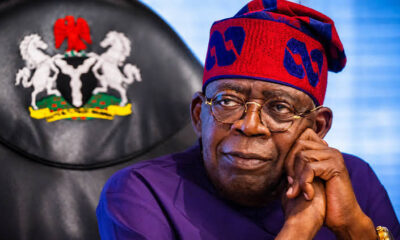

Tinubu blames Opposition for Nigeria’s Challenges
SharePresident Bola Tinubu on Saturday blamed opposition leaders for Nigeria’s hunger and poverty, accusing them of creating problems they now...


Nearly 83 Per Cent Uneducated Nigerians Live in Poverty – W’Bank
Share Nearly 83 per cent of Nigerians without formal education are living in poverty, according to the World Bank, highlighting...

Ebola: NCDC Tracks 53 Contacts, Offers Each N100,000 Weekly
ShareBy Elijah Oguche, Abuja The Nigeria Centre for Disease Control and Prevention (NCDC) has stepped up efforts to contain the...
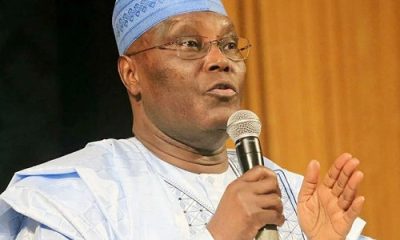

2027: Atiku Challenges Tinubu Over Alleged Ministerial Bribes
ShareBy Elijah Oguche, Abuja Former Vice President Atiku Abubakar has challenged President Bola Tinubu to identify those who allegedly collected...