
NEWS
Over 74.4 Per Cent of Households Back Govt’s Right to Collect Taxes, says NESG


By Tony Obiechina, Abuja
The Nigerian Economic Summit Group (NESG) has said that 74.4 per cent of households recognise the government’s right to collect taxes, although trust in tax authorities remains relatively low, with a score of 2.
01 out of four points.In a survey conducted by NESG, which covered 18,000 households and 9,097 businesses across the 36 states and the Federal Capital Territory (FCT), it discovered that 67.
2 per cent of households had encountered informal levies imposed by non-government groups or individuals at least once.It equally showed that 13.9 per cent of businesses had been asked to pay charges they considered illegal, raising concerns about the burden of multiple payments on households and businesses.
According to the survey, the findings which were presented in Abuja during a plenary session at the 32nd Nigerian Economic Summit (NES#32), examined how the government could rebuild public trust, ensure fairness and encourage voluntary tax compliance.
The session, titled: “Rethinking the Tax Contract: Building Trust, Fairness and Compliance”, brought together government officials, civil society representatives and technology experts to discuss how the tax system could better serve both the government and taxpayers.
The survey also revealed a gap in tax knowledge between households and businesses. While 40 per cent of households had a moderate understanding of tax laws, 80 per cent of businesses said they were aware of the laws.
The survey also identified concerns about unequal tax burdens, differences in the use of digital tax services and limited access to channels for reporting complaints as other problems requiring attention.
The NESG said improving tax compliance would require more than forcing people to pay. It called for simpler procedures, better communication, fair administration and clear evidence that tax revenue was being used to improve people’s lives.
Speaking at the session, the Executive Secretary of the Joint Revenue Board, Olusegun Adesokan, said ongoing reforms were aimed at building a tax system based on fairness, equal treatment, accountability and transparency.
He said that the government was working to harmonise taxes collected by state and local authorities to reduce the difficulties businesses and individuals face when dealing with multiple levies.
He revealed that 20 states have adopted the proposed harmonised tax framework, while the legislation was being reviewed in another 17 states.
Adesokan also pointed to the introduction of uniform presumptive tax regulations by the Minister of Finance, saying that the rules were designed to ensure more consistent treatment of taxpayers across the country.
He remarked that presumptive taxation generally provides a simplified way of calculating tax for businesses, particularly small operators who may not have complete financial records.
Adesokan reiterated that improving the independence of state revenue authorities was another important part of the reform process.
Of the 37 subnational tax authorities assessed, Adesokan said 15 were fully autonomous, 15 were partly autonomous, while seven had no autonomy.
By Elijah Oguche, Abuja
The National Agency for Food and Drug Administration and Control (NAFDAC) has destroyed counterfeit, banned, adulterated and unwholesome products valued at over ₦8 billion seized across the North-Central zone.
The products were destroyed on Thursday in Lafia, Nasarawa State, during an exercise led by the agency as part of efforts to protect public health and prevent dangerous products from reaching consumers.
NAFDAC Director-General, Prof. Mojisola Adeyeye, who disclosed this at the event, said the confiscated items were recovered from manufacturing facilities, sales outlets, markets and motor parks.
Adeyeye, represented by the agency’s North-Central Coordinator, Joseph Edor, said most of the seized products were prohibited alcoholic beverages packaged in sachets and containers of less than 200 millilitres.
She explained that the restriction on alcoholic drinks packaged in sachets and small containers, including glass bottles below 200 millilitres, was introduced because their affordability, availability and portability made them easily accessible to young people and underage schoolchildren.
“Research has shown that early exposure to alcohol affects the brain and other vital organs such as the liver and kidneys,” she said.
The NAFDAC boss warned that early alcohol consumption could disrupt brain development, cause brain damage, impair students’ academic performance, reduce productivity and contribute to various health conditions.
She said the ban and enforcement operations were intended to curb alcohol abuse and addiction while reducing the health risks associated with the consumption of prohibited products.
Adeyeye noted that the destroyed items also included expired and counterfeit medicines, unwholesome food products and cosmetics.
She reaffirmed NAFDAC’s commitment to safeguarding public health, noting that the agency was established under Decree No. 19 of 1993, as amended, to ensure that regulated products manufactured, imported, distributed and sold in Nigeria meet required standards of quality, safety and efficacy.
She also commended law enforcement agencies, sister agencies and other stakeholders for their cooperation with NAFDAC, particularly in intelligence sharing and providing security during enforcement operations.
Speaking at the event, the NAFDAC Coordinator in Nasarawa State, Dr. Gyani Stephen, said the destruction exercise was not intended to target or hurt traders but to protect public health and save lives.
He warned traders involved in the sale of fake and prohibited products to stop the practice or face the full weight of the law.
In his remarks, the Nasarawa State Commander of the National Drug Law Enforcement Agency (NDLEA), CN Saidu Daniel, represented by Yakubu Awoh, praised NAFDAC for its efforts to protect Nigerians from dangerous products.
Daniel said allowing the seized products into circulation could have put millions of lives at risk and adversely affected the mental health of many people.

By Tambaya Julius, Abuja
The Independent Corrupt Practices and Other Related Offences Commission (ICPC) has arraigned Adeniyi Adeyemi, who allegedly posed as director-general of the controversial ‘Presidential Foreign Investment Promotion Council (PFIPC)’, on 22 counts of forgery and impersonation before an Abuja High Court.
The arraignment on Thursday, followed the withdrawal of an earlier eight-count charge after a review by the Attorney-General of the Federation (AGF).
The earlier case was struck out by a Federal High Court in Abuja on October 12, after the Federal Government sought to discontinue the proceedings.
Director of Public Prosecutions of the Federation, Rotimi Oyedepo, had told the court that the review found that the alleged offences fell within the jurisdiction of the FCT High Court, rather than the Federal High Court, where the police initially filed the charges.
The prosecution subsequently filed a fresh charge before the FCT High Court.
In the new charge, the ICPC accused Adeyemi of forging a letter dated March 8, 2024, purportedly signed by Femi Gbajabiamila, Chief of Staff to the President, appointing him director-general of the PFIPC.
The commission alleged that he used forged documents to present the purported agency as a legitimate government institution and gain access to government facilities and official processes.
The charges include the alleged forgery of an executive order purportedly establishing the agency and a legislative instrument bearing the titles of the Presidential Economic Advisory Council and the PFIPC.
Adeyemi was also accused of forging a document addressed to the Accountant-General of the Federation, seeking approval for the agency to operate within the government’s financial reporting structure.
Other allegations concern documents purportedly submitted to the National Information Technology Development Agency (NITDA) to obtain a domain name for the agency.
The ICPC further alleged that Adeyemi sought more than N27 billion to establish the purported agency and N3.8 billion for personnel costs by presenting forged documents to the Minister of Finance and Coordinating Minister of the Economy.
The commission also accused him of giving N210,000 to Aminu Abdullahi, an assistant chief technical officer in the Office of the Secretary to the Government of the Federation, to facilitate the allocation of office space without official authorisation.
In another count, Adeyemi allegedly paid N300,000 to Ogaba Harry, an officer in the Office of the Chief Economic Adviser to the President, to facilitate the release of two official vehicles: a Prado sport utility vehicle and a Land Cruiser.
The ICPC further accused him of obtaining N20 million from Oyekunle Gbenga, managing director of Divine Dopacy Nigeria Limited, under the pretext of a project facilitation loan for a purported N2.8 billion contract to furnish and renovate the official residence of the PFIPC director-general.
The alleged offences, which reportedly occurred between 2024 and 2026, are punishable under relevant provisions of the Penal Code, the Advance Fee Fraud and Other Fraud Related Offences Act, and the Corrupt Practices and Other Related Offences Act.
Adeyemi denied the allegations and claimed that Gbajabiamila collected N400 million through a proxy in connection with his appointment letter to the purported agency.
He pleaded not guilty to all 22 counts.
Following his plea, Fatima Bardi, counsel to the ICPC, urged the court to fix a date for the commencement of trial.
Adeyemi’s counsel, Ibrahim Angulu, subsequently made an oral application for bail.
However, the presiding judge, Halilu Yusuf, directed him to file a formal written application.
Angulu accepted the directive but requested an early hearing, citing his client’s prolonged detention and health concerns.
He told the court that Adeyemi had spent 155 days in detention and had a medical report from the police clinic where he received treatment.
The judge adjourned the case until November 9 for trial and possible hearing of the bail application.
NEWS
WAHO, ECOWAS Stakeholders Move to Harmonise Nursing, Midwifery Accreditation Standards Across West Africa
By David Torough, Abuja
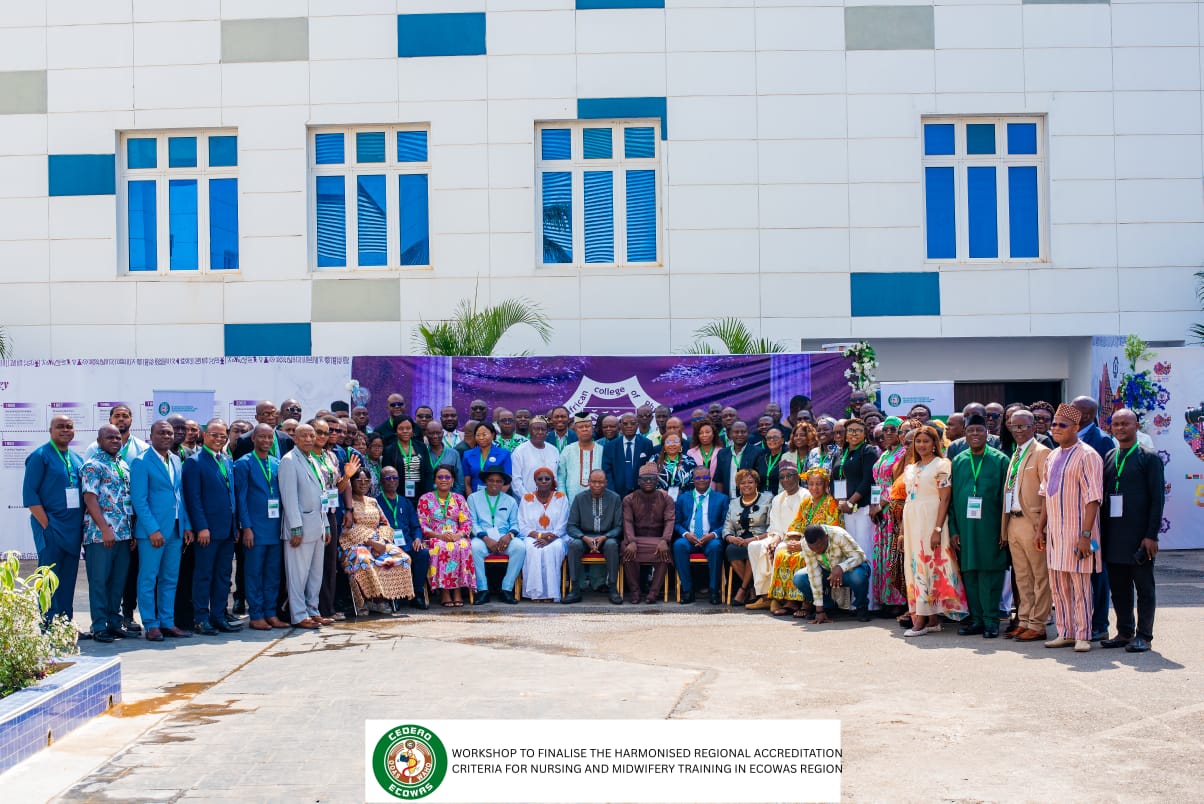
The West African Health Organisation (WAHO) has convened a three-day regional workshop in Abuja to finalise harmonised accreditation criteria for nursing and midwifery training institutions across Economic Community of West African States (ECOWAS) Member States, in a move aimed at strengthening healthcare education, improving patient safety and facilitating the mobility of qualified health professionals across the region.
The workshop brought together representatives of governments, professional regulatory bodies, academic institutions, professional colleges and other stakeholders to develop a common accreditation framework that will promote consistent standards in nursing and midwifery education throughout West Africa.
Speaking on behalf of Nigeria’s Coordinating Minister of Health and Social Welfare, Professor Muhammad Ali Pate, Dr Dakum Longji described the initiative as an important opportunity to strengthen professional standards, promote regional collaboration and improve the quality of healthcare delivery.
He said nurses and midwives remained the backbone of healthcare systems, noting that their knowledge, compassion and dedication were essential to improving the health and well-being of populations across the region.
According to him, accreditation is fundamental to ensuring that nursing and midwifery training institutions meet established educational standards and produce graduates equipped with the knowledge, skills and competencies required to provide safe, effective and compassionate care.
He stressed that harmonising accreditation standards across ECOWAS Member States would promote professional mobility, strengthen regional cooperation and enhance public confidence in healthcare systems.
“Accreditation should therefore not be viewed merely as a regulatory requirement. It is a vital investment in patient safety, quality healthcare and the future of our health systems,” he said.
Representing the WAHO Director General, Professor Palokinam T. Pitche, Professor Joseph Olorunda said the workshop was taking place at a critical time in the region’s efforts to strengthen health systems through improved education and training of healthcare professionals.
He noted that West Africa continued to face significant health system challenges, including inadequate financing, weak disease surveillance, insufficient infrastructure and shortages of qualified health workers.
According to workforce figures referenced in WAHO’s regional assessments, all 12 ECOWAS Member States face critical health workforce shortages, with an average health professional density of 0.73 per 1,000 population, compared with the referenced minimum threshold of 2.28 per 1,000.
He explained that addressing the shortages required not only increasing the number of health professionals but also ensuring that their education and training were relevant, consistent and of high quality.
“The quality of nursing and midwifery education directly determines the strength of our health systems,” he said, adding that the COVID-19 pandemic had demonstrated that universal health coverage and health security depended on a competent, adequately trained and equitably distributed health workforce.
Professor Olorunda said WAHO had already developed general accreditation criteria, while the ongoing workshop provided an opportunity to strengthen that foundation by developing specific, harmonised standards for nursing and midwifery training institutions.
He explained that a credible accreditation framework should establish clear requirements for curricula, institutional facilities, faculty qualifications and clinical training environments, supported by transparent institutional assessments, compliance monitoring and periodic reviews.
The proposed framework is expected to incorporate established accreditation procedures, including formal applications by institutions, verification of minimum programme requirements, pre-accreditation assessments, full accreditation visits and periodic reviews.
These measures, he said, would promote transparency, consistency and accountability while ensuring that training institutions complied with agreed regional standards.
Highlighting WAHO’s broader efforts to improve health professional education, Professor Olorunda said the organisation had supported the harmonisation and validation of 58 basic and specialist training curricula across medical specialties, pharmaceutical sciences, allied health professions, nursing and midwifery.
He added that WAHO had also supported the harmonisation of training manuals and practices for community-based health workers, developed regional training plans, provided financial assistance to Member States implementing harmonised curricula and offered scholarships for training in specialties facing critical shortages.
The organisation, he said, was also finalising a regional work plan to strengthen health worker motivation and retention, particularly in underserved and hard-to-reach areas, while pursuing initiatives to engage healthcare professionals in the diaspora to support training, retraining and mentorship.
Professor Olorunda called on participants to develop a robust, competency-based accreditation framework aligned with national requirements and regional and global priorities.
He further emphasised the need to strengthen inspection and regulatory mechanisms, introduce digital accreditation management systems and ensure safe, conducive clinical training environments for nursing and midwifery students.
Also speaking, the President of the Regional Council for Health Professionals Education, Professor Koffi Balogou, said harmonised accreditation criteria would help eliminate unregulated and substandard nursing and midwifery training practices in parts of the region.
He expressed concern that some institutions operated without qualified teaching personnel, adequate infrastructure and appropriate academic resources, while admitting candidates who did not meet the necessary academic requirements.
Such practices, he warned, undermined professional standards, exploited families investing in education and, most importantly, put the lives and safety of patients at risk.
Professor Balogou said the proposed framework would help ensure that only institutions meeting established standards were authorised to train nurses and midwives and award recognised qualifications.
He added that effective accreditation would protect students and their families from institutions offering inadequate training or qualifications that lacked legitimacy.
Beyond quality assurance, he said, the harmonisation of accreditation standards would facilitate mutual recognition of qualifications and support the free movement of qualified health professionals across ECOWAS Member States.
He, however, cautioned that the success of the initiative would depend on the effective dissemination and implementation of the final criteria across the region.
Representing Senegal, which currently chairs the ECOWAS Authority, Dr Awa Seck said the harmonisation of accreditation criteria represented a strategic decision for the future of health professional education in West Africa.
She conveyed the greetings of Senegalese President Bassirou Diomaye Diakhar Faye and reaffirmed his country’s commitment to building a more effective, harmonised and excellence-driven regional health education system.
Dr Seck said the quality of healthcare provided to communities was inseparable from the quality of education and training received by health professionals.
She noted that nurses and midwives were often the first, and sometimes the only, point of contact between communities and health services, making their contribution indispensable to achieving universal health coverage.
According to her, common accreditation standards would establish a regional framework in which nurses and midwives, regardless of their country of training, benefit from educational programmes based on rigorous and mutually recognised requirements.
She said the framework would strengthen confidence among training institutions, facilitate professional mobility and support continuous improvements in healthcare quality.
Dr Seck stressed that Member States must go beyond adopting the criteria to ensure national ownership, effective implementation and continuous improvement.
She expressed confidence that the workshop would produce a consensus that respected national circumstances while advancing the region’s shared ambitions for quality healthcare education.
Meanwhile, Professor Yao Tettey, representing the West African professional colleges, called for stronger collaboration among professional bodies, training institutions and regulatory authorities to ensure the successful implementation of the harmonised framework.
He said existing work undertaken by WAHO on accreditation, training curricula, professional practice, ethics and health workforce development provided a valuable foundation that relevant institutions should build upon rather than duplicate.
Professor Tettey noted that the participation of professional colleges, academic institutions and regulators in the workshop offered an opportunity to develop comprehensive criteria that could serve as a common reference across the region.
He urged participants to ensure that the final document met high professional standards and was widely disseminated to relevant institutions for adoption and implementation.
Similarly, Professor Boni Avoaka, representing the deans of faculties of health sciences, described the initiative as strategically important to the future of public health in West Africa.
He said nurses and midwives played fundamental roles in maternal, child and community health, making the quality and consistency of their education a priority for governments and academic institutions.
Professor Avoaka said academic leaders had a dual responsibility to ensure that training programmes met high standards and to support the free movement of health professionals through mutually recognised qualifications backed by credible accreditation mechanisms.
He expressed confidence that the expertise assembled at the workshop would produce rigorous, practical and regionally relevant criteria capable of strengthening quality assurance and mutual trust among universities, faculties and training institutions.
Across the goodwill messages, speakers underscored the importance of sustained cooperation among ECOWAS Member States, professional bodies, regulators and academic institutions to ensure that the proposed accreditation framework translated into measurable improvements in nursing and midwifery education.
They also highlighted the need for effective regulatory oversight, transparent assessment procedures and continuous monitoring to ensure that institutions maintained the standards required to produce competent health professionals.
The workshop is expected to conclude with the finalisation of harmonised regional accreditation criteria that will provide a common reference for nursing and midwifery training institutions across ECOWAS Member States.
The initiative is part of WAHO’s broader efforts to strengthen human resources for health, improve the quality of professional education and advance regional health integration.
Declaring the workshop open on behalf of Nigeria’s Coordinating Minister of Health and Social Welfare, Dr Longji commended WAHO, ECOWAS Member States and participating stakeholders for their commitment to the initiative.
He called on participants to work together in a spirit of unity and collaboration, emphasising that investment in the training of nurses and midwives was an investment in safer healthcare, healthier communities and a stronger future for West Africa.


Over 74.4 Per Cent of Households Back Govt’s Right to Collect Taxes, says NESG
ShareBy Tony Obiechina, Abuja The Nigerian Economic Summit Group (NESG) has said that 74.4 per cent of households recognise the...
NAFDAC Moves Against Fake Products, Destroys N8bn Seizure
ShareBy Elijah Oguche, Abuja The National Agency for Food and Drug Administration and Control (NAFDAC) has destroyed counterfeit, banned, adulterated...

ICPC Accuses Fake Investment Agency DG of N30.8bn Request From FG
ShareBy Tambaya Julius, Abuja The Independent Corrupt Practices and Other Related Offences Commission (ICPC) has arraigned Adeniyi Adeyemi, who allegedly...

WAHO, ECOWAS Stakeholders Move to Harmonise Nursing, Midwifery Accreditation Standards Across West Africa
ShareBy David Torough, Abuja The West African Health Organisation (WAHO) has convened a three-day regional workshop in Abuja to finalise...
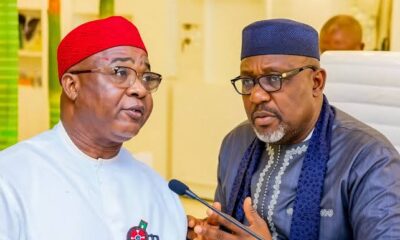

Okorocha Hails Court Victory as APC Insists Uzodimma Remains Candidate
ShareBy Tambaya Julius, Abuja Former Imo State Governor, Rochas Okorocha, has described a Federal High Court judgment recognising him as...


TRIBUTE: CHIEF GABRIEL GBAYAN, A LEGACY OF SERVICE TO BADMINTON
Share The late Chief Gabriel Gbayan was a distinguished sports administrator who served as a Two times Chairman of the...


Court Dismisses Emeka Ike’s N10bn Suit against Wike’s Aide
ShareThe Federal High Court in Abuja on Wednesday dismissed a N10bn fundamental rights suit filed by Nollywood actor Emeka Ike...
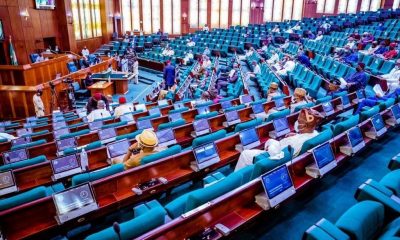

Reps Threaten to Arrest Telecom CEOs Over Poor Network Services
ShareBy Ubong Ukpong, Abuja The House of Representatives on Wednesday threatened to issue warrants of arrest against chief executives of...


A Guide to IFRS S1 and S2 Sustainability Implementation (4)
ShareBy Innocent Okwuosa The implementation of IFRS S1 and S2 must not be approached strictly from a regulatory compliance perspective....


2027: Reward Tinubu with Votes for Federal University – Wike
ShareBy Laide Akinboade Abuja The Minister of the Federal Capital Territory, Nyesom Wike, has said the Ogoni people of Rivers...