
Health
Nigeria Expects 3 Types of Vaccines – PTF


The Presidential Task Force (PTF) on COVID-19 says it is expecting three types of vaccines to cater to the needs of Nigerians.
The Minister of State for Health, Sen. Olorunnimbe Mamora, gave the hint at the PTF briefing on COVID-19 on Monday in Abuja.
Mamora said that Nigeria has the option to increase supply if need be.
“For now, there will be no need for ungoverned private importation of vaccines,’’ The News Agency of Nigeria (NAN) quotes the minister as saying.
The minister said that vaccine deployment would be done by the National Primary Health Care Development Agency (NPHCDA) until further notice.
The minister that all manufacturers of vaccines would require an official indemnification to be able to administer their product in Nigeria.
Nigeria, Mamora added, has provided for the Covax facility.
“Vaccines from any other sources must first have NAFDAC’s Emergency Use Authorisation and they are not covered under the indemnification arrangement.
“Such vaccines will be illegal and, therefore, subject to be impounded by NAFDAC and Customs.
“All vaccines coming into Nigeria will arrive only through the Nnamdi Azikiwe International Airport Abuja,’’ he said.
He warned that arrival vaccines at any other airport will not be allowed but will be confiscated by the Nigeria Customs.
He noted that it was important to have an orderly, disciplined rollout to avoid chaos in the immunisation scene.
“As the expected first batch of COVID vaccines from the COVAX facility arrives from Mumbai to Nigeria, all plans and arrangements have been finalised to ensure a hitch free rollout of vaccination.
“Such arrangements included training of health workers, secured logistics and cold chain equipment to receive vaccines in all wards of the federation.
“The vaccines will be received at the Nnamdi Azikiwe Airport and delivered to the National Strategic Cold Store (NSCS), Abuja where inspection and quality testing will be conducted by NAFDAC and due documentation and certification done.’’
Mamora said that the government would begin the roll out with the vaccination of frontline health workers, who are the first line of defence.
“Our goal is to introduce the COVID-19 vaccine in a phased, equitable manner and ultimately vaccinate all eligible Nigerians within the next two years to ensure herd immunity.
“The World Health Organisation recommendation is not to vaccinate persons under 18 years of age, until more scientific data is available on any effects on growing children,’’ he said.
The minister said that there were countries experiencing the third wave, after surviving the second phase, “a reason for us to beware’’.
“We have just marked the first year since the first case of COVID-19 was imported to Nigeria on Feb. 27, 2020.
“The health sector in Lagos did a fantastic job of identifying the individual, tracing 69 contacts and isolating one other person along with the index case.
“Since then, we have confirmed a total of 155,657 other infections, overwhelmingly by community transmission, of which 133,768 have been treated and discharged.
“As in most countries of the world, our health system has been stretched over the past year and the resilience of our people tested, as have been the commitment and dedication of our health workers, some of whom unfortunately became infected in the line of duty.
“We are relieved that our health has survived the stress up to date and we must thank God also for the lives of all Nigerians, who have survived COVID-19 infection.’’
The minister added that Nigeria has sadly lost 1,907 people, comprising fathers, mothers, grandparents, brothers, sisters, cousins and friends, all very dear to us to the disease. (NAN)








From Dan Amasingha, Minna
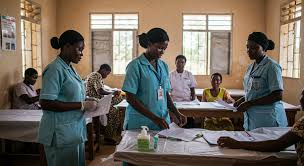
The Niger State Government has announced plans to recruit up to 5,000 health workers as part of a sweeping reform of its healthcare delivery system, following the commissioning of what it described as the first porta cabin specialist hospital of its kind in sub-Saharan Africa.
Governor Umar Bago made the disclosure on Tuesday during the inauguration of the multi-billion-naira twin porta cabin hospital project at Ibrahim Badamasi Babangida Specialist Hospital in Minna.
The Governor said the state would recruit an additional 2,500 medical personnel in the coming months, bringing the total number of health workers employed under his administration to 5,000.
According to him, the initiative is part of a revolutionary healthcare delivery agenda aimed at positioning Niger State as a hub for medical tourism in sub-Saharan Africa.
Bago further revealed that the state government has entered into a bilateral agreement with leading Arab hospitals in Cairo, Egypt, for a medical doctors’ exchange programme. Under the arrangement, between 20 and 50 Egyptian doctors are expected to be deployed to the IBB Specialist Hospital to provide specialised medical services.
He disclosed that the state has already engaged about 20 visiting consultants who are currently performing advanced neurosurgical procedures, including spinal cord and brain surgeries, as well as knee replacement operations.
The newly inaugurated twin porta cabin hospital, located within the premises of the IBB Specialist Hospital, will serve as a temporary take-off facility for the proposed IBB University Teaching Hospital.
Bago described the facility as the first of its kind in sub-Saharan Africa and a strategic investment to bridge gaps in tertiary healthcare services.
“We are deliberate in our healthcare policy. We want to make Niger State the healthcare delivery hub of the North and encourage people to seek medical screening and treatment at home,” the Governor said.
“We want to position Niger State as the prime location for healthcare delivery in the North.”
To complement the investment in tertiary healthcare, the Governor stated that the administration has upgraded 20 Primary Health Care Centres (PHCs) from Type I to Type II status.
“Currently, we have some of the best Type II PHC models in the country, and we will upgrade an additional 110 centres,” he added.
In his remarks, the State Commissioner for Health, Dr. Murtala Muhammad Bagana, commended the Governor for what he described as the largest healthcare renovation and investment drive in the state’s 50-year history, noting that the reforms would significantly improve access to quality healthcare for residents.

The Governor of Lagos State, Babajide Sanwo-Olu, has charged the Red Cross for greater innovation and deployment of technology in humanitarian response in the state.
Sanwo-Olu made the call while delivering his goodwill message at the 58th Annual General Meeting (AGM) of the Nigerian Red Cross Society (NRCS), Lagos State Branch, at the weekend in Lagos.
The governor, represented by Sesan Ogundeko, the Permanent Secretary of the state’s Ministry of Special Duties and Intergovernmental Relations, advised NRCS to leverage data and digital tools to strengthen emergency management in the state.
Sanwo-Olu, who described the AGM as more than a routine gathering, said it was a celebration of compassion, service and humanity spanning 58 years of Red Cross operations in the state.
He noted that with an estimated population of about 20 million people, the state faced increasing pressure from rapid urbanisation, climate change and infrastructural demands.
“In a city as large and fast-growing as Lagos, emergencies are sometimes unavoidable,” he said.
He said these realities made disaster preparedness and emergency response essential, adding that the work of the Red Cross aligned closely with the vision of building a resilient state.
Sanwo-Olu further advised the branch leadership to continue to be innovative, remain transparent and accountable and make good use of technology and data to improve humanitarian response.
According to him, effective governance requires strong partnerships, as the government cannot single-handedly manage the scale of emergencies in a megacity like Lagos.
He reiterated the state government’s commitment to strengthening collaboration with the Red Cross, promoting voluntary blood donations and supporting vulnerable communities across the state.
The governor also made an appeal to residents to become active responders during emergencies rather than passive observers.
He decried a growing culture where some young people record accident scenes for broadcast instead of assisting victims, urging them to choose service over harmful or indifferent behaviour.
“Each one of us can make a difference through simple actions; checking on a neighbour, donating blood, volunteering your time, learning about first aid and supporting those in need,” he said.
Sanwo-Olu envisioned a state where more citizens were prepared to respond in emergencies, and compassion spread as quickly as information online.
He said humanitarian service was not the responsibility of organisations alone but a shared civic duty.
He added that history would not only remember roads and buildings constructed, but also how a society cared for the weak, displaced, sick and forgotten.
The governor commended Red Cross volunteers for their dedication, describing them as everyday heroes who often risk their personal safety to save others.
He praised both young and veteran members for their selfless service.
“When floods displace families, when road accidents occur or when emergencies strike unexpectedly, the Nigerian Red Cross volunteers are often among the first to respond,” he said.
Sanwo-Olu congratulated the Lagos State Branch on its 58th AGM and assured members that the requests earlier submitted to the state government would receive a positive response.
Earlier, NRC Lagos chairman, Dr Adebola Kolawole, said the AGM was a pivotal moment for reflection, accountability and strategic renewal to reposition the branch for greater impact.
Kolawole said the branch was committed to becoming financially self-reliant while setting the standard in humanitarian service delivery across Lagos State.
“Our administration remains steadfast in its commitment to repositioning the Lagos State Branch as a beacon of humanitarian excellence,” she said.
She identified sustainability, inclusivity, impact measurement, advocacy and collaboration as key pillars for the branch’s next phase, adding that innovation and strategic partnerships would drive improved service delivery.
While acknowledging financial constraints as a major challenge, Kolawole appealed to government, corporate organisations and individuals for greater support.
She noted that additional resources were required for ambulances, disaster response equipment, personal protective gear for emergency teams and a solar power project to enhance operations at the branch’s facilities.
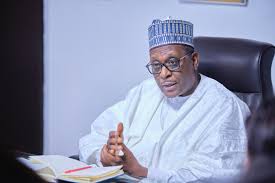
Minister of Health and Social Welfare, Prof. Muhammad Pate, has commended Plateau Government’s efforts in improving primary healthcare delivery in the state.
Pate gave the commendation in Jos at the graduation ceremony of Cohort 1.0 and the onboarding of Cohort 2.
0 Plateau State National Health Fellows.The minister said that statistics showed that Plateau is making significant strides in primary healthcare through revitalised facilities, budgetary support, and health insurance for vulnerable populations.
Pate, who was represented by Dr. Pokop Bupwatda, Chief Medical Director (CMD) of the Jos University Teaching Hospital (JUTH), said the state was also enhancing planning systems and collaboration to focus on the well-being of mothers, newborns, and children.
The minister stated that at the 2025 National Council on Health, Plateau led in implementing resolutions from the 2024 council, which he said was a feat made possible by strong political will.
According to him, in April 2024, President Bola Tinubu approved the National Health Fellowship Programme (NHFP) to enhance accessible and quality healthcare in Nigeria.
He said the initiative selected passionate, altruistic young Nigerians from all the 774 LGAs, building their capacities to drive innovative change in their communities.
“The NHFP symbolises a new Nigeria where talent and competence empower our youth to reach their full potential.
“Throughout the fellowship year, fellows in cohort 1 in Plateau and beyond had collaborated with their communities and health teams to improve coordination, enhance data use, combat maternal and childhood illnesses, address drug abuse, and rebuild trust in health services.
“Their fresh energy and innovative initiatives have significantly bolstered ongoing reforms to enhance service delivery.
“Cohort 1.0 fellows, your work has expanded the technical capacity of teams across the state; you have demonstrated that impactful public service is rooted in empathy, evidence, and commitment to communities,” he commended.
He urged the onboarding cohort 2.0 to build on the solid foundation laid by cohort 1.0, and you carry the responsibility to build on it with renewed excellence.
“Your journey begins at a time when the health system needs stronger data use at every level, deeper collaboration between communities and health teams, creative solutions to service delivery barriers, and unwavering focus on maternal and newborn health outcomes.
“As you join this fellowship, we encourage you to listen to the communities you serve, collaborate with health leadership, innovate for better care and access, and uphold professionalism,“ he urged.
Similarly, Plateau Governor Caleb Mutfwang said that the state NHFP was not just an initiative but a movement.
Mutfwang described the programme as a movement of empowerment, leadership and service that aligned the state with the Federal Government’s National Health Strategic Renewal Investment Initiative and the Primary Health Care Transformation Agenda.
Mutfwang, who was represented by his deputy, Josephine Piyo, said that this would ensure that the state is not left behind but is marching forward, shoulder to shoulder with the nation, into a new era of health reform.
Plateau Commissioner for Health, Dr Nicholas Ba’amlong, in his welcome address, said the graduation and onboarding ceremony reaffirmed the state’s collective commitment to strengthening the health system of the state and Nigeria at large.
“The state embraced the vision wholeheartedly, recognising that the health of our people is the foundation upon which every other aspect of development rests.” He said.
Both cohorts consist of 17 persons each, who were gotten from the 17 local government areas of the state.




Benue, Taraba Governors Visit IDPs on Border Communities
ShareTaraba State Governor, Agbu Kefas and Benue State Governor, Hycienth Alia on Monday visited IDPs on the border communities of the two states. Alia said the Benue government was...


Falcons Seek Redemption against Cameroon in Second Friendly
ShareReigning African champions Nigeria are keen to redeem themselves after losing to a late goal by Cameroon’s Indomitable Lionesses on Saturday in the first of two friendly matches in...


US Sanctions Rwanda’s Military, Top Commanders over Fight in DR Congo
ShareThe US has imposed sanctions on the Rwandan army and four of its senior commanders, accusing them of fuelling the conflict in neighbouring Democratic Republic of the Congo. Fighting has persisted despite a US-brokered...


Reps Reiterate Imperatives of Improving Polytechnics System
ShareBy Ubong Ukpong, Abuja The House of Representatives on Tuesday, said it was very imperative to intentionally invest in the nation’s Polytechnics System, towards...

Sani Warns Conflict Merchants, Pledges to Safeguard Peace in Kaduna
ShareFrom Nicholas Dekera, Kaduna Kaduna State Governor, Uba Sani has declared that his administration will not tolerate any individual or group seeking to undermine peace and...

ShareDisCos Meter 109,556 Customers in 2025 – NERC The Nigerian Electricity Regulatory Commission (NERC) said Electricity Distribution Companies (DisCos) metered...


Petrol Price Climbs N960 in Abuja, Lagos Sells N935 Per Litre
ShareBy Tony Obiechina, Abuja The escalating military confrontation involving the United States, Israel and Iran has begun to bite hard...

FG Outlaws Cash Tax Collection, Roadblocks Nationwide
ShareBy David Torough, Abuja The Federal Government yesterday formally banned the collection of taxes in cash and prohibited the mounting...
Tinubu’s Renewed Hope Agenda gaining traction, Amgbare Lauds RTIFN
ShareFrom Mike Tayese, Yenagoa Managing Director/CEO of the Niger Delta Basin Development Authority (NDBDA), Prince Ebitimi Amgbare, has expressed confidence...

NGF Backs Tinubu on Direct Federation Account Remittance
ShareBy Tony Obiechina, Abuja The Nigeria Governors’ Forum (NGF), under the chairmanship of AbdulRahman AbdulRazaq, has expressed strong support for...