
NEWS
Lawyers Want ”Archaic, Obolete” Laws Reviewed to Reflect Current Realities

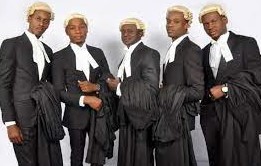
Some Abuja-based lawyers on Monday called for review of laws which provisions no longer reflect realities to advance justice administration in Nigeria.
The lawyers made the call in an interview with the News Agency of Nigeria.
They said that provisions of some laws had been overtaken by societal development.
Mr Friday Abu, a lawyer said some laws are obsolete, particularly in terms of the circumstances or situations they intend to regulate.
Abu said that for people to consider as adequate, laws that regulate their conduct and activities, such laws must be at par with the occasion it was provided for.
“ The law is made for the people and not the people for the law. Therefore, any law regulating the conduct and activities of the people in a particular area must be such that the people will regard as adequately meeting the occasion in order for such law to attain the desired effect or efficacy as the case may be.
“There are several obsolete laws in Nigeria that require either a total repeal or amendment to bring them in line with the current reality as regards the situations they are meant to regulate.
“One example of such obsolete laws requiring substantial amendment is the Entertainment Tax Act CAP 498 Laws of the Federation of Nigeria 2004.
“A closer look at this Act (Law) will reveal that the Law must have been passed during the colonial era because the Act mentioned entertainment centers like casinos, gaming events, horse racing events and the likes.
“In addition to the fact that this Law mentioned archaic places of entertainment, the fees specified as entertainment fees/tax are so extreme that if the government is to embark upon collecting the fees as mentioned in the Act, the cost of collecting the fees will be much higher than the fees collected at the end of the day.
”This law which is applicable in the FCT, Abuja and the Federal Capital Territory Administration (FCTA), headed by the Minister of the FCT ran into difficulties when it attempted to use the said Law (Act) to start charging and collecting tax from entertainment centers in the FCT including clubs, casinos, Bars and events centres.
“The former Minister of the FCT, Senator Bala Mohammed attempted to include events centers and gardens and halls in the Act by passing The Entertainment and Events Centers Regulations Act in 2014
“This action by the FCT administration was challenged by some hotels and events centers who dissected the law and realized that the Act did not mention Halls within hotels, Gardens and events centers/Halls”, Abu added.
Another legal practitioner, Seprebofa Oyeghe said “Sales of Goods Act (SOGA), which is about 128 years old was fashioned along the Britain, Scotland, Ireland commercial climate and being a Statute of General Application, was received upon our independence and is the extant law that governs commercial transactions bordering on sale of goods.
“This ancient law Act which is a relic of our colonial history is totally out of touch with modern realties and the dynamics of the commercial world.
”The place of e-Commerce, cyber laws and the various rights, liabilities of buyers, sellers and principles that applies in commercial transactions is totally out of touch in the old Sale of Goods Act
According to Oyeghe, “ another law that needs urgent amendment that readily comes to mind is the Hire-Purchase (Amendment) Act 1970”.
”This is the law that governs Hire-Purchase transactions. It was enacted in 1965 and amended in 1970.
“In spite of the far reaching changes and advancement in commerce and industry, the extant still remain the 1970 Act which was only recompiled in the 2004 Laws of the Federations as Cap. H4, LFN, 2004.
”The implication, even without saying is that, a lot of problems confront hire-purchase transactions.
“The introduction of technology, the dynamism in the business environment coupled and the increasing globalisation of businesses/transactions and new models of commercial transactions have nearly rendered the Hire-Purchase Act irrelevant, archaic and outdated piece of legislation that cannot fix the challenges in the modern business world.
“Section 1 of the Act provides that: all hire-purchase agreements and credit-sale agreements, other than agreement in respect of motor vehicles, does not exceed two N2,000
“This monetary fixation as well as others like twenty-kobo for expenses on memorandum or note from hirer to the owner now sounds ridiculous owing to the current value of money.
”One can only but imagine how anyone will undertake hire-purchase agreements other than motor vehicle, valued at not more than N2,000.
”he monetary limit is strange, offensive, unrealistic”, the legal practitioner opined.
Another grouse Oyeghe had with this Act was also in the requirement of personal signature of the hirer (while the owner can sign himself or by an agent) otherwise the owner would be unable to enforce the transaction.
”The different treatment of the parties on the issue of signing the hire-purchase agreement or note or memorandum appeared unfair, according to him.He also faulted that the Act did not take into account the place of online transactions relating to hire-purchase.
“The National Assembly and the National Law Reform Commission need to embark on a comprehensive review of the Act”, Oyeghe added.
In her opinion, Toyin Yimika said “the Land Use Act 1978 is one law too many that is outdated, obsolete, poorly drafted, poorly implemented and long overdue for an amendment.
“There is so much power granted to the governors which is unnecessary due to wide scale abuse. Sections 1, 34, 36 and several other provisions of the Act has been exposed to different interpretations.
“By Section 29, the governor who is expected to pay compensation upon revocation of rights in land. By Section 30, disputes with respect to dispute over compensation is referred to the Land Use and Allocation Committee, which is a Committee set up by the Governor, who equally appoints the members.
”That section of the Act contravenes natural justice which requires that no one should be a judge in his own case.
“The above provision is offensive, unconstitutional as it clearly ousts the power of court to entertain matters bordering on vesting of lands on governors.
“The above among several other defects, coupled the age of the Act, 43 years which to a large extent is no longer in consonance with modern reality, there is an urgent need for the National Assembly to embark on a comprehensive review of the Act”, she concluded.
Another lawyer, Josephine Ijekhuemen, said:”a clear example of an obsolete law is the criminalisation of bigamy in Nigeria”.
According to her, it is a criminal offence in Nigeria which is punishable by the criminal law.
“By law, bigamy, a by-product of polygamy, is a criminal offence punishable with imprisonment in Nigeria.
“It is an offence which arises from what is otherwise an incidence of marriage. You can see Section 370 of the Criminal Code,” she explained.
Ijekhuemen, a Principal Partner with Odikpo, Okpe and Associates, Lagos, however, said since the law was introduced in the criminal code, “I do not think that there has been a single case of conviction. It has simply become an obsolete provision.”
She said another obsolete provision due to lack of enforcement was Section 210 of the Criminal Code, Cap C38 of the Laws of the Federal Republic of Nigeria.
“This section provides that any person who is engaged in witchcraft practice as set out in subsections is guilty of a misdemeanor, and is liable to imprisonment for two years.
“There are also several other such legislations that are either outdated, unenforceable or not enforced,” she said.
The lawyer suggested that the only way to change the status of an obsolete law was to amend, repeal or expunge it from legislation.
“Remember the quarantine law has been in existence since the 1950s not enforceable until it was amended last year?
“This is because it was designed during the period of emergency and the situation then was more about public health than human rights and for many years, it wasn’t applied because there was no necessity until COVID-19 came.
“It was used to isolate people and was amended to allow it be in tune with today’s reality,” she explained.
Ijekhuemen stated that the amendment allows voluntary isolation rather than a near prison isolation for suspected cases.
“First Quarantine Act was in 1926 then amended in 1954 before the one amended last year.
“So from 1954 to 2020, it was obsolete,” she said.
According to her, another example is the Infectious Disease Act of 1908 which was obsolete until 2020 when coronavirus pandemic came.
“This law came alive when President Muhammadu Buhari signed the Infectious Diseases Regulations in 2020,” the Lagos-based lawyer said.(NAN)



By Tambaya Julius, Abuja
Nigeria Democratic Congress (NDC) candidate, for the Lagos State House of Assembly seat for Eti-Osa Constituency I, Hon. John Ademola Akano under the platform of the NDC, has protested alleged moves to impose or present an individual who did not participate in the party’s nomination process as its candidate for the constituency.
Akano, who spoke at a press conference, said he duly purchased the Expression of Interest and Nomination Forms, completed and submitted all required documents within the stipulated period and fulfilled the conditions set by the party to contest the election.
He said following his qualification, he invested considerable time and resources in consultations, mobilisation, stakeholder engagement, campaign planning and grassroots outreach across Eti-Osa Constituency I ahead of the scheduled primary elections.
According to him, he acted in good faith and relied on the party’s constitution, guidelines, rules and established democratic principles governing its nomination process.
Akano expressed concern over what he described as moves to award or confer the party’s ticket on an individual who, according to him, did not purchase nomination forms, express interest in the position, participate in the screening process or subject himself to the party’s nomination procedures.
He argued that allowing such an arrangement would undermine internal democracy, fairness, transparency, equity and due process, while frustrating aspirants who complied with the party’s requirements.
The candidate maintained that the circumstances surrounding the cancellation or non-conclusion of the primary were not attributable to him.
He therefore rejected any attempt to use the cancellation of the primary as a basis for disenfranchising qualified aspirants or introducing an individual who was not part of the nomination process.
Akano said where a primary election could not be validly concluded, the party should adopt a lawful, transparent and equitable mechanism that protects the interests of aspirants who legitimately participated in the nomination exercise.
He further alleged that Mr. Rotimi Obasanjo Egbewunmi, whose name he said was being considered in connection with the House of Assembly ticket, had contested for the House of Representatives seat rather than the House of Assembly position.
“It is a matter of public record that Mr. Rotimi Obasanjo Egbewunmi contested for the House of Representatives seat, not the House of Assembly seat. The evidence is clear and readily available,” he said.
Akano also referred to provisions of the Electoral Act 2022, arguing that the party must follow due process in determining its candidate.
He said any attempt to substitute a House of Representatives candidate for the House of Assembly ticket without following the prescribed process would be unjust and contrary to democratic principles.
“I have no objection to party supremacy. However, party supremacy must be based on justice, fairness, due process and the rule of law, not falsehood, deception or insincerity,” Akano said.
He appealed to the NDC National Leader, Senator Seriake Dickson; National Chairman, Senator Cleopas Moses Zuwoghe; and South-West Vice Chairman, Pastor Mrs. Adedayo Ekong, State chairman Hon Kings Okunneye to intervene in the matter and address what he described as irregularities by some party officials.
Akano said his expectation was that the party leadership would ensure that the rights of all qualified aspirants were protected and that the nomination process was resolved fairly.
The President of Youths in Politics, Dr. Paul Church Ukah, has called on the NDC leadership to review the circumstances surrounding the Eti-Osa Constituency I nomination process.
Ukah said his organisation became involved following a petition and complaint presented by Akano concerning the party’s nomination process.
He stressed that Youths in Politics was not taking sides because of friendship, political affiliation or personal interest, but was concerned about ensuring that young Nigerians who participate in politics are treated fairly.
According to him, Akano claimed to have purchased the required nomination forms, completed the nomination process, received clearance to participate and mobilised extensively across the constituency.
Ukah said Akano further alleged that following the cancellation or non-conclusion of the primary, there were moves to present another individual who did not participate in the nomination exercise as the party’s candidate.
He said the organisation reviewed materials presented in relation to the complaint and believed there were sufficient grounds for an immediate and transparent review before any irreversible decision was taken.
“Our position is simple: let the process be fair,” Ukah said.
He explained that Youths in Politics was not asking the NDC to deny any individual their rights, violate its constitution or allow external bodies to interfere in its internal affairs.
Ukah said that if a valid primary had produced a winner, the result should be verified and respected unless there was a lawful basis for setting it aside.
Where a primary was cancelled or could not be validly concluded, he said, the party should clearly communicate the legal and constitutional basis for whatever alternative mechanism it intended to use.
He added that if another nomination mechanism was adopted, all aspirants legally entitled to participate should be treated equally and transparently.
Ukah warned that denying young aspirants a fair opportunity after they had complied with party requirements could discourage young Nigerians from participating in politics.
He said political parties could not continue to encourage youths to participate in elections while allowing nomination processes that could erode their confidence in the political system.
“Young Nigerians must not only be encouraged to vote. They must be encouraged to contest, participate, organise, lead and seek elective office,” he said.
According to him, the legal framework provides avenues for aspirants to challenge alleged violations of electoral laws and party guidelines.
He said disputed nominations should be addressed through verification, transparency, dialogue and, where necessary, lawful adjudication rather than political silence or unilateral decisions.
Youths in Politics called on the NDC leadership to immediately review the circumstances surrounding the Eti-Osa Constituency I primary.
The organisation also urged the party to make relevant nomination records available to affected aspirants and give Akano and other stakeholders an opportunity to present their evidence.
The group demanded that any decision concerning the emergence of the party’s candidate should comply with the NDC constitution, nomination guidelines and applicable electoral laws.
It also urged the party to establish a transparent mechanism for resolving any genuine dispute arising from the primary.
Ukah stressed that the organisation’s intervention was not about one individual but about the confidence of young Nigerians in the political process.
Ukah clarified that Youths in Politics was not opposed to any individual who might eventually emerge as the NDC candidate.
“Our concern is the process,” he said.
He maintained that if another individual was legally entitled to the ticket, such entitlement should be established through a process capable of withstanding scrutiny.
Similarly, he said if Akano was entitled to the ticket, that entitlement should be established and respected.
“Our demand is not that the answer must favour John Akano. Our demand is that the answer must favour justice,” Ukah said.
He added that the organisation would neither support the victimisation of any aspirant nor the imposition of candidates without due process.
He also cautioned against supporting unsubstantiated claims merely because the claimant was a young person.
“Evidence must prevail. Rules must prevail. Justice must prevail,” he said.
Ukah appealed to young Nigerians preparing to participate in politics not to become discouraged by challenges within the political system.
He said youths deserved genuine opportunities to contest elections, participate in decision-making and emerge as political leaders.
He urged political leaders to create an environment that would make political participation meaningful and credible for younger generations.
The Youths in Politics called on all parties involved in the dispute to exercise restraint and respect democratic institutions.
The organisation urged the NDC leadership to engage the affected aspirants and resolve the matter transparently, while also encouraging Akano and other aspirants to pursue their grievances peacefully and through lawful channels.
Ukah said Youths in Politics would continue to monitor the matter, stressing that its commitment was to justice, internal democracy, the rule of law and the political future of Nigerian youths.
“Where justice is done, we will acknowledge it. Where legitimate concerns remain unresolved, we will continue to speak,” he said.
By Fransiscus Nanga Roka
The flourishing market in overseas cosmetic surgery offers you a dream — the promise of a new face, a new body, an extra holiday and at half the cost. What it too often delivers is much more sinister — death, disfigurement, and a tripwire/ obstacle course of the law to wear survivors down before any court ever hears their pain.
This is not just a matter of medicine. This is a cross-border accountability scandal.What is happening? Now instead of having liposuction, rhinoplasty, Brazilian buttlift and breast surgery in the comfort of a private room in an upscale L.
A. hospital, more patients are considering going overseas for less than the price of their traveling from say 5k plus flight. The bait here is the cheaper price. The hidden cost here is that your protection collapses once things are not going right! It works like this: if a patient dies, develops sepsis, experiences nerve damage, embolism, anesthesia gone terribly wrong or irreversible deformity—then the sales and marketing go away and it is put all on the person who has been injured.Who is responsible? Not only the surgeon. This liability must extend all the way up and down the profit chain, encompassing clinics, hospital operators, medical tourism brokers, influencers, advertising platforms and any spokesperson or intermediary selling safety they cannot validate. The failure to be in the moment The reason is that actors are too heavily monetizing desire and outsourcing risk. Such is the case with clinics who lure foreign patients in with glossy brochures and quick online consultations, then when the body on the operating table turns out to be butchered should not be allowed to hide behind borders.
Where does justice fail? In the space between countries. Patients go home injured, but courts at home routinely throw out claims under forum non conveniens and say: sue where it happened. Which sounds nice in theory and nasty in practice. Here the patient encounters alien laws, an alien tongue, and the range of overseas experts high-priced, privacy provisions very weak while drawing blood defending themselves as masters of delay. And even if a victim prevails at home, enforcing their judgment against the assets of a foreign clinic can be all but unfeasible.
What is the when of these harms being constructed? Long before the first incision. Negligence often starts at the hurried pre-operative evaluation: omitting parts of screening, cursory mental-health assessments, suboptimal risk disclosure and providing timelines for recovery that are dictated by airline flight schedules rather than by medical reality. Patients are discharged too early after surgery, or travel back home before safe follow-up and monitoring in the post-operative period has been achieved. Aesthetic tourism is frequently organized around speed, not care.
Why does this keep happening? Because the economics of the business model incentivizes volume, price competition and image management, above patient safety. Informed consent is often one signature, not a process. Accreditation can be inconsistent. Sterilization and staffing standards vary. Certain facilities are working below the global standard but continue luring foreigners with organized and relatively aggressive social media advertising practices. Global markets; provincial accountability.
Instead of regarding cross-border cosmetic harm as an unfortunate by-product of medical travel, governments and regulators should regard it as a predictable, enforceable policy failure The response cannot be sentimental. The third kind has to be structural, legal and immediate.
By-pass the symbolic nature of litigation and negotiate cross-border malpractice treaties (one) among states. Such agreements must ensure cross jurisdictional evidence-sharing, adequate service of process and real judgment enforcement mechanisms between jurisdictions. Absent that, every suit turns into a frustrating geography lesson: the harm occurs abroad, the evidence is spread far and wide, and away goes the defendant — safe behind borders.
In turn, foreigners patients should be protected through compulsory malpractice insurance. If a clinic exists to treat foreign patients, it must have insurance that specifically covers the complications after returning. That will prevent the insurer from just dumping his ass once he steps on a plane home. If surgery causes infection, disability or death in weeks after, the burden of cost should not be pushed onto bereaved families and already overstretched public health systems.
Third, they should make joint liability apply along the complete referral chain. Brokers, hospitals, platforms and marketing agents that push bad providers should not be able to say “Hey we didn’t know” after the damage is done. They should be legally accountable if they profit from peddling patients into dangerous hands. The model itself is one that privatizes profit and socializes the pain. That is indefensible.
Fourth, they should harmonize minimum informed-consent rules with a global standard. Consent should encompass a genuine recovery window, specific advisories about related travel hazards and explicit disclosure of probable complications, not small-print below fluff. An informed consent is a rushed signature, it is paper in the name of protection.
Fifth, we need an international registry system. Patients should have access to the veracity of clinic accreditation, whether the physician is licensed and serious adverse-event reporting that no public-relations team can scrub. Safe care depends on traceability. A system fails if the record of a doctor is opaque for you.
Make medical records transparent Many of the records, such as anesthesia logs and drug sourcing, operative notes, post-op instructions must be needless cross-border audits or reviewed in a court of law. Hidden records protect negligence. Open records expose it.
International arbitration should only be available if it actually protects the patient. And it must not become a private shield for defendants to evade public scrutiny.
Of course, this is not against medical travel. And that is about stopping the lucrative fiction that cheap surgery can be marketed without rigorous accountability.
Cosmetic surgery overseas is frequently sold as an exercise in consumer choice. But freedom without rights that can be enforced is no freedom. It is exposure. Without regulation from states, cheap beauty will, in short, remain one of the most profitable factions of organized irresponsibility on the world stage.
Fransiscus Nanga Roka, Faculty of Law University 17 August 1945 Surabaya and Managing Partner Law Firm Victorious Indonesia.
By Dan Amasingha, Minna
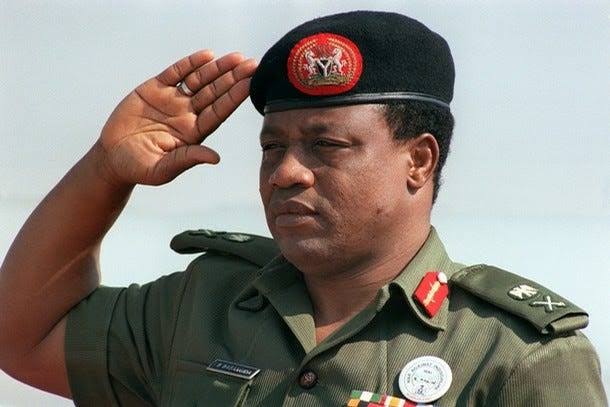
The Nigeria Union of Journalists (NUJ), Niger State Council, has congratulated former Military President, General Ibrahim Badamasi Babangida (rtd.), on his 85th birthday, describing him as an elder statesman whose policies and initiatives continue to shape Nigeria’s political, economic and socio-economic development.
In a congratulatory message signed by the Council Secretary, Comrade Usman Chiji, the NUJ thanked God for preserving the life of the former leader to witness the milestone, saying his 85th birthday provides an opportunity to reflect on his contributions to the nation.
The Council commended Babangida for policies, institutions and infrastructure initiatives introduced during his administration which, it said, continue to have direct impact on the lives of Nigerians.
It specifically cited the creation of additional states and local government areas, as well as the establishment of institutions including the Federal Road Safety Corps (FRSC), National Agricultural Land Development Authority (NALDA) and the Directorate of Food, Roads and Rural Infrastructure (DFRRI).
The NUJ also recalled the deregulation of the electronic media and the economic and financial reforms undertaken under Babangida, which it said created an environment for the emergence of private commercial banks and other enterprises aimed at strengthening the Nigerian economy.
According to the Council, many of the policies and initiatives introduced during the Babangida administration have remained significant milestones in the country’s political and socio-economic development, with successive governments reviewing, remodelling or modifying some of them.
The NUJ described Babangida as an elder statesman, military strategist and former Nigerian leader whose policies and programmes have outlived his administration.
The Council further acknowledged his contributions to regional and international peace, particularly Nigeria’s role in the establishment of the Economic Community of West African States Monitoring Group (ECOMOG), peacekeeping operations in troubled countries and efforts to strengthen Nigeria’s bilateral relations with other nations.
The journalists’ body prayed to God to grant the former military leader continued good health, wisdom and strength, as well as many more years of fulfilment and service to Nigeria.




NDC Eti-Osa Primary: Youths Reject Alleged Imposition, Demand Justice for Akano
Share By Tambaya Julius, Abuja Nigeria Democratic Congress (NDC) candidate, for the Lagos State House of Assembly seat for Eti-Osa...
Cheap Surgery, Costly Injustice
ShareBy Fransiscus Nanga Roka The flourishing market in overseas cosmetic surgery offers you a dream — the promise of a...


NUJ Felicitates Babangida at 85
ShareBy Dan Amasingha, Minna The Nigeria Union of Journalists (NUJ), Niger State Council, has congratulated former Military President, General Ibrahim...


Why I Married My Husband In Our Living Room – Ronaldo’s Wife
ShareGeorgina Rodríguez has disclosed that she chose their everyday family space to get married to Cristiano Ronaldo so that their...

ASUU Approves Strike in 20 Varsities over Breached 2025 Agreement
ShareAcademic Staff Union of Universities (ASUU) has authorised 20 federal and state universities across Nigeria to commence varying degrees of...

Nigeria’s Inflation Rate Drops to 15.43 Per Cent in July – NBA
ShareBy Tony Obiechina, Abuja Nigeria’s headline inflation rate fell to 15.43 per cent in July 2026, down from 15.91 per...


Igbinedion Varsity, EduTech Global Partner On Digital Education, Access
ShareBy Julius Tambaya, Abuja Igbinedion University, Okada, one of Nigeria’s leading private universities, has entered into a strategic partnership with...
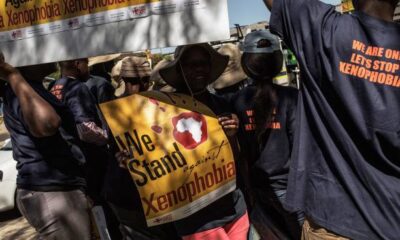

Xenophobia: FG Evacuates 83 More Nigerians from South Africa
ShareBy David Torough, Abuja The Federal Government has announced the arrival of another batch of 83 Nigerians evacuated from South...


Kaduna Varsity Lecturers’ Exodus Worsens as ASUU Issues Strike Ultimatum
ShareFrom Agbo Emmanuel, Kaduna More than 200 lecturers, including professors and other experienced academic staff, have left Kaduna State University...


NES 32 to Drive National Dialogue on Jobs, Productivity, Shared Prosperity
ShareBy Ayanyinka Ayanlowo Nigerian Economic Summit to Chart the Next Phase of Nigeria’s Economic TransformationThe Nigerian Economic Summit Group (NESG)...