
Metro
AEA Bags Best One Stop Shop Award

By Laide Akinboade, Abuja
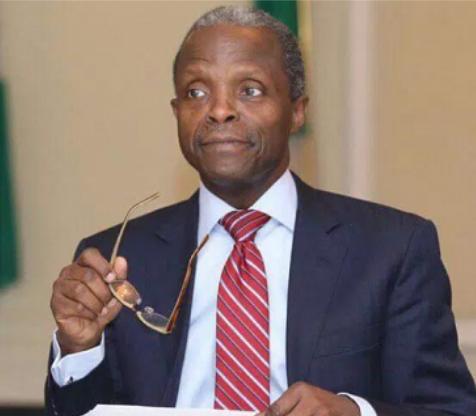
In recognition of the provision of excellent support services to SME’s, His Excellency the Vice-President of Nigeria Prof. Yemi Osinbanjo has presented Abuja Enterprise Agency with the Best MSME One Stop Shop Award in the country.
In a statement issued by AEA at the weekend and signed by Public Relations Officer
Abuja Enterprise Agency, Ifeyinwa Amulu, said the award was presented during the 4th National MSMEs Awards which coincided with the global MSMEs Day, June 27 at the State house Banquet Hall Abuja.
The Acting Managing Director/CEO of Agency Mr Shehu Abdulkadir received the award on behalf of the agency alongside some other staff.
He reinstated the Agency’s commitment in nurturing and stimulating business growth in the FCT.
He further expressed his profound gratitude to the Office of the Vice President for the recognition and appreciates the management and staff of AEA for their hard work and commitment towards effective service delivery.
The agency emerged first among 3 nominees (Bauchi MSME One Stop Shop, Jos MSME One Stop Shop and FCT MSMEOne Stop Shop).
The Federal Capital Territory (FCT) Micro Small & Medium Enterprise (MSME) One Stop Shop (OSS) was established as fallout of the Office of the Vice President’s ease of doing business initiative, and the Agency’s successful hosting of the Nation-wide Business Clinics held at the Eagles Square in July 2017, and the subsequent nomination of the Agency by the Office of the Honourable Minister of the Federal Ministry of Industry Trade and Investment (FMITI), and the approval by the Honourable Minister of the Federal Capital Territory.
The FCT MSME One Stop Shop host 14 Regulatory institutions (CAC, NAFDAC, SON, FIRS etc) to eliminate regulatory constraints MSME face by providing seamless access to regulatory institution. The Agency was awarded 2020 BEST MSME One Stop Shop by His Excellency the Vice President, Prof. Yemi Osinbajo.
This is in recognition of the Agency’s performance in the following areas: Sensitization of FCT residents on the Survival Funds Facilitation of the registration/formalization of over 7000 CAC
Provision One Stop Shop services to 2098 MSMEs and sensitization 9000 MSMEs on the activities among others.




The Nigerian Communications Commission (NCC) said telecom operators will compensate subscribers for poor network quality through airtime credits under a strengthened regulatory enforcement framework nationwide.
The measure is part of renewed efforts to improve service delivery, protect consumers, and hold operators accountable for persistent lapses in network performance across the country.
The Executive Vice Chairman, Dr Aminu Maida, disclosed this during a media breakfast meeting on Thursday, outlining the commission’s latest compliance and enforcement strategies.
Maida said the compensation directive followed verified failures by operators to meet established minimum quality of service standards in several locations.
“It is not a refund from the regulator but a compliance obligation placed on service providers,” he said, stressing operators must bear full responsibility.
He explained that the framework relies on detailed monitoring at local government level, enabling the commission to pinpoint exact areas and periods of poor service.
This granular approach, he said, allows regulators to move beyond general complaints and focus on measurable, location-specific service deficiencies affecting subscribers.
According to him, the compensation specifically covers service failures recorded between November 2025 and January 2026 across multiple network providers.
“Eligible subscribers will receive airtime credits with notifications explaining the cause and value of the compensation,” he said.
He added that notifications would improve transparency and help users understand why compensation was applied to their accounts.
Maida noted the commission has significantly strengthened its monitoring systems to capture real-time, location-specific service performance data.
“These systems ensure enforcement reflects actual user experience rather than generalised industry averages,” he said, highlighting improved regulatory precision.
He added that operators are required to implement the compensation directly, while the NCC provides oversight to ensure compliance.
“Independent checks will confirm that affected subscribers are properly credited,” he said, noting sanctions for non-compliance may follow.
Maida said the initiative formed part of broader reforms aimed at improving accountability and service standards within the telecommunications sector.
“Operators failing to meet obligations will face stricter enforcement measures,” he warned, signalling tougher regulatory action ahead.
He stressed that improving service quality required both sustained infrastructure investment and stronger operational discipline by network providers.
“Service providers must maintain performance standards consistently across all regions, including underserved and rural areas,” he said.
Maida reiterated the NCC’s commitment to balancing consumer protection with industry sustainability and long-term sector growth.
“Operators must take responsibility for the quality of experience delivered to subscribers,” he said, urging greater corporate accountability.
He added that the commission remained committed to ensuring Nigerians received value for money spent on telecom services nationwide.
“Persistent poor service quality is no longer acceptable under current regulatory direction,” he said, emphasising zero tolerance for continued lapses.
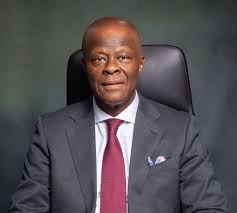
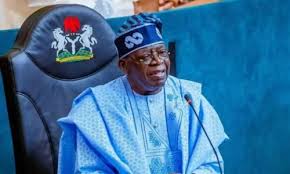
The Presidency on Wednesday said former Minister of Finance and Coordinating Minister of the Economy, Wale Edun, resigned from office and was not removed.
It also clarified that former Minister of Housing and Urban Development, Ahmed Dangiwa, similarly tendered his resignation.
This was contained in a statement issued by Presidential Spokesperson, Bayo Onanuga, on Wednesday in Abuja.
According to the Presidency, Edun cited health reasons in his resignation letter to President Bola Tinubu.
Edun, who turned 70 on Monday, thanked the President for the opportunity to serve in the administration.
“It has been a pleasure and privilege to serve your administration and the Renewed Hope Agenda.
“Under your leadership, Nigeria has emerged stronger, more resilient and more internationally respected,” his letter read in part.
The Presidency said Edun paid a valedictory visit to Tinubu on Tuesday before the announcement of his exit from the cabinet.
It said he held an hour-long meeting with the president and later departed to focus on private business interests.
Dangiwa also thanked the President for the opportunity to serve in the Federal Executive Council.
Tinubu expressed appreciation to both former ministers for their service and contributions to the administration’s reform agenda.
He wished them success in their future endeavours.
The President also urged the new Minister of Finance, Taiwo Oyedele, to consolidate ongoing reforms.
Oyedele is expected to advance fiscal and economic objectives with renewed focus, discipline and innovation.
Tinubu will also forward the ministerial nomination of Muttaqha Darma to the Senate for confirmation as Housing Minister.
Edun previously served as Lagos State Commissioner for Finance between 1999 and 2004 during Tinubu’s tenure as governor.
By Laide Akinboade, Abuja
Nigeria said it has concluded arrangement to host the 5th high level ministerial meeting on Antimicrobial Resistance (AMR), in Abuja.
This was announced on Wednesday, at the virtual Global Media Briefing organised by Global AMR Media Alliance (GAMA) in Abuja.
The theme for the meeting, “One Health — Advancing Global AMR Commitments through Local Action”, the high level meeting would hold from 28th to 30th June 2026.
According to the Ministerial Global Envoy on AMR, Government of Nigeria, Dr. Ayoade Alakija, delegations from over 100 countries are expected to participate along with Presidents of a few countries, such as, Botswana, Ghana and Nigeria.
Dr. Alakija also disclosed that President of Nigeria, His Excellency, Bola Tinubu, would welcome participants and declare the meeting open.
“The 5th High Level Ministerial Meeting on AMR would be different because not just ministers of health but also ministers of agriculture, environment and finance are being invited to take part to address AMR in all sectors (such as, animal health and livestock, food and agriculture and our environment) – and not just human health,” said Alakija.
“AMR is not just about human health and protecting just our medicines but also about prevention and protecting our animals, plants and our environment. We need to ensure that not only humans are not harmed due to AMR but also our animals, agriculture and food systems and our environment are kept safe so that we all can live in harmony together,” she said.
She noted, “If we invest US$ 1 on AMR, return on investment is US$ 11 – 11 times.
“This upcoming 5th High Level Meeting in Nigeria would focus more on solutions to address the challenge AMR is posing. We also need to ensure AMR response is fully financed including prevention, surveillance, water, sanitation and hygiene. It is strategic investments that our countries and our communities need.
“If we do not have money to fully fund our AMR multisectoral action plans, then how are we going to get the work done? So, we have to involve those who are involved with finances. Media is critical for accountability but also critical for awareness, and keeping the communities we serve involved,” she added.
Alakija cited Abuja Declaration 2001 where African countries committed to invest 15% of their annual budgets on health.
She hopes that the upcoming meeting will also play a historic role in sustainable financing for AMR response.
“Earlier in April 2026, I was at the One Health Summit in Lyons, France, hosted by President of France Mr Emmanuel Macron, where many of the people at the highest level, who were present there, have confirmed their attendance (for upcoming meet in Nigeria),” said Alakija.
She added that Nigeria had been involved with the integrated approach for a while as it was important for all sectors to speak to one another and work in concert with one another:
“AMR has typically been seen often from the lens of high-income countries. We need to address AMR recognising the gaps in all countries and contexts especially low- and middle-income countries – and ways to bridge the gaps in prevention of infectious diseases as well as gaps in stopping misuse and overuse of medicines in food and agriculture sector, animal health sector and environment along with human health sector. AMR commitments like UNGA Political Declaration 2024 needs to be translated into not just actions but local actions which are critical”, the expert said.
Speaking on the severity of AMR, Quadripartite Joint Secretariat on AMR, Dr. Jean Nyemazi stated: “AMR is a big threat and continue to kill many people, especially in LMICs and the Global South.
“AMR is among top 10 global health threats and threatens our animals, food systems, economies and our environment. All Quadripartite agencies are supporting the upcoming high level ministerial meeting on AMR in Nigeria including the World Health Organization (WHO), Food and Agriculture Organization of the United Nations (FAO), United Nations Environment Programme, and World Organisation for Animal Health (WOAH)”.
Dr. Nyemazi added that the task for this upcoming 5th High Level Ministerial Meeting on AMR in Nigeria would be to enabling the acceleration of implementation of multi-sectoral national action plans on AMR, enabled by effective governance at all levels, sustainable investment at all levels, and walk the talk on the theme of One Health for advancing global AMR commitments through local actions.
He reiterated the role of the Media, stating that it was a strategic partner to “inform, connect and hold us accountable”.
“Evidence-based reporting ensures that AMR is visible as a development, equity and sustainability issue, it shapes the public understanding, support, behaviour change, and sustains pressure for measurable progress”, he said.
Dr. Nyemazi pointed out that the 1st and 2nd High Level Ministerial Meetings that took place in 2014 and 2019 had mostly ministers from European regions in attendance.
Now, ministers of over 100 countries were expected to take part in the upcoming meeting in Nigeria and majority comes from the Global South.
“We see the focus changing from health to One Health – which means we are having more representation from ministries of animal health, food and agriculture, and environment along with human health. When we talk about AMR prevention, we are talking about preventing AMR across all the sectors (and not just in human health)”, he said.
Speaking further, Dr. Nyemazi disclosed that one of the targets of Political Declaration adopted at UN General Assembly High Level Meeting 2024 was to reduce AMR deaths by 10% by 2030 (compared to 4.9 million AMR associated deaths recorded in 2019).
“Simple strategies that are cost-effective and impact public health such as washing hands can help. We also need to ensure equitable access to essential antimicrobials. These are few steps governments can do now”, he said.
On her part, Chairperson, Global AMR Media Alliance (GAMA), Shobha Shukla explained that AMR or drug resistance was a problem driven by misuse and overuse of antimicrobial medicines – including antibiotics, antivirals, antiparasitics and antifungals – and results in critical medicines losing effectiveness to treat infections.
Shukla added that as result of drug resistance, medicines become ineffective, and infections become increasingly difficult or impossible to treat:
“All of us are at risk of AMR. But in absence of strong public systems, those in low- and middle-income countries – and especially those who are underserved are at a much-heightened risk of AMR. We have to do better in protecting the medicines that save us.
“We also have to do better in saving lives from preventable infections as well as ensuring right and timely diagnosis and right treatment, care and support for everyone, leaving no one behind.
“Misuse and overuse of medicines is rampant in animal health and livestock, food and agriculture, human health, as well as polluting our environment”, she said.



Wike Waives C-of-O Fees for Nigerian Law School
ShareBy Laide Akinboade, Abuja The Minister of the Federal Capital Territory (FCT), Nyesom Wike on Thursday gave an immediate waiver of fees for the Certificate of...
Study Links Alcohol to Higher Cancer Burden in Australia
ShareAustralian researchers on Thursday revealed that alcohol consumption causes a higher proportion of cancers in Australia than previous estimates. According to a statement of...


C’River Debunks False COVID-19 Report, Confirms Only One Case
ShareFrom Ene Asuquo, Calabar The Cross River State Government has refuted a publication by online platforms alleging the discovery of 10 new...


NCC Orders Airtime Credits for Poor Network Service
ShareThe Nigerian Communications Commission (NCC) said telecom operators will compensate subscribers for poor network quality through airtime credits under a strengthened regulatory enforcement framework...


CBN Orders Banks on Monthly Report of Mobile, ATM Transactions
Share The Central Bank of Nigeria has directed banks and other financial institutions to submit monthly reports on failed electronic...


Tinubu Seeks Senate Nod for $516m Sokoto–Badagry Superhighway Loan
ShareBy Eze Okechukwu, Abuja President Bola Tinubu has formally requested the National Assembly’s approval for a $516.3 million external loan...


2027: APC Begins Sale of Forms, Adopts Consensus, Direct Primaries
ShareBy David Torough, Abuja The All Progressives Congress (APC) has rolled out a comprehensive and revised timetable for its 2027...


Grant Pardon to Henry Okah, Niger Delta Activists Tells Tinubu
ShareBy Raphael Atuu, Abuja Popular Niger Delta activist Nengi James OON, alongside other youths under the aegis of Advocates for...


NCoS Places Facility on Red Alert over Alleged Attack Threats in Niger
ShareFrom Dan Amasingha, Minna The Nigerian Correctional Service (NCoS) in Niger State has placed all custodial centres across the state on red...


FIBA WWC: D’Tigress Land in Tough Group B with France, Hungary, Korea
ShareNigeria’s D’Tigress will face France, Hungary, and Korea in Group B at the 2026 FIBA Women’s World Cup. The draw set up the D’Tigress for...