
Education


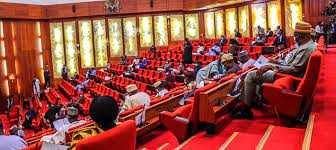
Bill to promote Female Education Passes 2nd Reading in Sokoto
A Bill for a Law to Establish Sokoto State Female Education Board has passed second reading at the state House of Assembly.
Presenting the Bill at plenary on Wednesday, Alhaji Buhari Haliru (PDP-Sokoto North I) said that the proposed law was in consideration of its significance in the promotion of girl child education in the state.
“The Bill seeks to promote female education in the state through the facilitation of female enrollment, attendance, retention, completion and transition into various educational institutions.
“This is within and outside Sokoto State as well as create awareness through sensitisation, mobilisation and advocacy to the general public.
“Moreover, the Bill as mentioned will guide the activities of the existing Female Education Board in the state and attract more development partners support to girl child education,” he said.
The Speaker, Alhaji Aminu Achida, referred the Bill to the House Committee on Basic and Secondary Education for scrutiny and recommendation to the Assembly.
In another development, the Assembly has received the state Auditor General’s Statutory report for the year ending Dec. 31, 2020.
The report was accordingly scrutinised, considered and approved at the Assembly Committee on the whole. (NAN)




Some students of Nnamdi Azikiwe University (UNIZIK), Awka, have called on the Federal Government to fully implement the judgment of the National Industrial Court by reinstating Professor Bernard Odoh as Vice-Chancellor of the institution.
The students, operating under the aegis of the Nigerian Students and Youth Association, UNIZIK chapter, urged the Minister of Education to act without further delay in reinstating Professor Odoh, in strict compliance with the court’s ruling.
President of the group, Chisom Nwangwu, recalled that Professor Odoh was removed from office by the Federal Ministry of Education following allegations that he was not a professor and therefore unqualified to occupy the position.
However, he said the National Industrial Court had since affirmed that Professor Odoh was duly promoted to the rank of professor in 2015 and consequently ordered that all his rights, entitlements and privileges be fully restored.
Nwangwu stressed that respect for court judgments is fundamental to nation-building and should not be treated as optional, urging Nigerians and government institutions to obey court orders if the country is to be firmly rooted in the rule of law.
He expressed concern that the continued failure to implement the court’s ruling, especially in a situation where the office of the Vice-Chancellor was neither legally nor practically vacant, sets a dangerous precedent.
“This persistent disregard for a valid court order undermines democratic values and sends the wrong signal to citizens. Such actions should not be allowed to define us as a people or as a democratic society,” Nwangwu said.
He noted that Professor Odoh is the first alumnus of Nnamdi Azikiwe University to be appointed Vice-Chancellor, describing his removal as regrettable and driven by what he termed malicious claims aimed at frustrating a young academic with a progressive vision for the development of the university.
The student leader also appealed to President Bola Tinubu to intervene in the matter, noting that his administration is anchored on the principles of justice, fairness and respect for the rule of law.
According to him, such an intervention would help reaffirm public confidence in democratic institutions and reassure young Nigerians that justice, fairness and equality before the law remain attainable in the country.
 | ReplyReply allForwardAdd reaction |
The National Universities Commission (NUC) has lifted the embargo on the establishment and operation of foreign universities in Nigeria, a move aimed at attracting foreign direct investment and boosting the global competitiveness of the country’s higher education system.
The Executive Secretary of the NUC, Professor Abdullahi Yusufu Ribadu, announced the decision at the weekend during the 10th convocation ceremony of Gregory University, Uturu, Abia State.
He said the policy shift was designed to deepen international collaboration and strengthen the quality of university education in Nigeria.Represented at the event by Offor Chukwuemeka, Ribadu explained that foreign universities would be allowed to operate in Nigeria through six approved partnership models: franchise arrangements, branch campuses, twinning or articulation programmes, open and distance learning, acquisition, and teaching institutions.
He said the Commission had also introduced a Code of Governance for private universities to ensure uniform standards, transparency, and accountability in their operations. In addition, Ribadu noted that the NUC had carried out major curriculum reforms, replacing the Benchmark Minimum Academic Standards (BMAS) with the Core Curriculum and Minimum Academic Standards (CCMAS).
Under the new framework, he said, the NUC provides 70 per cent of compulsory core courses required for graduation, while universities are allowed 30 per cent flexibility to customise their curricula in line with their areas of expertise and emerging global trends.
The NUC boss emphasised that the reforms were geared towards equipping Nigerian graduates with 21st-century skills and enhancing their employability. He commended Gregory University for its contributions to educational innovation and development.
Abia State Governor, Dr. Alex Otti, in his remarks, praised the founder of the institution, Professor Gregory Ibe, for his vision and commitment to quality education. Represented by the Commissioner for Tertiary Education, Professor Uche Eme Uche, the governor reaffirmed his administration’s support for educational transformation in the state.
The Vice-Chancellor of Gregory University, Professor Cele Njoku, disclosed that the university had grown from three colleges to 12 in 13 years, now boasting over 53 academic departments. She added that all eight academic programmes submitted to the NUC in 2024 received full accreditation, while new courses, including Artificial Intelligence and major foreign languages, had been introduced.
Founder of the university, Prof. Gregory Ibe, represented by the Pro-Chancellor, Prof. Augustine Uwakwe, said the institution was established to make quality education accessible to Nigerians and pledged continued investment in education.
The overall best graduating student, Master Onyechere Chinedum Yadirichukwu, who graduated with a CGPA of 4.91, urged young Nigerians to take responsibility for shaping the nation’s future.
The convocation ceremony also featured the award of honorary doctorate degrees to former Enugu State Governor Ifeanyi Ugwuanyi; Chairman of the Abia State Council of Traditional Rulers, HRM Eze Linus Nto Mba; and Chairman of the Manufacturers Association of Nigeria, Imo State chapter, Dr Okenze Sylvester Obinna.
From Ene Asuquo, Calabar
As a result of the unresolved renegotiation between Academic Staff Union of Universities and the Federal Government of Nigeria, the Union has sent a message of
Imminent danger to industrial harmony in Nigerian University system.
In a press statement in Calabar, ASUU has warned that they would embark on an indefinite strict action in a few days to come because of federal government’s insincerity in keeping to terms after the 14-day warning strike and another four weeks of grace was given which will expire on the 21st of November 2025.
According to them, “We have gathered not merely as members of ASUU, but as citizens whose patience has been stretched far beyond its elastic limits.
Occasioned by broken promises, shattered dreams, and deepening crises in the education sector, we hereby express deep concern over government’s inconsistency and dilatory approach to agreements, engagements and negotiations”.They stated that the renegotiation of the 2009 FGN/ASUU Agreement was not a gift. It was an obligation to Nigerian University Lecturers. Government owes Lecturers their due wages and her citizens and the dignity of decent and functional education.
They maintained that the fight is for the survival of Nigeria’s intellectual soul, while outlining the issues in contention to include: renegotiation of workers’ Conditions of Service since 2009 in tandem with changing times and inflationary trends over the years, funding for revitalization of infrastructures, University autonomy, academic freedom, undue proliferation of Universities without assured sustainable funding.
The Union stressed further that Government grandstanding, insensitivity and silence are deliberate to destroy academic system and ASUU is ready to shut down totally and completely in a few days.
Recall that ASUU gave the FGN 14-day ultimatum to conclude the renegotiation which according to them was enough to made government do the needful and they watched to no avail. ASUU then graduated to 2 weeks Warning Strike, which was suspended after NEC of 22nd October, 2025 due to the intervention of well-meaning Nigerians, the Nigeria Labour Congress, parents and students to create enabling opportunity for a meaningful dialogue.
“Let the Federal Government return to the path of truth, fairness and good conscience. Let the government hear us clearly: they cannot destroy public education, starve lecturers with a slavish salary, deduct and withhold part of legitimate Lecturers salaries by way of 3rd party deductions, deny students a conducive environment for effective learning and expect peace”.
“ASUU has been consistent: we are not asking for personal enrichment. We are demanding that the government fulfills its obligations to the Nigerian people by funding education properly, otherwise, we shall resume the STRIKE itself; not the father or mother of all strikes”.
“This will be a total, comprehensive and indefinite strike action. We are ready to shut down for as long as the government wants it to last because he who has been pushed down fears no fall Education is the foundation of personal and national development,” the stated.
“The problem is not paucity of funds as the government posits but lack of political will to invest in the development of Nigeria. The figures and empirical data from Federation Account Allocation Committee (FAAC) has revealed that in 2022, States received N3.02 trillion while in 2024, the figures rose to N5.81 trillion with an increase of over 62%. Similarly, federal allocations rose from N3.42 trillion in 2022 to N4.65 trillion with an increase of over 70%. This is clear evidence that the government has the capacity to pay Lecturers”. They maintained.


UNIZIK: Students Urge FG to Implement Industrial Court Judgment, Reinstate Odoh as VC
ShareSome students of Nnamdi Azikiwe University (UNIZIK), Awka, have called on the Federal Government to fully implement the judgment of...
NUC Opens Nigeria’s University Space to Foreign Institutions
ShareThe National Universities Commission (NUC) has lifted the embargo on the establishment and operation of foreign universities in Nigeria, a...


RMAFC Convenes Stakeholders Confab to Boost Effective Tax Act Implementation
ShareBy Tony Obiechina, Abuja The Revenue Mobilisation Allocation and Fiscal Commission (RMAFC) on Monday organised a 2-Day National Stakeholders’ Discourse...

Bandits Attack Kogi Communities, Kill Three Persons
ShareFrom Joseph Amedu, Lokoja Oke-Agi and Ilai communities in Mopa-Amuro local government area of Kogi State were attacked by some...


Palmer out for Chelsea’s Carabao Cup Quarter-final, Says Maresca
ShareChelsea attacker Cole Palmer will not feature in the Blues’ Carabao Cup quarter-final against Cardiff City, head coach Enzo Maresca...


Road Accident Claims Four Persons in Kogi
ShareFrom Joseph Amedu, Lokoja The Federal Road Safety Corps (FRSC), has confirmed the death of four persons in a motor...

Tinubu Happy with PAP’s Scholarship Scheme, Says Otuaro
ShareFrom Mike Tayese, Yenagoa The Administrator of the Presidential Amnesty Programme (PAP), Dr. Dennis Otuaro, has said that President Bola...


Enugu Police Bust Armed Robbery Operation, Arrest Suspect, Recover Arms
ShareFrom Sylvia Udegbunam, Enugu The Enugu State Police Command has sustained its onslaught against criminal activities during the Yuletide season...

NDLEA Busts Drug Suspect, Seizes 457kg Skunk Marijuana in Edo
ShareThe National Drug Law Enforcement Agency (NDLEA) on Monday, said it intercepted 457kg of skunk marijuana, during an intelligence-led raid...

Tinubu Urges Nigerians to Uphold Buhari’s Discipline, Integrity
SharePresident Bola Tinubu on Monday, urged Nigerians to embrace the discipline, integrity and service ethos of former President Muhammadu Buhari,...