
Education
Unresolved Renegotiation: ASUU Sets For Another Showdown With FG

From Ene Asuquo, Calabar
As a result of the unresolved renegotiation between Academic Staff Union of Universities and the Federal Government of Nigeria, the Union has sent a message of
Imminent danger to industrial harmony in Nigerian University system.
In a press statement in Calabar, ASUU has warned that they would embark on an indefinite strict action in a few days to come because of federal government’s insincerity in keeping to terms after the 14-day warning strike and another four weeks of grace was given which will expire on the 21st of November 2025.
According to them, “We have gathered not merely as members of ASUU, but as citizens whose patience has been stretched far beyond its elastic limits. Occasioned by broken promises, shattered dreams, and deepening crises in the education sector, we hereby express deep concern over government’s inconsistency and dilatory approach to agreements, engagements and negotiations”.
They stated that the renegotiation of the 2009 FGN/ASUU Agreement was not a gift. It was an obligation to Nigerian University Lecturers. Government owes Lecturers their due wages and her citizens and the dignity of decent and functional education.
They maintained that the fight is for the survival of Nigeria’s intellectual soul, while outlining the issues in contention to include: renegotiation of workers’ Conditions of Service since 2009 in tandem with changing times and inflationary trends over the years, funding for revitalization of infrastructures, University autonomy, academic freedom, undue proliferation of Universities without assured sustainable funding.
The Union stressed further that Government grandstanding, insensitivity and silence are deliberate to destroy academic system and ASUU is ready to shut down totally and completely in a few days.
Recall that ASUU gave the FGN 14-day ultimatum to conclude the renegotiation which according to them was enough to made government do the needful and they watched to no avail. ASUU then graduated to 2 weeks Warning Strike, which was suspended after NEC of 22nd October, 2025 due to the intervention of well-meaning Nigerians, the Nigeria Labour Congress, parents and students to create enabling opportunity for a meaningful dialogue.
“Let the Federal Government return to the path of truth, fairness and good conscience. Let the government hear us clearly: they cannot destroy public education, starve lecturers with a slavish salary, deduct and withhold part of legitimate Lecturers salaries by way of 3rd party deductions, deny students a conducive environment for effective learning and expect peace”.
“ASUU has been consistent: we are not asking for personal enrichment. We are demanding that the government fulfills its obligations to the Nigerian people by funding education properly, otherwise, we shall resume the STRIKE itself; not the father or mother of all strikes”.
“This will be a total, comprehensive and indefinite strike action. We are ready to shut down for as long as the government wants it to last because he who has been pushed down fears no fall Education is the foundation of personal and national development,” the stated.
“The problem is not paucity of funds as the government posits but lack of political will to invest in the development of Nigeria. The figures and empirical data from Federation Account Allocation Committee (FAAC) has revealed that in 2022, States received N3.02 trillion while in 2024, the figures rose to N5.81 trillion with an increase of over 62%. Similarly, federal allocations rose from N3.42 trillion in 2022 to N4.65 trillion with an increase of over 70%. This is clear evidence that the government has the capacity to pay Lecturers”. They maintained.

Candidates seeking admission into Nigerian tertiary institutions can now upload and verify their O’Level results from the comfort of their homes, following a new initiative by the Joint Admissions and Matriculation Board (JAMB).
Under the new arrangement, candidates will no longer need to visit Computer-Based Test (CBT) centres solely to upload their Senior Secondary School Certificate Examination (SSCE) results, as JAMB will verify the results directly with the examination bodies, beginning with the West African Examinations Council (WAEC).
In a statement on Monday in Abuja, JAMB’s Acting Director, Public Affairs and Protocol, Dr.
Fabian Benjamin, said the Board would continue to deploy technology and collaborate with examination and government agencies to simplify its services and make them more accessible to candidates.According to him, the initiative was part of its renewed commitment to making its services “easier, faster, safer and more convenient” for candidates.
He said the integration of its e-Facility platform with examination bodies would enable candidates’ results to be verified against the records of the issuing bodies before being downloaded into their profiles.
The new system is also expected to address problems associated with manual O’Level result uploads, including misplaced or mixed-up paper results, presentation of fraudulent or unverified certificates and errors in the manual entry of subjects and grades.
The examination body said the initiative would particularly ease pressure on CBT centres during periods of high patronage and help reduce the effect of network challenges and long queues.
The statement reads: “Consequently, candidates can now upload their O’Level results from the comfort of their homes, while the Board undertakes the verification of such results directly with the issuing examination bodies.
“The initiative is part of the Board’s renewed commitment to making services easier, faster, safer and more convenient for candidates. By using technology to reduce unnecessary visits to CBT centres, queues and manual processes, JAMB is putting candidate ease of service delivery at the centre of its operations.
“The new arrangement also addresses challenges associated with manual O’Level result uploads, including misplaced or mixed-up paper results, presentation of unverified or fraudulent results, and errors in the manual entry of subjects and grades. Through the integration of JAMB’s eFacility platform with examination bodies, results can now be verified directly against the examination body’s records before being downloaded into the candidate’s profile.”
To use the new service, candidates are required to visit its website, enter their National Identification Number (NIN) and select the number of examination sittings and relevant examination body or bodies.
After providing their email address and GSM number, candidates are required to pay for the verification using a debit card or bank transfer before entering their examination number, examination series and examination year.
From Joseph Amedu, Lokoja
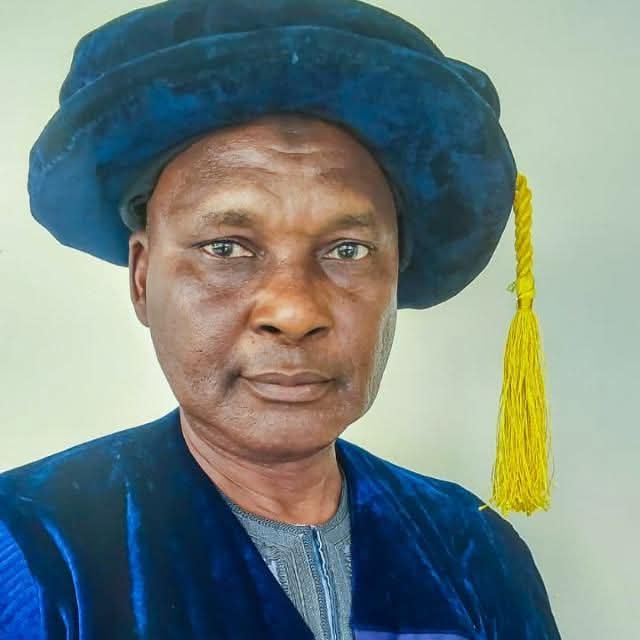
A Professor of History at the Federal University, Lokoja, Suberu Ochi Abdulrahaman, has raised the alarm over the prevailing political illegality bedeviling Nigeria insisting that leaders in the system should endeavor to obey the laws of the land and do the right thing that would move the nation forward.
Professor Abdulrahaman made the observation while delivering the 45th Inaugural Lecture Series of the University at its Felele Campus, in Lokoja, on Wednesday.
Professor Abdulrahaman in his Lecture titled, Persisting Illegalities in Nigeria’s Political Space: Who is to Blame? A Historical Discourse on Power, Institution and Democratic Governance, noted that political illegality which ranges from electoral fraud, arbitrary use of executive power for manipulation and intimidation to sponsorship of thuggery and violence in the system, amongst others, can only be overcome if leaders in governance work in accordance with the nation’s constitution.
According to the Inaugural lecturer “The resistance of political illegalities is neither accidental nor the responsibility of a single institution or generation.
“It is the cumulative product of colonial administrative legacies, prolonged military
authoritarianism, weak institutional development, political opportunism, inadequate civic engagement, and failures of ethical
Leadership.
“History teaches us that no nation develops sustainably when public institutions are weakened by impunity, when constitutional rules are subordinated to personal interests, or when political power is exercised without accountability.
“Equally, history reminds us that societies are capable of renewal when they choose to strengthen institutions rather than personalities, uphold the rule of law rather than arbitrary power, and promote justice above expediency.
“Accordingly, the challenge before Nigeria is not simply to conduct periodic elections or enact additional legislation.
The greater challenge is to cultivate a democratic culture in which constitutionalism becomes habitual, public office is regarded as a sacred trust, institutions command public confidence, and citizens
actively defend democratic values.
“Political leaders must recognise that authority derives its legitimacy not merely from electoral victory but from faithful obedience to the Constitution and unwavering commitment to the public good.
“Institutions must be empowered to function independently, impartially, and professionally.
” Citizens must reject every form of political illegality, whether manifested through vote buying, political
violence, corruption, or indifference to injustice”
The Vice Chancellor of the University, Professor Gbenga Solomon Ibileye in his welcome address, disclosed that his administration will continue to give Inaugural Lecture Series topmost priority as it offers opportunity for where the public is highly equipped with relevant knowledge on contemporary issues affecting the society.
He described Professor Suberu Abdulrahaman as an accomplished historian who has made his mark in his academic field.
Academic Staff Union of Universities (ASUU) has authorised 20 federal and state universities across Nigeria to commence varying degrees of industrial action.
The decision was reached during a critical National Executive Council (NEC) meeting held in Abuja between August 8 and 9, 2026.
ASUU National President, Prof.
Christopher Piwuna, disclosed this at the weekend, expressing the union’s deep frustration over the “haphazard implementation” of the landmark December 2025 FGN-ASUU Agreement.The union warned that a full-scale resurgence of campus unrest is now inevitable.
Regarding the 20 approved universities facing looming strikes, the NEC resolved to grant permission for industrial action once individual institutions successfully satisfy internal union requirements.
The affected institutions include: Adekunle Ajasin University, Akungba (AAUA); Nasarawa State University, Keffi (NSUK); Ibrahim Badamasi Babangida University, Lapai (IBBUL); University of Medical Sciences, Ondo (UNIMEDO); Gombe State University (GSU), Gombe; Plateau State University (PLASU), Bokkos; Emmanuel Alayande University of Education (EAUED), Oyo; Ambrose Alli University, Ekpoma (AAUE); Olusegun Agagu University of Science and Technology (OAUSTECH), Okitipupa; Abia State University (ABSU), Uturu; University of Education and Entrepreneurship (UEE), Akamkpa; Kaduna State University (KASU), Kaduna.
Others are Aliko Dangote University of Science and Technology (ADUSTECH), Wudil; Northwest University, Kano (NWUK); Enugu State University of Science and Technology (ESUT), Enugu; Imo State University (IMSU), Owerri; Niger Delta University (NDU), Wilberforce Island; University of Africa, Toru-Orua (UAT); Bayelsa Medical University (BMU), Yenagoa; and Taraba State University (TSU), Jalingo.
ASUU also disclosed that the implementation status of universities within the Lagos Zone is currently under review, with separate declarations expected in due course.
Speaking on the core grievances driving the crisis, ASUU noted that while Vice-Chancellors at the federal level face severe challenges due to underfunded monthly salary bills, the situation at the state level is considerably worse.
According to the union, only about 10% or fewer of state governors have openly endorsed the new salary package established in December 2025.
The rest were accused of “playing the ostrich” and passing financial burdens onto Governing Councils that lack the funding to back them.
The union also explicitly blamed officials within the Federal Ministry of Finance and the Office of the Accountant-General of the Federation. These bodies are accused of deliberately stalling promotion arrears, dragging their feet on monthly salary releases, and illegally withholding the remittance of academics’ deductions to their respective Pension Fund Administrations (PFAs).
Furthermore, ASUU raised concerns over the unpaid, withheld three-and-a-half months’ salaries dating back to the 2022 nationwide strike. While ASUU initially praised President Bola Tinubu for releasing four months of those salaries, the refusal to remit the balance has left a “strong bitter taste.”
The union also condemned the prolonged delays in paying the 25/35% wage award and outstanding promotion arrears to its members.
Meanwhile, ASUU issued a stern warning regarding the recent harassment of its branch leaders and members by Vice-Chancellors at ESUT, IMSU, and ABSU.
The NEC declared that it will strictly refuse to call off any industrial action in these specific institutions until all forms of victimization stop completely.
Beyond the immediate academic crisis, the NEC reviewed the worsening socio-political and economic landscape of Nigeria.
The union strongly condemned the ongoing atmosphere of pre-election violence, political killings, and economic instability as the country approaches upcoming election cycles, noting that these existential threats directly undermine the living and working conditions of everyday Nigerians and university lecturers alike.
Despite praising the mediation efforts of Senator Lanre Tejuoso, the Chairman of the Implementation Monitoring Committee (IMC), ASUU maintains that it will stop at nothing to enforce the full scope of the agreement.
The union has announced that it will convene an emergency NEC meeting in the next few weeks to appraise the situation. If the government fails to act swiftly to clear outstanding financial entitlements and halt the harassment of lecturers, a wider, coordinated national academic shutdown may follow.



Troops Neutralise 114 Terrorists, Rescue 60 Abducted Persons in August — DHQ
ShareThe Defence Headquarters says the troops of Operation Hadin Kai (OPHK) neutralised 114 terrorists, arrested 146 suspects and rescued 60...


Troops Rescue 21 Kidnap Victims in Kogi
ShareTroops of the Nigerian Army, in collaboration with other security agencies and local security groups, have rescued 21 kidnap victims...


Premium Trust Bank Expansion Signals Confidence in Bayelsa Economy, Says Diri
ShareFrom Mike Tayese, Yenagoa Bayelsa State Governor, Senator Douye Diri, on Monday commissioned a second branch of Premium Trust Bank...

BBNaijaS11: Aikou, Flora Exit Gambit, Can Now Win N160m
ShareBBNaija Season 11 housemates Aikou and Flora, who were previously guaranteed places in the finale but barred from winning the...


PenCom Moves to Resolve Pension Dispute Among Lagos Retirees
ShareThe National Pension Commission (PenCom) said discussions are ongoing with the Lagos State Government over concerns surrounding pension increases for...

Provide Evidence of Alleged Replacement of Nominated Candidates, INEC Challenges NDC
ShareThe Independent National Electoral Commission (INEC) has challenged the Nigeria Democratic Congress (NDC) to provide evidence that the commission replaced...

Uba Sani Faces 17 Challengers in Kaduna Governorship Race
ShareKaduna State Governor, Uba Sani is to face 17 other candidates in the 2027 governorship election, following the publication of...

Fuel Subsidy Removal: Real Issue Is Better Management, Not Reversal
ShareProf Uche Uwaleke The renewed debate over fuel subsidy in Nigeria is hardly surprising. As the country approaches another election...

Military Neutralises 324 Terrorists, Rescues 610 Kidnap Victims in August — DHQ
ShareBy David Torough, Abuja The Defence Headquarters (DHQ) says troops of the Armed Forces neutralised 324 terrorists and other criminals,...

Nigeria’s GDP Grows 4.43 Per Cent in Q2 2026 — NBS
ShareNigeria’s economy expanded by 4.43 per cent year-on-year in real terms in the second quarter of 2026, Q2’26, up from...