
OPINION
FEMA Has Five Minutes Response Time to Disasters -Abbas Idriss


The Federal Capital Territory Emergency Management Agency ( FEMA) stands out as a frontline disaster management organisation in the country that is matching technology with innovations and competence to produce excellent performance for the benefit of residents.
In this interview with DAILY ASSET Senior Correspondent, Blessing Bature – Akpakpan, Director General of the Agency, Alhaji Abbas Idriss speaks on the organisation’s preparedness to confront the predicted flood and other emergencies in the FCT.
The Nigeria Hydrological Agency has released what one could call a gloom picture of flooding for the remaining part of the year. The report paints a very worrisome picture about the environment especially flooding across the country and of course, FCT is involved, I want you to talk to us about the flooding outlook of 2021?
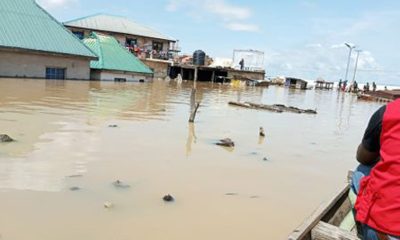
Actually, if you look at the global world you will realize that the whole environment and the climate has changed. In those countries that we call the developed countries you see the devastating flooding like in Germany, part of China and some other countries, it has been very devastating and Nigeria can not be an exception because we are part of the global world so we have this prediction that we are going to have above normal rainfall this year. The rain is going to be very short but very plenty or heavy and we have started experiencing it like the rainfall in Jalingo last two weeks that resulted in flooding was quantified to be rain that was supposed to fall in two weeks consistently everyday, so with that they could be flooding.
In some areas like FCT, it has also been predicted that we are going to have flooding and two Area Councils are going to be affected like AMAC and Gwagwalada area councils.
The rest will have probable flooding. So the main cause of this is the climate change as well as the global warming, which is also affecting Nigeria. In fact we can not also rule out the way we handle our environment, the way we dump refuge, our tap lining is very poor and so this can also add up to the climate change or effects of the climate change and leads us to certain situations that are really worrisome.
We have three major kinds of flooding; which of them is likely to confront residents in FCT…?
Well the two types of flooding that would likely affect FCT is the Urban flooding and the flash flooding. The Urban flooding has to do with the development that is going on in the city, you know Abuja is a growing city, people are building in the areas that were marked for flood prone areas most times people build on it, the green areas were also been build on by some people illegally so by the time you build on this places you are also blocking the areas that are supposed to allow water to populate and therefore water has to run and in the process of running, it gets stocked somewhere because somebody has blocked the water ways by erecting another structure, dumping refuse there would definitely cause flooding around the area.
The second one is the flash flooding, which is so devastating and also very dangerous to mitigate because it builds up over time and then its more severe and dangerous and can kill instantly.
These are the kinds of flooding that can trap people who are driving on the road or they are just in their houses and see water coming in, before you know it everywhere is filled up to the brim. These are the two flooding that might be experienced in the FCT.
So having received alert or early warning on this, what’s the level of preparedness in terms of response?
Even before we got the warning from the Nigeria Metrological Agency in February, we had already commenced our preparedness. How do we do that, by really seating down to debrief ourselves and look at what happened last year, the previous year, we look at the areas that were flooded and then analyzed the cause of the flooding and also look at the areas that we are anticipating flood, maybe as a result of human activities around the areas then we now carry out structural measures by ensuring that all the relevant MDAs that are supposed to work in those areas really carried out the work they are supposed to do in those areas.
When the early warning as passed by NIMET and the quantity of rainfall expected also we now have to wait for the NISA to come up with the outlook of the flooding.
And when they come out with the outlook of the flooding, the next thing we do was to reconvene the stakeholders meeting to discuss the flood management in the city, where the NIMET, NISA will be there and would give us the real outlook as it affects FCT and then tell us the implications. But before then we have already analyzed the implications of the report of NIMET and NISA, which we advised the FCT administration which was cascaded to all relevant agencies and SDS because we had to look at the implications on road network, rail lines, on agriculture, health and so many others and then we now advised the honourable Minister by way of instruction on what necessary things those SDS should do and especially agric, the kind of crops farmers should grow because of the shorter period rain would fall and the expected period of the amount of rain that is going to fall.
The flood that we can prevent we do so and the ones we can mitigate, we mitigate.
In terms of relief materials, we give less priority to relieve materials, we focus more on prevention rather than reliefs, we work hard to ensure that there’s no casualties, or loss of properties as a result of flooding in the FCT and that’s why our team are always out on monitoring and surveying the areas in the city, to ensure that the water level does not go beyond what we expected and also those areas we feel are threatening lives of the residents especially those slip floods are blocked so that people will not use them and get flash flood build up.
Now lets look at compliance of the residents, you passed the advisory to the FCT Administration, how would you assess the level of compliance in terms of the advisory yoh have rendered, having people to relocate to less flood – prone areas and other requirements to prevent the disaster?
Well, that is the area that we are still battling with the residents of the FCT and maybe because of our culture, people would not want to isolate themselves, they prefer to move to a friend’s house or relation somewhere but definitely there are reasonable levels of compliance by the residents, but where we are having issues are those we call the elites, they don’t want to move an inch from where they are, probably because of the facilities and amenities they enjoy there.
If you look at the history, most people that lost their lives in the FCT are the elites because of their non- compliance to the early warning, like don’t drive in a running water they would go and drive there; don’t build on water ways they would not obey and when flood comes, it carries them away, so these are the issues we have with the residents.
From the previous experience, what were the losses, the level of damage that was experienced in the preceding year…?
The preceding year, we loss about 13 people all over the FCT and it was really a high number because we never expected that, as I said at a go, five people in one family at Giri, were carried away by water and some were trapped as they were driving and then some were carried away because the children went to bath in the river, the water just overwhelmed them and took them away. It was really a sad story for them last year coupled with the COVID-19 that we had, which was part of those hiccups that did not really allow the agency to properly equip themselves.
Also, properties were damaged. So these are the things that we saw and feel that it is too much and we have to put a stop to it because all those things are avoidable things, they are not natural hazards, it was something created by residents by dumping refuse at water ways indiscriminately.
We had a number of disasters recently in some parts of the country and one thing that has continued to resonate is the delay in the intervention by the disaster management agencies like the recent fire disaster at an Abuja Supermarket and the boat mishap that happened in Kebbi, where the locals ended up commencing the rescue activities. As a practitioner can you speak on the issues, why do we suffer delays when we have disasters from the relevant agencies and what are the factors.?
First and foremost is the communication gap, the people don’t communicate on time, most of the time you find out that if there is fire in the city before they can call the fire service they would make an attempt of doing the job of rescue, the people around the houses first make an attempt to extinguish the fire till when they are overwhelmed they call the fire service and when the fire service comes, the youth would now jump on them that they did not come on time, other times this our own response time, which we have agreed is five minutes, if you call us on time wherever you are.
Coming to the locals carrying out rescuing in some areas, in the FCT we encourage them and we equip the locals because we feel they should be the first to respond when we are not available. For instance, considering the distance between here and Abaji, if there is flooding in Abaji and some people were taken by water before we would get there they might have reach the confluence point in Lokoja, but if we have the local divers whom we would call and integrate into our own respond team now in the FCT Emergency Management Agency, we give them the modern training and equip them with modern equipment so that they can carry out rescue. At every point in time we advised them to go in carry out the rescue before we arrive, we have given them the line to call to let us know what is happening before we come.
The training is consistent and even as I’m talking to you in the next few days, we are going to call them and give them brief of the climate situation and also train and give them protective equipment and other equipment they can use to carry out the rescue.
Our response actually is not a problem once we are called on time definitely we would be there within 5 minutes wherever the incidents is.
I’m sure you had a success story on this quick response, can you share.?
Actually we have been commended severally having a quick response, not to take you far away, even yesterday there was a car crash along Kubwa road within a few minutes less than 5minutes we were there, we carry out the rescue without even activating the Federal Road Safety Corps and carried out the victims to the hospital, wrapped them and did the needful, so we don’t have doubt in that, and many people have been commending the way we do our response and to your greater surprise we activate all othet responders quickly and carried out rescue.
Has it been so in the case of fire disasters?
Everything. In fact, where there is fire, we even have a of spread about nine fire stations in FCT and six in the Area Councils and if it is fire, we know which location and which fire station we can call and activate to quickly get there.
The main problem like I said people don’t get to us on time and we have given them the toll free emergency 3 digits number they can reach out – 112. There’s what we call running call.
Fire disaster happened in Gwarinpa and you are running to Asokoro to report meanwhile, all these traffic that is taking from Gwarimpa to Asokoro, the fire will be waiting for you then it will now be our trouble the following day to go Gwarimpa.
Meanwhile, we have toll free number that you can call 24/7 -112 emergency number. You don’t need network and credits any where. Any time you call 112, you will get response not only, fire, anything. It’s any kind of emergency. The people, dispatchers are there so you don’t need to run to the office.
Where there’s a call, its passed to the appropriate desks. You will see dispatcher and with that, we are trying to reduce our response time to 3 minutes, but we are going to do that after putting the navigational equipment in all our vehicles because some times we’ll call to say number so so ADC street, but when we get the number so so ADC street, you will find out that it is number 345 CBD street, so we have to turn and go to that area so that also causes delay.
But our attention now if you go to our websites, we have an App that you activate so that when you call, it will show us the location where you are.
The most important thing is that our drivers need to know the location so we have to put the navigational heads that will take the driver directly to where the incidents are happening.
When you download the App, you will see the distress numbers then you call or even send us pictureS then we move in for rescue.
Can we say that it is for all of these things you received award from FCTA.?
Well, I believe the award was for our wonderful performance during the COVID-19 lockdown, because we were busy not having time of our own in terms of surveying, apart from monitoring, carrying patients to the hospital, we were also involved in the distribution of palliatives and it was really a success story based on that they gave us the award. I assure you that more awards will come to FEMA by the grace of God.
Though we don’t have the applications but very soon we will have the applications and we will tell the general public how to use it and then they can stick to the applications and have no problems.
Our collaboration with stakeholders is fantastic, we don’t have any problems with stakeholders, at any point in time we are in need, we get the necessary things done.
Congratulations for the award and we hope more will come. By the saying that to whom much is given, much is expected do we expect FEMA to extend its portfolio through relief because with the state of affairs in the economy citizens are constantly in the state of emergency not really disasters per say, so can you speak to us about relief distribution because there has been a problem of misappropriation of relief materials, inappropriate distribution methodologies and at times distribution or fake adulterated products to people in distress?
I think its one of the reasons we are not having relief materials as a priority in the agency, like I told you that relief distribution is the last resort.
Our main concern is prevention. Lets prevent what will make people ask for relief material as we are, we don’t keep relief materials and we don’t even have a warehouse but we have profile of our suppliers at any point in time if there’s need for us to take any relief to anybody or any community, we call our suppliers to supply because by international standards you don’t keep food or preserve food for relief materials, that’s when you will have some adulterated items that are contaminated.
You can keep none food for livelihoods items to a warehouse sometimes keeping none food items like cement can also be adulterated so is best you have concrete agreement and MoU with a supplier that at any point in time you call them to come and supply.
Truly there are lots of controversies like you said some get missing on the road that’s why we want to keep off from this type of controversy and strictly focus on disasters prevention and disasters risk prevention.
What are the constraints in the delivery of your mandates?
Our main constraints is fund. If we have funds, we are going to do a lot of things that will surprise the nation not even the FCT because we have people who are really working hard, committed, we have also technology what I mean by technology is that those people who can sit down, they are very creative and can deliver but our main challenge is money finding out that the budget is not adequate to even buy some few equipment that you can use and everyday there are new equipment coming up but most important thing is that we need to protect people who are carrying out the rescue priority.
The second priority is those that we are rescuing.You can’t go to rescue without protecting yourself and there are certain things we are going with for rescue. Like the people we rescued yesterday, is totally different from what has been in the rescuing environment.
We had all the equipment that we can take the rescued to the hospital but most times victims don’t get problems at the point of the incident. It is when people come to rescue that they develop problems that will cause permanent disability, but if we have the equipment that we can wrap someone and then pick him from there, take him to the hospital, the doctor will get him intact.
If there is slight dislocation from hip, the doctor can correct it so if we do the same on all others.
If you see the way they rescue victims in other climes you will say yes, helicopter will just come and pick the person but we are getting there, initially we didn’t even have ambulance we use pickup vans to carry affected persons to the hospital but now we have ambulances fully equipped with oxygen, first aid and paramedics that are following.
Sir what are your non- financial challenges?
The challenges we face is non- compliance by some of the residents about early warning we passed out. This is giving us stress.
Secondly, people don’t obey the instruction of environmental hazards, that you don’t dump refuse indiscriminately and you don’t build indiscriminately and then people violate the code given to them in the city before building structure.
The fire code is been violated as well, people are using non – standard cables in their premises and a sad example of the recent fire incident at Ebeano Super Market, where by it is contrary to the main standard, we have only one access road- entry and exit in the same place. Our truck could not even access the premises to extinguish the fire that was why the fire could not be extinguished within 24hours.
So these are part of those things that are really given us headaches. The major thing is that people don’t obey the Siren.
Anytime the rescue workers are on their way to carryout rescue, the people who were at the other side will come in the middle of the road blocking the road. We have a law in this country that if you obstruct any rescue vehicle, definitely you are going to be sanctioned, but the enforcement of that law is void.
Sir with the issues of compliance, those who violate the safety prescription what is the sanction violators of the law?
You will agree with me that in Nigeria we have laws more than the population but the enforcement of that law is the problem. Simple traffic light laws how are we enforcing it? Nobody is enforcing it.
You can see that if we could put a mobile court on all our streets to ensure that once you are caught, there will be sanction then put cameras as well now that everybody uses NIN on his account, drivers license and so all the data are there so why can’t we put cameras and ensure that people are sanctioned and there are those who are recruited for that purpose?
On your own, you can not stop to carryout your call to embark on rescue to attend to a fire and then you stop to start fighting with someone that blocked your way.
Our own is for us to maneuver and get our way to the scene of the incidents and carryout our work to save lives and properties so those people responsible know themselves and we are calling on them to please ensure the laws are enforced appropriately otherwise we are doing like banana republic.






By Uddin Ifeanyi
Much of the palaver over the recent meeting of the Central Bank of Nigeria’s policy committee was exercised by how well the apex bank is doing its job. Against its primary goal of maintaining price stability, the CBN’s Monetary Policy Committee’s decision to recalibrate its monetary policy rate (MPR) in order to align it with the market invited the most attention.
First, there is the question of what the MPR anchors.
In reality, nothing. Ideally, however, the CBN’s policy rate should transmit price signals through the financial system, influencing saving, borrowing, liquidity, inflation expectations, and in the end, the naira’s exchange rate. It should, in other words, signal the central bank’s intentions. Yet, we have had years in which the MPR stoically remained unchanged even as inflation ran riot, and the naira’s exchange rate came under severe downward pressure.The CBN has regularly papered over this crack with an often-bewildering arsenal of tools — including some eccentric flimflams that it has deployed in recent times. But this only raises further questions as to how useful even these are. Take the cash reserve requirement.
At 45 percent for deposit money banks, it means that nearly half of banks’ qualifying deposits are warehoused with the central bank at any given time. While these sums may not, therefore, be available to build bubbles in the foreign exchange and equity markets, they are not likewise available for lending. Even if we argue that long-term lending ought properly to be funded by equity, banks and not shareholders should bear the burden of financing businesses’ working capital needs. Then, there is the small matter of how the CBN’s cash reserve requirement might be just as orphaned as its policy rate.
Banks raising naira deposits end up paying the CRR tax. In an economy that has witnessed considerable dollarisation — “the process where a country uses a foreign currency (most often the greenback) alongside or completely in place of its own domestic currency” over the years, does it matter that deposits into domiciliary accounts are not CRR compliant? And how?
Might the “dollarisation” phenomenon hold the key to the CBN’s toolkit’s redundancies? Countries formally adopt the dollar in place of their domestic currencies when locals lose faith in the latter. This process restores the stability that struggling economies often find unable to achieve with their currencies and drives investment inflows.
Nigeria’s dollarisation is only partial and barely adjacent. Yet, while the country may not have lost the gains — seigniorage — from printing its own currency that is one consequence of dollarisation, the CBN looks to have partially lost control of the monetary policy space, with the sums that Nigerians increasingly park in their dollar accounts.
There are, thankfully, many ways to regain this control without having to nationalise dollar deposits. Neither the CBN nor the government can talk their way out of this, though. You cannot tell Nigerians to keep their savings in naira while offering them a savings rate below inflation. The smart choice in this circumstance is for domestic economic actors to move their savings into dollars, property, equities, commodities, inventory, or other assets.
Giving Nigerians a reason to save in naira should thus be the central goal of a policy reset. How to do this? We have got to keep inflation low. At 30% year-on-year a while back, the CPI numbers were an outrage. At a little over 15 percent today, it is still doing great injury to the naira. N100 today has roughly the purchasing power of only ₦50 after five years. The solution here goes beyond the CBN setting a credible, explicit medium-term inflation target.
It also transcends the CBN laying out incentive structures that make deviations from this target costly both politically and institutionally. More than this, the national commitment to the CBN not financing fiscal deficits must be religious and total. While this means that monetary policy is no longer subordinate to the federal government’s financing requirements, it must aim at positive real interest rates for savers.
Still a spectre haunts monetary policy in Nigeria. It is unfortunately not in the CBN’s gift to exorcise the nightmare that the federal government’s financing requirements have become.
How do we persuade our public sector boffins that a government that persistently spends more than it can sustainably pay for creates pressure for any of higher taxation, additional borrowing, monetary accommodation, inflation, or the naira’s depreciation? If the naira is only as strong as Nigeria’s balance sheet, then the task of getting both the fiscal and monetary authorities to operate under a common nominal inflation anchor must begin with reducing recurrent expenditure, broadening the tax base instead of increasing the tax rate, returning off-budget borrowing back to the budget, publishing complete fiscal accounts, improving the quality of public investment, establishing a credible medium-term strategy, and ceasing to use the CBN as a piggy bank.
Hopefully, this should help the economy produce more tradable goods and services. Because the naira represents a claim on the economy by anyone holding it, we cannot permanently defend the currency’s exchange rate through interest rates and reserves, if the economy continually uses up more foreign exchange than it earns. In other words, then, the economy must work for the naira to work.
Uddin Ifeanyi, a journalist manqué and retired civil servant, can be reached @IfeanyiUddin.
By Prince Charles Dickson Ph.D
There is an old story about a lawyer who sold his well to a teacher, then returned demanding payment for the water inside it. The teacher smiled. If the water still belonged to the lawyer, he replied, perhaps the lawyer should remove it or pay rent for storing it in somebody else’s well.
Suddenly, the lawyer remembered he had only been joking.It is funny until we recognise ourselves as lawyers.
We tell people with disabilities that public spaces belong to everyone. Then we demand an additional price for entering them.
We give them citizenship, but charge for the ramp. We promise education, but make the classroom unreachable. We proclaim equal opportunity, then construct the doorway too narrow for their wheelchair.That contradiction came home to me when Grace shared her story with me, she titled Public Place Accessible Report for Inclusion. It contained no sentimental appeal. It simply insisted that public places should allow everyone to enter, move, communicate, receive services and participate independently, safely and with dignity.
I listened to it in her voice once as a report. Then, I read it again as an indictment.
Behind every line was somebody’s ordinary day made unnecessarily difficult. A mother arrives at a hospital, already frightened for her child, discovering that the entrance has steps but no ramp. A young man preparing carefully for an interview, only to find his opportunity waiting upstairs without a lift. An older woman confronting a pavement that has forgotten her legs cannot move as quickly as they once did.
These are imagined scenes, but the barriers Grace identified are painfully real. Poorly enforced building standards. Toilets that exclude. Transport that humiliates. Signs people cannot read. Public information people cannot hear. Facilities built without consulting those who will need to use them.
Grace’s intervention mattered because she did not reduce accessibility to a construction problem. Her story and experience understood something profound: every inaccessible entrance is also a message. Sometimes it says, “We did not think of you.” Sometimes, more cruelly, it says, “We thought of you, but you were not worth the expense.”
What does that message do to a child’s heart?
Imagine a girl with cerebral palsy watching other children rush into a school assembly while she waits outside for someone to carry her over the steps. Imagine her learning, year after year, that she must be grateful for help rather than entitled to access. Imagine how quietly a society can teach someone to apologise for existing.
On 3 October 2026, at GlowingStar Empowerment Initiative and Development’s World Cerebral Palsy Day commemoration in Bukuru, I delivered a keynote titled Beyond Therapy: Seeing the Whole Person, Not Just the Condition. Its central argument was simple: a person has cerebral palsy; cerebral palsy does not have the person.
A diagnosis is information, not identity. Therapy is necessary, valuable and sometimes life changing. But therapy is supposed to be a bridge into life, not the whole landscape of living. Beyond treatment are friendships, classrooms, jobs, ambitions, relationships, leadership, laughter, choices and dreams that deserve room to breathe.
We can celebrate a child’s progress in therapy while failing that same child at the school gate. We can praise a parent’s devotion while exhausting that parent with inaccessible transport, expensive care and the endless labour of explaining why their child deserves a chance. We can call ourselves compassionate while our architecture remains indifferent. At the commemoration, parents spoke of stigma, costly therapy and limited support. Their courage was unmistakable, but courage should not be the currency families must spend to secure ordinary human rights.
That was why I argued that admission is not inclusion. Allowing a child through the gate means little if the classroom, teaching methods, toilet, playground or attitudes inside still tell that child to remain on the margins.
And communication must never be confused with intelligence. When someone speaks differently or needs more time, our responsibility is neither impatience nor pity. Ask. Then wait. Listen without finishing their sentences. A human voice does not lose its authority because it travels by an unfamiliar route.
I returned to Grace’s story and noticed how practical her demands were: sensible ramps and handrails, usable toilets, safe pathways, accessible transport, clear signage, Braille, captions, audio information and regular audits. It called for architects, officials and contractors to understand universal design, and for people with disabilities themselves to help plan and evaluate the spaces they use.
Nothing about us without us. That principle is not a decorative language for conferences. It is what stops a well-meaning official from installing a ramp that is too steep, or declaring a school inclusive without asking the students to navigate its corridors.
Nigeria has legal commitments against disability discrimination. Yet a law that cannot travel from the statute book to a bus stop, hospital, workplace or classroom remains a promise stranded on paper. Rights should not require influential relatives, public sympathy or a viral photograph before anyone honours them.
Sometimes, as I said in that keynote, society needs therapy. Our buildings need rehabilitation. Our policies need rehabilitation. Our assumptions, professional habits and careless language need rehabilitation. We must stop asking only how a person can adapt to a hostile environment and begin asking why we made that environment hostile.
I keep thinking about Grace, my newfound friend. As she shared recommendations, their moral weight was larger than the suggestions itself. She reminded me that inclusion often begins when someone refuses to look away from what everyone else has learned to step over. It begins with the uncomfortable decision to measure progress not by the elegance of our speeches, but by who can actually enter the room.
The lawyer in the story wanted to sell the well while keeping its water hostage. Too often, our society offers people with disabilities belonging without access, opportunity without accommodation, dignity without choice. Then it calls every concession generosity.
But the water was never ours to withhold.
Every child deserves more than survival. Every caregiver deserves more than exhaustion. Every adult with a disability deserves the freedom to work, love, contribute and belong without performing gratitude for rights already theirs. The purpose of inclusion is not to make people feel fortunate to be tolerated. It is to build a country where nobody must beg to be considered human.
So, Grace, thank you for disturbing our comfort with something as unromantic, and as revolutionary, as sharing your story with me. May we answer it with budgets, redesigned spaces, enforced standards and genuine listening. May the next child approaching a public doorway find no argument waiting there, only an opening.
By Chiamaka Okafor-Onumah
A child hears that there will be no school tomorrow. The message arrives through a friend, a family WhatsApp group or a video shared online. What should the child do: believe it, forward it or check? That simple moment captures one of the defining challenges of growing up today.
Children are surrounded by information, but they are rarely taught early enough how to question it safely and responsibly.
Media and Information Literacy (MIL) is often discussed as a response to fake news, election rumours or online manipulation.
It is all of these, but it is also something more basic and enduring: the everyday ability to ask where information came from, what evidence supports it, why it was shared and whether it should be passed on.These habits should begin in childhood, when curiosity is strong and the foundations of learning and judgement are being formed.
Children in Nigeria encounter information through family conversations, school announcements, radio, television, books, mobile phones, messaging platforms, social media, online games and, increasingly, artificial intelligence.
This environment brings enormous opportunities. A child can discover a new subject, hear a story from another part of the country or use a digital tool to create something original. The same environment can
carry false health advice, fabricated school notices, altered images, harmful content and messages designed to provoke fear or hostility.
That is the purpose of Young Truth Detectives, an initiative of the Media and Information Literacy and Intercultural Dialogue (MILID) Foundation. Its workbook turns a complex subject into a journey children can understand: six missions that move from recognising information and media to identifying sources, spotting falsehoods, investigating claims and protecting the truth. A child is not asked to master abstract theory. The child is invited to become a detective: ask a question, look for a clue, check the source and seek evidence.
This approach matters because a definition alone does not create a habit. Children need repeated chances to practise. They can learn that a radio or phone is a medium, while the person or organisation behind a message is its source. They can compare a rumour with an official school notice. They can distinguish misinformation, shared by mistake, from disinformation, created or shared deliberately to deceive. They can learn that even a familiar or trusted person may be mistaken, and that checking a claim is an act of care rather than disrespect.
The most useful lesson may be the simplest: stop before sharing. The workbook’s fact-checking questions what happened, when and where, who said it, why it might have been shared, and how we can now give children a practical routine. The final question, “Is it correct?”, leaves room for an honest answer: “I need to check more.” In a culture that rewards speed and instant reaction, teaching a child to wait, ask an adult and verify is a meaningful achievement.
Children should not be expected to investigate dangerous or complicated claims alone. The Facilitator’s Guide places teachers, parents, caregivers and community educators at the centre of the learning process. It offers lesson plans, warm-ups, role-play, reflection, assessment and home activities so that the same ideas can be explored in class and reinforced in family life.
A child who sees adults check a message before forwarding it learns that verification is normal. A child whose questions are welcomed learns that curiosity is a strength.
The guide also recognises that learners do not all begin at the same place. Some children will write answers independently; others will need an adult to read a prompt aloud, invite a spoken response or use a drawing. Age-sensitive activities and familiar Nigerian settings make the lessons more accessible. The aim is not to turn every lesson into a lecture about danger. It is to make critical thought engaging, respectful and useful in ordinary life.
Artificial intelligence makes this work more urgent. AI tools can help children learn and create, but they can also produce convincing text, pictures, audio and video that are inaccurate or invented. The answer cannot be to frighten children away from technology or assume they can identify every manipulation by
sight. Instead, they need a question they can use in different situations: who or what produced this, what evidence supports it, and where else can we check? That habit serves them whether a claim comes from a person, a website or a machine.
For Nigeria, the stakes reach beyond individual screen use. Communities depend on information to make decisions about health, education, safety and public life. False claims can create confusion, damage trust and deepen division. Young people who learn to respect evidence, communicate kindly and correct mistakes without ridicule can contribute to a healthier information environment. MIL does not ask children to distrust everyone. It teaches them to place trust thoughtfully, recognise uncertainty and treat others with dignity.
Media and information literacy belongs alongside reading, writing and other foundational skills. It supports the wider purpose of education: helping children understand the world and participate in it. It also complements the commitment to inclusive, equitable quality education and lifelong learning in Sustainable Development Goal 4.
A child who can read a message but cannot question its source remains vulnerable. A child who can question, verify and communicate responsibly has gained a skill for life.
Schools cannot do this work alone, and parents cannot be expected to know every platform or trend. Young Truth Detectives offers a practical starting point. Schools can make space for short, regular MIL activities. Families can talk about where a message came from before deciding whether to share it. Libraries and community programmes can host detective games and story-based discussions. Facilitators can adapt examples to local languages and experiences while keeping the core questions consistent.
For this to take root, MIL should be treated as a continuing practice rather than a one-off event. Teachers need time and confidence to facilitate discussion; parents need simple prompts they can use without specialist training; and programme designers need to review activities as children’s media habits change.
Partnerships with libraries, schools, community organisations and public educators can help extend the work beyond a single classroom. Consistency matters: children learn best when the same habits are modelled across the places where they live, learn and play.
The measure of success will not be how many lessons children complete. It will be whether, over time, they pause when something sounds startling, ask who made the claim, look for evidence and seek help
when needed. It will be whether they can say, “I was wrong,” or “Let us check together.” These are modest actions, but they help protect children and the people around them.
Every child deserves the tools to navigate the information world with curiosity and care. Inviting children to become Young Truth Detectives does not ask them to carry the burden of fixing the information ecosystem. It gives them age-appropriate ways to take part in it wisely. The questions they learn to ask today can shape the citizens and community members they become tomorrow—and the kind of society they help build.
Chiamaka Okafor-Onumah is Co-founder and Executive Director of MILID Foundation. She can be reached via info@milidfoundation.org



UBA Wins N156bn Debt Recovery Case Against Stallion Group
ShareThe Court on Friday ruled in the Bank’s favour on all issues and granted all its prayers. United Bank for...


Senator Abba Moro: It is Time to Go Home
ShareBy Cleopas Agada For seven years in the National Assembly, what has Benue South actually felt? For a man who...


NCDs Fastest-growing Disease Burden in Nigeria — Pate
ShareThe Coordinating Minister of Health and Social Welfare, Prof. Muhammad Pate, said Non-Communicable Diseases (NCDs) have become one of the...


2027: Adeleke Inaugurates Aare Asejere’s Campaign Council
ShareFrom Ayinde Akintade, Osogbo The Governor of Osun State, Senator Ademola Adeleke, yesterday charged newly inaugurated members of the Osun...


INEC Seeks Stakeholders’ Collaboration for Credible, Peaceful Elections
ShareThe Independent National Electoral Commission (INEC) has reaffirmed its commitment to strengthen collaboration with the National Orientation Agency (NOA), security...
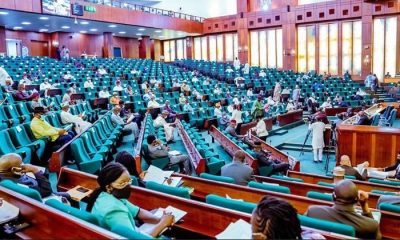

Reps Reject Child Marriage, Demand Protection of Girl Child
ShareBy Ubong Ukpong, Abuja The House of Representatives on Thursday unanimously called for urgent and coordinated actions to protect Nigerian...


Court Awards N125, 000 Cost against Odumodublvck
ShareAn Abuja High Court on Wednesday awarded N125, 000 against a rapper, Tochukwu Ojogwu, popularly known as “Odumodublvck”, for asking...


Hunger Changed My Mind, Timini Egbuson on Embracing YouTube movies
ShareNollywood actor Timini Egbuson has reflected on his changing perception of YouTube movies, joking that he might have struggled financially...


Peller Announces Livestream with Peter Obi
SharePopular Nigerian TikTok streamer, Hamzat Adelaja, popularly known as Peller, has announced an upcoming livestream with the presidential candidate of...

Nigeria’s inflation drops from 15.39 Per Cent to 14.63 Per Cent in September
ShareBy Tony Obiechina, Abuja The National Bureau of Statistics (NBS) on Thursday disclosed that Nigeria’s inflation has eased from 15.39...