
Economy
Buhari Tasks Economic Council on Nigeria’s Growth Plans

By Mathew Dadiya, Abuja
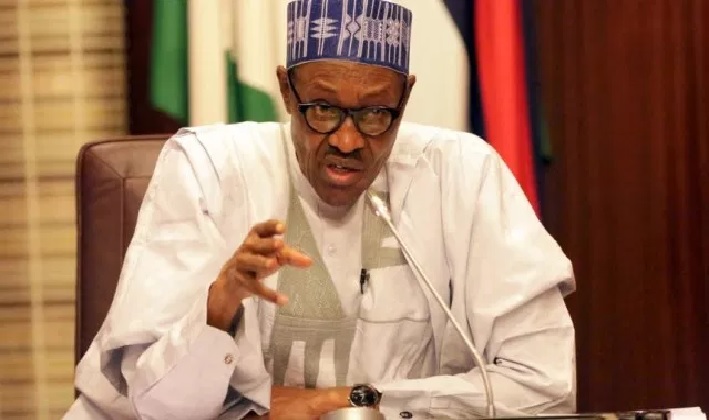
President Muhammadu Buhari has it was charged the new Presidential Economic Advisory Council (PEAC) to re-energise Nigeria’s economic growth plans as he also set an agenda of what they should accomplish in the shortest possible time.
The President said that it was very clear to him after the country exited the recession in 2016 that there need to restrategize proper and result oriented economic growth plans.
Buhari said this on Wednesday when he administered oaths of office on members the 8-man Council chaired by Prof.
Doyin Salami.He also charged them to focus on developing reliable data that will properly reflect what is happening in the country.
He assured the Council that the Federal Government will ensure that all their needs and requests were met before the next technical sessions in November.
‘President Buhari said: “Yes, Nigeria has exited the recession. But our reported growth rate is still not fast enough to create the jobs we need to meet our national ambition of collective prosperity.
”Reason being we had to tread carefully in view of the mess we inherited.
”Many of the ideas we developed in the last four years were targeted at returning Nigeria back to the path of growth.
”I am sure you will also appreciate that during that time, our country was also facing serious challenges especially in the areas of insecurity and massive corruption.
”Therefore, I will be the first to admit that our plans were conservative. We had to avoid reckless and not well thought out policies.
The President who called the task before the PEAC ‘‘most important national assignment’’, said:
”As you develop your baseline study, I would like you to focus on primary data collection.
” Today, most of the statistics quoted about Nigeria are developed abroad by the World Bank, IMF and other foreign bodies.
” Some of the statistics we get relating to Nigeria are wild estimates and bear little relation to the facts on the ground.
” This is disturbing as it implies we are not fully aware of what is happening in our own country.
” We can only plan realistically when we have reliable data. As you are aware, as a government, we prioritised agriculture as a critical sector to create jobs and bring prosperity to our rural communities.
”Our programs covered the entire agricultural value chain from seed to fertiliser to grains and ultimately, our dishes.
”As you travel in some rural communities, you can clearly see the impact. However, the absence of reliable data is hindering our ability to upgrade these programmes and assure their sustainability. ”
The President also used the occasion to set agenda and expectations from the Council, constituted on September 16, 2019, to replace the Economic Management Team (EMT).
On the Social Investment Programmes (SIPs), the President told members that his administration was working to measure the impact of the programme targeted at improving the well-being of millions of poor and vulnerable citizens.
As such, the President said he had directed the new Minister for Humanitarian Affairs to commence a comprehensive data-gathering exercise in all Internally Displaced Persons (IDP) camps in the North East.
” Today, we hear international organisations claiming to spend hundreds of millions of dollars on IDPs in the North East. But when you visit the camps, you rarely see the impact.
” In 2017, when the National Emergency Management Agency took over the feeding of some IDPs in Borno, Yobe and Adamawa, the amount we spent was significantly lower than the claims made by these international organisations.
” Therefore, actionable data is critical to implement effective strategies to address pressing problems such as these humanitarian issues.
” I, therefore, look forward to receiving your baseline study as this will help us shape ideas for a sustainable and prosperous future, ” the President said.
On his expectations from the council, the President urged them to proffer solutions on how to move the country and economy forward.
The President directed the Council to coordinate and synthesize ideas and efforts on how to lift 100 million Nigerians out of poverty in 10 years, working in collaboration with various employment generating agencies of government.
”I am told you worked throughout last weekend in preparation for this meeting.
”I have listened attentively to findings and ideas on how to move the country and the economy forward.
He said all key ministries, departments and agencies will be available to meet and discuss with them on how to collectively build a new Nigeria that caters for all.
”Now, no one person or a group of persons has a monopoly of knowledge or wisdom or patriotism.
”In the circumstances, you may feel free to co-opt, consult and defer to any knowledgeable person if in your opinion such a move enriches your deliberations and add to the quality of your decisions, ” he said.
Chairman of Council, Professor Salami, said the mandate was about ”Nigeria first, Nigeria second, and Nigeria always, ” adding that it was about Nigerians, not as numbers, but as people.
He added: ”Our goal is that the economy grows in a manner that is rapid, inclusive, sustained and sustainable so that Nigerians will feel the impact.”
President Buhari had on September 16, announced the new Presidential Economic Council and abolished the Economic Management Team headed by Vice President Yemi Osinbajo.








The Nigerian Export Promotion Council (NEPC) says exporters in Imo generated a total of 1,244,095 dollars as proceeds from export trade in 2025.
The Imo Coordinator of the council, Mr Anthony Ajuruchi, disclosed this during a follow-up engagement with cocoa farmers in the state on Thursday in Owerri.
50 cocoa farmers and exporters in Imo received 30 cocoa seedlings each in 2025 as part of interventions to boost production for export.
Ajuruchi said the amount was derived from proceeds of both formal and informal export transactions carried out by the farmers within the 2025 fiscal year.
He commended the Executive Director of NEPC, Mrs Nonye Ayeni, and the management team for their support and commitment to the growth of the export market in Imo and across the country.
According to him, the council recorded notable achievements in 2025, including the organisation of capacity-building programmes on non-oil export, product packaging and labelling.
“In addition to our interventions for cashew farmers, we conducted trainings on product development and adaptation, export contracts, market penetration, product certification and export documentation procedures.
“We also trained about 600 exporters and small and medium-scale enterprises,” he said.
Ajuruchi said the engagement with the cocoa farmers was aimed at obtaining feedback and brainstorming on strategies to increase production and export volume in 2026.
One of the beneficiaries, Mrs Sophia Orji, said the cocoa seedlings she received were doing well and had started fruiting after 17 months.
Another farmer, Mrs Mary Okeke, said her cocoa plants were thriving and appealed to NEPC to extend similar support to farmers during the rainy season.
Also speaking, Mr Canice Nze, Director of Produce in the Imo Ministry of Trade, Commerce and Investment, urged the farmers to register with the ministry to enable them benefit from cooperative structures and access possible government grants. (NAN)

By David Torough, Abuja
In line with the consumer-focused objectives of the Nigerian Communications Commission (NCC) and the Central Bank of Nigeria (CBN), the two regulators have drawn up a framework to address consumer complaints arising from unsuccessful airtime and data transactions during network downtimes, system glitches, or human input errors.
The framework is the outcome of several months of engagements involving the NCC, the CBN, Mobile Network Operators (MNOs), Value Added Service (VAS) providers, Deposit Money Banks (DMBs), and other relevant stakeholders.
According to the NCC, these engagements were prompted by a rising incidence of failed airtime and data purchases, where subscribers were debited without receiving value and experienced delays in resolution.
“The Framework represents a unified position by both the telecommunications and financial sectors on addressing such complaints. It identifies and tackles the root causes of failed airtime and data transactions, including instances where bank accounts are debited without successful delivery of services. It also prescribes an enforceable Service Level Agreement (SLA) for MNOs and DMBs, clearly outlining the roles and responsibilities of each stakeholder in the transaction and resolution process,” a statement by Head of Public Affairs of NCC, Nnen Ukoha said.
Under the new framework, where a purchaser is debited but fails to receive value for airtime or data—whether the failure occurs at the bank level or with an NCC licensee—the purchaser is entitled to a refund within 30 seconds, except in circumstances where the transaction remains pending, of which the refund can take up to 24 hours.
The framework further mandates operators to notify consumers via SMS of the success or failure of every transaction. It also addresses erroneous recharges to ported lines, incorrect airtime or data purchases, and instances where transactions are made to the wrong phone number.
Director of Consumer Affairs at the NCC, Mrs. Freda Bruce-Bennett in a comment on the development said the framework also establishes a Central Monitoring Dashboard to be jointly hosted by the NCC and the CBN. According to her, the dashboard will enable both regulators to monitor failures, the responsible party, refunds, and track SLA breaches in real time.
“Failed top-ups rank among the top three consumer complaints, and in line with our commitment to addressing these priority issues, we were determined to resolve it within the shortest possible time,” she said.
“We are grateful to all stakeholders—particularly the Central Bank of Nigeria and its leadership—for their tireless commitment to resolving this issue and arriving at this framework, and for ensuring that consumers of telecommunications services receive full value for their purchases.
“So far, pending the approval of management of both regulators on the framework, MNOs and banks have collectively made refunds of over N10 billion to customers for failed transactions” she explained .
Mrs. Bruce-Bennett further noted that implementation of the framework is expected to commence on March 1, 2026, once the two regulators have made final approvals, and technical integration by all MNOs, VAS providers and DMBs is concluded.

By Tony Obiechina, Abuja
The Budget Office of the Federation has reaffirmed the integrity of Nigeria’s newly enacted Tax Reform Acts, cautioning against what it described as governance by speculation and unverified claims following allegations of post-passage alterations.
In a statement on Wednesday, the Budget Office said it had taken note of concerns raised by the Minority Caucus of the House of Representatives, stressing that the sanctity of the law is central to constitutional democracy and not a mere procedural formality.
According to the Office, any suggestion that a law could be altered after debate, passage, authentication, and presidential assent without due process would strike at the core of the Republic and undermine citizens’ right to be governed by transparent and stable laws.
However, it warned that democratic integrity is also endangered by the careless amplification of unverified claims. “A nation cannot be governed by insinuation or sustained on circulating documents of uncertain origin,” the statement noted, adding that public confidence, once shaken by speculation, is often difficult to restore.
The Budget Office emphasized that both government and citizens share a common interest in truth, clarity, and due process, noting that public finance depends heavily on trust in the legality and clarity of fiscal laws. It welcomed the decision of the National Assembly to investigate the allegations, describing institutional inquiry, not conjecture as the appropriate response to claims of illegality.
On public access to the law, the Office agreed that Nigerians and the business community are entitled to clear and authoritative texts of all laws they are required to obey. It clarified, however, that the authenticity of legislation is determined by certified legislative records and official publication processes, not by informal or viral reproductions.
The statement also underscored the importance of separation of powers, warning that claims suggesting Nigeria is being governed by “fake laws,” if not backed by established facts, risk eroding confidence in democratic institutions.
At the same time, it stressed that legislative scrutiny should not be dismissed by the executive, noting that oversight is a constitutional duty, not an act of hostility.
From a fiscal perspective, the Budget Office said legal certainty is essential for revenue projections, macroeconomic stability, budget credibility, and investor confidence. While it is not the custodian of legislative records, it maintained that uncertainty around operative tax provisions directly affects economic planning.
To restore confidence, the Office proposed a set of measures, including the publication of verified reference texts in a single public repository, orderly access to Certified True Copies for stakeholders, clear public explanations where discrepancies are alleged, and strict alignment of all implementing regulations with authenticated legal texts.
Addressing calls for suspension of the tax reforms, the Budget Office cautioned against allowing prudence to slide into paralysis. It argued that properly implemented tax reform is necessary to reduce dependence on borrowing and inflationary financing, while easing indirect burdens on vulnerable citizens.
“Where clarification is required, it must be provided; where correction is required, it must be effected; where investigation is required, it must proceed,” the statement said, adding that governance and reform should not be stalled by unresolved conjecture.
The Office concluded by describing taxation as a democratic covenant that binds citizens and the state, insisting that compliance depends on transparency and trust. It called on political actors to protect institutions as much as positions, urging citizens and businesses to rely on verified sources and resist the spread of unauthenticated information.
The statement was signed by Tanimu Yakubu, Director-General of the Budget Office of the Federation, who reaffirmed the agency’s commitment to fiscal transparency, institutional integrity, and reforms that advance national prosperity while safeguarding citizens’ rights.



ASUSS Opposes NUT Strike in FCT, Urges Teachers to Ignore Stay-at-home Directive
ShareBy Laide Akinboade, Abuja The Academic Staff Union of Secondary Schools (ASUSS), Federal Capital Territory (FCT) Chapter, has dissociated itself...
Edo Varsity Lecturer Dies after Sex Romp in Hotel
ShareA senior lecturer at the Ambrose Alli University, Ekpoma in Edo State, Dr. Matthew Uwuigbe, has died under mysterious circumstances...
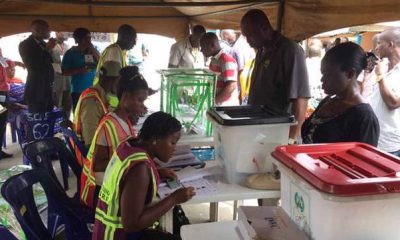

Over 84 Per Cent Nigerians willing to Vote During 2027 Elections – Yiaga
ShareYiaga Africa said 84 per cent of Nigerians intend to vote during the 2027 general elections, urging political parties to...

PNC 2026: NCDMB, DMG Affirm Collaboration with Bayelsa, Unveil New Activities
ShareFrom Mike Tayese, Yenagoa As preparations intensify for the 2026 edition of the Practical Nigerian Content (PNC) Forum, slated for...

Tinubu’s $700 Billion Mineral Resources Deal With America at Whose Interest?
ShareBy Hajia Hadiza Mohammed For some time now the hottest issue of debate in the Nigeria media space has been...

Atiku’s Production Subsidy: Has politics overtaken economics?
ShareBy Kayode Oladele Alhaji Atiku Abubakar, former Vice President of Nigeria and presidential candidate of the African Democratic Congress, (ADC),...

2027: Governors’ Backing Boosts Tinubu’s Chances, says Presidency
ShareBy Tambaya Julius, Abuja The Presidency has said the growing number of governors backing President Bola Tinubu has strengthened his...


Security Operatives Rescue 20 Abducted NYSC Members in Imo
ShareBy Tambaya Julius, Abuja Security operatives have rescued 20 members of the National Youth Service Corps (NYSC) who were abducted...

Nigeria’s Oil Reforms will Unlock $50bn Deep Offshore Investments – Tinubu
SharePresident Bola Tinubu said recent reforms in Nigeria’s oil and gas sector are designed to unlock up to 50 billion...
Ododo Condoles Families of NAF Personnel, Armed Forces Over Ondo Crash
ShareFrom Joseph Amedu, Lokoja Kogi State Governor, Ahmed Ododo has commiserated with the families of the Nigerian Air Force personnel...