
Foreign News
Harness Advances in Science, Technology to Scale up Literacy— UNESCO


Stefania Giannini, Assistant Director General for Education, United Nations Educational, Scientific and Cultural Organisation(UNESCO), says advances in science and technology should be harnessed to scale up global literacy.
Giannini said this during a virtual conference organised by the UN agency to commemorate the 2021 International Literacy Day (ILD) on Wednesday.
The theme for ILD 2021 was: “Literacy for a human-centred recovery: Narrowing the digital divide”.
The ILD celebrations take place annually around the world to remind the public of the importance of literacy as a matter of dignity and human rights, and to advance the literacy agenda towards a more literate and sustainable society.
According to Giannini, education is a right and literacy is the foundation of learning.
She said that digital skills were essential for the world and the right to education was increasingly dependent on connectivity.
“Access to education ensures empowerment, expands choices and freedom but the right to education is endangered today.
“The challenge being faced today is in two folds, one being improving infrastructure, affordability, safety, networks and data protection.
“On the other side, it is about making digital skills an essential component of literacy,” Giannini said.
She said that rapid change was possible with fresh ideas, commitment and social mobilisation.
She added that UNESCO would defend literacy as part of the recovery from the COVID-19 pandemic by focusing on 29 countries facing literacy challenges through carpet programmes and partnerships.
“The human centered recovery is a human right based recovery . The right to education is at the center of human rights and is an enabler for other human rights.
“It has been a time of rapid change and innovation.
“We are learning the ropes of resilience to face uncertainty and shape a more sustainable future, one that leaves no one behind.
“This is only possible by putting people at the core and striking the right relationship with technology, one that benefits the immense diversity of learners,” Giannini said.
Koumbou Boly Barry, UN Special Rapporteur on the Right to Education, said that the pandemic had revealed how bad a state the world was in, saying “education is about the intersectionality of rights.
“There are still millions of young people , especially women who are living in precarious conditions and don’t have access to education.
“Access to literacy learning opportunities, however, has not been evenly distributed.
“We all have to continue to move forward and build on the basis of equality and equity.
“The statistics are clear today and they tell us that we have a long way to go in turning our literacy ambition into reality,” she said.
Barry said that education had to be recognised as a “key basic social right”, adding that teachers and school administration staff in general must be properly trained to ensure high quality education. (NAN)





By Eze Okechukwu, Abuja
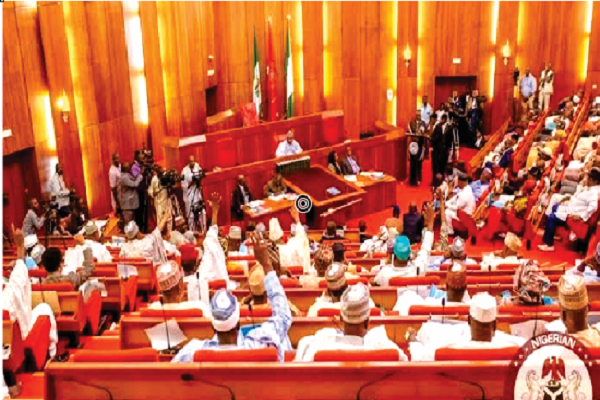
The Senate yesterday ordered mandatory health screening for every international passenger arriving Nigeria airports, seaports, land borders as Ebola resurfaces in the Democratic Republic of Congo with a scare case reported in the FCT.
The resolution followed an urgent motion by Senator Francis Fadahunsi, who warned that with Lassa fever already ravaging states, Nigeria cannot afford another outbreak.
“Protecting our entry points is far cheaper than managing Ebola,” Fadahunsi told the chamber.
Lawmakers insisted screening must be total and indiscriminate — no exemptions based on nationality or departure country because infected travellers can transit through safe-listed nations.
Senator Diket Plang raised the stakes further, demanding immediate funding for NCDC and Port Health Services, including release of withheld funds and emergency budget.
Senate President Godswill Akpabio said the Federal Government has started releasing Ebola response funds but ordered relevant committees to track every kobo.
“Ascertain whether the funds were released and judiciously utilised. Any outstanding debt must be released by the Finance Ministry without delay,” Akpabio directed.
At least 72 civilians who had been prospecting for gold in a border region of Sudan have been killed in air strikes, a regional rights group said.
Emergency Lawyers, based in the Sudanese capital, Khartoum, said jets targeted the so-called artisanal miners at a popular gold mining site on Saturday.
Neither the Egyptian government nor the de facto Sudanese authorities have so far commented.
Cairo has previously faced accusations of deadly strikes on gold prospectors as part of a crackdown on illicit activity along its southern border.
Emergency Lawyers noted the previous alleged attacks and said they represented not only a violation of Sudan’s sovereign territory but demonstrated the government’s lack of control over the region.
“The deliberate targeting of unarmed civilians violates international humanitarian law and the right to life,” it said in a statement on Sunday. “These acts may constitute war crimes.”
It noted that its death toll was provisional and could rise.
The Paris-based Sudan Tribune reported that the death toll could far exceed the number reported by Emergency Lawyers, citing a survivor of Saturday’s attack who said many more people had been injured.
Eyewitnesses said the attack began around 06:00 local time (04:00 GMT), with the aircraft firing more than five missiles directly at the miners’ camps, destroying them and excavation pits with people still inside, the newspaper wrote.
The Sudan Tribune reported claims in June that Egyptian forces had used drones and artillery to target artisanal mining sites in the same region, killing several, after sporadic incidents of Egyptian border guards of burning equipment, torching temporary shelters, and firing live ammunition to disperse mine workers.
Days later, Egypt’s border agency announced that it and the military had begun a sweeping security campaign along the border to foil illegal migration, drug smuggling and illegal mining.
At the same time, Sudan’s de facto leader announced an investigation into the alleged strikes, which were said to have killed dozens.
Gold lies at the core of the border tensions.
Sudan’s ongoing civil war has led to a surge in artisanal mining – and often risky practice conducted by civilians with rudimentary tools and without official permission – particularly in remote areas near its borders.
Gold-rich areas lie along porous borders in terrain historically associated with cross-border smuggling routes, with artisanally mined gold potentially feeding into those channels.
Egypt’s border force said in June that it had seized 86 tonnes of gold ore along with amateur prospecting equipment.
Artisanal mining has also reportedly continued in Sudan’s conflict zones and smuggled gold may be a source of income for armed insurgent groups.
This has raised concerns of illicit Sudanese gold undermining the legitimate Egyptian gold market.
Several German fighter jets will take part in the Northern Atlantic Treaty Organisation (NATO) annual nuclear defence exercise this week as troops from 17 countries take part in the Steadfast Noon drill.
The German Air Force said three Tornado jets will take part in the exercise hosted by Italy, which starts Tuesday and runs for about a week and a half.
The jets are normally stationed in Büchel in the German state of Rhineland-Palatinate.
NATO has not revealed the exercise scenario but said its scale would be comparable to last year’s drill, which involved around 2,000 personnel and more than 70 aircraft.
Last week, NATO’s head of nuclear policy, Nassima Barrows, said the exercise was designed to demonstrate the alliance’s readiness and ability to defend its territory.
No real nuclear weapons will be used, she added.
NATO said the exercise was not linked to current events or directed at any specific country.
Military experts say the drills, held regularly in October, include practising the safe transport of weapons from underground storage facilities to aircraft and mounting them on fighter jets.
Only practice bombs without real nuclear warheads are used during the drills.



WAHO Seeks Uniform Standards for Health Professionals’ Education in ECOWAS
ShareBy David Torough, Abuja The West African Health Organisation (WAHO) has reaffirmed its commitment to harmonising the training, accreditation and...


Firm Promises No Storage Charges On Subscribers’ Wallets
ShareBy David Torough, Abuja A telecommunications firm, ESDIAC Global, has said it does not impose storage charges on subscribers’ wallets,...


GIGM Brings hireX, PASS to Abuja Nov 4
ShareBy Tony Obiechina, Abuja Premium vehicle hire and all-in-one travel booking are coming to Nigeria’s capitalGIG Mobility (GIGM) has announced...


UNIBEN Recruits again after 10-year Employment Freeze
ShareThe Vice-Chancellor of the University of Benin, Prof. Edoba Omoregie, SAN, has said that another set of graduates will be...


Fire Service Responds to Building Collapse, Rescues Five Victims in Osun
ShareFrom Ayinde Akintade, Osogbo The Federal Fire Service, Osun State Command, responded to a distress call on a building collapse...


CAN Raises Concern Over Reported Conviction of Christian Woman in Borno
ShareBy Laide Akinboade, Abuja The Christian Association of Nigeria (CAN), at the weekend has expressed their concern over the reported...


Wike Hails Dunamis Church for Pedestrian Bridge
ShareBy Laide Akinboade, Abuja The Minister of the Federal Capital Territory (FCT), Nyesom Wike, has commended the Dunamis International Gospel...


El Niño: Lagos Urges Residents to Stay Hydrated, Avoid Sunlight
ShareThe Lagos State Government has urged residents to take precautions against possible extreme heat as the dry season approaches and...


INEC Targets Dec 15 for Publication of Final Voters’ Register
ShareThe Independent National Electoral Commission (INEC) has fixed December 15 2026, for final publication of the voters’ register. Professor Joash...

Nigeria, China Sign $30m Deal on Grassroots Development
ShareBy Tony Obiechina, Abuja Nigeria and China have signed a grant agreement worth RMB 200 million (approximately $30 million) to...