
NEWS
Plateau: Irigwe, Fulani Resolve to Live in Peace


The Irigwe and Fulani communities in Bsasa Local Government of Plateau on Thursday agreed to live in peace with each another after series of attacks that bedeviled the area recently.They made the resolution at a consultative meeting of key religious and ethnic/community leaders in the state, organised by Dialogue, Reconciliation and Peace (DREP) Centre, Jos.
Chief Daniel Geh, Representative of Irigwe Paramount Ruler, Rev. Ronku Aka and Alhaji Muhammad Nuru of Plateau State Chapter of Miyatti Allah Cattle Breeders’ Association of Nigeria (MACBAN) hugged one another as a sign of the resolution.Chief Geh in his remarks, said they desired to live in peace with anyone in their community as well as their neighbours, stating that crisis was not of benefit to anyone.“We have been living peacefully with the Fulanis from the time immemorial.“We must endeavour to return to those days that we peacefully coexisted and we must guard against anything that would cause disintegration,” he said.Alhaji Nuru on his part, said the settlement of their differences at the meeting was laudable and that they would pass the message to their wards.He stated that both parties who had been at loggerheads before not had decided to embrace themselves in love and end the violence.He added that his people would be happy to return to their place of abode.The stakeholders urged government to do all it could to stop reoccurrence of the crisis which had put Plateau in the news for the wrong reasons for 20 over years. (NAN)





By Laide Akinboade, Abuja
The Agaba of Jiwa Chiefdom in Abuja Municipal Area Council (AMAC), Alhaji Idris Musa, has supported Federal Capital Territory (FCT) Renewed Hope Ambassadors, a group working for the reelection of President Bola Tinubu, with a sum of N1 million.
The traditional ruler made the donation when members of the Renewed Hope Ambassadors were led to his palace by its Coordinator, Hon Adamu Abdullahi, on Wednesday.
The monarch expressed profound appreciation to Tinubu for his leadership and his choice of Minister for the FCT, praising the President for appointing Nyesom Wike and further commending him for finding Hon Adamu Abdullahi, whom he described as his son, worthy of coordinating the Renewed Hope Ambassadors in the FCT.
He declared his unreserved commitment to the President’s reelection, stating that within his influence in the FCT and beyond, he would personally lead efforts to mobilise support for President Tinubu.
Alhaji Idris Musa emphasised that the people must show appreciation for what he described as a laudable and brotherly gesture extended to the people of Abuja through inclusive governance and meaningful appointments.
In his address, the Renewed Hope Ambassadors’ Coordinator commended the administration of President Tinubu for its deliberate and inclusive approach to governance, particularly its attention to the FCT.
He highlighted key appointments, infrastructure projects, and policy directions aimed at positioning Abuja as a true national capital reflective of unity and shared prosperity.
Abdullahi further stressed the importance of traditional institutions in sustaining development, urging royal fathers to adopt deliberate engagement with village heads and community leaders.
He sought the consent of the Agaba of Jiwa to allow the Renewed Hope Ambassadors engage tribal chiefs across the various communities within his domain, noting that peaceful coexistence remained the foundation upon which sustainable development in the capital must rest.

President Donald Trump has expanded a US travel ban, barring nationals of five additional countries and people travelling on Palestinian Authority-issued documents from entering the US.
The White House said the restrictions were intended “to protect the security of the United States” and will come into force on 1 January.
Full-entry restrictions will be imposed on people from Burkina Faso, Mali, Niger, South Sudan and Syria as well as Palestinian Authority passport holders.
The administration also moved Laos and Sierra Leone, which were previously subject to partial restrictions, to the full ban list and put partial restrictions on 15 other countries, including Nigeria, Tanzania and Zimbabwe.
Trump, who has tightened immigration controls since returning to the White House in January, said the expanded travel ban was necessary because of what his administration described as failures in screening and vetting systems overseas.
Officials cited high visa overstay rates, unreliable civil records, corruption, terrorist activity and a lack of cooperation in accepting deported nationals.
The announcement followed the arrest of an Afghan national suspected of shooting two National Guard troops over the Thanksgiving weekend, an incident the White House pointed to in highlighting its security concerns.
This is the third time Trump has imposed a travel ban.
During his first term, he introduced a similar order in 2017, which sparked protests and legal challenges at home and abroad. The policy was later upheld by the US Supreme Court.
The White House said the restrictions would remain in place until affected countries show “credible improvements” in identity management, information-sharing and cooperation with US immigration authorities.
A number of exceptions apply and the ban will not affect lawful permanent residents, many existing visa holders, diplomats, or athletes travelling for major sporting events. Officials said case-by-case waivers would also be available where travel is deemed to be in the national interest.
Countries with full restrictions:
Afghanistan, Burkina Faso, Burma, Chad, Equatorial Guinea, Eritrea, Haiti, Iran, Laos, Libya, Mali, Niger, Republic of the Congo, Sierra Leone, Somalia, South Sudan, Sudan, Syria, Yemen
Individuals travelling on Palestinian Authority issued or endorsed travel documents are also subject to a full suspension of entry
Partial restrictions:
Angola, Antigua and Barbuda, Benin, Burundi, Côte d’Ivoire, Cuba, Dominica, Gabon, Gambia, Malawi, Mauritania, Nigeria, Senegal, Tanzania, Togo, Tonga, Venezuela, Zambia, Zimbabwe
Special case:
Turkmenistan (restrictions remain for immigrants but have been lifted for non-immigrant visas).

By Eze Okechukwu, Abuja
President Bola Tinubu has nominated new chief executives for Nigeria’s two foremost petroleum regulatory agencies following the resignation of their heads, Engineers Farouk Ahmed and Gbenga Komolafe.
In separate letters to the Senate yesterday, the President requested the confirmation of Oritsemeyiwa Amanorisewo Eyesan as Chief Executive Officer of the Nigerian Upstream Petroleum Regulatory Commission (NUPRC) and Engineer Saidu Aliyu Mohammed as Chief Executive Officer of the Nigerian Midstream and Downstream Petroleum Regulatory Authority (NMDPRA).
The nominations followed the voluntary exit of Ahmed, who headed the NMDPRA, and Komolafe, the pioneer CEO of the NUPRC.
Both men were appointed in 2021 by former President Muhammadu Buhari after the enactment of the Petroleum Industry Act (PIA), which created the two regulatory bodies to oversee reforms in Nigeria’s oil and gas industry.According to a State House press release by the Special Adviser to the President on Information and Strategy, Bayo Onanuga, Tinubu urged the Senate to expedite the confirmation process to ensure continuity and stability in the regulation of the petroleum sector.
Eyesan, a seasoned industry professional, is an Economics graduate of the University of Benin and spent nearly 33 years with the Nigerian National Petroleum Company Limited (NNPC) and its subsidiaries. She retired as Executive Vice President, Upstream, in 2024, and previously served as Group General Manager, Corporate Planning and Strategy, from 2019 to 2023.
Engineer Saidu Aliyu Mohammed, born in 1957 in Gombe State, is a Chemical Engineering graduate of Ahmadu Bello University, Zaria. He has held several strategic positions in the oil and gas industry, including Managing Director of the Kaduna Refining and Petrochemical Company and the Nigerian Gas Company. He also served as Group Executive Director and Chief Operating Officer, Gas and Power Directorate at NNPC.
Mohammed has chaired the boards of the West African Gas Pipeline Company, Nigeria LNG subsidiaries and NNPC Retail, and played key roles in major national projects such as the Escravos–Lagos Pipeline Expansion, the Ajaokuta–Kaduna–Kano (AKK) Gas Pipeline and Nigeria LNG Train developments.
The President expressed confidence that the nominees’ experience and expertise would strengthen the implementation of the Petroleum Industry Act and advance reforms across Nigeria’s oil and gas value chain.

FCT Traditional Ruler Donates N1m to Support Tinubu’s Reelection
ShareBy Laide Akinboade, Abuja The Agaba of Jiwa Chiefdom in Abuja Municipal Area Council (AMAC), Alhaji Idris Musa, has supported...

Nigeria Clinches Bronze in Judo at 4th African Youth Games
ShareTeam Nigeria clinched a bronze medal in judo at the ongoing 4th African Youth Games after winning the 63kg category bout against Zimbabwe. The...
NCDMB Set to Attain 100 Per Cent Local Content in Africa
ShareBy Eddy Ochigbo, Abuja The Nigerian Content Development Management Board (NCDMB) has reaffirmed its determination to increase the current from...


Trump Expands US Travel Ban to Five More Countries
SharePresident Donald Trump has expanded a US travel ban, barring nationals of five additional countries and people travelling on Palestinian Authority-issued documents from entering the US. The White...


Farouk Ahmed, Gbenga Komolafe Resign after Dangote Petition
ShareBy Eze Okechukwu, Abuja President Bola Tinubu has nominated new chief executives for Nigeria’s two foremost petroleum regulatory agencies following the resignation...

NLC Stages Nationwide Strike over Insecurity
ShareLabour Takes Nationwide Protest to Streets over Insecurity The Nigeria Labour Congress (NLC) yesterday led a nationwide protest across major...
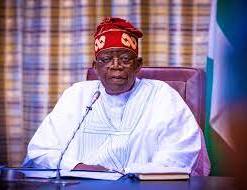

Presidency Transmits N43.5trn 2026 Appropriation Bill to Reps
SharePresident Bola Tinubu yesterday, transmitted the appropriation (Repeal and Re-enactment Bill 2024/2025 bill to the House of Representatives for consideration and expected approval...

SMEDAN Unveils MSMEs New Policy in 2026, Targets Funding Expansion
ShareThe Small and Medium Enterprises Development Agency of Nigeria (SMEDAN) said it will deepen business formalisation, expand access to affordable financing and unveil a new national MSMEs policy in 2026....


NCDMB set to Attain 100% Local Content in Africa
ShareBy Eddy Ochigbo The Nigerian Content Development Management Board (NCDMB) has reaffirmed its determination to increase the current from 56%...
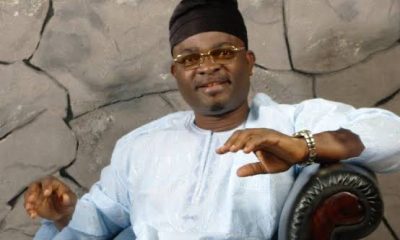

The Man Rotimi Makinde: A True Progressive by All Standards
ShareBy Kolapo Ogundare It is impressive to note that many well-meaning Nigerians are now coming out, recounting several good deeds...