
Oil & Gas
NCDMB set to Attain 100% Local Content in Africa


By Eddy Ochigbo
The Nigerian Content Development Management Board (NCDMB) has reaffirmed its determination to increase the current from 56% to100% local content in Africa between now and next decade, to align with President Ahmed Tinubu’s “Nigeria First” policy, aimed at boosting local production and reducing dependence on imports in critical sectors of national economy.
Director Corporate Services NCDMB, Dr Abdulmalik Halilu who drop the hint during the week at a capacity building workshop for media stakeholders in Abuja, disclosed that NCDMB, was in good stead to attain 100% Local content in less than no time due to impactful steps being taken by the board.
Innovative steps being by the board, be said, were put in place under the leadership of Executive Secretary, Engr. Felix Omatsola Ogbe. While hinging the milestones attained by the board on the establishment of the Nigerian Oil and Gas Industry Development Content Act (NOGICD) – a sole agency of the federal government responsible for driving Nigerian content in the oil and gas industry – Halilu urged Oil and Gas Correspondents to place high premium on the core operations of NCDMB, rather than their day to day reportage of policy matters.The media capacity building workshop themed: The Role of Media and Communications in Sustaining Nigerian Content Development”, challenged the media to deploy its expertise and professionalism to boost Nigeria’s sustained campaign in championing local content development in Africa.
“The media should to do more in the reportage of activities of the board by moving from reporting policy matters, and throw more light on core operations of the Nigerian content performance in the oil and gas industry”, he volunteered.
Meanwhile, NCDMB”s move is to ensure that for every N100 spent in the industry by operators and service companies, N56 is now retained in-country in terms of value addition local assets, goods, expertise to target 70 per cent local content by 2027. The workshop stressed the need for the media to interrogate the board’s activities and keep Nigerians abreast of the ongoing silent revolution in nation’s local content trajectory.
On his part, Dr Obinna Ezeobi, General Manager, Corporate Services, reiterated that the Nigerian content has become so widespread the world over that a good number of African countries are now seeking ways to optimise value from their oil and gas resources, turning to Nigeria’s local implementation as a case study.
Earlier, Mr Azubuike Ishiekwene, Editor-in-Chief of Leadership Newspapers, who delivered a paper on why “Good Journalism is not Enough: Creating Sustainable Income from your Content in Digital Age”, maintained that good journalism is no longer in vogue because of the collapse of traditional newsroom revenue and the under payment and casualisation of Journalists, especially beat reporters. He reasoned that the Journalist as knowledge worker, a trusted interpreter, public educator and a market signaler must live above board because digital age did kill journalism, it killed dependency.
By and large, the media capacity building workshop, among things touched on:
- Formulation and implementation of policies and monitoring its socioeconomic impact;
- Provision of the economic and social capital, necessary for the growth of industries; and
- Provision of enabling business environment to support production and consumption of goods and services by local supply chain.
The Federal Government is firming an initiative that will boost oil and gas swap plan, embedded with a regulator-mandated netting mechanism, the first of its kind around the world, to enable refiners to bring down refining costs.
The finer details of this complicated swap mechanism, pitched forward by the present administration, are being worked out by the various stakeholders
The spur is volatility in retail petrol prices, which have rocketed more than sixfold since President Bola Tinubu terminated decades-old fuel subsidies on his inauguration day in May 2023, and the promise the move holds for the affordability of the product, and other fuels.
Retail petrol has been defenceless against external pressures that have driven it to extreme price levels in Nigeria, since the US-Iran war started in February, up by 22.7 per cent.
This has continued to weigh on consumer budgets so profoundly that regulators are now stepping up consultations more tenaciously to introduce reforms to ease the pressure on businesses and households.
In August, the idea of a crude oil and gas swap system that pairs domestic producers up with refineries with a view to compressing input costs and delivery time was discussed at a meeting between the midstream sector’s top watchdog and the Nigerian Upstream Petroleum Regulatory Commission (NUPRC) in Abuja.
The structure is in the works. The proposal is currently engaging other players, with Eyesan noting that discussions on the crude oil component of the swap are still rudimentary.
The operational asset-exchange framework of the swap allows two distant producers, who are close to each other’s delivery points (refineries in this case), to switch volumes.
This gives them ample room to leverage the proximity of their bases to such destinations to save the massive logistics expenses involved in shipping crude across the supply chain.
The volume differences, quality API differentials, as well as delivery margins, are then netted off at a proposed commercial clearing house.
At the time, 27 of the 63 companies producing gas in the country had approved quotas to supply the market. However, just 23 of them were actively doing so.
The gas swap framework, on that score, permits operators unable to evacuate their gas for certain technical constraints to get a leg-up from counterparts with the facilities to supply the gas where it is needed.
It raises hope that the savings on logistics the swap is out to guarantee will directly impact the pump price of locally sold petrol, should the plan fly.
The scheme advances to the drafting stage, once consultation is over, where the energy sector’s technical committees will compose the credit-settlement laws, commercial netting-off guidelines and grade quality valuation standards, setting it up for adoption.
Implementation, if reasonably successful, might institutionalise a model from which oil-producing nations, especially those battling spikes in fuel costs internally, could borrow a leaf.
The netting-off feature of the scheme uniquely endows it with a luxury, which similar swap structures in other markets don’t offer.
Under the US crude location/quality swaps, which come closest, midstream operators can exchange cargoes of crude through clearing houses like ICE to avoid physical pipeline backhauls, based on mutual agreements between parties. However, regulation does not obligate such deals.
Dangote Petroleum Refinery, the continent’s largest, based in Lagos, added to the urgency to tame soaring refining costs recently when it revealed that involvement of middlemen raises feedstock costs by USD 3 to USD 4 per barrel in Nigeria.
That is so because crude pricing under Nigeria’s petroleum industry law is tied to Free-on-Board Dated Brent. Producers often claim that not factoring in international freight differentials while selling oil to the home market puts them at a disadvantage, unlike if it is exported.
Much as that is a regulation-backed practice, it unfairly leaves local refiners bearing a cost they are not actually liable for.
Beyond stretching logistics spending for refiners, the pass-on effect of the extra cost on fuel prices complicates affordability for consumers.
The refinery holds the biggest slice of the domestic fuel market, accounting for 87.6 per cent of petrol supply in May, according to the Nigerian Midstream and Downstream Petroleum Regulatory Authority (NMDPRA).
That affirms the overpowering implications a slight rise in the refining expenses of a refinery of that scale can have on the majority of Nigeria’s 242.4 million population, the continent’s largest.
The global costs of processing crude feedstock into finished products are accelerating to unprecedented levels across regions, due to a refining shortfall.
A note by Goldman Sachs, cited by Bloomberg in a report on August 31, suggested that the trouble has been compounded by attacks on refineries in the Middle East and Russia that are driving margins to new highs.
Russia had, in the last week of July, elongated its ban on petrol and diesel exports until January of the year ahead, making the global fuel market tighter.
Diesel is projected to be the worst-hit, with the New York-based investment bank anticipating the refining margins to reach $63 per barrel in the US and an average of USD 49 in the EU in 2027.
It marks a 133.3 per cent surge for US refiners and 157.9 per cent for their EU peers from previous forecasts.
As of August 26, the daily time rates of chartering a tanker from the Middle East to China had surpassed USD 600,000, the second time in history that has happened, Reuters stated, citing LSEG data, pressuring refining costs.
In India, a shortage of physical oil supply is pointing refiners to the expensive spot market as traders request premiums of USD 3 to USD 4 per barrel amid a narrow supply condition that shows no signal of improving soon.
The risk factor of transporting cargoes through troubled maritime routes is giving traders grounds to price crude higher.
Brazil’s state-owned oil company Petrobras, the largest in South America, reported in its half-year 2026 corporate results that average refining cost rose 15.1 per cent to USD 3.21 per barrel, compared to a year ago.
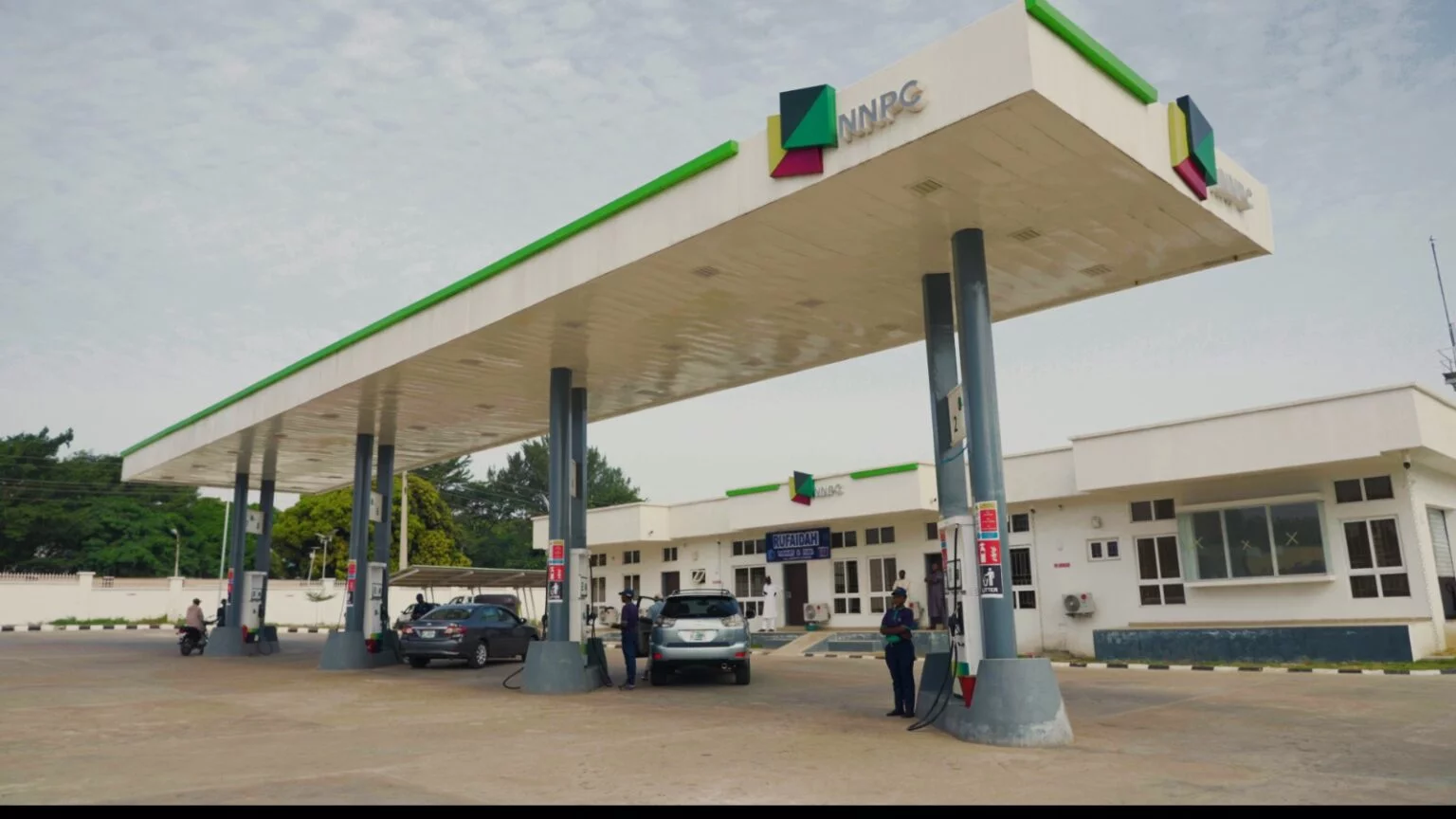
The Nigerian National Petroleum Company Limited (NNPC Ltd.) said it is activating multiple pathways aimed at transforming Nigeria into a global gas hub.
NNPC Ltd.’s Executive Vice President, Gas, Power & New Energy, Olalekan Ogunleye disclosed this on Monday, while speaking at the 2026 Gas Technology & Exhibition Conference (GASTECH), taking place in Bangkok, Thailand.
Ogunleye, who spoke on a panel themed: “The New LNG Order: Leadership Strategies for Energy Security and Growth” said as geopolitics, conflict and other factors continue to affect global energy supply and demand, Nigeria is leveraging its over 215 trillion cubic feet (tcf) of proven reserves to power domestic industrialization and expand export reach.
“Gas development and monetisation from Nigeria’s standpoint is a purely commercial play. NNPC Ltd. is implementing a Gas Master Plan (GMP) engineered as a gap-to-potential tool to move Nigeria from a 215tcf reserves position to above 600tcf,” Ogunleye stated.
He explained that the Company’s focus is hinged on reinforcing coordination, anchored on the Petroleum Industry Act (PIA), Decade of Gas Framework and the GMP, with the near-term target to ramp up national production of gas to 10 billion standard cubic feet per day (Bcf/d) by 2027 and 12 Bcf/d by 2030.
Ogunleye observed that Nigeria is already a reliable global supplier of gas on a major expansion drive, citing key LNG projects such as Trains 1-6 which produce 22 million tonnes per annum (MTPA) and has exported over 6,000 LNG cargoes since 1999, as well as Train 7 which is due for completion in 2027.
He said Nigeria’s geographical advantage (well-positioned for the Atlantic Basin and Asian markets) has placed the country as a strategic supplier to global markets, an advantage that is complemented by Nigeria’s substantial gas resource base and a national focus on gas development.
He said Nigeria’s domestic gas utilisation and gas for export are not mutually exclusive, as the country has adopted a dual pathway which leverages exports for foreign exchange earnings while advancing domestic gas utilization to create job opportunities, deepen energy security, and economic wellbeing.
Ogunleye said Nigeria has de-risked new LNG projects through a robust legal and regulatory framework supported by attractive fiscal incentives.
“With continued efforts towards stable security, competitive gas pricing and assured gas supply, there is no better time for investors and financiers to confidently participate in the development of Nigeria’s LNG projects,” Ogunleye concluded.
GASTECH is the world’s largest exhibition and conference focused on natural gas, LNG, hydrogen and low-carbon solutions. Now in its 54th edition, the conference brings together about 50,000 participants from over 150 countries ranging from energy experts, CEOs, policymakers, investors and technology leaders to discuss the future of energy security, LNG supply, infrastructure investment and decarbonisation.
Nigeria’s crude oil and condensate production rose by 0.4 per cent to 1,677,777 barrels per day (bpd) in August 2026.
The Nigeria Upstream Petroleum Regulatory Commission (NUPRC) disclosed this in its crude oil and condensate statistics report released on Sunday.
The commission said crude oil production, excluding condensate, averaged 1,500,190 bpd during the month under review.
It added that Nigeria met its Organisation of Petroleum Exporting Countries (OPEC) crude oil quota for the fourth consecutive month.
According to the report, combined crude oil and condensate production fluctuated between a daily low of 1.
64 million barrels and high of 1.71 million barrels.The report showed that Bonny Terminal recorded the highest average production at 320.04 thousand barrels per day (kbpd).
Forcados Terminal followed closely, recording an average daily production of 317.40 kbpd during the month.
“Qua Iboe Terminal recorded an average production of 171.72kbpd of crude oil and condensates,” the report said.
It added that Escravos Oil Terminal recorded a daily average production of 131.71 kbpd during the period.
Bonga ranked fifth among the highest-producing terminals, with an average output of 92.50 kbpd of crude oil.
The NUPRC attributed the modest increase in August production largely to the resolution of operational challenges involving the Single Buoy Mooring (SBM) at the Erha field.
The commission said the challenges had adversely affected production performance in the preceding month.
It explained that restoring normal evacuation and production operations at the Erha field contributed positively to overall production volumes in August.
“Production activities across most other producing assets remained relatively stable,” the report said.
It said operators continued implementing measures to optimise production efficiency, maintain asset integrity and minimise operational disruptions.
The commission added that routine production and crude evacuation operations were generally sustained across the industry during the period.
“These supported the observed improvement in output,” it said.
The report described the August increase as modest but said it reflected continuing industry efforts to address operational bottlenecks.
It said stakeholders were also working to restore affected production capacity and support sustained growth in the coming months.
The commission said operators remained focused on improving asset reliability and operational resilience across Nigeria’s upstream petroleum sector.
It added that intervention programmes were being advanced to strengthen production performance and reduce disruptions.
The August performance, according to the NUPRC, underscored the importance of resolving operational constraints promptly.
It also highlighted the need for effective asset management and continued collaboration among industry stakeholders.
Such measures, the commission said, remained critical to safeguarding and improving Nigeria’s crude oil production capacity. (NAN)




Minister Warns Envoys against Unguarded Comments Ahead 2027 Elections
ShareThe Minister of Foreign Affairs, Ambassador Bianca Odumegwu-Ojukwu, has warned foreign diplomatic missions against making unguarded comments, disparaging remarks or...

Shettima Holds Northern Governors in High Regard, Aide Clarifies
ShareSenior Special Assistant to the President on Media and Communications, Stanley Nkwocha, said Vice President Kashim Shettima holds northern governors...

World Bank Mobilises $112bn Private Capital in FY26
ShareThe World Bank Group said it mobilised a record 112 billion dollars in private capital in fiscal year (FY) 2026,...


Oluremi Welcomes FOPSHAN’s Endorsement of Tinubu for Second Term
ShareThe First Lady, Sen. Oluremi Tinubu on Thursday in Abuja, welcomed the endorsement of the President for a second term...


Why APC Govs Oppose Wike — Tinubu’s Ex-spokesman
ShareA former South-East spokesman to President Bola Tinubu, Denge Onoh, has attributed the growing face-off between the Minister of the...
Nigeria, State Capture and the Implications on 2027 Elections
ShareBy Uche Igwe An interesting trend is going on in Nigeria in the name of democracy. Many observers have noticed...


Wike, His Rainbow Coalition and the Politically Lazy Governors
ShareBy Hajia Hadiza Mohammed Nyesome Wike, the current Minister of the Federal Capital Territory (FCT) will go down in Nigeria...


2027: INEC Appeals for Peaceful Conduct, Promises Neutrality
ShareThe Independent National Electoral Commission (INEC) has appealed to political parties, candidates and voters to ensure peaceful conduct before, during...


DAILY ASSET Loses Political Editor, Mike Odiakose at 63
ShareBy David Torough, Abuja The management and staff of DAILY ASSET have announced the death of the newspaper’s Political Editor,...


Nigeria Nears 66: Why is Leadership Failing a Generation That Refuses to Give Up?
ShareBy Daniel Nduka Okonkwo Walk through any Nigerian city before sunrise and you will meet the youth of this country...