
Agriculture
Onions Farmers Want Increased Production

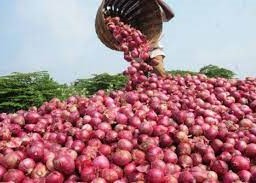
Alhaji Aliyu Maitasamu-Isah, President, National Onion Producers, Processors and Marketers Association of Nigeria (NOPPMAN) has called for increased production of onions so as to plug the deficit of 1.1 million tonnes in local demand in the country.
Maitasamu-Isah made the call while exchanging views with newsmen shortly after the inauguration of the North Central executives of NOPPMAN, in Lafia, on Thursday.
He said that the 1.
4 million metric tonnes of onions currently being produced in the country annually was not enough to meet the demands of Nigerians, hence the call for increased production to meet the 2.5 metric tonnes required for local consumption.The president, however, said that government’s support would be needed to achieve the target and to enable the massive exportation of the commodity to countries like India, which, he said, had high demand for it.“The challenges we are facing is as a result of lack of good storage facilities, among other challenges.“If government can intervene to assist farmers to access inputs and facilities for production, while also helping them to improve on their storage facilities, then we can be able to meet the demands.
“We are producing 1.4 metric tonnes, but what we need is 2.5 metric tonnes. Apart from that we are still exporting.“So, we need support and empowerment from government because we need to step up our production to meet the demands,” he said.
Maitasamu-Isah explained that the association chose Nasarawa state for the inauguration, because of the efforts made by the Gov. Abdullahi Sule-led administration in terms of security, as well as the state being the second largest producer of onions in the North Central zone, after Plateau state.In another interview, Justice Sidi Bage I (Rtd), the Emir of Lafia, lauded the association for holding the event in the state and for also willing to educate farmers in the state on the right techniques in onion production.
He called on farmers to take the advantage of the knowledge that would be shared with them on onions production to increase their production.“Nasarawa state was specifically chosen as a new destination for the production of onions, because of security challenges bedevilling traditional places known for production of onions such as the North West and North East zones of the country.
“So, with their coming here for this event and to share knowledge on onions, the gate is now open for us in Nasarawa state and we must take advantage of it because they are bringing in the techniques and training to farmers.
“The advantages of this development are enormous. It will boost economic activities. It will also open us up to having more people coming in here to do business. The advantages are too enormous to mention,” he said.
Executives of the Association from the Federal Capital Territory, Abuja, Nasarawa, Niger, Kogi, Plateau and Benue states were inaugurated at the event. (NAN)







From Attah Ede, Makurdi
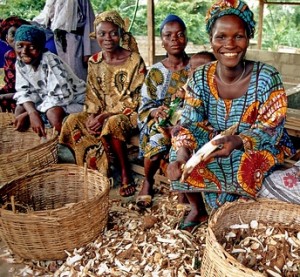
Olam Agri, in partnership with Sustainable Collective Advocacy for Africa Development (SCAAD) Initiative, is to launch the Community Resilience Opportunities for Women and Youth (CROWY) in Benue and Nasarawa States.
A press release by Elizabeth Nnoko Communication Manager, Olam Agri, said the CROWY Project is aimed at creating lasting positive change for women and youth across Nigeria’s North-Central region.
The Project ground-breaking initiative is designed to empower grassroots women and youth farmers, aligning with national development and gender equality objectives.
The project also, aims to strengthen livelihoods during off-farming seasons by equipping beneficiaries with strategic leadership skills, entrepreneurship training, and increased awareness on inclusion, gender equality, and early warning signs and systems related to Gender-Based Violence (GBV).
Delivered in collaboration with Rich-Oak Life Initiative, Sahel International Support Foundation, and Elikizi Foundation for Women and Youth Advancement, the CROWY Project seeks to close critical economic gaps by providing inclusive livelihood opportunities, access to cooperative financing, and leadership support for emerging women and youth-led enterprises.
“We aim to create 10 Village Savings and Loan Associations and support 100 of women and youth entrepreneurs within the first year in the fields of tailoring, baking amongst others.
“This intervention will expand economic opportunities, promote self-employment, and build sustainable and resilient livelihoods across the targeted communities.
“Across Nigeria, women, youth, and persons with disabilities continue to face systemic barriers to education, livelihoods, and leadership pathways. Recent statistics highlight the urgency of this challenge.
“In 2023, women’s labour force participation stood at just over 52%, down from nearly 57% in 2010 (Statista, 2023). Youth unemployment remains critically high, with 53% of Nigerians aged 15–24 unemployed or underemployed (World Bank, 2024).
“According to Nigeria’s Minister of Women Affairs, as of October 2025, approximately 70% of Nigerian women live in extreme poverty, unable to meet basic needs or sustain livelihoods
“These figures paint a stark picture of structural inequalities that continue to undermine national development and social stability”, the statement said.
On the part of SCAAD initiative, a Statement by Frances Okeke, Executive Director, stated that “Every day, we meet women and young people with immense creativity and resilience, yet without the support they need to thrive truly. Nigeria’s overlapping crises have made survival even harder for them, especially in farming communities where off-season periods often deepen economic vulnerability.
Okeke maintained the through the support of Olam Agri, the CROWY Project is stepping into this gap, offering practical skills, livelihood opportunities, and hope to grassroots women and youth.
Said he, “Together, we are equipping individuals not only to earn a living during non-farming seasons but also to lead, innovate, and uplift their communities. When women and young people are given the tools to succeed, entire communities become more resilient and rise with them.”
While Anil Nair, Country Head Olam Agri Nigeria added, “Our partnership with SCAAD Initiative on the CROWY Project reinforces our shared vision of resilient, empowered, and economically active communities. Women and youth are central to the future of agriculture in Nigeria and supporting them through targeted skills development and inclusive financing is essential for long-term national growth.
“Olam Agri will continue to champion initiatives that uplift vulnerable groups and strengthen the fabric of our communities.”
“Olam Agri and SCAAD Initiative invite government agencies, community leaders, NGOs, and development partners to join in supporting inclusive livelihood strategies. Collaboration is vital to building resilient, equitable communities.
“The partnership is committed catalyze efforts to enhance economic opportunities, promote self-employment, and build sustainable livelihoods for women and youth in conflict-affected communities”.

The Federal Government said African countries must shift from reactive, event-driven responses to predictive, risk-based and analytics-driven surveillance to meet the global target of Peste des Petits Ruminants (PPR) disease eradication by 2030.
PPR is a viral disease caused by morbillivirus closely related to rinderpest virus which affects goats, sheep and wild relatives of domesticated small ruminants and camels.
Permanent Secretary, Federal Ministry of Livestock Development, Dr.
Chinyere Akujobi said this in Abuja on Wednesday at the Regional Training on Strengthening Animal Disease Surveillance, Building Capacities for PPR Eradication and Trans-boundary Animal Diseases.The training was under the Framework of Implementation of the Pan-African PPR Eradication and other Sheep and Goat Disease Control Programme in West African Member Countries.
It was organised by the Food and Agriculture Organisation of the United Nations (FAO) in collaboration with the African Union-Interafrican Bureau for Animal Resources (AU-IBAR) with financial support from the European Union.
Akujobi urged every country to build surveillance systems that were smarter, faster and more collaborative.
She further urged strengthening coordination, adoption of modern tools and ensuring information-driven action.
“We must build stronger technical skills in participatory and risk-based surveillance; harmonise epidemiological procedures so that data generated across countries can be compared and acted upon.
“We must adopt modern tools for defining epi-systems, map high-risk zones and integrate these results into continental and global platforms and strengthen regional coordination structures and the Regional Veterinary Committee.
“These priorities speak directly to the core challenges of our region, uneven reporting, weak linkages between laboratories and field surveillance, fragmented information systems and gaps in cross-border coordination,” she said.
She said the presence of participants at the workshop demonstrated the collective commitment of the region in tackling diseases that continued to undermine livestock productivity, livelihoods and regional integration.
Akujobi urged the participants to approach the sessions with an evidence-driven mindset that reflected the complexity of today’s trans-boundary animal disease landscape.
“Our surveillance systems must be guided by real-time information and must incorporate digital tools that enable us to detect risks early and intervene quickly.
“At the same time, our countries must work in harmony, because a disease like PPR does not recognise administrative boundaries.
“It is essential that our systems speak to one another and that information flows seamlessly from community animal health workers to national databases and onward to regional and global systems.
“This gathering is more than a routine training session; it represents a strategic turning point for West Africa,” she said.
According to her, many African countries remain heavily affected by PPR, Foot and Mouth Disease, African Swine Fever, Anthrax, Highly Pathogenic Avien Influenza (HPAI) among other trans-boundary and zoonotic diseases that threaten food security.
“The small ruminant sector, in particular, supports millions of families, including women and youth whose livelihoods depend on healthy animals.
“Every outbreak that sweeps through our communities deepens vulnerability and disrupts social and economic stability,” she said.
She assured that Nigeria remained fully committed to regional solidarity and to the Pan-African PPR Eradication Programme.
Akujobi said the country was focused on strengthening the National Animal Disease Information System to improve reporting from across the federation, enhanced laboratory–field collaboration under the One Health approach.
According to her, Nigeria works closely with ECOWAS, AU-IBAR, FAO and World Organisation for Animal Health to align national actions with continental strategies.
The training targeted veterinarians, laboratory scientists, epidemiologists, wildlife experts, border authorities and pastoralist communities across West Africa.
Its goal was to strengthen national and regional systems to enable them to be better equipped to eradicate PPR.

The Federal Government, through the Kano State Special Agro-Processing Zone (SAPZ) Programme in partnership with IFAD, has empowered 9,870 rice farmers in Kano with climate-resilient inputs and modern rice production technologies.
This was contained in a statement issued by the SAPZ Knowledge Management and Communication Officer, Rabi Mustapha.
The State Project Coordinator, Aminu Iliyasu, disclosed this on Sunday during the Farmers Field Day at Chiromawa Garin Babba Cluster in Garun Malam Local Government Area.
He said the exercise was organised to expose the farmers to Science-based and practical solutions capable of enhancing yields, improving food security, and boosting rural livelihoods.
Iliyasu described the field day as a celebration of knowledge, innovation and the resilience of smallholder farmers.
He explained that the SAPZ initiative in Kano aimed to expand access to improved technologies, strengthen extension services, reduce post-harvest losses and create market opportunities for rural farmers.
“These innovations are not theoretical. They are practical solutions that farmers can adopt immediately to raise productivity and increase income,” he said, while commending the support of local authorities.
Mustapha said the inputs distributed to 9,870 farmers included FARO 44 improved seeds, Urea and NPK fertilizers, and insecticides, targeting beneficiaries in Garun Malam, Gezawa, Bichi and Bagwai LGAs during the 2025 wet season.
She added that experts trained farmers on soil selection, seed dressing, nursery establishment, land preparation, and timely transplanting at proper spacing.
“They also covered fertilizer management, weed control, Integrated Pest Management and water regulation to boost rice yields.
“The training emphasised harvesting at optimal maturity, drying paddy to safe moisture levels, and fumigation using phostoxin to prevent storage losses,” she stated.
A beneficiary, Salamatu Ali, said the intervention had positioned Kano farmers to boost yields, withstand climate pressures and increase household incomes.
Another farmer, Huwaila Ibrahim, said the programme transformed her approach to rice production.
“Before, we planted without checking whether the land was suitable.
“Now, we first assess the soil to ensure it matches the seed variety. This season, we cultivated FARO 44,” she said.
Ibrahim added that her output increased from 20–25 bags per acre to about 40 bags after adopting the improved technologies.


Olam Agri Partners with SCAAD to Empower Women in Benue, Nasarawa
ShareFrom Attah Ede, Makurdi Olam Agri, in partnership with Sustainable Collective Advocacy for Africa Development (SCAAD) Initiative, is to launch...


Security Operatives Arrest 32-yr-old Man for Allegedly Negotiating Ammunition for Bandits in Zamfara
ShareFrom Ifeanyichukwu Nwannah, Gusau A 32-year-old man, Ahmed Abubakar suspected to be armed weapons dealer has been arrested in Abuba,...
Zamfara Charges Corps Members to Live Harmoniously with Host Communities
ShareFrom Ifeanyichukwu Nwannah, Gusau Zamfara State Government has charged Corps members deployed to the State to demonstrate commitment and live...


Ademola Adeleke: Between Dancing Steps and Political Cul-de-sac
Share By Wale Sadeeq Gov. Ademola Adeleke of Osun is known for dancing hysterically at virtually every public occasion, to the...

FG, Partners Champion Women’s Empowerment in Livestock Sector
ShareBy Raphael Atuu, Abuja The Minister of Livestock Development, Idi Mukhtar Maiha, has reaffirmed the Federal Government’s commitment to placing...


Mutfwang Declares ASUP National Delegates Conference Open in Jos
ShareFrom Jude Dangwam, Jos Plateau State Governor, Caleb Mutfwang has declared open the 18th National Delegates Conference of the Academic...


Nigeria’s Gemade Builds Fleet For Saudi’s New National Carrier
ShareBy Mike Odiakose, Abuja When Saudi Arabia’s Crown Prince Mohammed bin Salman personally unveiled the Kingdom’s new National Carrier on...


Tinubu Support Group Appoints Ex Senate President, Lawan Patron
ShareBy Eze Okechukwu, Abuja Tinubu Support Group; House-to-House Network has appointed Ex Senate President, Ahmed Lawan as its national patron,...


Senate Worries over Airfare Hike, Seeks Immediate Suspension of New Price Regime
ShareBy Eze Okechukwu, Abuja The Senate has expressed worries over the recent hike in domestic airfares as one-way ticket costs...
FG Tasks Africans on Sheep, Goat Plague Eradication
ShareThe Federal Government said African countries must shift from reactive, event-driven responses to predictive, risk-based and analytics-driven surveillance to meet...