
Uncategorized
Equities Ear N981b in Net Capital Gains


Nigerian equities earned more than N981 billion in net capital gains in the past seven trading sessions, making Nigerian stocks some of the most lucrative in the global stock markets.
Benchmark indices for the Nigerian stock market yesterday rode on the back of increased demand across several sectors of the market to a year-to-date return of 4.
4 per cent; implying net capital gains of N981. 1 billion in the seven trading sessions.The sustained bullish rally at the Nigerian stock market underlined a positive, though cautious, outlook for the equities by several pundits after the Nigerian market sustained a two-year consecutive positive return.
The continuing rally has built up the net capital gains for investors since 2020 to more than N8.7 trillion.
Nigerian equities had over the past 24 months posted a two-year average return of 56.1 per cent, equivalent to net capital gains of N7.76 trillion over the past two years.
The stock market closed in 2021 with an average return of 6.07 per cent, equivalent to net capital gains of N1.278 trillion.
It had in the throes of the outbreak of the COVID-19 pandemic in 2020 recorded an average return of 50.03 per cent, representing net capital gains of N6.483 trillion.
Yesterday, investors raked in N403 billion in net capital gains amidst bargain-hunting for large-cap blue chips and value stocks. The benchmark index showed an average return of 1.7 per cent.
The strong rally yesterday was driven by influential stocks such as Dangote Cement, Seplat Energy; Guinness Nigeria; BUA Foods and MTN Nigeria Communications.
Dangote Cement, Nigeria’s most capitalised quoted company, yesterday announced that it would be buying back 170 million shares from shareholders between next Wednesday and Thursday.
The second tranche of the share buyback programme would see the company mopping up one per cent of its current issued share capital
Analysts at Afrinvest Securities said they “anticipate that bargain hunting would persist on improved investor sentiment”.
The All Share Index (ASI) of the Nigerian Exchange (NGX), a value-based common index that tracks all share prices at the NGX, closed yesterday at 44,608.82 points as against its opening index of 43,859.30 points. It had opened the year at 42,716,44 points
The aggregate market value of all quoted shares at the NGX rose from its opening value of N23.631 trillion to close at N24,034 trillion. It had opened the year at N22.297 trillion.
The total turnover of trades yesterday stood at 266.3 million shares valued at N3.8 billion in 4,502 deals.
All sectoral indices closed positive with the exception of the NGX Insurance Index, which dipped by 0.5 per cent. The NGX Industrial Goods Index led with a return of 3.1 per cent.
The NGX Oil & Gas Index rose by 1.4 per cent. The NGX Banking Index posted an average gain of 0.4 per cent while the NGX Consumer Goods Index appreciated by 0.1 per cent.
Dangote Cement rose by N16 to close at N275. Seplat Energy appreciated by N20 to close at N690. Guinness Nigeria rallied N1.20 to close at N42.20. BUA Foods added N1.65 to close at N66 while MTN Nigeria Communications chalked up N4 to close at N190 per share.
Most market pundits have predicted a continued rally at the stock market despite emerging political risks.
Analysts at Cordros Capital said the outlook for the Nigerian equities is bullish in the near term.
“In the near term, we believe positioning for 2021 full year dividends will continue to support buying activities in the market even as institutional investors continue to search for clues on the direction of yields in the fixed income market,” Cordros Capital stated.
President, Chartered Institute of Stockbrokers (CIS), Mr Olatunde Amolegbe, said two years of positive returns show that the market is reflecting its function as the barometer for the economy.
“We also expect the positive movement for the first half of 2022 on the back of good corporate performance, implementation of some part of the Petroleum Industry Act (PIA) and intense focus on infrastructural development and resultant increased capital raising by government and corporate entities,” Amolegbe said.
According to him, the implementation of the PIA has the potential to raise government revenue, which may elicit a positive response from the market while infrastructural development would likely boost market activity.
“These, however, depend on stable macroeconomic policy, increased security and stable polity,” Amolegbe, who doubles as Managing Director of Arthur Steven Asset Management Limited said.
Managing Director, APT Securities and Funds, Mallam Kasimu Garba Kurfi, also said the market would remain positive in 2022, although the second half would be determined by the politics of succession by the largest political parties.
“We expect the bullish rally to continue in first and second quarters but the continuity to the third and fourth quarters depends on the outcome of the primary election of the APC and PDP if they are able to succeed in electing the right candidates for the presidency.
“Acceptability will lead to bullish rally throughout the year, otherwise, the market may suffer a reversal,” Kurfi said.
Group Head, Research, GTI Capital Group, Mr. Emmanuel Onoja, said there was a strong possibility of the market running through a third positive year.
“It’s most likely we see the third year of positive return given the potential liquidity buildup next year as a result of increased borrowing, election spending and falling yields,” Onoja said.


By Tochukwu Jimo Obi
Sixty six years after independence, Nigeria should be asking itself a question that can no longer be postponed: what exactly has become of the great promise of our nation? A country blessed with enormous human and natural resources should not, at this stage of its journey, still be struggling with problems that ought to have become distant memories.
As we mark 66 years of independence, this should be more than another occasion for colourful ceremonies, patriotic speeches and celebrations. It is a time for sober reflection as a people, to examine where we are, where we ought to be and, most importantly, how best to move Nigeria forward.Undoubtedly, Nigeria is not where it used to be. There have been significant developments in different sectors of the economy and society, and successive administrations have introduced policies and programmes aimed at addressing the country’s challenges. However, we must also acknowledge that we are certainly not where we ought to be, considering the enormous human and natural resources available to us. A nation blessed with abundant natural resources, a large youthful population and considerable human capital should be able to provide a higher standard of living for its citizens.
At 66, Nigeria should have no reason to still be battling with inadequate power supply, dilapidated roads, massive unemployment and widespread hunger. These are challenges that have persisted for decades, despite the huge resources committed to addressing them. While some of our past and present leaders may have done, or may still be doing, their best, the reality remains that their efforts alone have not been enough to solve the numerous problems bedevilling the nation. What Nigeria requires is sustained commitment, effective institutions, accountability and policies that go beyond individual administrations.
Corruption and insecurity also continue to pose serious challenges to national development. Resources that should be channelled towards infrastructure, education, healthcare, job creation and other essential services can be undermined by corruption and poor accountability. Similarly, insecurity discourages investment, disrupts economic activities and threatens the lives and livelihoods of citizens. We cannot continue like this as a nation. There must be a collective determination to strengthen institutions, uphold the rule of law and confront the factors that continue to undermine national development.
Unfortunately, the people themselves appear to have become accustomed to many of these perennial problems. This has contributed to a situation where some citizens fail to demand accountability from leaders or make effective use of their democratic power during elections. Democracy gives citizens the opportunity to choose their representatives and to replace those whose performance does not meet their expectations. Elections should therefore be about competence, integrity, policies and the ability to serve the public interest, rather than personal loyalty or temporary benefits.
Sycophancy has also become increasingly visible in our political space. Some people praise leaders excessively for personal gain, defend actions they would ordinarily condemn and, in some cases, sell their votes during elections, only to complain about bad leadership afterwards. Citizens must understand that leadership and followership are interconnected. When voters trade their electoral power for immediate personal benefits, they may be contributing to a system that makes it more difficult to demand responsible governance later. The ballot should be treated as an important instrument for shaping the future of the country.
As Nigeria marks this 66th anniversary, our leaders at all levels must put the interest of the nation at the centre of their decisions and actions. Religious, political and ethnic considerations should not be allowed to take precedence over the collective interest of Nigeria. Diversity should be a source of strength rather than a reason for division. Those entrusted with public office must remember that political positions are temporary, while the consequences of decisions taken in office can affect generations yet unborn.
The people also have an important role to play in moving Nigeria forward. Citizens must obey the law, reject corruption, participate responsibly in elections, demand accountability and contribute positively to their communities. Professionals must give their best in their respective fields, young people must be encouraged to pursue productive opportunities, and the private sector must continue to contribute to economic development. Nation building cannot be left entirely to government. Every Nigerian has a responsibility to contribute to the Nigeria we desire.
At 66, the question, therefore, is not simply which way Nigeria, but what kind of Nigeria do we want to leave for the next generation? The answer lies in our collective willingness to change the things that have held us back, strengthen the institutions that sustain democracy and development, and place national interest above personal, political, religious and ethnic considerations. Nigeria has the resources, talent and potential to achieve greatness. What is required is the collective will to translate that potential into reality. As we celebrate 66 years of independence, let us renew our commitment to building a peaceful, prosperous and united nation. Nigeria shall be great again.
Tochukwu Jimo Obi, Obosi Anambra state.

By Tambaya Julius, Abuja
The Nigeria Customs Service (NCS) has concluded the final phase of its 2025 recruitment exercise, with nearly 3,000 shortlisted candidates undergoing screening in an exercise the Service said recorded improved coordination and efficiency.
The two-week exercise, held at the Training and Doctrine Command (TRADOC), Gwagwalada, Abuja, commenced on September 7 and ended on September 19, 2026.
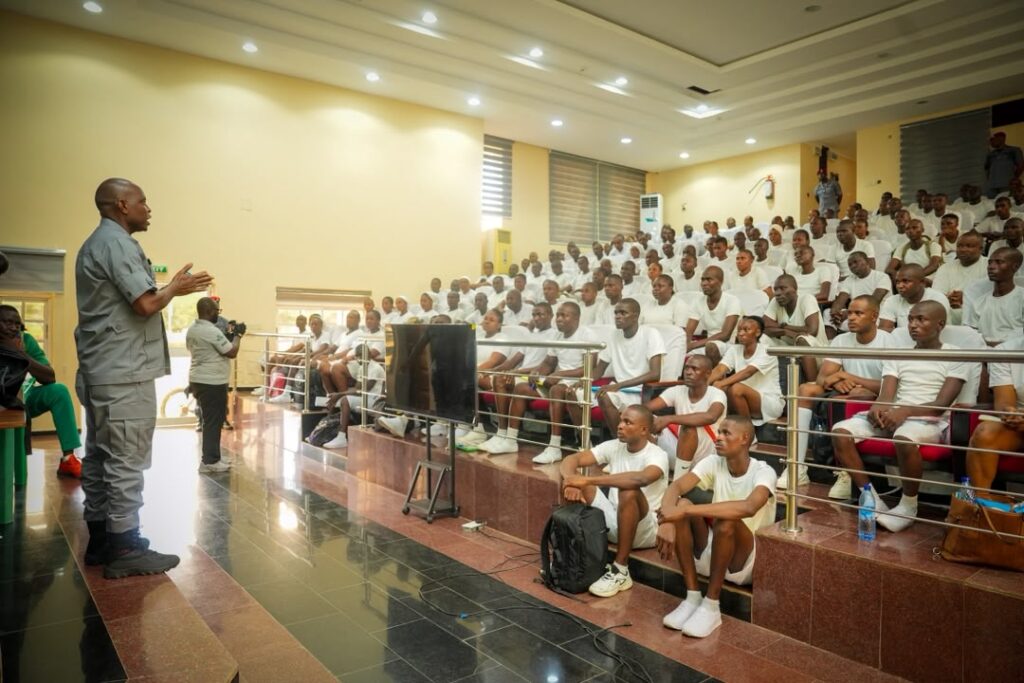
Candidates shortlisted for the Assistant Superintendent of Customs II (ASCII), Inspectorate and Customs Assistant cadres underwent documentation, physical fitness assessments and medical screening as part of the final stages of the recruitment process.
The exercise was conducted in batches, a measure introduced by the Service to reduce congestion and ensure smoother movement of candidates through the various screening points.
Speaking on the exercise, the Assistant Comptroller-General of Customs in charge of Human Resource Development, Frank Onyeka, said the Service had addressed challenges identified during the earlier phase of the recruitment process.
According to him, measures were introduced to improve coordination and reduce congestion at the screening centres.
“We have put measures in place to reduce congestion and ensure a smoother process this week. The gaps identified last week have been addressed, and we do not expect them to recur this week,” Onyeka said.
He urged candidates to remain disciplined and comply with the procedures established for the exercise.
The Service also introduced personalised screening forms as part of efforts to strengthen verification and minimise discrepancies in candidates’ records.
The Deputy Comptroller of Customs and member of the recruitment coordinating team, Adamu Musa, said each shortlisted candidate was provided with a form containing personal information and details required for the various stages of the screening.
He said the approach represented a departure from the previous system in which candidates received forms at the screening venue.
“Any candidate that has been shortlisted has a form designed especially for him, unlike in the past where you come, they issue you a form, and then some people along the way go and even change some of the records,” Musa explained.
According to him, the forms contained candidates’ names and other details covering sports, medical assessment, documentation and related requirements.
“So, once the candidate comes, you just verify what you already have from the system,” he added.
Musa said the new arrangement had made it easier for officials to authenticate candidates’ information while reducing opportunities for alterations and discrepancies.
The recruitment team also assessed candidates against established requirements, including age, physical fitness and drug screening.
Musa disclosed that candidates who test positive for hard drugs, exceed the stipulated age requirement or are found to have physical conditions that could affect their ability to perform their duties may be disqualified, subject to the final decision of the Service’s management.
He also stressed the importance of continuous recruitment and manpower development, noting that the expanding responsibilities of the Customs Service require personnel capable of responding to emerging challenges.
According to him, a well-trained workforce remains important to the Service’s responsibilities in national security, border protection, revenue collection and trade facilitation.
The Service also warned candidates and members of the public against relying on unverified information about the recruitment exercise.
Musa urged applicants to obtain recruitment updates only through the official communication channels of the Nigeria Customs Service, including its official website and verified social media platforms.
He warned that fraudsters could exploit the recruitment process by circulating fake announcements, misleading applicants or making unauthorised demands.
The warning comes as the Service moves towards the next stages of the recruitment process following the completion of the final screening exercise.
With the introduction of personalised forms, batch screening and tighter verification procedures, the NCS said it had strengthened the process to improve efficiency, reduce congestion and protect the integrity of the recruitment exercise.

Post Recapitulation: NAICOM Holds First Quarterly Staff Meeting
By Tony Obiechina, Abuja
The Commissioner for Insurance, Olusegun Ayo Omosehin, at the weekend presided over the Quarterly Staff General Meeting of the National Insurance Commission (NAICOM), the first such gathering since the successful conclusion of the insurance industry’s recapitalization exercise.
The meeting brought together management and staff to review the achievements recorded during the recapitalization programme and to align on the Commission’s strategic direction for the period ahead.
Participants also used the occasion to discuss issues bordering on staff welfare, institutional effectiveness, and the overall growth of the organization.
In their deliberations, the Commission reaffirmed its commitment to stronger regulation and supervision of the insurance sector, continuous capacity building for staff, and sustained operational excellence.
NAICOM said in a statement on Saturday that the resolutions reached at the meeting would help drive the emergence of a more resilient, competitive, and trusted insurance industry in the country.



WAHO, ECOWAS Stakeholders Move to Harmonise Nursing, Midwifery Accreditation Standards Across West Africa
ShareBy David Torough, Abuja The West African Health Organisation (WAHO) has convened a three-day regional workshop in Abuja to finalise...

Okorocha Hails Court Victory as APC Insists Uzodimma Remains Candidate
ShareBy Tambaya Julius, Abuja Former Imo State Governor, Rochas Okorocha, has described a Federal High Court judgment recognising him as...

TRIBUTE: CHIEF GABRIEL GBAYAN, A LEGACY OF SERVICE TO BADMINTON
Share The late Chief Gabriel Gbayan was a distinguished sports administrator who served as a Two times Chairman of the...


Court Dismisses Emeka Ike’s N10bn Suit against Wike’s Aide
ShareThe Federal High Court in Abuja on Wednesday dismissed a N10bn fundamental rights suit filed by Nollywood actor Emeka Ike...

Reps Threaten to Arrest Telecom CEOs Over Poor Network Services
ShareBy Ubong Ukpong, Abuja The House of Representatives on Wednesday threatened to issue warrants of arrest against chief executives of...


A Guide to IFRS S1 and S2 Sustainability Implementation (4)
ShareBy Innocent Okwuosa The implementation of IFRS S1 and S2 must not be approached strictly from a regulatory compliance perspective....

2027: Reward Tinubu with Votes for Federal University – Wike
ShareBy Laide Akinboade Abuja The Minister of the Federal Capital Territory, Nyesom Wike, has said the Ogoni people of Rivers...

FCSC, Soft Alliance Explore IPPIS Integration to Improve Civil Service Management
ShareThe Federal Civil Service Commission (FCSC) and Soft Alliance and Resource Ltd. are exploring ways to integrate the commission’s statutory...


Tinubu Presides over FEC Meeting
SharePresident Bola Tinubu is presiding over a meeting of the Federal Executive Council at the Council Chamber of the State...
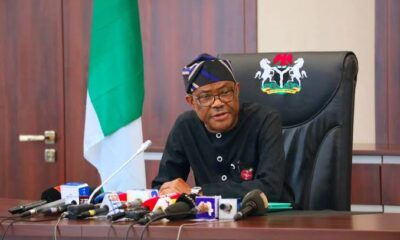

Wike Question Atiku, Obi, Contributions to Rivers State
ShareBy Laide Akinboade Abuja Minister of the Federal Capital Territory, Nyesom Wike, has challenged former Vice-President Atiku Abubakar and former...