
Uncategorized


Post Recapitulation: NAICOM Holds First Quarterly Staff Meeting
By Tony Obiechina, Abuja
The Commissioner for Insurance, Olusegun Ayo Omosehin, at the weekend presided over the Quarterly Staff General Meeting of the National Insurance Commission (NAICOM), the first such gathering since the successful conclusion of the insurance industry’s recapitalization exercise.
The meeting brought together management and staff to review the achievements recorded during the recapitalization programme and to align on the Commission’s strategic direction for the period ahead.
Participants also used the occasion to discuss issues bordering on staff welfare, institutional effectiveness, and the overall growth of the organization.
In their deliberations, the Commission reaffirmed its commitment to stronger regulation and supervision of the insurance sector, continuous capacity building for staff, and sustained operational excellence.
NAICOM said in a statement on Saturday that the resolutions reached at the meeting would help drive the emergence of a more resilient, competitive, and trusted insurance industry in the country.
By Tochukwu Jimo Obi
Sixty six years after independence, Nigeria should be asking itself a question that can no longer be postponed: what exactly has become of the great promise of our nation? A country blessed with enormous human and natural resources should not, at this stage of its journey, still be struggling with problems that ought to have become distant memories.
As we mark 66 years of independence, this should be more than another occasion for colourful ceremonies, patriotic speeches and celebrations. It is a time for sober reflection as a people, to examine where we are, where we ought to be and, most importantly, how best to move Nigeria forward.Undoubtedly, Nigeria is not where it used to be. There have been significant developments in different sectors of the economy and society, and successive administrations have introduced policies and programmes aimed at addressing the country’s challenges. However, we must also acknowledge that we are certainly not where we ought to be, considering the enormous human and natural resources available to us. A nation blessed with abundant natural resources, a large youthful population and considerable human capital should be able to provide a higher standard of living for its citizens.
At 66, Nigeria should have no reason to still be battling with inadequate power supply, dilapidated roads, massive unemployment and widespread hunger. These are challenges that have persisted for decades, despite the huge resources committed to addressing them. While some of our past and present leaders may have done, or may still be doing, their best, the reality remains that their efforts alone have not been enough to solve the numerous problems bedevilling the nation. What Nigeria requires is sustained commitment, effective institutions, accountability and policies that go beyond individual administrations.
Corruption and insecurity also continue to pose serious challenges to national development. Resources that should be channelled towards infrastructure, education, healthcare, job creation and other essential services can be undermined by corruption and poor accountability. Similarly, insecurity discourages investment, disrupts economic activities and threatens the lives and livelihoods of citizens. We cannot continue like this as a nation. There must be a collective determination to strengthen institutions, uphold the rule of law and confront the factors that continue to undermine national development.
Unfortunately, the people themselves appear to have become accustomed to many of these perennial problems. This has contributed to a situation where some citizens fail to demand accountability from leaders or make effective use of their democratic power during elections. Democracy gives citizens the opportunity to choose their representatives and to replace those whose performance does not meet their expectations. Elections should therefore be about competence, integrity, policies and the ability to serve the public interest, rather than personal loyalty or temporary benefits.
Sycophancy has also become increasingly visible in our political space. Some people praise leaders excessively for personal gain, defend actions they would ordinarily condemn and, in some cases, sell their votes during elections, only to complain about bad leadership afterwards. Citizens must understand that leadership and followership are interconnected. When voters trade their electoral power for immediate personal benefits, they may be contributing to a system that makes it more difficult to demand responsible governance later. The ballot should be treated as an important instrument for shaping the future of the country.
As Nigeria marks this 66th anniversary, our leaders at all levels must put the interest of the nation at the centre of their decisions and actions. Religious, political and ethnic considerations should not be allowed to take precedence over the collective interest of Nigeria. Diversity should be a source of strength rather than a reason for division. Those entrusted with public office must remember that political positions are temporary, while the consequences of decisions taken in office can affect generations yet unborn.
The people also have an important role to play in moving Nigeria forward. Citizens must obey the law, reject corruption, participate responsibly in elections, demand accountability and contribute positively to their communities. Professionals must give their best in their respective fields, young people must be encouraged to pursue productive opportunities, and the private sector must continue to contribute to economic development. Nation building cannot be left entirely to government. Every Nigerian has a responsibility to contribute to the Nigeria we desire.
At 66, the question, therefore, is not simply which way Nigeria, but what kind of Nigeria do we want to leave for the next generation? The answer lies in our collective willingness to change the things that have held us back, strengthen the institutions that sustain democracy and development, and place national interest above personal, political, religious and ethnic considerations. Nigeria has the resources, talent and potential to achieve greatness. What is required is the collective will to translate that potential into reality. As we celebrate 66 years of independence, let us renew our commitment to building a peaceful, prosperous and united nation. Nigeria shall be great again.
Tochukwu Jimo Obi, Obosi Anambra state.
By Tambaya Julius, Abuja
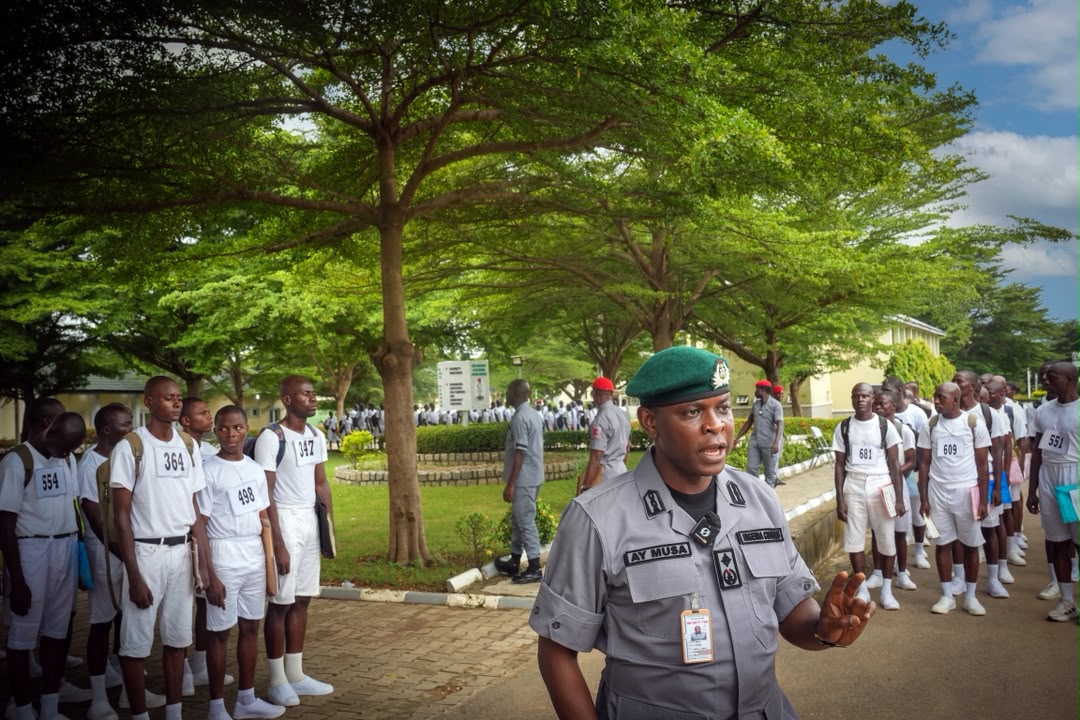
The Nigeria Customs Service (NCS) has concluded the final phase of its 2025 recruitment exercise, with nearly 3,000 shortlisted candidates undergoing screening in an exercise the Service said recorded improved coordination and efficiency.
The two-week exercise, held at the Training and Doctrine Command (TRADOC), Gwagwalada, Abuja, commenced on September 7 and ended on September 19, 2026.
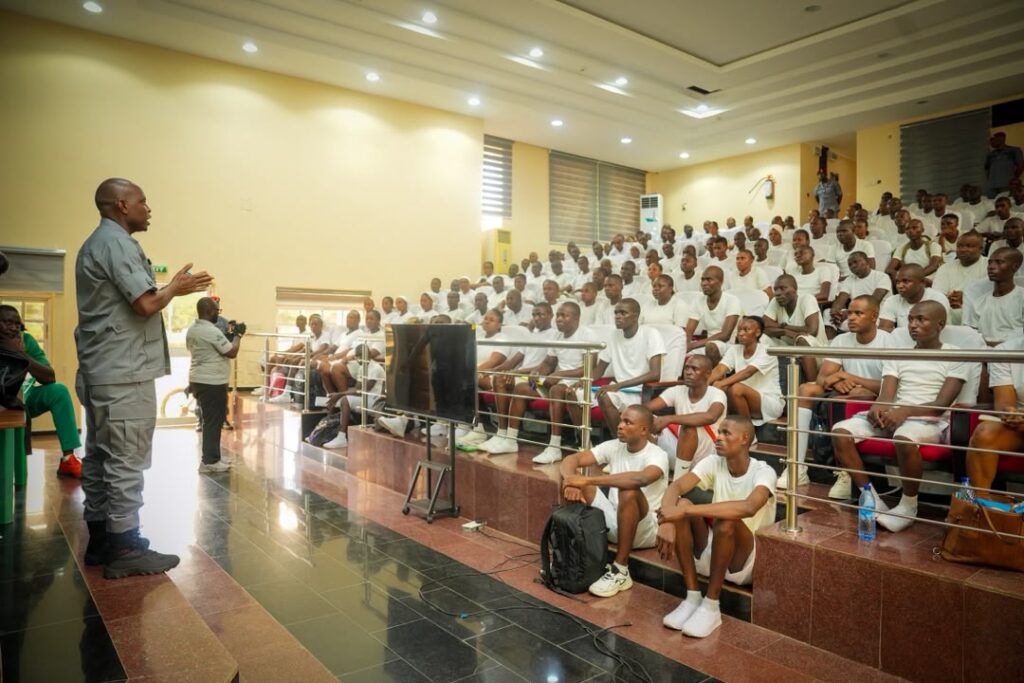
Candidates shortlisted for the Assistant Superintendent of Customs II (ASCII), Inspectorate and Customs Assistant cadres underwent documentation, physical fitness assessments and medical screening as part of the final stages of the recruitment process.
The exercise was conducted in batches, a measure introduced by the Service to reduce congestion and ensure smoother movement of candidates through the various screening points.
Speaking on the exercise, the Assistant Comptroller-General of Customs in charge of Human Resource Development, Frank Onyeka, said the Service had addressed challenges identified during the earlier phase of the recruitment process.
According to him, measures were introduced to improve coordination and reduce congestion at the screening centres.
“We have put measures in place to reduce congestion and ensure a smoother process this week. The gaps identified last week have been addressed, and we do not expect them to recur this week,” Onyeka said.
He urged candidates to remain disciplined and comply with the procedures established for the exercise.
The Service also introduced personalised screening forms as part of efforts to strengthen verification and minimise discrepancies in candidates’ records.
The Deputy Comptroller of Customs and member of the recruitment coordinating team, Adamu Musa, said each shortlisted candidate was provided with a form containing personal information and details required for the various stages of the screening.
He said the approach represented a departure from the previous system in which candidates received forms at the screening venue.
“Any candidate that has been shortlisted has a form designed especially for him, unlike in the past where you come, they issue you a form, and then some people along the way go and even change some of the records,” Musa explained.
According to him, the forms contained candidates’ names and other details covering sports, medical assessment, documentation and related requirements.
“So, once the candidate comes, you just verify what you already have from the system,” he added.
Musa said the new arrangement had made it easier for officials to authenticate candidates’ information while reducing opportunities for alterations and discrepancies.
The recruitment team also assessed candidates against established requirements, including age, physical fitness and drug screening.
Musa disclosed that candidates who test positive for hard drugs, exceed the stipulated age requirement or are found to have physical conditions that could affect their ability to perform their duties may be disqualified, subject to the final decision of the Service’s management.
He also stressed the importance of continuous recruitment and manpower development, noting that the expanding responsibilities of the Customs Service require personnel capable of responding to emerging challenges.
According to him, a well-trained workforce remains important to the Service’s responsibilities in national security, border protection, revenue collection and trade facilitation.
The Service also warned candidates and members of the public against relying on unverified information about the recruitment exercise.
Musa urged applicants to obtain recruitment updates only through the official communication channels of the Nigeria Customs Service, including its official website and verified social media platforms.
He warned that fraudsters could exploit the recruitment process by circulating fake announcements, misleading applicants or making unauthorised demands.
The warning comes as the Service moves towards the next stages of the recruitment process following the completion of the final screening exercise.
With the introduction of personalised forms, batch screening and tighter verification procedures, the NCS said it had strengthened the process to improve efficiency, reduce congestion and protect the integrity of the recruitment exercise.
By Prince Charles Dickson
Two of my dogs fought with a bitterness I had never seen. The older one carried himself as though the title deed to the yard was hidden beneath his paws. He knew every corner and had always enjoyed the younger dog’s deference.
Then a female dog entered the equation, and instinct overruled history.This was no ceremonial barking for the neighbours.
Teeth found flesh; dust rose. Each separation merely postponed the next assault. By the fourth day, the older dog was badly injured and close to death. The younger stood over him like a claimant who had discovered that age was not invincibility, then walked away as though succession had been settled.Then came the detail that changed the story: the younger dog was the older dog’s son. Once, he would not have imagined confronting his father, much less doing so with such confidence.
Nigeria is now standing inside that compound.
The female dog in this metaphor is not womanhood; she is politics and governance; the Nigerian state: desired, possessed, fought over, but rarely nurtured. The older dog represents a political breed that mistakes long residence for permanent ownership. The younger dog is the coming generation: impatient, digitally armed and unconvinced that fatherhood confers an eternal right to the yard. This is a warning, not a prescription; but when an old order refuses an orderly handover, succession often arrives with teeth.
My friend, Professor Chris Kwaja, recently put his finger on this future. Nigeria’s Gen Z—usually defined as those born between 1997 and 2012—is not a demographic footnote but a nation within the nation. Estimates vary by dataset, but we are speaking of tens of millions in a country whose 2025 population the United Nations Population Fund placed at 237.5 million. The arithmetic is patient but merciless.
The minimum constitutional age for the presidency is 35. The cohort’s oldest members are 29 in 2026; by 2035, they will be 38 and eligible. A Gen Z Nigerian may not become President that year, but one will eventually sit in Aso Rock. The question is: what kind of President will Nigeria produce?
This generation carries Nigeria in its pocket. It learns across borders, earns across currencies, compares governments in real time and records brutality before authority can issue a denial. It has far more in its locker than caricature admits—intellect, guts, innovation and creative audacity—and does not wait for the emir, bishop, party chairman or television editor to grant permission to speak.
The 2020 #EndSARS uprising showed the possibilities. Young Nigerians mobilised crowds, raised funds, coordinated welfare and legal aid, and seized narrative power from old gatekeepers. Yet assessments of its successes and limitations suggest that leaderlessness was both armour and ceiling: it resisted co-option but complicated negotiation and continuity. A hashtag can open a gate; it cannot write a budget. Virality is not organisation, followers are not delegates, and power does not resign because a meme embarrassed it.
This is where the current argument about an “Olodo uprising” requires more light than heat. Olodo, in popular Yoruba usage, is the dunce. The phrase captures anxiety that digital Nigeria rewards noise above knowledge, spectacle above substance and confidence above competence. The anxiety is not foolish. When a teacher cannot pay rent while profitable nonsense buys another SUV, society has published a curriculum without calling it one. If ignorance attracts money and fame while learning attracts unemployment, why feign surprise at the lesson being learnt?
But using the most visible absurdities online to define a generation is a false dawn of analysis. A ring light is not a census instrument. The algorithm magnifies whatever arrests attention; it does not mirror a generation’s mind. Five viral jesters can obscure thousands of young Nigerians writing code, building payment systems, creating films, conducting research, farming with data and solving problems the state has abandoned.
The “Olodo uprising” is not an age group; it is an incentive system with grey-haired patrons, corporate sponsors, educated audiences and institutions that have spent decades humiliating learning. Before TikTok, public officers commissioned uncompleted projects with brass bands and long grammar. The young did not invent anti-intellectualism; they merely gave some of it better lighting and faster internet.
The Yoruba say, Àgbà kì í wà lọ́jà, kí orí ọmọ tuntun wọ́—an elder cannot be in the marketplace while a newborn’s head remains crooked. If society’s head is bent, elders cannot shout “Olodo!” like innocent passers-by. Another warning says, Ọmọ tí a kò kọ́ ni yóò gbé ilé tí a kọ́ tà—the child we fail to build will sell the house we built. Nigeria erected monuments while neglecting schools, values, civic capacity and hope. Now it fears the auctioneer it raised.
Still, Gen Z must not mistake demographic power for moral superiority. Youth is not an ideology. A young thief remains a thief, even in livestreamed 4K. Nigeria can replace grey hair without replacing grey habits. Ethnic merchants will open TikTok shops; godfathers will recruit digital godsons. A Gen Z President could be innovative and accountable—or an old politician in sneakers, fluent in emojis and authoritarianism.
To reset Nigeria, this generation must convert attention into organisation, outrage into policy, and population into electoral power. It must enter wards, parties, councils, unions and communities; it must learn budgets, federalism, security, history and compromise. The Igbo say, Nwata kwọcha aka, ọ soro ndị okenye rie nri—when a child washes his hands, he may eat with the elders. Yet the elders must stop moving the table behind nomination fees, rigged primaries and patronage.
Nor are young Nigerians as post-ethnic or post-religious as romantic commentary suggests. They are less deferential, but algorithms manufacture digital tribes efficiently. The phone that exposes corruption can distribute a lie; the platform that mobilises justice can organise a mob. Digital nativity is power, not wisdom. Innovation without ethics can merely optimise corruption.
The Hausa offer an audacious proverb, Kowa ya raina tsayuwar wata, ya hau ya gyara—whoever dislikes the moon’s position should climb and straighten it. Gen Z has long mocked Nigeria’s crooked moon. Soon, it must climb. Then it will discover that the presidency is not a content house, the budget is not a caption and insecurity cannot be defeated with a clapback. Its President must govern X Spaces and village squares, data dashboards and dusty farm paths, including millions the algorithm never sees.
Meanwhile, the remaining Mohicans of the old political order are transitioning, one after another, from centre stage into memoir, memory and history. Their wisest choice is to build bridges, not barricades; to mentor without annexing; to surrender space without demanding that the future first kneel. As the Igbo say, Egbe bere, ugo bere—let the kite perch and let the eagle perch. Generational renewal need not be warfare, but coexistence becomes impossible when one bird claims the whole tree.
The older dog in my compound survived, but survival humbled him. The younger dog also learnt that victory can leave blood on everybody. The object of their contest simply moved on, indifferent to their wounds. Nigeria must not become that bleeding compound.
A Gen Z will soon be President of Nigeria. That is not prophecy; it is arithmetic. Whether that presidency becomes renewal or merely youthful packaging for an ancient failure depends on what we teach, reward and build now. The younger Turks are already inside the compound. The old breed should hear their footsteps—not with panic, but with the wisdom to prepare a handover before succession again arrives with teeth.
May Nigeria win.


ASUSS Opposes NUT Strike in FCT, Urges Teachers to Ignore Stay-at-home Directive
ShareBy Laide Akinboade, Abuja The Academic Staff Union of Secondary Schools (ASUSS), Federal Capital Territory (FCT) Chapter, has dissociated itself...
Edo Varsity Lecturer Dies after Sex Romp in Hotel
ShareA senior lecturer at the Ambrose Alli University, Ekpoma in Edo State, Dr. Matthew Uwuigbe, has died under mysterious circumstances...

Over 84 Per Cent Nigerians willing to Vote During 2027 Elections – Yiaga
ShareYiaga Africa said 84 per cent of Nigerians intend to vote during the 2027 general elections, urging political parties to...

PNC 2026: NCDMB, DMG Affirm Collaboration with Bayelsa, Unveil New Activities
ShareFrom Mike Tayese, Yenagoa As preparations intensify for the 2026 edition of the Practical Nigerian Content (PNC) Forum, slated for...

Tinubu’s $700 Billion Mineral Resources Deal With America at Whose Interest?
ShareBy Hajia Hadiza Mohammed For some time now the hottest issue of debate in the Nigeria media space has been...

Atiku’s Production Subsidy: Has politics overtaken economics?
ShareBy Kayode Oladele Alhaji Atiku Abubakar, former Vice President of Nigeria and presidential candidate of the African Democratic Congress, (ADC),...

2027: Governors’ Backing Boosts Tinubu’s Chances, says Presidency
ShareBy Tambaya Julius, Abuja The Presidency has said the growing number of governors backing President Bola Tinubu has strengthened his...
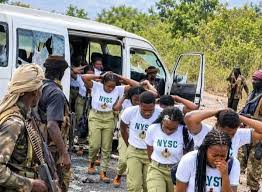

Security Operatives Rescue 20 Abducted NYSC Members in Imo
ShareBy Tambaya Julius, Abuja Security operatives have rescued 20 members of the National Youth Service Corps (NYSC) who were abducted...

Nigeria’s Oil Reforms will Unlock $50bn Deep Offshore Investments – Tinubu
SharePresident Bola Tinubu said recent reforms in Nigeria’s oil and gas sector are designed to unlock up to 50 billion...
Ododo Condoles Families of NAF Personnel, Armed Forces Over Ondo Crash
ShareFrom Joseph Amedu, Lokoja Kogi State Governor, Ahmed Ododo has commiserated with the families of the Nigerian Air Force personnel...