
BUSINESS
Buhari Commends CBN for Introducing Anchor Borrowers Programme

…ABP has Supported Over 4.8m Farmers
By Tony Obiechina, Abuja
The Anchor Borrowers Programme (ABP) has so far supported over 4.8 million small scale farmers across Nigeria for the production of 23 agricultural commodities including maize, rice, oil palm, cocoa, cotton, cassava, tomato and livestock since the programme was introduced by the Central Bank of Nigeria (CBN) six years ago.
President Muhammadu Buhari made the disclosure while unveiling the FCT Mega Rice Pyramids at the International Trade Fair Complex in Abuja on Tuesday.
Each of the 13 Pyramids has one million bags of rice.He said, “today rice production in Nigeria has increased to over 7.5 Million Metric tons annually. Prior to the introduction of ABP, the average production in Nigeria between 1999 to 2015 was less than 4 metric tons annually”. Each of the 13 Pyramids has one million bags of rice.
The president explained that “the bags of paddy will be moving straight from here to rice milling plants across Nigeria, which lead to the release of processed rice to the markets by the rice millers. The measure will aid our efforts at reducing the price of rice in Nigeria”.
He pointed out that before his administration launched the ABP, there were only 15 standard Rice mills in Nigeria, adding that “as at today, we have over 50 Standard and integrated Rice mills creating jobs and reducing unemployment”.
“We expect additional significant output when two new mills are started in Lagos and Katsina. I am also aware that because of the large margins in this business, more people are showing interest in investing in our agribusiness”, he added.
The President who commended the CBN for the initiative said the ABP is no doubt a testament to the fact that the Anchor Borrowers’ Programme is working.
“Indeed, these sky-high pyramids for which we are gathered here to commission are part of our commitment at achieving national food security and economic diversification through home-grown policies targeted at securing food for all Nigerians.
“As a critical policy of the government, the Anchor Borrowers’ Programme is expected to catalyse the agricultural productive base of the nation, which is a major part of our economic plan to uplift the economy, create jobs, reduce reliance on imported food and industrial raw materials, and conserve foreign exchange.
“In the implementation of the Programme, adoption of high-yielding seedlings, quality inputs and best farming practices were essential features. For instance, the improved rice seedlings have helped to ensure our achievement of rice sufficiency, as they are disease-resistant and have an average yield of about 5 metric tonnes per hectare, compared with the traditional national average of 1.5 metric tonnes. This has resulted in bridging our rice consumption gap, a significant reduction in rice imports, and saved us foreign exchange.
“The commissioning of these rice pyramids today, is an indication that our country is making steady and assured progress towards self-sufficiency in food production, and it is my desired hope and expectation that other agricultural commodity associations that are yet to participate under the Anchor Borrowers’ Programme will emulate the Rice Farmers Association of Nigeria in supporting our administration’s drive for food self-sufficiency.
” I would like to seize this opportunity to commend the Central Bank of Nigeria for its recent efforts at resuscitating the Nigerian Commodity Exchange following my approval to do so. This has been done, in the hope that our farmers can have ready buyers of their produce, thereby resolving the current logistical challenge of moving their produce from farm to markets.
“Let me also commend the Governor and staff of the Central Bank of Nigeria, as well as the leadership of the Rice Farmers Association of Nigeria for the successful delivery of these pyramids, which hopefully is just the first of many that will be unveiled this year across Nigeria”, the President said.
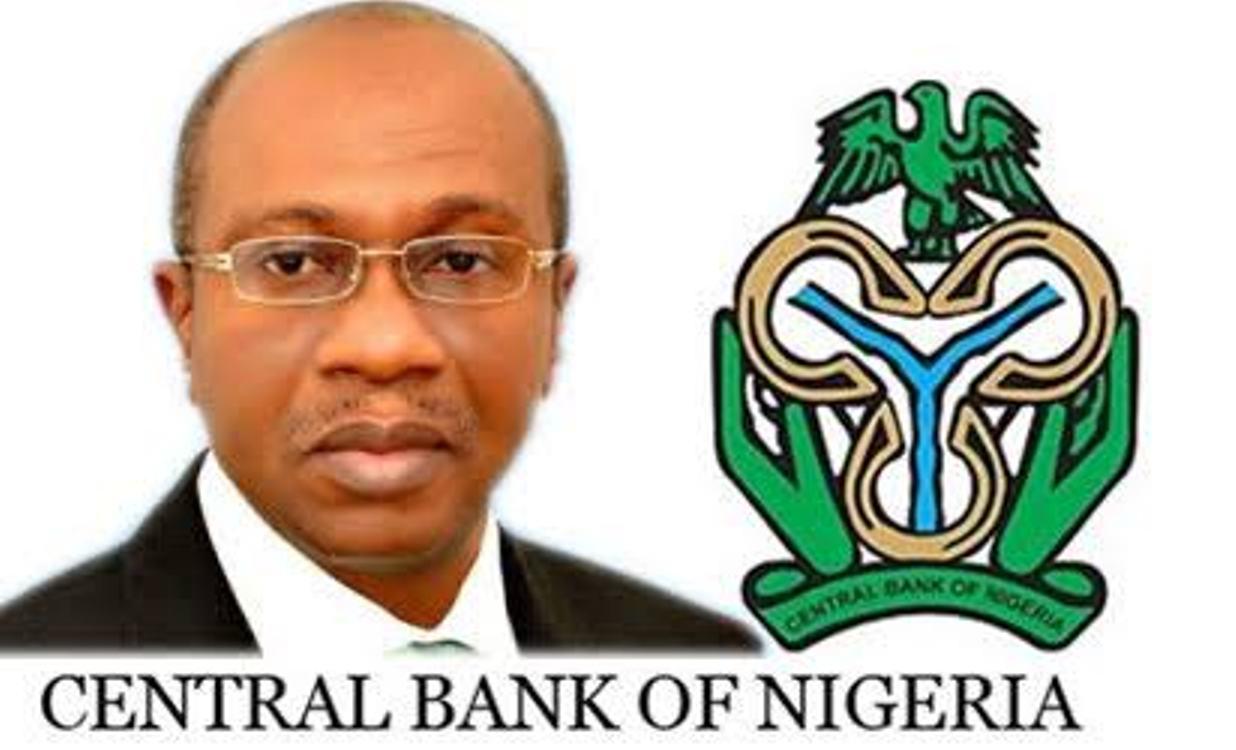
In his remarks, the CBN Governor, Mr Godwin Emefiele said The Anchor Borrowers’ Programme has catalyzed the rural economy and has built a sustainable framework for financing small holder farmers in Nigeria.
The Governor, Central Bank of Nigeria said that with Nigeria producing about nine million metric tons of rice as of the end of 2021, the country has now become the highest producer of rice in Africa.
He said the Anchor Borrowers’ Programme has catalyzed the rural economy and has built a sustainable framework for financing small holder farmers in Nigeria.
The apex bank governor added that the expansion in the production of rice has not only made Nigeria the largest rice producer in Africa, but has also unlocked enormous private sector investment in the rice value chain.
Specifically, Emefiele said that the number of Integrated Rice Mills has grown astronomically from six in 2015 to over 50 in 2021 with many more in various stages of completion.
The programme, according to him, has developed an ecosystem among all nodes of the agricultural value chain, adding that these linkages can be better optimized through synergy among all stakeholders.
The CBN Governor said that as at the end of December 2021, the apex bank has financed 4,489,786 farmers that cultivated 5,300,411 hectares across 21 commodities through 23 Participating Financial Institutions in the 36 States of the Federation and the FCT.
He said, “We are delighted that these efforts have yielded fruits in not just increasing the availability of rice, but also in moderating prices, reducing imports and increasing job creation in the country.
“For example, Thailand alone exported 1.3 million metric tons of rice to Nigeria in 2014. The ABP was launched in 2015 to curtail these imports, and since then, we have seen incremental reductions in rice imports from Thailand.
“By 2016, rice imports from Thailand had fallen to only 58,000 metric tons. As of the end of 2021, they only exported 2,160 metric tons to Nigeria, thereby saving us foreign exchange and helping preserve jobs in Nigeria.
“Beyond increasing our national output from about 5.4 million metric tons in 2015 to over 9 million metric tons in 2021, we have also significantly improved the productivity per hectare of the smallholder farmer from about 2.4 metric tons per ha in 2015 to between about 5 metric tons per ha in 2021.
“These expansions have not only made Nigeria the largest rice producer in Africa, but has also unlocked enormous private sector investment in the rice value chain as the number of Integrated Rice Mills grew astronomically from 6 in 2015 to over 50 in 2021 with many more in various stages of completion.”
He explained that currently, Nigeria’s milled rice can compete effectively with the foreign rice in quality.
He added, “Our experience over the years has been transformed to operational efficiency of the Programme. We have added several layers of controls to improve on transparency and accountability among all stakeholders and what you are witnessing today is a demonstration of our growth and a strong indication of the enormous potential in the Country’s agricultural space.
“It is important to note that this is still a far cry from the desired goal. However, the growth processes reaffirm our belief in the potential inherent in our agricultural space and we can hopefully harness them to lead the diversification agenda of the economy.”
The CBN Governor said the mega pyramids being launched today represents aggregated paddy rice submitted as repayment of loans by RIFAN farmers under the 2020 dry season and 2021 wet seasons.
Beyond the event, he said the ABP also symbolizes the efforts made by farmers to commit to loan repayment through produce submission and ultimately ensure the sustainability of the Programme.
To further create value and transfer these gains along the value chain, he explained further that the bank has mapped millers to off-take these paddies, noting that that the CBN will track the release of their outputs to the market so as to manage inflation and grow the rice value chain in Nigeria
“The Programme has developed an ecosystem among all nodes of the agricultural value chain and these linkages can be better optimized through synergy among all stakeholders”, he added.

The Federal Government has called for a stronger agricultural value chains, increased agro-industrialisation and improved market access to boost food security in Nigeria.
The Permanent Secretary, Federal Ministry of Agriculture and Food Security, Dr.
Marcus Ogunbiyi, made the call on Monday in Enugu during the Technical Session of the National Council on Agriculture and Food Security.The theme of the event is “Enhancing Agricultural Value Chains, Agro-Industrialization and Market Access for Economic Growth.”
Ogunbiyi, who doubled as the Chairman of the Technical Session, said that the country must move beyond subsistence farming and embrace a commercially driven agricultural system capable of supporting industries, improving farmers’ incomes and expanding export opportunities.
“Our task goes beyond increasing the volume of food produced.
“We must build an agricultural economy that creates wealth, supports industries, generates decent employment, expands exports, improves rural livelihoods and contributes meaningfully to national economic growth,” he said.
The Permanent Secretary identified inadequate storage and processing facilities, limited access to finance, poor logistics and weak links between farmers and processors as major challenges affecting the competitiveness of agricultural products.
He called for increased investment in agro-processing facilities, rural roads, irrigation, electricity, cold-chain infrastructure and modern technologies to reduce post-harvest losses and promote local value addition.
“Agro-industrialisation is central to the transformation we seek to achieve. It provides the bridge between agriculture and industry.
“It also enables agricultural production to serve as a reliable source of raw materials for manufacturing and other productive sectors of the economy.
“The value of this Council will ultimately be determined by the quality of its resolutions and the extent to which those resolutions are implemented,” Ogunbiyi stated.
He also urged state governments to identify priority commodities, establish clear production and processing targets, attract private-sector investment and strengthen partnerships with research institutions and development partners.
In his remarks, the Enugu State Commissioner for Agriculture and Agro-industrialisation, Patrick Uburu, said that the state government was committed to agro-industrialisation to boost farmers’ income, create jobs and generate wealth.
Uburu, who described the technical sessions as a platform for translating policies into practical solutions, urged delegates to prioritise farmers and agribusiness operators in their deliberations.
He emphasised the need for stronger collaboration among state governments, federal agencies and development partners to address food security challenges, noting that recommendations from the meeting should be measurable and implementable.
The commissioner called for practical policies and investments that would improve farmers’ productivity and expand market access for agricultural produce.
Technical Lead Policy Advisory, GIZ ECOWAS & Nigeria, Dr Abiodun Ihebuzor, advocated for stronger partnerships and increased investment in agricultural value chains to reduce post-harvest losses and improve food security in Nigeria.
Ihebuzor noted that previous engagements at the 46th Council in Calabar and the 47th Council in Kaduna had provided opportunities to advance agricultural development.
He expressed optimism that the current meeting would strengthen collaboration among government institutions, development partners and private-sector operators.
According to him, healthy soils, efficient markets and improved storage systems were essential to sustainable food security.
On her part, Geraldine Onu, Deputy Director, Administration and Supply, Enugu State Ministry of Agriculture and Agro-Industrialisation, disclosed that the State Government had intensified efforts to transform agriculture from subsistence farming to commercial and mechanical farming as part of its economic development agenda.
She noted that investments in irrigation, storage, processing and agricultural infrastructure were aimed at increasing production, attracting private investment, reducing post-harvest losses and improving farmers’ livelihoods.
“In Enugu State, under the visionary leadership of Gov. Peter Mbah, agriculture occupies a strategic position in the state’s economic transformation agenda.
“The initiatives include the 300,000-hectare agricultural land bank, the development of Smart Farm Estates across the 17 Local Government Areas, the 260 Farm Estate Programme and the establishment of a tractor assembly plant,” Onu added.(NAN)

A graduate of the University of Maiduguri, Shianya Ebwaseh, said the Nigerian Education Loan Fund (NELFUND) helped improve her Grade Point Average (GPA) to 3.50 through financial support that enabled her to concentrate on her studies.
Ebwaseh, who graduated from the Department of Zoology, Faculty of Life Sciences, said this in an interview on Monday in Maiduguri.
She said financial difficulties had previously affected her academic performance, as she struggled to meet her daily needs while pursuing her degree.
The graduate said she resorted to selling fried chips and groundnuts on campus to support herself, sometimes missing lectures because of the time and energy required to run the business.
According to her, the introduction of NELFUND’s student loan scheme relieved her financial burden through tuition support and a monthly N20,000 upkeep allowance.
“Before NELFUND, I struggled with my GPA because of financial challenges. I sometimes missed lectures after spending hours frying and packaging chips for sale.
“But when NELFUND came, I stopped the business and concentrated on my studies. My GPA improved to 3.50, which is Second Class Upper,” she said.
Ebwaseh said the financial support also enabled her to attend lectures regularly, purchase learning materials and prepare adequately for tests and examinations without constant worries about money.
She added that her examination scores improved significantly after she began receiving the support, attributing the change to increased concentration and financial stability.
The graduate, who said she accessed the scheme in her third year, described the application process as simple and encouraged other eligible students to apply.
She also said the programme had helped financially disadvantaged students remain in school, particularly those whose parents could not afford tuition fees and upkeep.
Ebwaseh appealed to the Federal Government to sustain the initiative, emphasising that withdrawing the support could expose many students to financial difficulties and possible dropout.
She said the scheme had given beneficiaries an opportunity to pursue their academic ambitions with fewer financial distractions.(NAN)
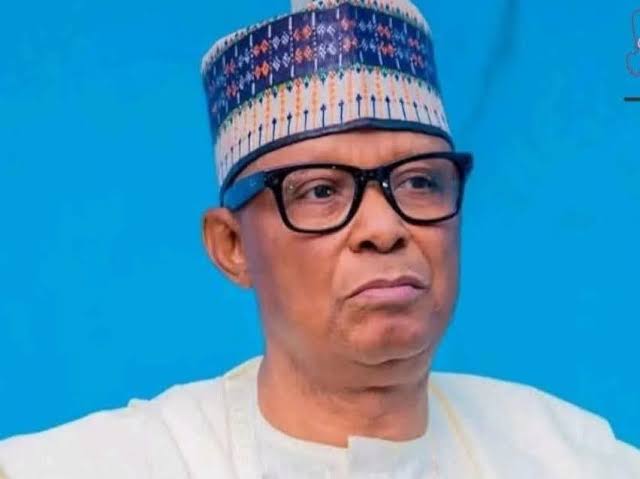
The Minister of Housing and Urban Development, Dr Muttaqha Darma, has called for synergy among government agencies in the housing sector to improve coordination and accelerate housing delivery.
Darma made the call in Abuja on Monday at the stakeholders’ conference on the proposed National Real Estate Regulatory Authority (NRERA).
The conference, themed “One vision, One Ecosystem, One National Housing and Real Estate Plan”, was organised by the Office of the Speaker, House of Representatives, and the House Committee on Housing and Habitat.
The minister said the lack of coordination among government agencies had affected the effective delivery of houses to Nigerians, noting that institutions in the sector operated independently.
“The players within the industry, all of us, operate in silos.
“Federal Housing Authority (FHA) does not even know what the Federal Mortgage Bank of Nigeria (FMBN) is doing. FMBN does not know what the Ministry of Finance Incorporated (MOFI) is doing,” he said.
According to him, the various institutions must work together towards a common goal rather than operate independently.
“Our target is to build houses for Nigerians. We are wasting our time because if we fail, it is us who fail, not the President,” he said.
The minister expressed support for the establishment of NRERA, saying the proposed authority would address the regulatory gaps in the real estate sector.
He said the ministry had reviewed the proposed legislation and recognised its potential to improve the sector.
Darma also disclosed that abandoned housing projects funded by the Federal Mortgage Bank of Nigeria (FMBN) across the country were worth about N38 billion.
He said a survey conducted by the ministry revealed abandoned FMBN-funded housing developments in every state of the federation, including the Federal Capital Territory.
“We realised about N38 billion of contributors’ money, your own money, all the Nigerian workers’ money. N38 billion is wasted,” he said.
He said that the poor management of workers’ contributions could discourage Nigerians from contributing to the National Housing Fund.
The minister urged the committee handling the proposed legislation to ensure that state governments were included in the regulatory framework.
He also called for safeguards to protect homebuyers, tenants, developers and mortgage lenders, including mandatory escrow accounts for buyers and standardised tenancy agreements.
The Managing Director and Chief Executive Officer of the Ministry of Finance Incorporated (MOFI), Dr Armstrong Takang, said effective regulation was necessary to restore investor confidence in Nigeria’s real estate sector.
Takang said the sector contributed 12.71 per cent to Nigeria’s Gross Domestic Product (GDP) as of June 2026, but remained largely unregulated.
He said the absence of a national licensing system had allowed unqualified individuals to operate as estate agents and developers without adequate accountability.
“Anyone can sell land, anyone can collect off-plan payments, run into tens of billions and get away with it. There are very few countries in the world where these are allowed,” he said.
He called for mandatory licensing of real estate operators and the protection of buyers’ funds through designated project accounts.
“An operator must be licensed with the authorities. No one should be operating in the real estate sector without a licence, no matter which part of the value chain they are involved in,” he said.
He added that buyers’ funds should be kept in protected project accounts and released to developers based on evidence of progress on construction.
Takang said effective regulation would attract domestic and foreign investment, protect citizens and support the Federal Government’s one-trillion-dollar economy target.
He urged the National Assembly to ensure the passage of the proposed legislation, describing it as critical to bringing order and transparency to the real estate sector.




2027: Tompolo Deploys 50 Vehicles in Enugu, Cross River for Tinubu’s Re-election
ShareGrand Patron of the PBAT Door-to-Door Movement, High Chief Oweizidei Government Ekpemupolo, has donated 50 vehicles for President Bola Tinubu’s...


Customs Generates N1.4tn Revenue in Two Months
ShareBy Julius Tambaya, Abuja The Nigeria Customs Service (NCS) generated a total of N1.419 trillion in revenue between September and...

Tegbe Assures Nigerians of Swift Restoration of Power Supply
ShareThe Minister of Power, Joseph Tegbe, has assured Nigerians experiencing reduced electricity supply in parts of the country of a...


WAHO Leads Drive to Harmonise Subspecialty Training Across ECOWAS
ShareBy David Torough, Abuja Accredited health professional colleges, training institutions and regulatory bodies across the Economic Community of West African...


Bishop Oyedepo Re-affirms strong support for Pastor Ibiyeomie, Pastor Komaiya’s Ministry
ShareBy David Torough, Abuja The Founder and Presiding Bishop of Living Faith Church Worldwide, Bishop David Oyedepo, has reaffirm strong...


West Africa: How WAHO Successfully Harmonized Procedure Manuals for Health Disciplines and Professions
ShareBy David Torough After three days of serious brain-storming sessions in Abuja, the West African Health Organization (WAHO), has successfully...


2027: CAN Seeks Return of Sacked Traditional Rulers in Kaduna
ShareFrom Shabanyan Kantiok, Kaduna The Christian Association of Nigeria in Chikun Local Government Area of Kaduna State has urged Christian...


OPay Opens New Kano Office, Strengthens Commitment to Nigeria’s Financial Inclusion
ShareOPay, Nigeria’s leading digital bank, has opened a new office in Kano State, strengthening its presence in Nigeria and bringing...


Rigging Years Before Elections: Why Tinubu, Parliament Favours Staggered Balloting
Share Silhouette of Donald Andoor e‐mail; doandoor@gmail.com There is a growing need for Nigerians to look beyond the ballot box and...

Akpabio Congratulates Nigeria’s Golden Girls, Flamingos
ShareThe President of the Senate, Godswill Akpabio has sent a hearty congratulations to the Nigerian Under-17 Women’s National Team on...