
BUSINESS
SEC Working to Improve Capital Market – Yuguda

By Tony Obiechina, Abuja
The securities and Exchange Commission has reaffirmed it’s committement to making the capital market attractive to Nigerians of all ages and status.
Director General of the SEC, Mr.
Lamido Yuguda stated this during a meeting with a team lead by the British Deputy High Commissioner in Abuja on Friday.Yuguda said the Commission is implementing various initiatives to ensure that products and offerings in the market are accessible to both the young and old which he said would further deepen the market.
According to him, “When we assumed office, we were shocked to know that the average age of the Central Securities Clearing System account holder was over 50 years.
The CSCS is a depository so if you are investing in equities you must have a CSCS account.“The average age of that account holder was over 50, and that made us realise that the young people were not participating in this market and when young people are not participating in any market, that market is doomed to fail. And young people today prefer to do things on their phones, if you have to fill a stack of forms manually young people won’t do it. We want to make investing in the capital market a fun experience.
“The capital market experience starts with a bank account and eventually the distribution has to hit a bank account as well. So we decided to look at the whole process and find out what is turning young people off. We have started the process and seen how the tech companies are providing much needed relief to the kind of bureaucracy that happens in the capital market.
Yuguda disclosed that the SEC recently approved an e-offer for MTN and expressed the excitement of the Commission that Nigerians especially those of the younger age bracket were able to participate in the offer.
According to him “It was marvellously successful and we are very excited about it. A lot of young people who had never invested in the capital market took the MTN offer. That is one of the first step in a lot of steps we are going to take to make investing in the capital market a much nicer experience for people both young and old. We know we can move quickly and faster once we strengthen our IT infrastructure to do a lot more” He said.
“In this market what we have seen is that where people do have ready access to interesting products in the regulated market they then gravitate towards the parallel markets and the Ponzi schemes and really the task of the Commission is to as much as possible move money to the regulated market away from the Ponzi schemes”.
He stated that with e-offers, a lot of Nigerians would be happy to invest in the capital market and that would dissuade people from patronising illegal schemes thereby leading to the development of the capital market and the Nigerian economy.
Yuguda also stated that the Commission in its drive to attract more people to the market is focusing on a proper identity management system which would also aid in the reduction of the issue of unclaimed dividends.
“One area we recognised we needed to attend to is the lack of proper identity management system in the market and this an area the Commission has really focused on. We have had over the past few decades a lot of unclaimed dividends in the market and we thought that the identity management could help solve the problem.
“I believe if we are able to do this to a logical conclusion it could unlock a lot more investors because I think the fact that people have money in the capital market and have not been able to claim them, it is not only bad for the people who have this money but it is also a disincentive for those trying to come in because they do not want their money to be trapped” he stated.
The DG commended the relationship between the Commission and the UK government the Commission and Nigeriawhich he stated has contributed to the growth and development of the capital market
In his remarks, the British Deputy High Commissioner, Mr. Ben Llewellyn-Jones canvassed the need for the SEC to create more alternative options for investments for all classes of people as one of the ways of pulling people away from unregulated space.
He said, “The more you can create alternative options the easier it is to pull people away from unregulated space and that is why the Sandbox is so attractive to us and why we encourage it. We come across these fintech players and they are formidably driven in their vision.
“But we get a sense they need to work with regulators to make it work and they recognise that it’s the right way to be attracted to investment and grow the way they want. They are formidably talented as well and it is really encouraging. we are very keen to work with you and your approach and that’s very heartening and the appetite for innovation is what has attracted us to that the most”.
A statement by BPE Head of Public Communications, Mr Ibeh Uzoma Chidi on Sunday, named the companies as, Federal superphosphate Fertilizer Company (FSFC), Kaduna; Cement Company of Northern Nigeria (CCNN) Sokoto and Ikoyi Hotel (now Southern Sun) Lagos.
Their delisting followed a request by the BPE to the NCP for approval at its maiden meeting for year 2022 which held for two days (Monday, January 31, 2022 and February 1, 2022) at the Presidential Villa, Aso Rock, Abuja.
In its request, the Bureau noted that it had carried out a review of the enterprises in line with BPE’s mandate to manage post—privatisation issues of privatised public companies and was satisfied the core investors had ensured compliance with the covenants.
BPE stated that it had developed standard processes and procedures for delisting privatised enterprises which all privatised enterprises are bound to comply with before being recommended for delisting.
In assessing the now delisted enterprises, BPE said it reviewed all the data submitted by the Core Investors in Line with their KPIs as indicated in the SSPA and followed up with an on-the spot assessment of the companies to validate the data submitted which showed excellent performance.
It would be recalled that FSFC was incorporated in September 1973 with an installed capacity of 100,000 metric tons per annum and privatied in 2005. It was handed over to the Core Investor, Messrs HEIKO Consortium in January 2006.
While Ikoyi Hotel also called Nigerian Hotels Limited was established in 1932 and owned 100% percent by the Federal Government, was privatised through Assets Sale to BETA Consortium Limited with a bid price of $13,867,000.000 and handed to the investor in 2003.
The Cement Company of Northern Nigeria Plc (CCNN), Sokoto was commissioned in 1967 with the Federal Government owning 45% shares of the Company.
In 2000 the FG shares were divested through a strategic Core Investor sale/Initial Public Offer. During its privatisation, an already existing shareholder and technical partner to CCNN, ScanCem/Dammnaz International Limited emerged as the core investor of the company. In 2010, the company was acquired by BUA international.
The delisted enterprises will be presented with their discharge certificate later.


By Eze Okechukwu, Abuja
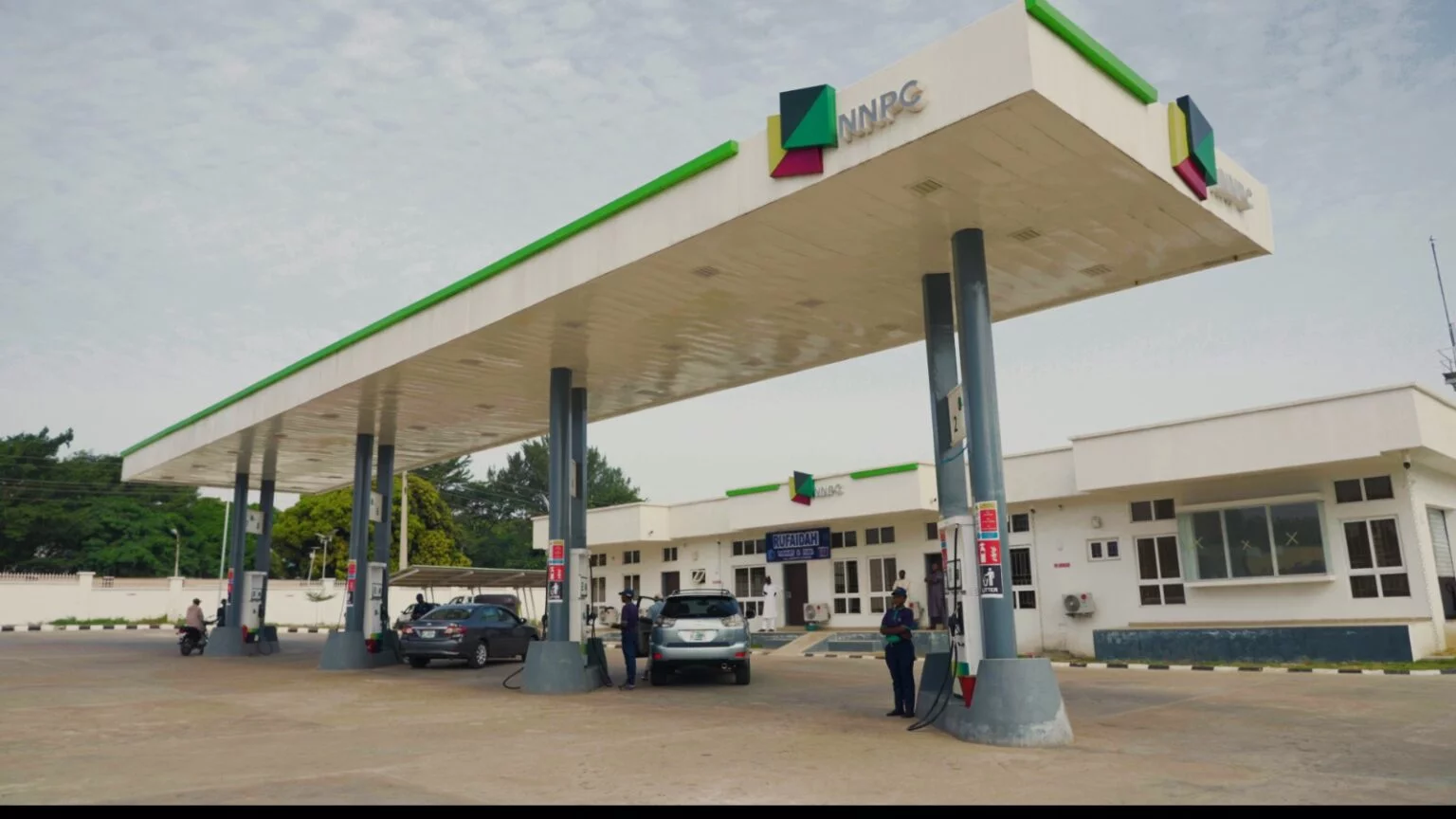
The Federal Ministry of Finance has heaped blames on the Nigerian National Petroleum Company Limited (NNPCL) over its inability to answer queries raised against it in the 2021 to 2023 Oil and Gas Sector Audit report by the Nigeria Extractive Industry Transparency Initiative (NEITI), saying the Oil Company could not make available the necessary financial records it would have used to respond to the queries.
Declaring this yesterday during an interrogation by the Senate Committee on Public Accounts at the National Assembly following several financial infractions raised against the Ministry in the NEITI audit findings, the Permanent Secretary of the Ministry, Raymond Omachi said that if the Nigeria National Petroleum Company Limited (NNPCL) had availed them the documents, he would have been in a better position to answer the questions with ease.
However, one of the infractions contained in the report was the pre – export financing for $3billion loan taken in 2012 to settle subsidy payment which according to NEITI, the recovery of the loan from monthly Federation revenue proceeds under pre -export financing and project eagle agreement remained unclear.
Another query raised against the Ministry by NEITI was that “In 2021, the sum of $722.6 million was paid to NNPC by Nigeria Liquified Natural Gas (NLNG) as dividend and interest earned by the federation but was neither remitted to the federation account nor properly accounted for.
In the report also, NEITI observed that in 2021 none of the refineries was operational despite N200 billion spent on them. The ministry couldn’t answer it and couldn’t also give a clean bill to the $221.283million overhead costs incurred by NAPIMS in 2021.
In his response to the queries , the Permanent Secretary said the Ministry was not directly involved in all the dealings or transactions and that the agencies involved, particularly the NNPCL has refused to cooperate with it in terms of accurate records.
“We don’t have direct involvement in all the issues raised and required provision of financial records from the affected agencies, particularly NNPCL, NUPRC etc but we couldn’t get them.
“In resolving the financial issues, we have engaged a reputable external audit firm; Arthur Andersen LLP, to carry out a forensic audit on all the transactions for the required reconciliation “, he said.
But the Committee chaired by Senator Ibrahim Hassan Dankwabo (Gombe North) took him up on when the report on the forensic audit would be ready after extending it twice; 6 months to one year but he insisted that NNPCL and NUPRC should be made to be at the same session with Ministry of Finance over the issues, to enable all parties chart a common cause in relation to the issue.
“I know you have enormous powers that you can use to compel these agencies to appear before us. We are having challenges bringing them to the table so that we can resolve these issues.
“We in the Federal Ministry of Finance are ready to come and sit with them here, so that you can hear directly from them and obtain the necessary explanations and clarifications”, he stated.
But the Chairman of the Committee told the permanent secretary to arrange the meeting with the affected agencies as issues involved are not only being followed in Nigeria but internationally.
“I will like you to review the internal report and arrange a meeting involving the Ministry of Finance, the NUPRC, NNPC and any other agency whose participation is necessary to resolve the issues we have raised.
“As you are aware, these issues are being followed by the international community. They are not matters confined to Nigeria; they are in the public domain and are being monitored by people across the world.
“Therefore, if there are records or issues that need to be clarified and properly put in order, we should do so in the interest of our country. All of us have no other country except Nigeria”, he said.
Nigeria’s crude oil production fell by four per cent month-on-month in July, but the country still met its Organisation of Petroleum Exporting Countries quota for the third consecutive month, latest data from the Nigerian Upstream Petroleum Regulatory Commission has shown.
The commission’s latest production figures showed that Nigeria pumped an average of 1.
505 million barrels per day of crude oil in July, slightly above its OPEC quota of 1.5 million barrels per day.When condensate production of about 170,000 barrels per day is included, the country’s total crude and condensate output stood at 1.
67 million barrels per day during the month.The July performance, however, represented a decline from the 1.735 million barrels per day recorded in June, translating to a reduction of about 65,000 barrels per day, or 3.75 per cent.
The NUPRC disclosed the figures in a statement issued on Wednesday by its Head of Media and Corporate Communications, Eniola Akinkuotu.
The statement read, “Nigeria has for the third consecutive month met and exceeded its OPEC quota of 1.5mbpd. In the month of July 2026, Nigeria produced 1.505mbpd of crude oil and 0.17mbpd of condensate, bringing the combined daily production to 1.67mbpd.
“Although Nigeria met its OPEC quota in the month of July, the statistics show that on a month-on-month basis, production fell by 4 per cent.”
According to the commission, daily combined crude and condensate production fluctuated between a low of 1.57 million barrels per day and a peak of 1.78 million barrels per day in July.
“Daily average production was 1.67 million barrels per day, comprising both crude oil (1.505 million bopd) and condensate (0.17mbpd),” the commission said.
Despite the July decline, Nigeria has maintained crude production above its 1.5mbpd OPEC quota for three consecutive months.
The country’s combined crude and condensate production has increased since the beginning of the year, according to NUPRC’s month-on-month data.
Production stood at 1.459 million barrels per day in January, before rising to 1.483mbpd in February. It subsequently increased to 1.564mbpd in March, 1.663mbpd in April, 1.701mbpd in May and 1.735mbpd in June.
July therefore marked the first monthly decline after the steady increase recorded in the first half of the year.
Compared with January, however, July’s combined production of 1.67mbpd was about 211,000 barrels per day, or 14.5 per cent, higher.
The NUPRC attributed the July decline principally to operational challenges at the Erha and Akpo fields, which affected production during the month.
“These disruptions constrained production volumes and contributed significantly to the overall reduction in national crude oil output,” the commission said.
It added that production activities at other oil-producing assets remained relatively stable despite the disruptions.
“Despite the challenges encountered, production operations across other producing assets remained relatively stable, with operators implementing measures aimed at maintaining production efficiency and minimising the impact of operational constraints,” the regulator said.
It said routine production and crude evacuation activities were also largely sustained across the industry.
The commission added that operators and other stakeholders were working to resolve the affected production facilities and restore lost capacity.
“Industry stakeholders remain focused on addressing the identified operational issues, restoring affected production capacity and strengthening asset reliability to support improved performance in subsequent months,” it said.
The breakdown of production by terminals and streams showed that Forcados Terminal recorded an average output of 322.34kbpd in July, making it the largest producing stream listed by the commission.
It was followed by Bonny Terminal, which recorded 303.72kbpd.
Qua Iboe Terminal ranked third, with average production of 158.02kbpd of crude oil and condensates, while Escravos Oil Terminal recorded 131.41kbpd.
The Bonga stream ranked fifth among the leading producing terminals, with an average of 100.23kbpd of crude oil.
The Federal Government and NUPRC have identified increased crude oil production as important to government revenue, foreign exchange earnings and investment in the upstream sector.
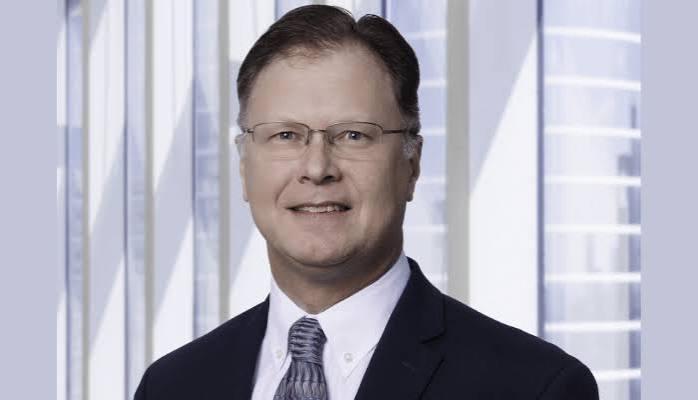
The Managing Director of Chevron Nigeria Limited, Jim Swartz, has highlighted key areas that would sustain Nigeria’s energy transition growth pathway.
Swartz, is of the opinion that strong collaboration and partnership are key to sustain the country’s energy needs.
Speaking at the just-concluded 49th Nigerian Annual International Conference and Exhibition (NAICE) in Lagos, Swartz, said no one player can deliver the scale of projects required to achieve the goals set by the country alone.
He declared that Collaboration is essential because no single company, institution, or stakeholder can address the opportunities and challenges of the intersector alone.
And technology will remain a key driver of safer operations, stronger performance, and the future that we will deliver. For Nigeria, the opportunity is significant.The conference with the theme “Thriving in the Evolving Global Energy Landscape: Collaborative Growth and Resilience,” focused on how Nigeria can compete for capital and sustain production amid global volatility.
The managing director listed four pillars he believed are essential to define a resilient energy future.
These include continued investment, enabling long-term policies, competitive local capacity development, and strong partnerships.
He continued, “Building a resilient energy future requires continued investment, enabling policies that are resilient for the long-term, local capacity development that’s competitive and durable as well, and strong partnerships across governments, regulators, industry, and the technical community,”.
He said Chevron has invested in Nigeria for more than six decades, noting the company’s role in building the foundation of the industry and in developing technical capacity.
The firm therefore called for stronger collaboration across government, regulators and industry operators as the foundation for building a resilient oil and gas sector that can deliver growth, jobs and energy security for Nigeria.




Troops Kill Terrorists, Rescue 39 Kidnap Victims in One Week – DHQ
ShareBy David Torough, Abuja The Armed Forces of Nigeria says its troops killed scores of terrorists, rescued dozens of kidnapped...

Nigeria’s Diversity, Our Greatest Asset, Says Idris
ShareBy David Torough, Abuja The Minister of Information and National Orientation, Mohammed Idris, has described Nigeria’s diversity as a source...

Groups Reject Grazing Reserves, Insist on Resettlement of IDPs in Benue
ShareFrom Attah Ede Makurdi The three Socio Cultural Organizations in Benue State(Mdzough U Tiv, Ochetoha K’ Idoma and Omi Ny’Igede,...
Babangida: Why I Could Not Save Vatsa From Coup Conviction
ShareBy Dan Amasingha,Minna. Former Military President, General Ibrahim Badamasi Babangida (rtd.), has broken his silence on one of the most...
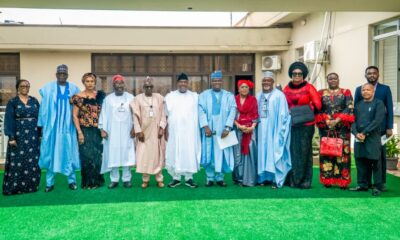

FG Inaugurates New NSIWC Board, Tasks Members on Fair Wages, Productivity
ShareBy David Torough, Abuja The Federal Government has inaugurated a new Board of the National Salaries, Incomes and Wages Commission...


Nigeria’s Celebrity Golfer, Leo Edochie Shines at London’s Shire
ShareBy Julius Tambaya, Abuja Chief Leo Edochie, Nigeria’s number one celebrity golfer turned heads with a jaw-dropping appearance at The...

Fadahunsi, Osun and the Price of Political Rhetoric
ShareBy Willie Adegbite A video clip has placed Senator Francis Fadahunsi at the centre of a political firestorm. In it,...
What Investing in Africa Means to Aliko Dangote
ShareBy Ehi Braimah When conversations turn to investment in Africa, one name consistently dominates the discussion: Aliko Dangote. Over the...

It’s not Tinubu’, Femi Kuti Reveals Nigeria’s Real Problem
ShareAfrobeat legend, Femi Kuti has claimed that President Bola Tinubu is not the major problem facing Nigeria. He argued that...


Brain Jotter Cries out after Harassment by Lagos Touts
ShareNigerian content creator, Brain Jotter, has cried out on social media after being harassed by Lagos touts, popularly known as...