
NEWS
SEC Moves to Deepen Nigeria’s Capital Market Digital Transformation


By Tony Obiechina, Abuja
The Securities and Exchange Commission (SEC) has announced a series of wide-ranging reforms aimed at strengthening market efficiency, deepening investor confidence, and accelerating the digital transformation of Nigeria’s capital market.
SEC Director General, Dr.
Emomotimi Agama, unveiled the initiatives during the second Capital Market Committee (CMC) meeting for 2025, where he also confirmed Nigeria’s move toward a T+1, and eventually T+0 settlement cycle.In his address, Agama noted that the transition from T+3 to T+2 settlement for equities, implemented on November 28, marked a major milestone for the Nigerian capital market and aligned it more closely with global best practice.
He explained that shorter settlement cycles will enhance liquidity, reduce counterparty risk, and accelerate capital reinvestment.
The reform now applies across the Nigerian Exchange, NASD OTC Securities Exchange, and Lagos Commodities and Futures Exchange.
The SEC DG outlined broader market developments since the last CMC meeting in May, including the upgrade of Nigeria’s sovereign credit rating and the country’s removal from the FATF grey list. He said these achievements have boosted investor confidence and improved prospects for capital inflows. Inflation has also moderated, with the headline rate easing to 16.05 per cent year-on-year in October, the lowest level since March 2025.
Agama reported strong capital-raising activities between April and October, with significant transactions approved across debt, equity, and commercial paper markets.
Notable programmes include the N500bn Climate Funding SPV and the N200bn Elektron Finance bond, reflecting growing investor interest in infrastructure and sustainable finance.
The commercial paper market remained active, with over N753bn issued across sectors such as manufacturing, energy, and agriculture.
He said these figures demonstrate sustained confidence in the market’s regulatory framework.
Despite these positives, the market faced headwinds in November when the Nigerian Exchange recorded its steepest monthly decline on record. Market capitalization fell by N6.54trn, while the All-Share Index dropped nearly 7 per cent. The downturn was driven by profit-taking ahead of the planned 30 per cent Capital Gains Tax, weakened sentiment in banking stocks, and broader policy and global uncertainties.
However, Agama noted that the market has since shown resilience, with modest recovery following government reassurances on fiscal and tax policy, and remains significantly positive year-to-date.
The SEC is intensifying its market development and financial inclusion efforts through education-based initiatives, including the integration of capital market studies into the national secondary school curriculum in collaboration with the Nigerian Educational Research and Development Council.
At the tertiary level, the Commission partnered with Nnamdi Azikiwe University for a conference focused on leveraging capital market opportunities for SME growth.
Regionally, the SEC continues to reinforce Nigeria’s leadership in non-interest finance.
The Commission recently engaged a Bank of Ghana delegation on regulatory frameworks for non-interest capital markets, highlighting Nigeria’s N1.4trn sovereign Sukuk issuances and the growth of Islamic mutual funds. Planning is also underway for a Municipal Bond and Sukuk Summit scheduled for the first quarter of 2026.
Agama emphasized ongoing efforts to deepen the commodities and derivatives ecosystem.
The SEC is collaborating with the Standards Organisation of Nigeria to update commodity standards, working with insurance brokers to enhance risk mitigation, and partnering with the Ministry of Solid Minerals to unlock funding for mining companies. It is also engaging the Central Bank of Nigeria to secure liquidity status for warehouse receipts while strengthening oversight of commodity exchanges through inspections and financial reviews.
The Commission is advancing new rules under the Investments and Securities Act (ISA) 2025 to support commodity exchanges, collateral managers, warehouse operators, and warehouse receipt issuers. Study tours of exchanges and clearing agencies are informing updated regulatory frameworks, while work continues on harmonizing rules to align with ISA mandates. Engagements with commodity exchanges such as Gezawa and NCX have also helped revive their operations.
In the derivatives market, the SEC is collaborating with stakeholders to deploy a real-time surveillance system to reinforce market integrity. Updated rules on central counterparties, derivatives trading, online forex, and NG Clearing operations have been submitted to the Rules Committee. A draft systemic risk management rule is also being developed to require stronger risk governance frameworks across regulated entities.
Agama highlighted the Commission’s technology-driven regulatory reforms, including automation through the Digital Transformation Portal, which now allows capital market operators to submit applications, upload documents, and track approvals online. A commercial paper issuance module has been launched, with automation of quarterly and annual returns underway. The SEC is upgrading IT infrastructure and strengthening cybersecurity to support these reforms.
He also presented findings from the Technology Adoption Survey conducted in May 2025, which revealed that while cloud computing and cybersecurity tools are gaining traction, adoption of advanced technologies such as artificial intelligence and big data remains below 10 percent. Yet more than 70 percent of firms plan to adopt AI, blockchain, and regulatory technology within three years. Challenges include high implementation costs, skill shortages, and legacy system integration.
Agama stressed that innovation must go hand-in-hand with ethical and responsible deployment. He reminded operators that safeguarding investor data, preventing market abuse, and maintaining operational resilience are essential to building trust—the foundation of any capital market.
By David Torough, Abuja
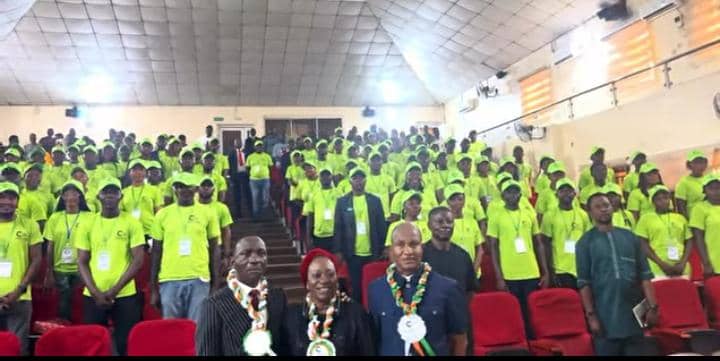
The founders and Senior Pastors of Dunamis International Gospel Centre (DIGC), Dr. Paul and Dr. (Mrs.) Becky Enenche, have successfully trained and empowered 100 individuals in agribusiness as part of their commitment to youth empowerment, entrepreneurship, and economic development.
Dr.
Paul Enenche made the announcement during the church’s Thanksgiving and Testimony Service on Sunday, highlighting the initiative as a strategic effort to promote self-reliance and agricultural productivity.According to the cleric, each beneficiary will be allocated at least one hectare of farmland to commence farming activities upon completion of the training programme.
He further disclosed that the beneficiaries will receive monthly stipends to support them until their agricultural produce is ready for harvest.Dr. Enenche noted that the training and empowerment programme represents a significant investment, with each participant’s training costing approximately ₦500,000.
The beneficiaries, who constitute Batch A of the Entrepreneurship Agribusiness Training Programme, graduated from the C.S.S. Farm and Skills Acquisition Centre located along the Keffi–Abuja Road. The entire programme was fully sponsored by Dr Paul,Dr (Mrs.) Becky Enenche and the church as part of their ongoing efforts to empower individuals with practical skills and sustainable means of livelihood.
The initiative reflects the church’s commitment to transforming lives through both spiritual and socio-economic empowerment.

The Chairman of the Independent National Electoral Commission, Prof. Joash Amupitan, SAN, has reaffirmed the commission’s neutrality ahead of the 2027 general election, saying INEC has no candidate or political party to favour.
In a post obtained from INEC’s X handle on Sunday, Amupitan stated this during a visit to the Emir of Zazzau, Amb.
Ahmed Nuhu Bamalli, as part of the commission’s stakeholder engagement and preparations for the 2027 elections.The visit formed part of activities surrounding INEC’s planned interactive meeting with staff and readiness assessment at the zonal level.
The INEC chairman was accompanied by National Commissioners, the Acting Director-General of the Electoral Institute, his Chief Press Secretary, Chief Technical Assistant, Chief of Staff, Special Aides and other senior officials of the commission.
Amupitan described traditional institutions as important stakeholders in the electoral process because of their influence and reach within communities.
He said elections were fundamentally about the social contract between citizens and those entrusted with public office, stressing that public trust was essential to the success of democracy.
According to him, INEC has commenced preparations early because of the size and complexity of conducting elections across Nigeria.
He said the commission had moved away from last-minute preparations and was testing, auditing and strengthening its operational systems well ahead of the 2027 polls.
Amupitan assured the Emir that INEC remained committed to neutrality, fairness and transparency in the conduct of elections.
“We have no candidates, we have no political party, we have no interest other than the sovereign will of the people of Nigeria,” the INEC chairman said.
He added that the commission would continue engaging traditional institutions and other stakeholders as it intensifies preparations for the 2027 General Election.
The Nigerian Forest Security Service (NFSS), Kano State Command, has deployed personnel to Garko Local Government Area to track and contain dogs suspected to be infected with rabies.
The service said the suspected rabid dog had bitten 18 people in Garko and its environs.
The NFSS State Commander, Abdullahi Al’ameen, disclosed this in a statement signed by the Public Relations Officer of the service, Usman Abdullahi-Umar, on Sunday in Kano.
Al’ameen said: “The command received a distress report at about 2 p.m. that a dog suspected to be rabid has attacked residents in Garko town.
“The dog has so far bitten 11 persons in Garko town before moving to neighbouring communities, including Raba, Kadage, Gurjiya and Dausai.
“It has also attacked and bitten seven additional persons in the affected communities.”
The commander further explained that they had received another report that two more dogs had been infected with rabies in the area.
Al’ameen said personnel of NFSS Garko Division, under the leadership of the Divisional Forest Officer, Auwalu Muhammad, had been deployed to the affected areas to track and contain the infected dogs.
He urged residents of Garko and neighbouring communities to remain vigilant and report sightings of stray or suspected rabid dogs to the nearest NFSS office or other security agencies.
The commander also advised residents who might have been bitten by suspected rabid dogs to seek immediate medical attention.
Al’ameen assured residents that the NFSS would continue to monitor the situation and take necessary measures to prevent further attacks.(NAN)



Paul Enenche, Wife Train, Empower 100 People in Mechanized Agribusiness
ShareBy David Torough, Abuja The founders and Senior Pastors of Dunamis International Gospel Centre (DIGC), Dr. Paul and Dr. (Mrs.)...

2027: Tinubu’s victory, a win for the north, Tompolo tells Kano electorate
ShareGrand patron of the PBAT Door-to-Door Movement, High Chief Government Oweizide Ekpemupolo has said President Bola Tinubu’s victory in the...

INEC Has No Candidates, Party – Amupitan
ShareThe Chairman of the Independent National Electoral Commission, Prof. Joash Amupitan, SAN, has reaffirmed the commission’s neutrality ahead of the...
Rabies Scare: Suspected Infected Dog Bites 18 in Kano
ShareThe Nigerian Forest Security Service (NFSS), Kano State Command, has deployed personnel to Garko Local Government Area to track and...

FG Targets 10m Globally Certified Nigerians by 2030 — Alausa
ShareThe Federal Government said it is working to create one million export-linked jobs and produce 10 million globally certified Nigerians...


Doctors Give FG Two-week Ultimatum to Avert Strike
ShareThe National Association of Resident Doctors (NARD) has given the Federal Government a two-week ultimatum to resolve outstanding welfare and...


Diri Urges Newlyweds to Make Forgiveness, Tolerance Foundation of Marriage
ShareFrom Mike Tayese, Yenagoa Bayelsa State Governor, Senator Douye Diri, has urged newly wedded couples to make the virtues of...
Bayelsa at 30: Assembly Clashes with State Executive Today
ShareFrom Mike Tayese, Yenagoa The Bayelsa State House of Assembly will take on members of the State Executive Council in...


Oborevwori Urges Nigerians to Embrace Sacrifice, Patriotism for National Devt
ShareFrom Francis Sadhere, Delta Delta State Governor, Rt. Hon. Sheriff Oborevwori, has urged Nigerians to embrace sacrifice, patriotism, courage and...


Nweze Urges S-East Voters to Back Tinubu
ShareFrom Godwin Okeh, Abakaliki The Senior Special Assistant to the President on Community Engagements, South-East, Chioma Nweze, has urged people...