
view point
What the Oyo Situation Teaches about Nigeria’s Emerging Security Doctrine


By Crispin Oduobuk
There are moments when an entire nation seems to breathe again.
The announcement on Friday, 10 July that all 39 pupils and seven teachers abducted from schools in Oriire Local Government Area of Oyo State had finally regained their freedom was one such moment.
After 56 days of fear, uncertainty, and prayers, the children were coming home. Families that had lived between hope and despair could embrace their loved ones once more.It was an operation worthy of commendation. Acting on painstaking intelligence, personnel of the Nigerian Army, the Nigeria Police Force, and the Department of State Services tracked the abductors, rescued the victims, neutralised at least nine kidnappers, and arrested eight others.
For many Nigerians, that is where the story ends. It should not.
The rescue deserves to be remembered not only because 46 innocent Nigerians returned alive, but because it offers perhaps the clearest demonstration yet of the security philosophy that National Security Adviser, Nuhu Ribadu, has been working to institutionalise since assuming office.
Security, after all, is rarely won in the final assault. More often, it is won in the days, weeks, and months before that moment. Through information patiently gathered. Agencies persuaded to work as one. Rival bureaucracies aligned around a common objective. Difficult decisions taken without the benefit of public applause.
The Oyo operation was an illustration of that principle.
When the abduction occurred, public anxiety was understandable. Parents wanted immediate action. Citizens demanded swift results. Yet the circumstances confronting security agencies were exceptionally delicate.
As recently revealed by the Minister of Defence, General Christopher Musa (Rtd), the kidnappers had threatened to execute every child if security personnel attempted a direct assault on their hideout. They demanded the release of some of their commanders already in military custody.
To leave nobody in doubt of their total lack of conscience, the kidnappers had already demonstrated their brutality by the gruesome murder of teacher, Michael Oyedokun, whose killing they recorded and circulated as psychological warfare. The unfortunate killing of Oyedokun, may his soul rest in peace, highlighted how dangerous the situation was.
In such circumstances, speed alone is not strategy. A dramatic raid might have produced headlines. It could also have produced dozens of small coffins.
Instead, the government chose the harder path. Within days of the abduction, the NSA led a high-level federal delegation to Ogbomoso, alongside the Chief of Staff to the President, the Inspector General of Police, and the Minister of Defence. The commitment was clear. Every available instrument of the Nigerian state would be deployed through a carefully coordinated combination of kinetic and non-kinetic measures until every hostage returned safely.
That commitment required more than courage. It required discipline.
Behind every successful rescue lies an invisible ecosystem of institutions. Intelligence must be collected, analysed, and shared. Operational units must trust one another. Political authorities must resist the temptation to prioritise dramatic gestures over calculated outcomes. Decisions must be coordinated across multiple chains of command, often under intense public pressure.
This is precisely the institutional culture the National Security Adviser has attempted to strengthen.
The Intelligence Fusion Centre reflects an understanding that modern threats cannot be defeated by agencies working in isolation. Border management reforms recognise that insecurity rarely respects administrative boundaries. Greater collaboration among defence, intelligence, and law enforcement institutions acknowledges a reality that many nations have already learned. Criminals cooperate far better than governments unless governments deliberately redesign themselves to do the same.
The Oyo rescue demonstrates what becomes possible when those institutional walls begin to disappear.
Critics will understandably ask why it took 56 days. The question is legitimate. The answer, however, lies in what Nigerians witnessed on Friday. 46 hostages returned alive. Measured against that outcome, patience was not indecision. It was strategy.
This distinction matters because Nigeria’s security environment has changed fundamentally. The country no longer confronts conventional threats alone. Terrorism, kidnapping, organised crime, cyber networks, illicit financial flows, and cross-border criminal enterprises operate as interconnected ecosystems.
Responding to such threats requires more than military strength. It demands intelligence, technology, financial tracking, community engagement, and sustained coordination among institutions that historically worked in parallel rather than together.
That is why the role of the National Security Adviser is often misunderstood. The office was never designed to command soldiers in the field. Its comparative advantage lies elsewhere. It exists to ensure that intelligence informs operations, that agencies pursue common objectives rather than competing mandates, and that the machinery of national security functions as a single system instead of disconnected parts.
The Oyo operation demonstrates the value of that model.
The Army provided operational capability. The Police contributed investigative capacity. The Department of State Services supplied actionable intelligence. The Oyo State Government worked closely with federal authorities. The Office of the National Security Adviser sustained strategic coordination across the entire process.
No single institution could have produced that outcome alone.
There is a broader lesson here. Nations are not secured merely by brave individuals. They are secured by institutions that enable brave individuals to succeed.
History remembers dramatic rescues. It often overlooks the patient work that makes those rescues possible. Files examined. Intelligence verified. Meetings held. Information shared. Rivalries set aside. Strategies refined. Decisions revisited. Trust painstakingly built between organisations that must act together when lives hang in the balance.
That work seldom attracts headlines. Yet it is precisely that work that rescued 46 Nigerians in Oyo State.
President Bola Tinubu’s approval of additional forest guards and specialised rescue capabilities points towards the same philosophy. Security cannot depend on reactive deployments alone. It must become preventive, intelligence-led, and rooted in stronger institutions capable of anticipating threats before they mature into tragedy.
Nigeria still has a long distance to travel. Kidnapping remains a grave national challenge. Criminal networks continue to evolve. Citizens are entitled to expect faster responses and safer communities.
But progress should also be recognised where it occurs.
The rescue of the Oyo schoolchildren and teachers was not simply the successful conclusion of a hostage crisis. It was evidence that institutional coordination, when sustained with discipline and purpose, can produce outcomes that once seemed beyond reach.
Those children are back because several arms of the Nigerian state chose cooperation over competition, intelligence over impulse, and strategy over spectacle.
In the years ahead, Nigeria’s greatest security victories may not be defined by the loudest battles. They will be defined by whether the institutions charged with protecting the nation continue learning to think, plan, and act as one.
That is the enduring lesson from Oyo. And if sustained, it may prove to be one of the most consequential developments in Nigeria’s evolving security story.
Crispin Oduobuk is a former acting editor of Weekly Trust. He writes from Abuja.
By Dakuku Peterside
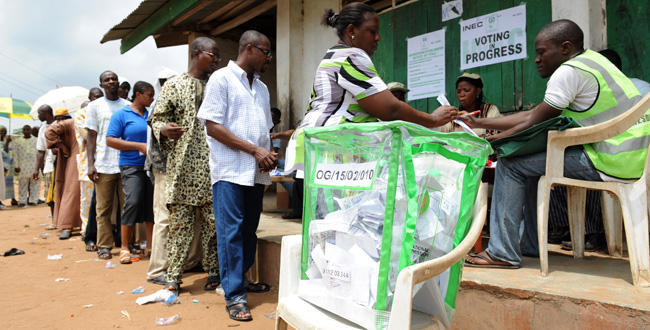
By the time Nigerians file into polling units in 2027, the most consequential battle for the nation’s democracy may already have been fought — and perhaps won or lost. Elections are merely democracy’s public ceremony, the visible culmination of political choices shaped long before the first ballot is cast.
The real test of democratic health lies elsewhere: in the independence of institutions, the conduct of political actors, the resilience of the rule of law, the protection of dissent, and the willingness of those entrusted with power to submit themselves to the same constitutional restraints they expect others to obey.
It is in these quiet, often-overlooked arenas — not on Election Day — that democracies either flourish or gradually unravel. This distinction is essential in the months ahead. Nigeria has every reason to take pride in sustaining uninterrupted civilian rule since 1999.
In a continent where constitutional disruptions and democratic reversals have become increasingly common, the country’s record of regular elections represents an achievement worthy of recognition. Governments have changed through the ballot box, opposition parties have occasionally defeated incumbents, and democratic institutions have matured with each electoral cycle. Yet, democratic longevity should never be mistaken for democratic consolidation.
Conducting elections repeatedly does not, by itself, guarantee the deepening of democracy. A nation may become increasingly proficient at organising elections, while simultaneously becoming less committed to the democratic principles that give those elections meaning.
Democracy is not measured simply by the regularity of voting; it is measured by the openness of political competition, the impartiality of institutions, the protection of fundamental freedoms, and the confidence of citizens that every political actor competes under the same constitutional rules. That distinction matters profoundly as Nigeria begins its long march towards another defining election, in which the health of democracy will be tested beyond the ballot box.
Across the political landscape, internal crises have become almost routine. Leadership disputes, factional struggles, and prolonged litigation have weakened several opposition parties, while internal disagreements have hardly been absent within the ruling party itself. Such tensions are not unique to Nigeria; political parties everywhere experience internal contestation.
What should concern every democrat, however, is the growing public perception that institutions established to arbitrate political disputes are increasingly viewed through partisan lenses. Whether that perception is entirely justified is, in many respects, secondary. Public confidence matters, even when the facts remain contested.
Democracy depends as much on public confidence as it does on constitutional procedure. Institutions derive legitimacy, not only from the powers vested in them by law but also from the trust citizens place in their neutrality.
When confidence in institutional independence erodes, democratic stability becomes increasingly fragile, even where formal constitutional processes remain intact. Trust, once diminished, is far more difficult to restore than to preserve.
History repeatedly teaches the same sobering lesson: democracies rarely collapse in dramatic fashion. They seldom disappear overnight through military intervention or constitutional abolition. More often, they weaken gradually through the slow erosion of institutional checks, the shrinking of the political space, the selective application of laws, the normalisation of unequal political competition, and the quiet acceptance of practices that would once have been considered unacceptable. That is why vigilance before elections is infinitely more valuable than regret after them, especially when warning signs appear gradually.
Equally troubling is the deterioration of political discourse itself. Increasingly, public debate rewards outrage over reason, suspicion over dialogue, and personal attacks over policy alternatives. Social media has amplified misinformation, deepened political polarisation, and accelerated the spread of narratives designed more to inflame emotions than illuminate facts.
Political opponents are too often portrayed not as legitimate competitors but as existential enemies whose very participation in national life is treated with hostility. Such a political culture impoverishes democracy, because pluralism is not democracy’s greatest weakness; it is its defining strength.
The freedom to disagree peacefully, to challenge authority, and to present alternative visions of national development is not a threat to constitutional order. It is the mechanism through which democracy renews itself. Nations do not become weaker because citizens disagree.
They become weaker when disagreement itself becomes unacceptable. The months ahead, therefore, demand a renewed commitment to democratic restraint, beginning with the use of public power.
Public resources must never become instruments of partisan advantage. The constitutional separation between the state and the governing party is one of democracy’s most important guardrails. In mature democracies such as the United Kingdom, the long-established “purdah” convention restricts governments from using official resources to secure electoral advantage during sensitive pre-election periods. The principle is straightforward: governments govern on behalf of all citizens, while political parties campaign on their own behalf.
Preserving that distinction protects both public trust and electoral legitimacy. Every naira appropriated through the national treasury belongs to the Nigerian people, not to any political party. Government property, public institutions, official communication platforms, and state infrastructure exist to serve the Republic, rather than those who temporarily administer it.
Power invariably tempts those who hold it to mistake temporary authority for permanent entitlement. Yet the greatness of democratic leadership lies not in the unfettered exercise of power but in the discipline to restrain it.
History remembers leaders not simply for the authority they wielded but for the constitutional limits they respected while wielding it. The responsibility for protecting democracy, however, does not rest exclusively with those in government; it also falls on the opposition, the media, civil society, and citizens.
Opposition parties cannot demand stronger democratic institutions while neglecting democracy within their own ranks. Persistent factionalism, opaque candidate selection, leadership instability, and organisational indiscipline undermine public confidence just as surely as institutional overreach.
Political parties serve as the training grounds of democratic leadership. When internal democracy collapses, national democracy is inevitably weakened.
Nor can the media and civil society abdicate their responsibilities. Journalism fulfils its highest calling when it subjects power to rigorous scrutiny, while remaining faithful to the facts, rather than to political preferences.
Civil society, likewise, must defend constitutional principles consistently, resisting the temptation to become selectively outraged, depending on which political interests are affected. Principles acquire moral authority only when they are applied impartially.
Ultimately, however, the destiny of Nigerian democracy rests with its citizens, whose choices shape every democratic outcome. The 2023 Nigerian general election itself underscored this responsibility. Beyond debates over technology, logistics and institutional performance, it revealed a politically engaged electorate that increasingly demanded transparency, accountability, and credible electoral processes.
That civic awakening remains one of the country’s greatest democratic assets. Institutions matter enormously, but informed and vigilant citizens remain democracy’s ultimate custodians. No electoral commission can compensate for an electorate that normalises vote-buying.
No constitutional amendment can eliminate ethnic or religious prejudice from political decision-making. No judicial pronouncement can replace civic responsibility.
Democracy reflects the political culture of its people. Citizens who reward competence, integrity and ideas strengthen democratic institutions. Those who elevate ethnicity, patronage, misinformation, or immediate material inducement above national interest weaken the very system upon which their own freedoms ultimately depend.
As 2027 approaches, Nigeria should resist the temptation to reduce political debate to a simple calculation of who will emerge victorious. The larger question is what kind of democracy will remain.
Every administration eventually leaves office. Every governing party eventually confronts the possibility of opposition. Every election eventually becomes history.
What endures are institutions, constitutional conventions and the democratic norms that outlive individual leaders and political movements. Those enduring foundations deserve greater protection than the temporary ambitions of any political generation.
Nigeria has repeatedly demonstrated extraordinary resilience, but this should never become an excuse for complacency. It has survived military dictatorship, constitutional crises, economic upheaval, and periods of profound national uncertainty.
Those experiences testify to the remarkable endurance of the Nigerian state. Democracy survives not because it is indestructible, but because every generation consciously chooses to defend it.
That choice confronts Nigeria once again. The months before the 2027 elections will reveal far more about the nation’s democratic maturity than election day itself, showing whether political actors value constitutional restraint above partisan expediency; whether institutions remain faithful to the Republic rather than to political interests; whether leadership is exercised with humility rather than entitlement; and whether citizens recognise that democracy is sustained not by perpetual victory but by the certainty that power can change hands peacefully, fairly and legitimately. Nigeria must pass this test.
The battle before the 2027 ballots is therefore not fundamentally between political parties, personalities or regions. It is a contest between principle and expediency, between institutional integrity and institutional capture, between democratic restraint and excess. Nigeria must choose which side of that contest it will stand on.
The election will last only a day. The character of Nigeria’s democracy will endure long after the final votes have been counted, and that enduring character will reveal whether the months before the election strengthened principle, restraint and public confidence.
What remains is whether Nigerians will defend it now, before the ballots are cast. History will remember not simply who won in 2027 but whether the nation preserved the democratic values that made victory worth having in the first place.
Dakuku Peterside is a renowned author of two bestselling books, Leading in a Storm and Beneath the Surface.
By Tochukwu Jimo Obi
The debate over the creation of state police in Nigeria has continued to generate intense public discussion.
While many Nigerians believe that decentralising policing will improve security and enable quicker responses to local crimes, others remain worried that state police could become instruments of political oppression in the hands of state governors.
These concerns are genuine and should not be dismissed. However, rather than abandoning the idea of state police altogether, Nigeria should focus on building strong constitutional and legal safeguards that prevent abuse while allowing the country to enjoy the benefits of community based policing.
The greatest fear expressed by critics is that governors could deploy state police to harass political opponents, intimidate critics, manipulate elections, or suppress lawful dissent. Nigeria’s political history provides enough reasons for such apprehension. Yet, it is equally true that institutions, not individuals, determine whether power is abused. A carefully designed legal framework can ensure that no governor exercises unchecked authority over a state police force.
A critical safeguard would be the establishment of an Independent State Police Service Commission in every state. Such a commission must be constitutionally protected from political interference and should comprise representatives of the judiciary, the Nigerian Bar Association, civil society organisations, traditional institutions, and experienced security professionals.
Most importantly, the commission, rather than the governor, should be solely responsible for appointing the State Police Commissioner, recruiting officers, overseeing promotions, enforcing discipline, and dismissing personnel. This arrangement would significantly reduce the possibility of governors filling the police with political loyalists.
The Independent State Police Service Commission should also possess strong oversight and disciplinary powers. It must be empowered to investigate complaints against officers, sanction misconduct, and where a state police force is being used unlawfully, recommend federal intervention. Such powers would create institutional checks capable of addressing abuse before it threatens democratic governance or public confidence in law enforcement.
Equally important is the need to clearly define the governor’s role in state policing. Governors, as Chief Security Officers of their states, may legitimately set broad security priorities and policy directions.
However, they should have no authority to issue operational instructions in individual investigations, arrests, or prosecutions. Day to day policing decisions must remain strictly within the professional discretion of the Police Commissioner and senior officers, thereby insulating law enforcement from partisan political pressure.
The State House of Assembly must equally serve as a strong democratic watchdog. It should possess robust oversight powers to investigate allegations of abuse, summon police leadership for questioning, and scrutinise police budgets and expenditure.
Furthermore, the appointment of a State Police Commissioner should require legislative confirmation, while removal from office should only be possible through the recommendation of at least two thirds of the members of the State House of Assembly, with the concurrence of the Independent State Police Service Commission. Such multiple layers of approval would make arbitrary dismissal virtually impossible.
Beyond state institutions, there should be federal constitutional oversight to preserve uniform national standards. Whether through an expanded Nigeria Police Council or a newly established National State Police Oversight Commission, the Federal Government should retain responsibility for setting nationwide policing standards, monitoring compliance with constitutional principles, and intervening where fundamental rights are persistently violated. This would ensure that every state police force operates within the same democratic and professional framework across the federation.
Strong legal protections against political misuse must also be expressly written into the Constitution and any enabling legislation establishing state police. The law should clearly prohibit the deployment of state police for political purposes or against political opponents of governors.
In addition, every state should establish an independent Police Complaints Authority where citizens can report misconduct without fear of intimidation. Fast track courts should promptly hear cases involving alleged abuse of state police, particularly during election periods, while the Complaints Authority should publish regular reports detailing complaints received, investigations conducted, and disciplinary actions taken to strengthen transparency and public confidence.
Ultimately, the success or failure of state police will depend less on the concept itself than on the strength of the institutions that regulate it. If properly designed, these safeguards would strike the right balance between giving states greater control over local security and preventing governors from converting the police into political weapons.
The overriding democratic principle must remain that no single political office holder should exercise unchecked control over law enforcement. Instead, authority should be shared among independent commissions, the legislature, the judiciary, federal oversight institutions, and the public, thereby preserving professionalism, protecting citizens’ rights, and strengthening Nigeria’s democracy.
Tochukwu Jimo Obi, Obosi Anambra state.
By Toyin Falola
We are blessed that the students and teachers have regained their freedom. The emotional agonies that many of us suffered, especially following the wicked slaughter of a schoolteacher is unimaginable.
Many are careless over the need to understand trauma and its scars.What is now urgent is an immediate therapy.
Kidnapped students and teachers of the Oriire community must receive long-term psychosocial support immediately following their release. Survival does not end physical captivity but begins mental captivity. After trauma, survivors may feel afraid, anxious, depressed, ashamed, jumpy, have bad dreams, feel unable to trust others, shut down emotionally, or have trouble concentrating. They may experience repeated memories of the violence and threats they endured. Children can act out inappropriately by being unusually quiet, aggressive, clingy, fearful of school, or unable to sleep at night. Teachers may feel guilty for being unable to protect their students or themselves and may feel helpless and experience severe post-traumatic stress. If teachers do not receive care from a professional, trauma wounds can fester and impair students’ ability to learn as well as their family life, social integration, and future wellbeing.It is a welcome relief that the kidnapped students and teachers of the Oriire community have finally been released. However, their freedom should not be taken to mean that life has returned to normal for them. Many who have been freed by kidnappers become slaves of psychological trauma from their experiences of fear, humiliation, violence, uncertainty and helplessness during their ordeal. They must be given emergency, ongoing and professionally coordinated psychotherapy when they get back home.
Surviving kidnapping is traumatic. Victims can experience nightmares, panic attacks, depression and anxiety. They can feel emotionally numb, constantly fearful and suspicious. They also can have insomnia, poor appetite, trouble concentrating and flashbacks of the traumatic event. Some relate their experiences repeatedly. Others go out of their way to avoid people, places, conversations, or activities that remind them of the kidnapping. If the freed students and teachers experience some of these symptoms, they could have post-traumatic stress disorder and should not be dismissed as weak or suddenly overwhelmed. Religious support and family love can help but should not substitute for proper mental health treatment.
Special attention should be paid to the students. Children and teens may not have the vocabulary to express what they are feeling. They may suffer in silence or may become aggressive violent. Others may start wetting the bed or become overly dependent. Poor grades and an unexplained fear of strangers are common. Some may refuse to return to school. Behaviour can also change drastically. Dump them into the classroom without any psychological evaluation and their trauma will be exacerbated. Their return to normalcy must be gradual and come from trained professionals, including psychologists, counsellors, social workers, and doctors.
Released teachers deserve special attention as well. They may experience guilt for failing to keep students safe; anxiety about returning to work; fear of another attack; or uncertainty about their careers. As parents and figures of authority, they may also struggle to ask for help or show emotions if they feel they need to be strong for others. Confidential counselling services and peer-support initiatives would help them work through their ordeal without stigma or guilt.
Trauma-informed health practitioners should conduct urgent examinations to check for injuries, infections, malnutrition, dehydration, and any other ailments. Survivors will also need one-on-one counselling, group counselling, family counselling, and long-term mental-health support. Parents and families should be counselled as well, and taught how to support survivors without pressuring them to talk about what happened, blaming them for their ordeal, subjecting them to media attention, or infantilising them.
Ideally, the government should collaborate with school administrators, community leaders, religious groups, public health agencies, and civil-society groups to create a coherent rehabilitation programme. Survivors’ privacy and dignity should be respected. Their names, photographs, and testimonies shouldn’t be traded for political points or clickbait headlines. Recovery will take time, safety, confidentiality, and trust.
Oriire might need communal therapy, too. Kidnapping traumatises victims, but it also harms the families, friends, classmates, colleagues, and neighbours whose lives are upended by fear and uncertainty. Community meetings, memorial services or thanksgiving celebrations, mental health education on security issues, and creating spaces for communal reflection can foster resilience.
Until the psychological needs of students and teachers are addressed, their freedom will be diminished. Therapy should not be seen as a privilege or as a sign of weakness. It is an integral component of rescue, relief, and justice. The government and security forces’ job will not be done until survivors are physically healthy, emotionally informed, securely reintegrated into their communities, and able to return to their daily lives without being haunted by what happened.
Toyin Falola, a professor of History, University Distinguished Teaching Professor, and Jacob and Frances Sanger Mossiker Chair in the Humanities at The University of Texas at Austin, is the Bobapitan of Ibadanland.




What the Oyo Situation Teaches about Nigeria’s Emerging Security Doctrine
ShareBy Crispin Oduobuk There are moments when an entire nation seems to breathe again. The announcement on Friday, 10 July...


Fintiri Swears in Newly Elected Council Chairmen
ShareAdamawa State Gov, Ahmadu Fintiri, on Wednesday, swore in 21 newly elected council chairmen to administer the local governments in...


NECO Targets Full CBT Transition as Hitch-free Exam Boosts Confidence
ShareThe Minister of State for Education, Prof. Suwaiba Ahmad has expressed satisfaction with the conduct of the National Examinations Council...


Adeleke’s Call for Visa Ban on APC Stalwarts Sign of Political Jitters, Says Oyebamiji
ShareFrom Ayinde Akintade, Osogbo The governorship candidate of the All Progressives Congress (APC) in the forthcoming gubernatorial election in Osun...


Midnight Social Media Curfew Proposed for UK Teens Aged 16, 17
ShareOlder teenagers in the UK will face an overnight social media curfew, the government has announced – though they will...


UN Forum Participants Discuss Role of Private Sector in Achieving SDGs
ShareThe 2026 UN Global Business Forum on the Sustainable Development Goals (SDGs) has concluded, with participants calling for a greater...

Aliko Dangote: Africa’s Industrialist-in-chief
ShareBy Wale Osofisan Aliko Dangote’s rise from a trader from Kano to the builder of some of Africa’s most important...


When a Toothache Turns Fatal: Nigeria’s Silent Antimicrobial Resistance Crisis
ShareBy Racheal Abujah Mrs Amara Obi, a 28-year-old trader at Wuse Market in the FCT, believed that she only had...


World Cup: We Were Not at Our Best – Mbappe
ShareKylian Mpappe said he and his France teammates did not perform well to progress to the 2026 FIFA World Cup...


Police Launch Manhunt as Bandits Abduct Six during NECO Exam
ShareThe Police Command in Kogi has launched a manhunt for gunmen who abducted six persons during the ongoing NECO examination...