
Foreign News
Midnight Social Media Curfew Proposed for UK Teens Aged 16, 17

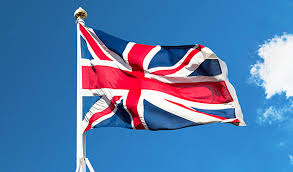
Older teenagers in the UK will face an overnight social media curfew, the government has announced – though they will be able to opt out of it by changing their account settings.
It would mean apps such as Instagram, TikTok and YouTube being set to be unavailable by default to 16 and 17-year-olds between midnight and 06:00.
The government also wants “addictive” features such as auto-play and infinite scroll to be set to be disabled, saying – combined with the curfew – the measures will improve teenagers’ focus, sleep quality and family life.
However, campaigners such as Ellen Roome, who believes her 14-year-old son Jools Sweeney died in an online challenge gone wrong in 2022, does not think the plan goes far enough as teenagers can switch the setting off.
The new plans follow the announcement in June that under-16s in the UK would be banned entirely from a range of platforms.
It adds to a complex – and potentially confusing – mix of policies and measures from the government and tech firms intended to keep young people safe online.
They include optional parental controls over children’s devices and child-only versions of popular sites such as YouTube.
Lorna Woods, professor of internet law at Essex University, said she felt the measure was designed to target apprehensions from parents and child safety groups.
“There have been concerns about the way services keep children and young people engaged on their phones for long periods, and that this can impact their sleep, amongst other effects,” she said.
Meta, which owns Facebook, Instagram and WhatsApp, has previously said it wants age verification to be handled by manufacturers of devices themselves, rather than the onus being entirely on platforms.
Apple recently introduced such “device level” age checks, meaning anyone using iPhone and iPads with the latest version of their operating software will be asked to verify their ages.
Baroness Kidron, who has strongly campaigned for safety and age assurance measures to be at a device rather than app level, was critical of the government’s approach.
She said it should not be about “banning children from tech” but “banning tech from putting toxic products in the hands of children”.
Online safety minister Kanishka Narayan defended the action the government had taken, said the combination of the curfew and limiting auto-play features meant that “Britain is already going to be the most robust place in the world when it comes to regulating” tech companies.
In an earlier statement, Technology Secretary Liz Kendall said the measures would be “crucial in helping young people get the sleep they need, focus on school and college, and spend more quality time with family and friends, all of which are fundamental to building a happy, healthy and fulfilling adult life”.
Laura Trott, the Conservative shadow education secretary, described the plans as a “dog’s dinner”.
The government said further measures would be aimed at helping children use AI chatbots safely including by making providers introduce regular breaks for under-18s.
It said it will aim to lay its new proposed measures in front of Parliament by the end of 2026, with the aim that they take effect alongside its social media ban for under-16s next spring.
But some child safety charities and experts have cast doubt on the effectiveness or promise of a midnight curfew for older UK teens.
He added that Prime Minister Sir Keir Starmer “leaves office having announced a social media ban without a plan” with his likely successor Andy Burnham to “inherit a series of missed opportunities”.
Prof Sonia Livingstone, an expert in children’s digital rights at the London School of Economics, said a curfew could harm vulnerable children by limiting their access to social media when they might need it most.
Dame Rachel de Souza, children’s commissioner for England, said: “We have to listen to young people. They don’t want a ban, but they do want to be protected from addictive, infinite scrolling.”
Meanwhile, social media analyst Matt Navarra said the measure was “not a curfew” but a “mildly annoying settings prompt with a government press release attached”.
Previous attempts to restrict what young people can see online – for example Australia’s social media ban – have been hampered by VPNs, which can hide the true location of an internet user.
But the government said it would not be taking any action to restrict them in the UK for now, saying they were useful for whistle-blowers, minority groups and family privacy.
It cued findings from research it commissioned which indicated there was little to show VPNs were being used by many children to get around age checks.
In a report published on Tuesday, the government said it had trialled a selection of different options with 300 teens, and found an overnight curfew showed sleep benefits.
But Pete Etchells, professor of science communication at Bath Spa University, cautioned against the results – saying it was merely “one part of the puzzle” in restricting tech use.

The 2026 UN Global Business Forum on the Sustainable Development Goals (SDGs) has concluded, with participants calling for a greater role for the private sector in achieving the goals.
This year, the forum was held under the theme “Business and the Real Economy: Delivering Sustainable Development in a Changing Global Context”.
Business leaders, government representatives, and international organisations discussed the contribution of the private sector to accelerating progress towards the SDGs.
Participants focused on Goal 9, dedicated to industry, innovation and infrastructure, as well as the implementation of action 55(c) of the Pact for the Future.
The document was adopted by UN Member States at the Summit of the Future in 2024 and outlined directions for modernising global governance and accelerating the implementation of the 2030 Agenda for Sustainable Development.
Action 55(c), in particular, provides for strengthening cooperation with the private sector and increasing business accountability. The business forum programme included two thematic discussions.
The first focused on key trends shaping modern industrial policy, including digitalisation, the development of artificial intelligence, the green transition and the transformation of global supply chains.
During the second session, participants examined practical aspects of implementing action 55(c) at the national level, presenting examples of cooperation between government bodies and businesses, including in the preparation of Voluntary National Reviews (VNRs).
Opening the forum, CEO and Executive Director of the UN Global Compact, Sanda Ojiambo, noted that timely investments in sustainable development can become a driver of global economic growth and energy transformation.
In turn, Chair of the Board of the UN Global Compact Network in Central Asia, Umut Shayakhmetova, highlighted the importance of regional cooperation in achieving the Sustainable Development Goals.
Fatou Haidara, Deputy to the Director-General and Managing Director of the Directorate of Global Partnerships and External Relations (UNIDO), said that private business has already become a major driving force behind modern industrial transformations.
“When we think about the future of industrialisation, we can say that the private sector is already at the centre of ongoing transformations from the green transition to the restructuring of global supply chains.
President and CEO of the African Finance Corporation (AFC), Samaila Zubairu, said that the continent has reached a point where it needs to move from discussing financing needs to creating competitive economies.
The speeches by forum participants were complemented by assessments from representatives of the technology sector, who highlighted the importance of digital solutions in advancing the sustainable development agenda.
Valery Sherman, Technical Director of MEFERI, said the agenda of the SDG Global Business Forum reflects an important trend being increasingly assessed not through declarations but through real changes in the economy.
The outcomes of the forum are expected to be used in preparing subsequent intergovernmental events in 2026, including the Private Sector Forum and the United Nations Water Conference.
The SDG Global Business Forum was held as a special event within the framework of the High-Level Political Forum on Sustainable Development (HLPF).
Its theme in 2026 is “Transformative, Equitable, Innovative and Coordinated Actions for the Implementation of the 2030 Agenda”.
During the HLPF, an in-depth review of five Sustainable Development Goals is being conducted, while 36 countries, including Brazil, Tanzania, Saudi Arabia and Uruguay, will present their Voluntary National Reviews.

A man suspected of killing his wife and two daughters in Bedfordshire has been in court in South Africa after UK authorities submitted an application to extradite him.
Nothabo Zandile Tshuma, 42, and her daughters Natalie, 15, and Nala, five, were found dead by police in a house in Great Denham, near Bedford, on 6 July.
The Crown Prosecution Service has authorised three murder charges against Ndodana Mkhanyisi Tshuma, 45, who is a British citizen of Zimbabwean heritage.
He has appeared before magistrates in Johannesburg where he confirmed his name and was told a further court hearing would take place on 22 July.
During the hearing he indicated he would be speaking in English.
His mother and sister were seated in the court’s public gallery, and Tshuma waved to his family as he was taken down to the holding cells at the end of Monday’s hearing.
South African police spokesperson Athlenda Mathe explained that the court proceedings concern the extradition request and a charge of illegal possession of firearms.
She said: “We can confirm that South Africa has received a provisional extradition request from Interpol Manchester through to Interpol Pretoria.
“We will be awaiting a full extradition request within 40 days, which will include the case docket as well as supporting evidence.
“However, we can confirm that, for now, we do have the warrant of arrest from UK authorities.”
Police added that he travelled from Heathrow Airport in London to South Africa, via Dubai, and he briefly went to Zimbabwe before returning to Johannesburg.
He was arrested in the Kensington suburb of the city on Friday.
In a tribute, family members said “words cannot begin to express the depth of our emptiness and sorrow in the fact of this tragic and senseless loss of life”.

German Foreign Minister Johann Wadephul has defended his country’s defence budget against renewed criticism from U.S. President Donald Trump as NATO leaders are due to gather in Ankara for a two-day summit on Tuesday.
“We’re looking at the numbers, and they are pointing up,” Wadephul told Germany’s Deutschlandfunk radio.
Responding to demands from Trump, who has repeatedly complained about unfair burden-sharing within the defence alliance, NATO allies committed last year to raise core defence spending from two to 3.
5 per cent of national GDP by 2035.Wadephul said Germany was on track to reach the 3.
5 per cent mark by the end of the decade.“We are spending more than many of our partners. What Germany is doing is also being noticed in Washington,” he stressed.
Trump has continued to pressure allies, branding their defence spending as “ridiculous” just days before the summit, singling out Germany in particular.



Midnight Social Media Curfew Proposed for UK Teens Aged 16, 17
ShareOlder teenagers in the UK will face an overnight social media curfew, the government has announced – though they will...


UN Forum Participants Discuss Role of Private Sector in Achieving SDGs
ShareThe 2026 UN Global Business Forum on the Sustainable Development Goals (SDGs) has concluded, with participants calling for a greater...
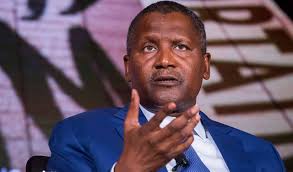

Aliko Dangote: Africa’s Industrialist-in-chief
ShareBy Wale Osofisan Aliko Dangote’s rise from a trader from Kano to the builder of some of Africa’s most important...


When a Toothache Turns Fatal: Nigeria’s Silent Antimicrobial Resistance Crisis
ShareBy Racheal Abujah Mrs Amara Obi, a 28-year-old trader at Wuse Market in the FCT, believed that she only had...


World Cup: We Were Not at Our Best – Mbappe
ShareKylian Mpappe said he and his France teammates did not perform well to progress to the 2026 FIFA World Cup...


Police Launch Manhunt as Bandits Abduct Six during NECO Exam
ShareThe Police Command in Kogi has launched a manhunt for gunmen who abducted six persons during the ongoing NECO examination...


Trust NAF, not Rumours, Air Force Spokesman Tells Nigerians
ShareThe Nigerian Air Force (NAF) has urged Nigerians to trust its official communications, saying every statement issued by the service...

FG, States, LGCs Share N2.551trn June Revenue
ShareBy Tony Obiechina, Abuja The Federation Account Allocation Committee (FAAC), at its July 2026 meeting chaired by the Minister of...


Senate Orders Security Agencies to Hunt Benue Killers
ShareBy Eze Okechukwu, Abuja The Senate yesterday took far-reaching decisions on the nation’s worsening security situation, ordering security agencies to...


Court Orders Final Forfeiture of 48 Malami-Linked Assets to FG
ShareBy David Torough, Abuja The Federal High Court in Abuja yesterday ordered the final forfeiture of 48 properties linked to...