
NEWS
Senate Challenges NDLEA, NHRC to Synergize for Review of Anti-drug War Regime


By Eze Okechukwu, Abuja
The Senate has challenged the National Drug Law Enforcement Agency (NDLEA) and National Human Rights Commission (NHRC) to work together to pursue a comprehensive review of the country’s anti-drug war regime.
On how the National Assembly completed the process of reviewing the National Drug Law Enforcement Agency Act, 2004 in June 2025, the Senate said President Bola Tinubu declined assent because a section of the amendment bill conflicted with Section 58(4) of the 1999 Constitution.
Leader of the Senate, Senator Opeyemi Bamidele made the remarks during a technical workshop of the NHRC@Civil Society, Human Rights Defenders Forum and Human Rights Expo held at Abuja Continental Hotel, yesterday in Abuja.
The workshop, titled “Towards a Comprehensive Drug Harm Reduction Strategy in Nigeria: Legislative Perspectives and Opportunities,” was convened to improve drug laws and policies, so that they are not detrimental to the health and wellbeing of people who use drugs and their communities
Bamidele, represented by his Chief of Staff, Charles Luri-Bala, commended the NHRC and its strategic partners for organising the workshop which was aimed at crafting a comprehensive drug harm reduction strategy for the country.
The senate leader noted that the Senate “Recognise that the challenges posed by illicit drug use require a multi-sectoral approach that respects the fundamental rights of all persons, particularly those in vulnerable populations.
“At the National Assembly, we believe that an effective drug strategy must shift away from overly punitive policies that only exacerbate stigma to a comprehensive approach that prioritizes treatment, rehabilitation, and social reintegration.
“These are the issues that informed the decision of the 10th National Assembly to amend the National Drug Law Enforcement Act, 2004. But Mr. President declined assent to the bill because it conflicted with Section 58(4) of the Constitution of the Federal Republic of Nigeria, 1999 (as amended).”
He observed that the fact that the president declined assent to the bill in June 2025 “does not mean the bill cannot be brought again if the section that conflicts with the Constitution is substantially addressed.”
Bamidele, therefore, urged the stakeholders to work together towards this end because the bill, if eventually enacted, will revolutionize the country’s anti-drug war, pointing out its significance to national development.
He assured the stakeholders that the lawmakers “are committed to reviewing and supporting an amendment to the legislation that would provide adequate legal and institutional backing for evidence‑based drug‑harm‑reduction strategies.
“The insights and recommendations generated from this workshop, particularly from the legal and specialist perspectives, will be invaluable for the National Assembly as we consider necessary policy reforms.”
In June 2025, Tinubu declined assent to the National Drug Law Enforcement Agency Act (Amendment) Bill, 2025 into law, citing its breach of or conflict with Section 58(4) of the 1999 Constitution (as amended).
The president explained that the proposed law seeks to give the NDLEA to retain a portion of the proceeds from drug-related crimes. Currently, according to him, all proceeds of crime must be paid into the Confiscated and Forfeited Properties Account.
By Elijah Oguche, Abuja
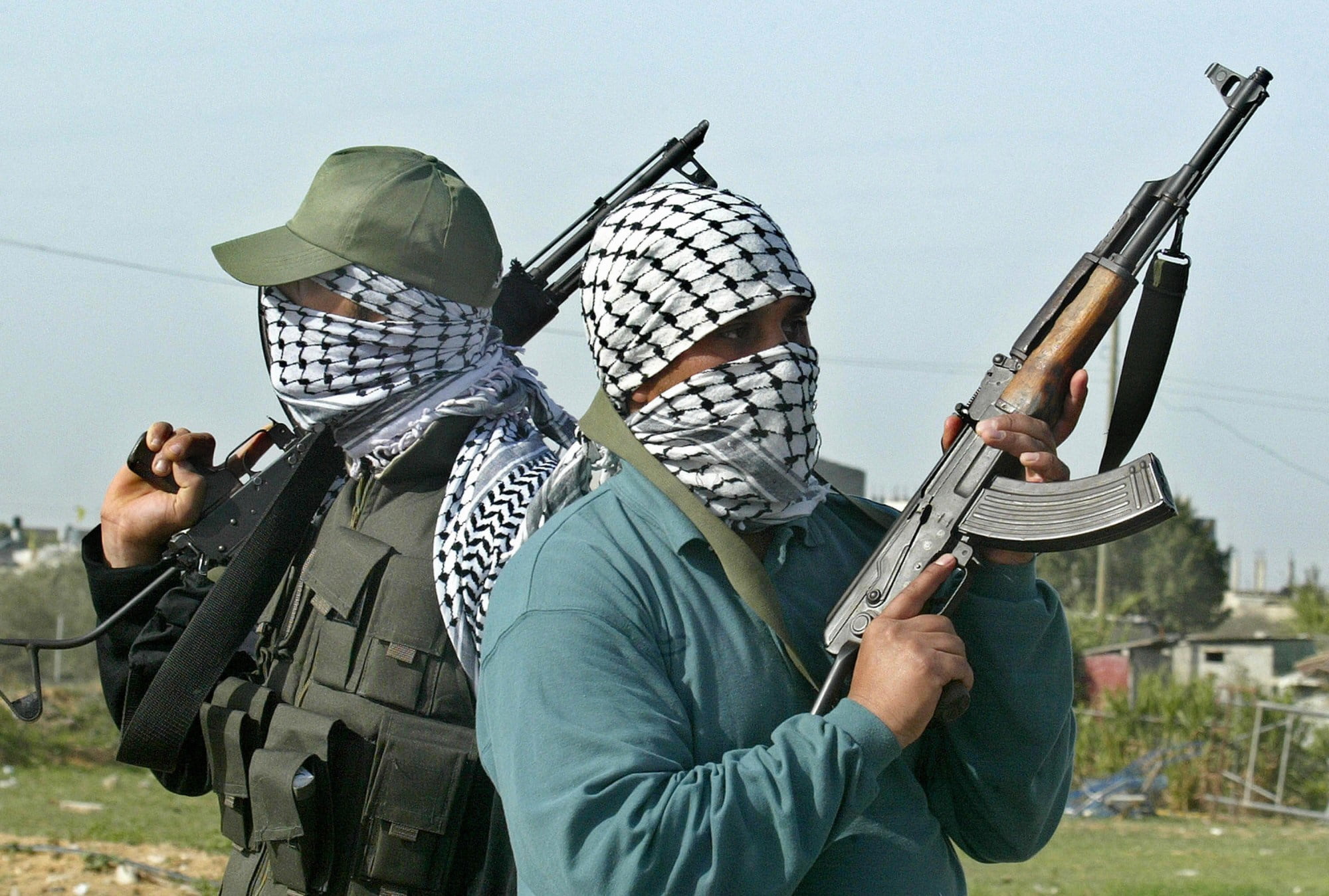
Stakeholders of the All Progressives Congress (APC) in Benue State have condemned the worsening State of insecurity in the state resulting in continuing wanton killings of innocent citizens, the latest of which occurred in Otukpo-Nobi, in the Benue-South Senatorial District.
They called for change of governmental leadership in the state owing to the manifest inability of Governor Hyacinth Alia to muster a serious challenge against the situation.
Speaking in Abuja while answering questions on “One Benue, One Direction Hang Out with Journalists”, A Chieftain of the APC, Hon.
Timothy Hembaor, lamented that insecurity in Benue is spiralling out of control because Governor Alia has failed to even accept that there are killings in the state, talk more of finding solutions to the crisis.Hembaor lamented that Governor Alia had repealed the the Anti Grazing law that was in place before his elections, confiscating enforcement vehicles and converting them for commercial transportation purposes.
“We are an agricultural state. How are we going to support our farmers to turn from partisanship to become extension agricultural farmers? Is the present government willing to support farmers? Is our land safe? I tell you it is not. The Alia administration is not going about the issue of security with sincerity.
“Hostilities against our people now have grown many times more than what obtained prior to Alia becoming Governor, and it is getting worse, with the potential of going completely out of control should he be re-elected to a second term as Governor” he stated.
Also speaking, APC Legal Adviser in the Benue-South (Zone C) Barr. Napoleon Otache, lamented that the entire Zone C is under siege by Fulani herdsmen, kidnappers and bandits.
“There are active threats going on in all parts of Zone C from terrorists. Governor Alia refers to them as foreigners, so I agree. But they pose a very latent threat of terrorism, yet the governor does not treat it as such. As big an urban centre as Otukpo is, once it is 4 p.m. the town shuts down.
“The economy is crippled. People no longer go to farm in Otukpo and environs. You stay at home and wait for the worst that could happen. You can be in your house and still be killed” he lamented.
Barr. Otache criticized the governor as not showing commitment or readiness to protect lives and property in the state, noting that it is becoming obvious he lacks ideas on how to deal with the situation that has put the state under siege, pushing her citizens into poverty and hopelessness.
Calling in on the programme from Makurdi, Comrade Adams A. said to rescue Benue from the hands of insecurity, the current leadership of the state must be changed.
He explained that Governor Alia does not believe he has a security crisis, “he has denied it many times openly, while people are dying and displaced from their homes on a daily basis all over the state, so how can he proffer solutions to what he does not think exist” Adams questioned.
Stakeholders who spoke on the programme believe that the insecurity in the Benue state will get worse if the Governor Alia is re elected to a second term of office.
By David Torough, Abuja
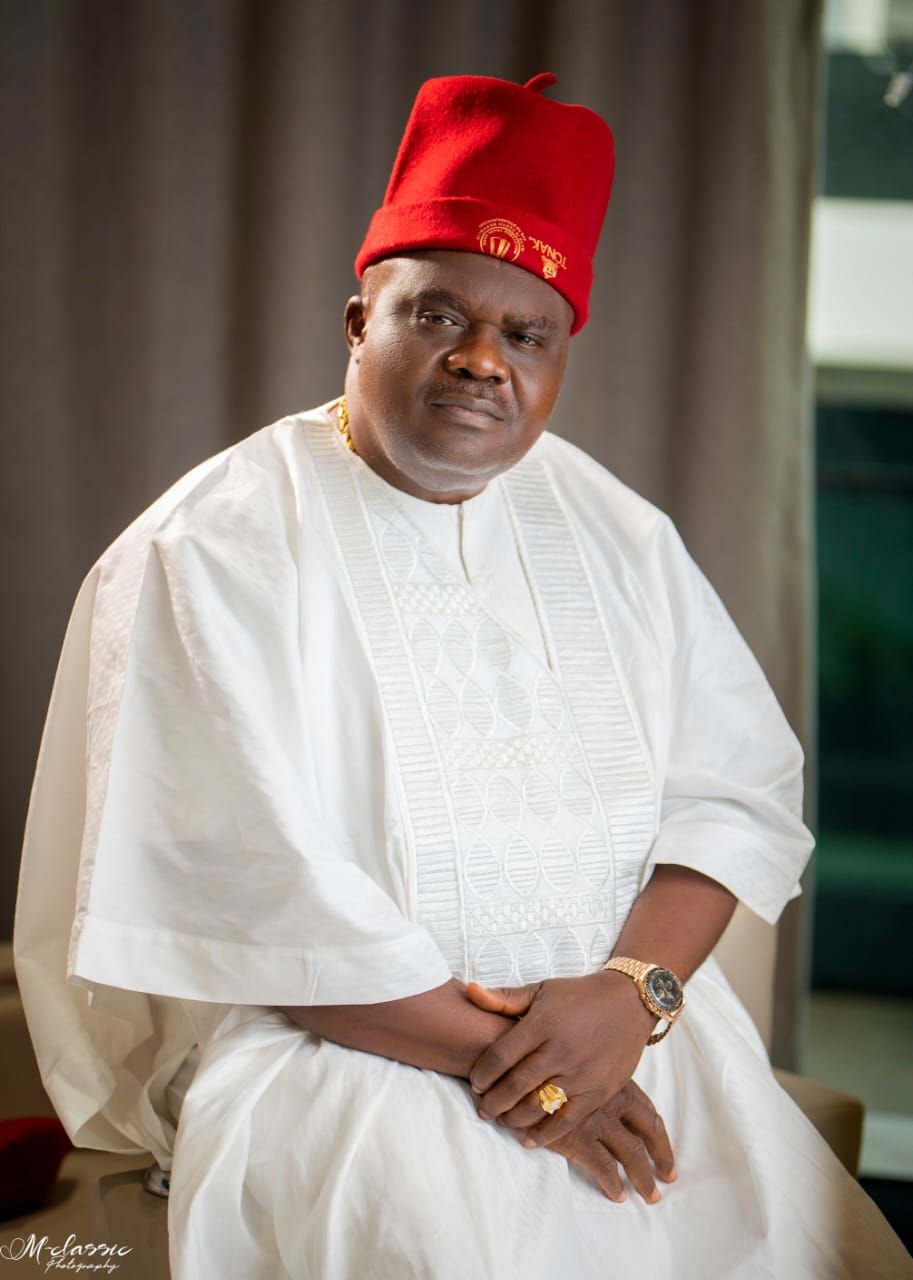
The Defence for Democracy, has reiterated earlier call on the leadership of the People’s Democratic Party (PDP) including the minister of the Federal Capital Territory (FCT) Nyesome Wike against fielding former minister of Science and Technology, Uche Geoffrey Nnaji as candidate for the 2027 Enugu Governorship polls , allaying fears that his protracted alleged forgery prosecution will have negative effect on the party .
The civil society organisation emphasized that there are two windows available for the PDP which includes uploading and substitution to field a formidable candidate that will win the election for the PDP stressing that Enugu state is the traditional home of the PDP but only if a candidate without alleged criminal charges flies it’s flag.
The Independent Corrupt Practice Commission(ICPC) has arraigned the former minister Nnaji before an Abuja High Court over allegations of forged credentials .
Nnaji resigned from President Bola Ahmed Tinubu’s cabinet over similar allegations of forgery and was arrested by anti corruption agencies at the Abuja airport and charged to court .
In a statement issued by the National President of the organisation Dr. Emeka Nwachukwu, and made available to journalists, the organisation expressed concerns that the leadership of the PDP has not yet taken a firm decision to protect the integrity of the party of despite its earlier warnings that the PDP will be working for the victory of the ruling All Progressives Congress (APC) in the state should the party fails to take decisive measures .
The organisation had warned that the APC will have sufficient grounds to fast-track accelerated hearing of the forgery case and eventually upturn any victory if the former minister wins .
Reiterating it’s position following the commencement of the criminal trials against the former minister, the group maintained that trust building,integrity and credibility as qualities that attract fellowship are conspicuously absent giving the wealth of allegations against the former minister .
The organisation emphasized that the people of Enugu State deserve leaders whose records can withstand public scrutiny without fear or controversy.
Acknowledged that the allegations are not yet proven in court, the distractions and moral burden has negative impact of the party and the candidate heading into the most critical part of the electioneering process ahead of the 2027 Governorship elections in Enugu state.
It maintained that the PDP has a moral responsibility to raise the red flag on the former minister, adding that winning the election with him on the ballot will be nearly impossible .
The organisation argued that credible candidates such as Chief Samson Nnamani stands a brighter chance of winning the elections having participated in all the processes in outlined by the Independent National Electoral Commission (INEC) in the amemded electoral Act.
“We have said everything that is playing out today and we cautioned the PDP because we want to see a competitive Democratic process and not a process that already places a popular political party in a disadvantaged position .
“We are confident that the moral burden against the former minister is huge and with the commencement of the criminal charges against him makes his case worse even before a court judgement .
“So why take an unnecessary gamble in a game you can win if you fix your house in order .
“We are calling on the NWC and major stake holders of the party including the FCT minister to come to the rescue of the PDP in Enugu and do the needful and for the first time we are saying why can’t you go with Chief Sampson Chukwu Nnamani who has clean and Excellency records instead of sticking with somebody with such baggages especially as an opposition party “.
By Sumaila Ogbaje
When officers, soldiers and defence stakeholders gathered in Port Harcourt for the Nigerian Army Day Celebration (NADCEL) 2026, the occasion represented far more than another military anniversary.
It provided an opportunity to reflect on 163 years of dedicated service and honour the sacrifices of fallen heroes.
It also highlighted the Nigerian Army’s operational achievements and efforts to reposition itself to confront a complex security environment.
Established in 1863 as the Glover Hausas, the Nigerian Army has evolved from a modest colonial force into one of Africa’s largest and most experienced land forces.
Its history mirrors Nigeria’s own evolution, spanning the civil war, peace support operations across Africa and the ongoing fight against terrorism, insurgency, banditry, kidnapping, oil theft and other emerging security threats.
Today, the Army operates across the country’s six geopolitical zones under various joint operations, confronting asymmetric threats that have continuously replaced conventional warfare.
In spite of these challenges, the Army says sustained offensive operations, improved intelligence and enhanced collaboration with sister services and other security agencies have continued to degrade criminal and terrorist networks while protecting lives and critical national assets.
The 163rd anniversary also underscored Nigeria’s growing role in regional security cooperation.
As part of NADCEL 2026, the Nigerian Army hosted the Third African Land Forces Forum, bringing together army chiefs and defence leaders from 17 African countries to deliberate on terrorism, insurgency and other transnational security threats confronting the continent.
The Chief of Army Staff (COAS), Lt.-Gen. Waidi Shaibu, said integrating the forum into NADCEL reflected the Nigerian Army’s commitment to strengthening military diplomacy, regional cooperation and collective security across Africa.
According to him, terrorism, insurgency, organised crime and other transnational threats have become increasingly complex, making collaboration among African armies imperative.
Shaibu said Nigeria’s experience in counter-terrorism and counter-insurgency operations had demonstrated the importance of adaptive strategies, effective air support, intensive training, intelligence-driven operations and regional cooperation.
He noted that the successes recorded by the Multinational Joint Task Force in degrading insurgent capabilities and reclaiming territories within the Lake Chad Basin further demonstrated the value of collective action.
The COAS expressed confidence that the forum would deepen interoperability, promote knowledge sharing and produce practical strategies capable of strengthening Africa’s collective security architecture.
For Shaibu, NADCEL 2026 also marked another milestone in the Nigerian Army’s transformation journey.
He said the nationwide activities reflected the institution’s commitment to professionalism, operational excellence and national cohesion while reinforcing its constitutional responsibility to protect the nation’s territorial integrity.
According to him, the theme of this year’s celebration, “Protecting the Nation and Serving the People: A Way Forward for the Nigerian Army,” captures the Army’s determination to balance operational effectiveness with improved service to Nigerians.
He paid tribute to fallen heroes whose sacrifices, he said, remain the foundation for building a safer and more secure nation, while reaffirming the Army’s commitment to personnel welfare and continuous enhancement of operational capabilities.
Speaking at the grand finale of NADCEL 2026, President Bola Tinubu, represented by Vice-President Kashim Shettima, said the Nigerian Army remains a strategic pillar of national security.
He noted that the Army’s professionalism and resilience have continued to preserve Nigeria’s unity while contributing to peace and stability across Africa.
The President said the changing security environment requires a modern, agile and highly motivated Army, assuring that his administration would continue to invest in personnel welfare, training, modern equipment and operational capabilities.
He also reaffirmed his administration’s commitment to improving the welfare of officers, soldiers and the families of fallen heroes, stressing that a well-motivated military remains indispensable to national peace, security and development.
Tinubu urged Nigerians to complement the efforts of the Armed Forces through patriotism, intelligence sharing and cooperation with security agencies, emphasising that national security is a shared responsibility.
Observers say the President’s commitment aligns with the Army’s “Soldier First” initiative introduced by Shaibu, which places personnel welfare at the centre of operational effectiveness through improved accommodation, healthcare, education, training and modern equipment.
Military analysts believe the initiative has boosted morale and reinforced the understanding that a motivated soldier is better equipped to accomplish demanding operational tasks.
Beyond combat operations, experts say the Army’s increasing emphasis on civil-military cooperation reflects the realities of contemporary warfare.
According to them, intelligence provided by local communities has become one of the most effective tools in combating terrorism, banditry and kidnapping.
Consequently, the Army has expanded medical outreaches, educational support, environmental sanitation campaigns and community development projects aimed at strengthening public confidence and fostering stronger civil-military relations.
Analysts argue that such engagements help bridge the gap between the military and civilians while reinforcing the Army’s constitutional responsibility to serve the people.
Notwithstanding these gains, the Army continues to confront significant challenges.
The changing character of warfare has seen terrorists and other criminal groups deploy drones, improvised explosive devices, encrypted communications and sophisticated propaganda to advance their activities.
Security experts say these developments demand sustained investment in emerging technologies, intelligence capabilities and specialised training.
They also advocate stronger collaboration among security agencies and regional partners to improve intelligence sharing and coordinated responses to transnational threats.
Beyond military operations, analysts maintain that addressing the root causes of insecurity remains critical to achieving lasting peace.
They identify poverty, unemployment, weak governance, limited educational opportunities and communal conflicts as conditions that continue to facilitate recruitment into criminal and extremist groups.
According to them, while military operations create the secure environment required for development, sustainable peace ultimately depends on good governance, economic opportunities and social inclusion.
Retired senior military officers also emphasise the importance of professionalism, accountability and strict adherence to the rules of engagement during internal security operations.
They argue that public confidence in the Armed Forces is strengthened when military operations are conducted with respect for human rights and the rule of law.
Nigeria’s contribution to regional and international peace support operations also remains one of the defining features of the Army’s history.
Over the decades, Nigerian troops have served under the mandates of the United Nations, the African Union and the Economic Community of West African States, earning recognition for professionalism while enhancing the country’s international standing and enriching the operational experience of its personnel.
As the Army marks 163 years of existence, defence experts say it must continue investing in modern equipment, digital technologies, intelligence capabilities and human capital to remain responsive to evolving security threats.
They also advocate stronger collaboration with research institutions, indigenous defence industries and international partners to promote innovation, self-reliance and technological advancement in defence production.
Equally important, they say, is sustained government support through adequate funding, timely procurement of equipment and continued investment in personnel welfare and leadership development.
For many Nigerians, NADCEL extends beyond colourful parades and ceremonial displays.
It is an opportunity to honour officers and soldiers who paid the supreme price in defence of the nation while recognising those who continue to serve under demanding and often dangerous conditions.
Families of fallen heroes and wounded personnel equally view the celebration as recognition of the enormous sacrifices made in preserving Nigeria’s unity, sovereignty and stability.
As the Nigerian Army marks 163 years of distinguished service, analysts say its ability to remain professional, adaptive and people-centred will determine its relevance in addressing Nigeria’s evolving security challenges.
They argue that President Tinubu’s message at NADCEL 2026 reinforces a shared national responsibility; while the government must continue to equip and support the military, citizens must equally contribute through patriotism, intelligence sharing and cooperation with security agencies.
They also believe the decision to host the African Land Forces Forum alongside NADCEL reflects Nigeria’s growing leadership role in promoting regional military cooperation against terrorism, insurgency and other transnational threats.
Ultimately, the Nigerian Army’s legacy is measured not only by its battlefield achievements but also by its enduring commitment to professionalism, constitutional responsibility and selfless service.
As new security threats continue to emerge, the Army’s sustained transformation, investment in personnel welfare, regional partnerships and commitment to serving the people will remain central to safeguarding Nigeria’s peace, unity and sustainable development. (NAN)




APC Stakeholders Condemn Killings In Benue, Urge Govt’s Action
ShareBy Elijah Oguche, Abuja Stakeholders of the All Progressives Congress (APC) in Benue State have condemned the worsening State of...


Alleged Forgery: Civil Society Group Urges PDP NWC to Drop Nnaji, Pick Nnamani
ShareBy David Torough, Abuja The Defence for Democracy, has reiterated earlier call on the leadership of the People’s Democratic Party...
Nigerian Army at 163: Legacy of Sacrifice, Service and Transformation
ShareBy Sumaila Ogbaje When officers, soldiers and defence stakeholders gathered in Port Harcourt for the Nigerian Army Day Celebration (NADCEL)...


What the Oyo Situation Teaches about Nigeria’s Emerging Security Doctrine
ShareBy Crispin Oduobuk There are moments when an entire nation seems to breathe again. The announcement on Friday, 10 July...


Fintiri Swears in Newly Elected Council Chairmen
ShareAdamawa State Gov, Ahmadu Fintiri, on Wednesday, swore in 21 newly elected council chairmen to administer the local governments in...

NECO Targets Full CBT Transition as Hitch-free Exam Boosts Confidence
ShareThe Minister of State for Education, Prof. Suwaiba Ahmad has expressed satisfaction with the conduct of the National Examinations Council...


Adeleke’s Call for Visa Ban on APC Stalwarts Sign of Political Jitters, Says Oyebamiji
ShareFrom Ayinde Akintade, Osogbo The governorship candidate of the All Progressives Congress (APC) in the forthcoming gubernatorial election in Osun...


Midnight Social Media Curfew Proposed for UK Teens Aged 16, 17
ShareOlder teenagers in the UK will face an overnight social media curfew, the government has announced – though they will...


UN Forum Participants Discuss Role of Private Sector in Achieving SDGs
ShareThe 2026 UN Global Business Forum on the Sustainable Development Goals (SDGs) has concluded, with participants calling for a greater...

Aliko Dangote: Africa’s Industrialist-in-chief
ShareBy Wale Osofisan Aliko Dangote’s rise from a trader from Kano to the builder of some of Africa’s most important...