
COVER
No Hope for Nigerian Economy with Fuel Subsidy, Official Forex Rate- IMF


.Proposes Heavier Tax on Citizens, Corporate Bodies
.Says Increased Borrowing, Huge Debt Servicing Pose Fiscal Risks
The International Monetary Fund has again urged the Nigerian government to stop subsidising the price of petrol, barely two weeks after the Federal Government restated petrol subsidy regime for the next 18 months.
The Federal Government had on January 24 suspended its plan to remove fuel subsidy from June this year, saying it would engage the legislature for the amendment of the Petroleum Industry Act which cannot operate with a fuel subsidy regime.
The IMF had in November last year emphasized the need “to fully remove fuel subsidies and move to a market-based pricing mechanism in early 2022 as stipulated in the 2021 Petroleum Industry Act.”
The IMF, in a statement on Monday at the end of its Article IV consultation with Nigeria, said despite the recovery in oil prices, the general government fiscal deficit was projected to widen in 2022 to 5.9 per cent of GDP, reflecting implicit fuel subsidies and higher security spending.
According to the Washington-based fund, higher debt service to government revenues (through higher US interest rates and/or increased borrowing) pose risks for fiscal sustainability.
IMF executive directors noted that the country’s outlook remained subject to significant risks, including from the pandemic trajectory, oil price uncertainty, and security challenges.
They emphasised the need for major reforms in the fiscal, exchange rate, trade, and governance areas to lift long-term, inclusive growth and urged the government to do away with fixing official exchange rate.
“Directors highlighted the urgency of fiscal consolidation to create policy space and reduce debt sustainability risks. In this regard, they called for significant domestic revenue mobilisation, including by further increasing the value-added tax rate, improving tax compliance, and rationalizing tax incentives.
“Directors also urged the removal of untargeted fuel subsidies, with compensatory measures for the poor and transparent use of saved resources. They stressed the importance of further strengthening social safety nets,” the statement said.
The IMF welcomed the removal of the official exchange rate and recommended further measures towards a unified and market-clearing exchange rate to help strengthen Nigeria’s external position, taking advantage of the current favourable conditions.
They noted that exchange rate reforms should be accompanied by macroeconomic policies to contain inflation, structural reforms to improve transparency and governance, and clear communications regarding exchange rate policy.
The statement said, “Directors considered it appropriate to maintain a supportive monetary policy in the near term, with continued vigilance against inflation and balance of payments risks. They encouraged the authorities to stand ready to adjust the monetary stance if inflationary pressures increase.
“Directors recommended strengthening the monetary operational
framework over the medium term – focusing on the primacy of price stability – and scaling back the central bank’s quasi-fiscal operations.”
The fund also welcomed the resilience of the banking sector and the planned expiration of pandemic-related support measures.
The directors agreed that while the newly launched eNaira could help foster financial inclusion and improve the delivery of social assistance, close monitoring of associated risks would be important.
They also encouraged further efforts to address deficiencies in the Anti-Money Laundering and Countering Financing of Terrorism framework.
The directors called for stronger efforts to improve transparency of COVID-19 emergency spending.
The statement said, “Directors noted that Nigeria’s capacity to repay the Fund is adequate. They encouraged addressing data gaps to allow timely and clear assessments of reserve adequacy.
“Directors emphasised the need for bold reforms in the trade regime and agricultural sector, as well as investments, to promote diversification and job-rich growth and harness the gains from the African Continental Free Trade Agreement,” noting that “Improvement in transparency and governance are also crucial for strengthening business confidence and public trust.”







By Tony Obiechina, Abuja
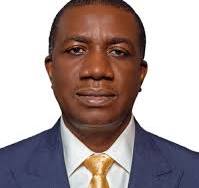
The Development Bank of Nigeria Plc (DBN) has launched DAWN: DBN Action for Women in Nigeria, unveiled its Impact Report and presented MSME Data Assets at the seventh edition of Annual Lecture held in Abuja.
DBN, in a statement on Thursday, said while delivering a welcome address, its Managing Director and Chief Executive Officer, Dr Tony Okpanachi, said the central challenge was no longer reforms themselves but ensuring benefits reach businesses at end of the chain.
He asked how to make sure benefits reach traders in Onitsha, fabricator in Aba, farmer in Kebbi and young founder in Yaba, noting that MSMEs accounted for about half of Nigeria’s GDP and more than eight in every ten jobs, adding that when reform works for MSMEs it works for most Nigerians.
He explained that reform becomes prosperity only when entrepreneurs can act on it whether through long tenor loans to buy equipment, banks willing to take risk or skills and records needed to grow.
He said working through Participating Financial Institutions DBN provides longer term funding, partial credit guarantees through subsidiary Impact Credit Guarantee Limited and capacity building including Entrepreneurship Training Programme.
He disclosed that as at December 2025 DBN had disbursed a cumulative N1.4 trillion to MSMEs through 84 Participating Financial Institutions creating about 1.6 million jobs nationwide.
Under the new five year strategy, the Bank aims to reach more than two million MSMEs with deliberate targets for women led businesses, youth led businesses and underserved states.
On DAWN, Okpanachi said finance alone had not enabled enough women-led businesses to scale.
He said initiative brings together financing, guarantees and credit support, technical assistance, outcome linked grants and market linkages delivered through banks, microfinance institutions, fintechs, aggregators, cooperatives and direct channels.
Its priority sectors are agriculture and exports, healthcare, arts and creatives, technology and green business.
He said DAWN is about moving gender focused lending beyond intention and turning access into opportunity.
On the sidelines of the lecture DBN and African Development Bank held a signing ceremony of AfDB DBN 61 million United States dollars Gender Line of Credit development that reinforces Bank commitment to women led enterprises.
Okpanachi urged Participating Financial Institutions to extend lending into sectors and states where access to finance has been limited, policymakers and regulators to measure reform by what changes for business at end of chain and MSMEs to formalise, keep good records and use support now available.
The Vice President as Special Guest of Honour was represented by Dr Fred Iklaga Senior Technical Adviser in the Office of Special Adviser to the President on Economy.
Keynote speakers were Chief Executive Officer of MTN Nigeria, Dr Karl Toriola, and Chairman of Nigeria Sovereign Investment Authority, Dr Segun Ogunsanya.
Fireside chat featured Chief Executive Officer of Sterling Bank Abubakar Suleiman, manufacturing and trade entrepreneur Mrs Omoyemi Chukwurah and by video Kola Masha of Babban Gona.
The Secretary to the Government of Federation, represented by Augusta Warren Bekaredebo, said 2026 tax reforms would bring relief to many small businesses expressing optimism that a lot of businesses will be smiling by next year because they will be exempted from tax.
By Tambaya Julius, Abuja
The Nigeria Labour Congress (NLC) has threatened possible nationwide industrial action following the failure of talks with the Federal Government over workers’ welfare, petrol prices and other outstanding labour demands.
The warning came after a meeting between the government and organised labour at the Ministry of Labour in Abuja on Thursday, October 22, ended without an agreement.
The congress has given the Federal Government until Tuesday, October 27, to make meaningful progress on the issues, warning that its relevant organs would decide the next line of action if the next meeting fails to produce concrete commitments.
The NLC has also directed its affiliates, state councils and civil society allies to begin mobilising members for possible nationwide action.
In a statement issued after the meeting, the NLC Acting General Secretary, Benson Upah, expressed disappointment over what he described as the government delegation’s lack of preparedness for the negotiations.
According to the congress, organised labour presented its demands in good faith but left the meeting without any concrete commitments from the government.
The demands include a reduction in petrol prices to 2024 levels, renegotiation of the national minimum wage, implementation of agreed tax relief measures and resolution of the terms of settlement involving the Joint Health Sector Unions (JOHESU).
The congress also called for the resolution of issues raised by the Joint Public Service Negotiating Council (JPSNC) over peculiar allowances, wage awards and hazard allowances.
The NLC said the government delegation lacked the necessary authority to engage meaningfully on the issues presented by labour representatives.
“The meeting between the Federal Government and organised labour, convened at the Ministry of Labour in Abuja on 22nd October 2026, has ended without resolution,” the statement said.
It added that the Minister of Labour requested that the meeting be adjourned until October 27 to allow the government to prepare adequately for further discussions.
The preparations, according to the statement, would include bringing relevant ministers and heads of departments and agencies to the negotiating table.
The congress said it remained open to dialogue but would not accept continued delays in addressing workers’ concerns.
“We will report back to our organs, and if no meaningful progress is made on Tuesday, the relevant organs of the NLC will decide the next line of action,” it said.
The labour body urged workers and members of the public to remain calm while the negotiations continue, even as it directed its affiliates and allies to prepare for possible industrial action.
“However, we urge all affiliates of NLC and TUC; all state councils and our civil society allies to be alert and start mobilising for a possible action across the nation while we hope that the tenets of our demands are met by the government,” the statement added.
The October 27 meeting is expected to provide another opportunity for both sides to address the outstanding issues and prevent a possible escalation of the dispute.
However, the NLC’s decision to begin mobilisation suggests that tensions could rise if the next round of talks fails to produce meaningful progress.
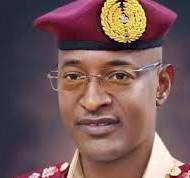
The Federal Road Safety Corps (FRSC) has barred its personnel from escorting politicians during campaigns for the 2027 general elections.
Zonal Commanding Officer, RS6, ACM Abimbola Owolabi, gave the directive during her maiden visit to the Cross River Command in Calabar on Wednesday.
Owolabi said patrol vehicles and sirens must not be used for political activities or private engagements, including weddings and funeral processions.
She directed officers deployed to campaign venues to focus exclusively on traffic management to prevent congestion and road crashes.
The zonal head warned personnel against leading political convoys or providing escorts for politicians, stressing that official vehicles must not be used for unauthorised purposes.



Establishment of Development Commissions, Tinubu’s Best Decision for Nigeria, Says Momoh
ShareBy David Torough, Abuja The Minister of Regional Development, Engr. Abubakar Momoh, has described the establishment of the Regional Development...


OPHK Air Strikes Kill 37 Terrorists, Destroy Four Vehicles in North-East
ShareBy David Torough, Abuja The Nigerian military says air strikes conducted by the Joint Task Force, Operation HADIN KAI (OPHK),...
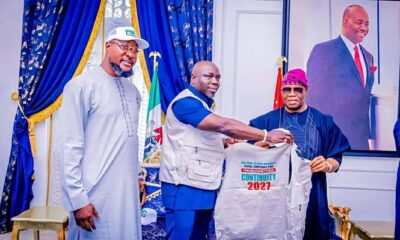

2027: Akwa Ibom opposition ‘ll Vote Tinubu, says Akpabio as Tompolo Donates 31 Campaign Vehicles
SharePresident of the Senate, Godswill Akpabio, says the All Progressives Congress (APC) in the state and other opposition political parties...

Don’t Destroy Family Ties Over Politics, Ogazi Cautions Youths
ShareBy Tambaya Julius, Abuja Gidan Zakara community in Karu Local Government Area of Nasarawa State has declared 100 per cent...

BTOCARES: Ondo Families, Students, Farmers Celebrate as Tunji-Ojo’s Intervention Eases Hardship
ShareBy David Torough, Abuja Beneficiaries of the BTOCARES humanitarian initiative in Ondo State have expressed gratitude to the Minister of...


WPRF Delegates Leaving Nigeria with Positive Impressions, Says Customs CG
ShareBy Tambaya Julius, Abuja The Comptroller-General of the Nigeria Customs Service (NCS), Adewale Adeniyi, has said delegates attending the World...
Customs Suspends Training at Two Colleges over Recruitment Concerns
ShareBy Tambaya Julius, Abuja The Nigeria Customs Service (NCS) has temporarily suspended training activities at its two training colleges to...

INEC Shelves Comprehensive Voters’ Register Clean-Up
ShareBy Orjime Moses, Abuja The Independent National Electoral Commission (INEC) has said it will no longer conduct a comprehensive clean-up...
Protect The President, But Do Not Punish the People
ShareNo one disputes it: the security of the President of the Federal Republic of Nigeria cannot be compromised. Not for...

Shettima to Moniepoint: Provide Affordable Loans for Businesses
ShareBy Tony Obiechina, Abuja Vice-President Kashim Shettima has tasked Moniepoint Microfinance Bank to expand access to affordable loans for farmers,...