
NEWS
Tinubu Clarifies on Utilization of Fuel Subsidy Removal Funds

By Ubong Ukpong, Abuja
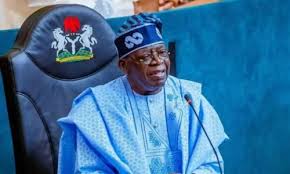
President Bola Tinubu on Monday clarified that funds saved from fuel subsidy removal, were being channeled into critical infrastructure, social safety nets, and targeted economic reforms aimed at rebuilding public trust and promoting inclusive development.
The President said this at the opening of a National Conference on Public Accounts and Fiscal Governance, jointly organized by the Public Accounts Committees (PAC) of the Senate and House of Representatives. Represented by the Minister of State for Finance, Dr. Doris Nkiruka Uzoka-Anite, Tinubu said the removal of the subsidy, though painful, was necessary to free up fiscal space and redirect national resources to sectors that benefit the broader population.The President described fiscal governance as “the lifeblood of national development,” stressing that without transparency, accountability, and sound management of public resources, no nation can prosper—regardless of its natural wealth.Highlighting other key reforms, he pointed to the newly assented tax reform laws, which he said will simplify compliance, expand the tax base, digitize collections, and harmonize multiple taxes to ease doing business in Nigeria.Describing the new tax system as “a governance imperative,” Tinubu noted that Nigeria is laying the foundation for a self-sustaining economy that gradually moves away from dependence on oil revenues to a more diverse and inclusive revenue base.The President also emphasized economic diversification as a top policy objective, naming agriculture, manufacturing, digital services, renewable energy, mining, and the creative economy as focal sectors receiving targeted investments and reforms.He referenced new initiatives like the National Credit Guarantee Company, which aims to support local production, empower SMEs, and boost non-oil exports.On monetary policy, Tinubu acknowledged the Central Bank’s efforts in stabilizing the naira, taming inflation, and coordinating effectively with fiscal authorities.The President affirmed that transparency and accountability are non-negotiable, citing steps taken to digitize public finance systems through platforms such as the Integrated Payroll and Personnel Information System (IPPIS), the Government Integrated Financial Management Information System (GIFMIS), and the Open Treasury Portal.Tinubu called on the National Assembly, especially the Public Accounts Committees, to uphold their constitutional duty with “integrity, courage, and independence.”“Oversight is not a political tool. It is a patriotic duty. Every project must be guided by value for money, and every budget must reflect the new priorities of our people,” he said.The President also underscored the role of citizens, the media, civil society, and the judiciary in institutionalizing good governance.President of the Nigerian Senate and Chairman of the National Assembly, Senator Godswill Akpabio, urged the Public Accounts Committees (PACs) of the National Assembly to assert their constitutional powers in enforcing transparency and accountability in government, warning against the growing trend of non-compliance with legislative summons.Represented by Senator Abdul Ningi, Akpabio emphasized that Nigeria’s progress is inseparable from effective fiscal oversight, which was the central mandate of the PAC.House of Representatives Speaker, Abbas Tajudern on his part, stressed that the 10th House of Representatives has made fiscal oversight a legislative priority and has deliberately elevated financial accountability “from mere procedural obligations to an active, results-driven process.”According to him, the legislative arm has engaged in expanded committee work, direct interface with the Office of the Auditor-General, and follow-up on past audit findings.Chairman of the House of Representatives Public Accounts Committee (PAC), Hon. Bamidele Salam, called for a complete recalibration of Nigeria’s fiscal governance systems, urging all public officials to move beyond lip service and ensure that public funds are truly used for the public good.Salam stressed that the conference must go beyond discussions to deliver concrete, measurable outcomes that will impact the lives of citizens.
From Rabiu Sanusi Kano
Kano State Governor, Alhaji Abba Kabir Yusuf, has applauded the Federal Government for suspending the proposed increase in the registration fees for the National Examinations Council (NECO) describing the decision as a timely intervention that will ease the financial burden on parents and ensure greater access to education for Nigerian students.
The Governor made the remarks during the official presentation of appointment letters to 4,900 newly recruited teachers and 3,688 ABBA Gida-Gida BESDA teachers at the Indoor Sports Hall of Sani Abacha Stadium in Kano.
He said the recruitment marks another major milestone in his administration’s commitment to rebuilding the state’s education sector through strategic investment in human capital.
Governor Yusuf reaffirmed that education remains the cornerstone of sustainable development, stressing that no society can achieve lasting progress without giving priority to learning.
He disclosed that his administration allocated 31 percent of the 2026 budget to the education sector, one of the highest allocations in the country, noting that the investment is already producing measurable results as Kano emerged the best-performing state nationwide in this year’s NECO examinations.
He described education without moral values as “a body without a soul,” emphasizing that the goal of his administration is not only to improve academic excellence but also to nurture disciplined, responsible and patriotic citizens.
According to him, the government is implementing comprehensive reforms to improve school infrastructure, enhance teaching quality and provide a conducive learning environment across the state.
The Governor urged the newly recruited teachers to discharge their duties with professionalism, integrity and commitment, reminding them that they have been entrusted with the responsibility of shaping the future of thousands of young learners.
He also commended teachers, education stakeholders and development partners for their unwavering support in advancing educational development across Kano State
Minister of Education, Dr. Maruf Tunji Alausa, described teachers as the bedrock of every prosperous nation, noting that quality education begins with committed and competent educators.
He commended Yusuf for making education a top priority through massive investments in schools, teacher recruitment and other developmental initiatives, describing Kano’s efforts as worthy of national recognition.
The Minister urged the newly recruited teachers to justify the confidence placed in them by serving with dedication, discipline and excellence. He stressed that their commitment would play a vital role in producing future leaders capable of driving Nigeria’s economic and social transformation.
In his remarks, the Kano State Commissioner for Education, Gwani Ali Haruna Makoda, said the success of any education system depends largely on competent teachers, adequate teaching and learning materials, and conducive infrastructure.
He reaffirmed the ministry’s commitment to sustaining ongoing reforms aimed at improving learning outcomes across the state.
The Executive Chairman of the State Universal Basic Education Board (SUBEB), Malam Yusuf Kabir, described education as a collective responsibility and appealed to wealthy individuals, development partners and community leaders to complement the government’s efforts in strengthening the education sector.
He also advised the newly recruited teachers to remain patient, disciplined and punctual in the discharge of their responsibilities.
The ceremony featured the formal presentation of appointment letters to 8,588 teachers, comprising 4,900 newly recruited primary and secondary school teachers and 3,688 ABBA Gida-Gida BESDA teachers, alongside colourful cultural performances by school pupils and entertainment by political musicians, bringing the landmark event to a memorable close.
From Sylvia Udegbunam, Enugu
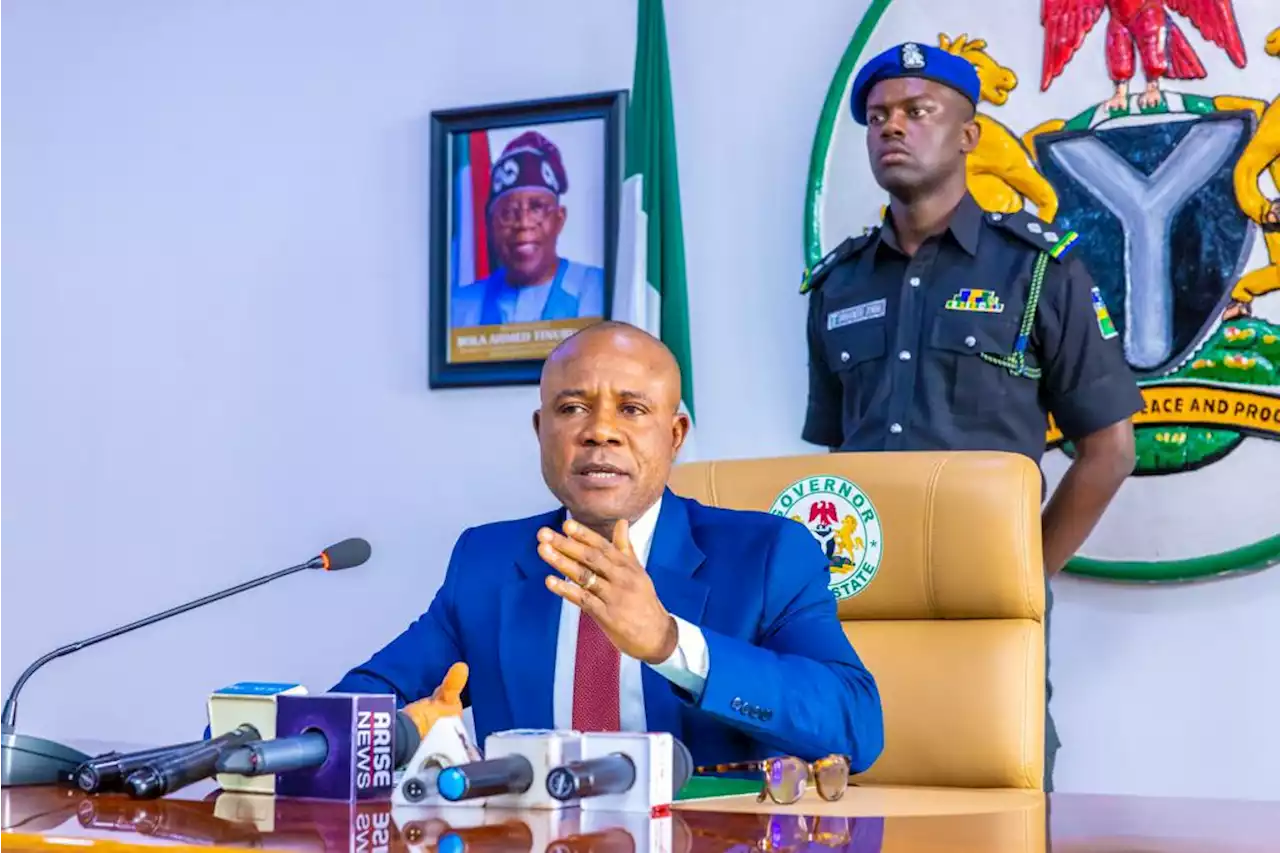
Enugu State Governor, Peter Mbah has called for a fundamental overhaul of Nigeria’s education system, urging schools to focus on producing problem-solvers and innovators rather than graduates armed only with certificates.
Speaking on Thursday while delivering the 55th Convocation Lecture of the University of Nigeria, Nsukka (UNN), Mbah said education must become the driving force for restoring human dignity through experiential learning, innovation and inclusive prosperity.
Delivering the lecture titled, “Restoring the Dignity of Man: Enugu’s Quantum Leap in Human Development and Inclusive Prosperity Through Experiential Learning,” the governor described UNN’s motto as a timeless mission whose relevance has become even greater in the era of artificial intelligence, biotechnology and the knowledge economy.
He argued that true development should be measured by citizens’ ability to transform knowledge into productivity and shared prosperity rather than by physical infrastructure alone.
“True dignity exists when people possess not merely the freedom to aspire, but the capability to transform aspiration into achievement, potential into productivity, and possibility into shared prosperity,” he said.
Mbah said Enugu’s education reforms were inspired by the Igbo apprenticeship system, which, according to him, embodies learning by doing, mentorship, trust, discipline and entrepreneurship.
“Our purpose is not to romanticize the past, but to apply its deepest principle to the future. This is why we embraced experiential learning—not as a foreign educational idea, but as a modern expression of our knowledge tradition and a twenty-first-century development imperative,” he said.
The governor explained that through experiential learning, the state seeks to democratise opportunities by ensuring that access to quality education, technology, healthcare, infrastructure, mentorship, capital and connectivity is no longer determined by birthplace, income or social status.
He disclosed that the Centre for Experiential Learning and Innovation (CELI), Enugu, is driving reforms in curriculum development, teacher training, research, digital literacy, technical education and industry partnerships to bridge what he described as the “activation gap” between knowledge and opportunity.
Mbah said his administration’s vision of growing Enugu’s economy from about $4.4 billion to $30 billion is anchored on human capital development rather than conventional infrastructure projects alone.
He noted that about one-thirds of the state’s annual budget has consistently been allocated to education, leading to the construction of 268 Smart Green Schools across the state’s 260 political wards, equipped with smart classrooms, laboratories, digital libraries, innovation studios, clinics, smart farms, solar power and internet connectivity.
According to him, over 23,000 teachers have undergone digital literacy training, while the state has approved the recruitment of 4,698 teachers to strengthen the Smart Green School initiative.
The governor added that students in the state’s Technical and Vocational Education and Training (TVET) colleges were already receiving practical industry training in ICT, mechatronics, aquaponics, precision welding, fashion and design through partnerships with industries, including the Enugu Haier Factory.
He also announced plans to establish three specialised universities dedicated to Artificial Intelligence and Technology, Education and Technology, and Agriculture, Agro-industrialisation and Technology, while new degree programmes in Automation, Artificial Intelligence and Mechatronics have already been introduced at ESUT and IMT.
To demonstrate the impact of experiential learning, Mbah narrated the story of Arinze Edeoga, a pupil of a Smart Green School in rural Owo community, who recently taught digital literacy to pupils in Enugu metropolis.
Mbah, however, said education reforms alone would not guarantee prosperity unless supported by investments in healthcare, electricity, roads, aviation, tourism and technology, stressing that Enugu’s development strategy integrates all sectors into a single human development architecture.
He cited projects such as the 300-bed Enugu International Hospital, the transport terminals, Enugu Air, the expansion of primary healthcare centre, the Enugu Command tourism infrastructure, and the proposed 660-megawatt power plant, as interconnected investments designed to unlock productivity, attract investment and improve citizens’ quality of life.
Mbah concluded by urging governments, universities, communities and the private sector to reject what he described as the “poverty of imagination,” insisting that the future belongs to societies willing to invest boldly in human capability.
Meanwhile, in their various remarks, the Vice Chancellor of UNN, Prof. Simon Ortuanya and Chairman of the event and former Minister of Power, Prof. Chinedu Nebo commended Mbah’s milestones in human capital development.
They noted that Mbah had, in three years, made a resounding impact in development across all sectors.
The event was attended by notable dignitaries, including the Deputy Governor of Enugu State, Barr. Ifeanyi Ossai; Deputy Speaker, Enugu State House of Assembly, Hon. Ezenta Ezeani; Minister of Innovation, Science and Technology, Dr. Kingsley Udeh and Catholic Bishop of Nsukka Diocese, Most Rev Godfrey Igwebuike Onah and Senator Ikeje Asogwa.

A Federal High Court in Ibadan on Thursday sentenced a 40-year-old woman, Omodunmami Ayantola to one year in the correctional centre for trafficking 45.6kg of Cannabis.
Delivering judgment, Justice Uche Agomoh convicted and sentenced Ayantola based on her guilty plea and the evidence tendered against her by the prosecution.
Agomoh added that she reduced the convict’s jail term because she did not waste the time and resources of the court before pleading guilty.
She said that the convict was also a first time offender.
“The convict has shown signs of remorse and has promised to turn a new leaf after completing her jail term.
“To serve as a deterrent to others, Ayantola is sentenced to one year imprisonment from the date of arrest.
“The dried weed substance found in her possession shall be destroyed by the National Drug Law Enforcement Agency (NDLEA),” Agomoh said.
The prosecuting counsel, D.O. Otunla, had told the court that the convict committed the crime on April 1, at Eleta area of Ibadan, Oyo State.
Otunla said that the NDLEA operatives received intelligence reports from informants that Ayantola was into illicit drug dealing.
According to him, the operatives arrested the convict in possession of a substantial quantity of Cannabis Sativa weighing 45.6kg.
The prosecutor said that the offence contravened the provision of Section 11 (C) of the NDLEA Act Cap n30 Law of the Federation, 2004.




Police Arrest Four Suspected Kidnappers, Rescue Abducted Woman in Rivers
ShareThe Police Commander in Rivers has arrested four suspected members of a kidnapping syndicate and rescued a woman abducted from...

Yusuf Hails FG Suspension of NECO Fee Hike
ShareFrom Rabiu Sanusi Kano Kano State Governor, Alhaji Abba Kabir Yusuf, has applauded the Federal Government for suspending the proposed...


Mbah Advocates Experiential learning, Unveils Human Development Model
ShareFrom Sylvia Udegbunam, Enugu Enugu State Governor, Peter Mbah has called for a fundamental overhaul of Nigeria’s education system, urging...

Woman Bags One year Imprisonment for Trafficking 45.6kg Cannabis
ShareA Federal High Court in Ibadan on Thursday sentenced a 40-year-old woman, Omodunmami Ayantola to one year in the correctional...


Oborevwori Approves Financial Support for Delta Law School Graduates
ShareFrom Francis Sadhere, Delta Delta State Governor, Rt. Hon. Sheriff Oborevwori, has approved the payment of financial assistance to 533...
The State of Humanities Education in Nigeria
ShareBy Kenny Ola The reality that recently dawns on Nigerian education arrives not with noise, but with poise, a gospel...

Customs Debunks Viral Recruitment Update, Warns Public against Fake Information
ShareBy Tambaya Julius, Abuja The Nigeria Customs Service (NCS) has dismissed a purported recruitment update circulating on social media, describing...


Over 450m People in Americas Living with Neurological Disorders – WHO
ShareResearchers with the Pan American Health Organisation (PAHO), a sub-agency of the World Health Organisation (WHO) said nearly 470 million...


Veekee James Opens up on Childhood Financial Survival, Family Loss
ShareNigerian fashion designer Veekee James, has spoken up on some of the experiences that shaped her childhood, revealing that she...

Niger Gov Welcomes Partnership with NCDC Regional Devt
ShareBy David Torough, Abuja Governor of Niger State, Mohammed Umaru Bago, has expressed the readiness of his administration to partner...