
BUSINESS
Customs Debunks Viral Recruitment Update, Warns Public against Fake Information


By Tambaya Julius, Abuja
The Nigeria Customs Service (NCS) has dismissed a purported recruitment update circulating on social media, describing it as false and not originating from the Service.
The Service, in a statement, urged members of the public to disregard the misleading information and refrain from sharing unverified content capable of misleading prospective applicants and the general public.
The NCS advised Nigerians to rely solely on information published through its official communication channels for accurate updates on recruitment exercises and other activities of the Service.
It reiterated that its verified social media platforms remain the authentic sources of information and urged the public to always verify recruitment-related announcements before acting on them or sharing them with others.
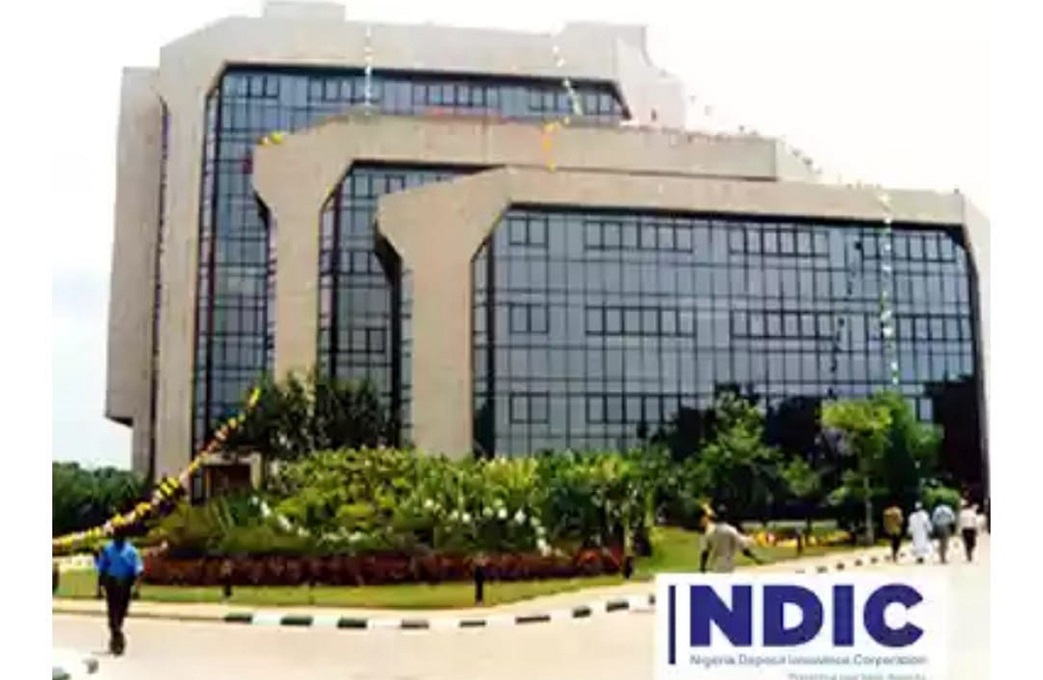
The Nigeria Deposit Insurance Corporation (NDIC) has begun paying insured deposits to customers of the 46 recently failed microfinance banks.
The NDIC Managing Director and Chief Executive, Thompson Sunday, disclosed this in an interview in Abuja.
The interview took place on the sidelines of the International Association of Deposit Insurers Africa Regional Committee meeting.
Sunday said the corporation was using the Nigeria Inter-Bank Settlement System and customers’ Bank Verification Numbers (BVNs) for the payments.
He said NDIC had traced depositors’ alternative bank accounts and credited them directly without requiring physical visits.
He advised depositors without BVNs to visit the nearest NDIC zonal office for verification and payment processing.
“The CBN revoked the licences of the 46 microfinance banks on July 1, 2026,” he said.
He said NDIC automatically became the provisional liquidator after the revocation, in line with the law.
Sunday said the corporation had commenced payment of the insured maximum deposit of N2 million to eligible customers.
He explained that further payments would depend on the recovery of the failed banks’ assets and outstanding debts.
He said proceeds realised from recoveries would be distributed as liquidation dividends to eligible depositors.
Sunday cited Heritage Bank, Aso Savings and Union Homes as examples of NDIC’s prompt reimbursement efforts.
He said insured depositors of Heritage Bank were paid within four days of licence revocation.
He added that customers of Aso Savings and Union Homes received payments within 72 hours.
“The law allows us 30 days, but we are working to surpass our previous records,” he said.
The Central Bank of Nigeria revoked the banks’ licences for failing to meet regulatory requirements for continued operations.
The apex bank said the action was aimed at protecting depositors, strengthening financial stability and ensuring regulatory compliance.
By Tony Obiechina, Abuja
The Nigeria Deposit Insurance Corporation (NDIC) will host the International Association of Deposit Insurers (IADI) Africa Regional Committee (ARC) Annual Meeting and Workshop from 20th to 23rd July, 2026 in Abuja.
According to a statement by Head, Communication & Public Affairs Department, Hawwau Gambo on Sunday, the meeting has the theme: “Safeguarding Stability: Public Awareness and Crisis Readiness for a Stronger Future”
The 4-day high-level regional engagement will gather Chief Executives, Directors and senior officials of deposit insurance institutions, financial regulators and other stakeholders within the financial safety net across Africa and beyond.
The engagement will deliberate on strategies for strengthening public awareness and crisis preparedness in deposit insurance systems in line with the revised IADI Core Principles.The focus will be on building and sustaining depositor confidence, enhancing effective communication, improving coordination among financial safety-net participants, and equipping deposit insurers with practical tools for crisis management and resolution.
The workshop will also provide a platform for peer learning, sharing of experiences, and addressing emerging risks including financial technology innovations and cyber threats, with a view to strengthening frameworks for effective crisis response across the region.
The programme will feature technical committee meetings, plenary sessions and interactive roundtable discussions covering public awareness in both normal and crisis periods, crisis preparedness and management, system-wide response operations, and simulation exercises designed to test institutional readiness.
The event will be declared open by Olayemi Cardoso, Governor, Central Bank of Nigeria (CBN).
The Minister of Finance and Coordinating Minister of the Economy, Mr. Taiwo Oyedele is expected to deliver the Keynote Address. Other dignitaries expected include Ms. Eva Hüpkes, IADI Secretary General, and Ms. Julia Oyet, Chairperson of the IADI-Africa Regional Committee. The Chief Host of the Conference is Thompson Oludare Sunday, Managing Director/Chief Executive, NDIC.

The International Monetary Fund (IMF) has projected that global economic growth will slow to 3.0 per cent in 2026 before recovering to 3.4 per cent in 2027.
The IMF made the projection in its July World Economic Outlook (WEO) Update, released on Wednesday and titled “Global Economy in Crosscurrents of War and Technology.
”According to the report, the global outlook remains uneven, with the ongoing war in the Middle East weighing heavily on energy-importing and vulnerable economies.
It, however, said that Artificial Intelligence (AI)-driven demand was lifting countries integrated into the global technology value chain.
“The impact varies widely based on countries’ exposure to the war and position in the technology value chain.
“Energy exporters outside the conflict zone benefit from favourable terms of trade, whereas economies plugged into the technology-led upturn experience stronger activity even if they are energy importers.”
It said that economic activities would weaken in energy-importing countries with limited participation in the technology value chain, a group that includes many low-income economies.
The IMF also projected global headline inflation to increase from an estimated 4.1 per cent in 2025 to 4.7 per cent in 2026 before declining to 3.9 per cent in 2027.
According to the fund, the projections, which were revised slightly upward from the April outlook, suggest that the disinflation trend observed since early 2024 has stalled.
“For Sub-Saharan Africa, growth is expected to remain stable at 4.3 per cent in 2026 before rising to 4.5 per cent in 2027.
“However, the regional outlook masks significant differences across countries due to varying policy space, reform implementation and exposure to external shocks,” it said.
The report said that oil-importing, non-resource-intensive economies would be more adversely affected by higher energy and food prices.
It said that some larger economies would continue to benefit from earlier stabilisation and reform efforts despite remaining largely outside the AI-driven technology upswing and facing reduced official development assistance.
For Nigeria, the IMF projected economic growth of 4.1 per cent in 2026, and rising to 4.3 per cent in 2027.
“Nigeria is supported by improved macroeconomic stability and favourable terms-of-trade effects, though higher prices for essentials are expected to further aggravate poverty and food insecurity,” it said.
The report said among advanced economies, growth was projected at 1.7 per cent in 2026 and 1.8 per cent in 2027.
For emerging markets and developing economies, it projected growth to slow to 3.8 per cent in 2026 before recovering to 4.5 per cent in 2027.
The IMF projected growth in the Middle East and Central Asia to decline sharply to 0.7 per cent in 2026 before rebounding to 6.5 per cent in 2027.
It projected that growth in Latin America and the Caribbean would remain stable at 2.4 per cent in 2026 before rising modestly to 2.7 per cent in 2027.
It said that growth in emerging and developing Europe would remain restrained at about 2.0 per cent.
According to the IMF, risks to the global outlook are more balanced than in April but remain tilted to the downside.
It warned that renewed conflict in the Middle East could prolong commodity price volatility, further disrupt supply chains, raise prices and tighten global financial conditions.
The report also identified trade fragmentation, possible corrections in technology-driven market expectations and eroded policy buffers as additional downside risks.
On the upside, the IMF said faster-than-expected normalisation in energy markets, stronger technology investment, renewed international cooperation to reduce trade barriers and structural reforms could improve medium-term growth prospects.
It urged policymakers to maintain price stability, supported by clear communication, central bank independence and strong financial supervision.
It also recommended rebuilding fiscal buffers while limiting fiscal support to temporary and targeted measures that preserve market price signals.


Customs Debunks Viral Recruitment Update, Warns Public against Fake Information
ShareBy Tambaya Julius, Abuja The Nigeria Customs Service (NCS) has dismissed a purported recruitment update circulating on social media, describing...


Over 450m People in Americas Living with Neurological Disorders – WHO
ShareResearchers with the Pan American Health Organisation (PAHO), a sub-agency of the World Health Organisation (WHO) said nearly 470 million...


Veekee James Opens up on Childhood Financial Survival, Family Loss
ShareNigerian fashion designer Veekee James, has spoken up on some of the experiences that shaped her childhood, revealing that she...


Niger Gov Welcomes Partnership with NCDC Regional Devt
ShareBy David Torough, Abuja Governor of Niger State, Mohammed Umaru Bago, has expressed the readiness of his administration to partner...


Women Have No Business Getting Married in Their 20s – Toke Makinwa
ShareMedia personality and actress, Toke Makinwa, has claimed that it is not ideal for women to get married in their...


Cardi B Breaks Silence on Rumours Linking Her with Okoye
ShareAmerican rapper Cardi B has reacted to growing speculation surrounding her friendship with Super Eagles goalkeeper Maduka Okoye, following recent...
Ghost Workers, IPPIS Fraud, and Lessons from the N941m Forfeiture
Share By Nafisat Bello “Ghosts are supposed to haunt abandoned buildings, not government payrolls. They do not possess bank accounts, collect...


Minister Commends Yusuf on Education Transformation, Others
ShareFrom Rabiu Sanusi Kano The Minister of Education, Dr. Ma’aruf Tunji Alausa, has commended Kano State Governor, Alhaji Abba Kabir...

NDIC Begins Payment to Depositors of 46 Failed MfBs
ShareThe Nigeria Deposit Insurance Corporation (NDIC) has begun paying insured deposits to customers of the 46 recently failed microfinance banks....
Troops Rescue 16 Kidnap Victims, Nab Terrorist Logistics Suppliers
ShareThe Nigerian Army says its troops have rescued 16 kidnapped victims, apprehended suspected terrorist logistics suppliers and informants, and recovered...