
BUSINESS
NNPC Weekly: 24-hour Operation in Petrol Filling Stations in Abuja


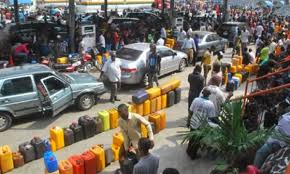
The Nigerian National Petroleum Company Limited (NNPC Ltd.) started its week with the introduction of 24-hour operation for over 40 ppl filling stations in Abuja as part of efforts to ensure the disappearance of fuel queues.
The development which ensured round-the-clock operations of these selected filling stations in the Federal Capital Territory (FCT) saw the officials of the NNPC Ltd embark on several unannounced visits.
In one of such unannounced visits in the wee hours, within the week, officials of the company, led by the Group General Manager, Group Public Affairs Division, Malam Garba Muhammad noticed a much-improved situation, with much of the queues vanished.
At the Airport Road branch of the A. A. Rano Filling Station which has over 60 pumps, only two motorists were found filling their car tanks while majority of the fuel attendants in other filling stations were waiting for customers.
A motorist who identified himself as Jika Wakili said the efforts by the NNPC authorities to restore normalcy to the fuel situation were highly commendable.
Wakili urged the management of the company to sustain the tempo and ensure the situation gets even better across other locations in the country.
“The situation is easing now and we are happy with the efforts of the NNPC Management.
“This shows that the leadership of the organisation is working very hard to resolve this issue.
“They should not rest on their oars please,” Wakili added.
Other motorists spoke on the improved fuel situation.
Also in the week, the Minister of State for Petroleum Resources, Chief Timipre Sylva called on the United States (U.S.) Government to provide funding support for Nigeria to develop its natural gas resources to serve as alternative source of energy for Europe.
Speaking at a meeting with the U.S. Secretary of Energy, Jennifer Granholm, on the side-line of the just concluded CERA Week in Houston Texas, Sylva said the collaboration between the U.S. and Nigeria in this area would be of immense benefits to both countries as well as the entire globe.
According to Sylva “It is in the interests of the global community that there is alternative supply of gas to Europe.
“The challenge for us to achieve this feat has been lack of infrastructure and we need funding to develop infrastructure for our gas and we believe that the U.S. can provide that funding”.
He told Granholm that Nigeria had abundance of natural gas resources that can meet European gas demands, noting that the problem has been access to funding.
He said as part of efforts to boost gas supplies across the African continent, the country had embarked on the construction of 600 kilometers of the Ajaokuta- Kaduna- Kano (AKK) gas pipeline designed to take gas to Europe via North Africa.
The minister therefore called on the U.S. to provide the needed funding for infrastructure for the exploitation of the huge natural gas in Nigeria.
Speaking on the burning issue of global energy transition, Sylva said for the energy transition programme to be meaningful, the peculiar problems of Africa must be factored into the entire energy transition arrangement.
In her remarks, Granholm expressed the readiness of the U.S. to cooperate with Nigeria to develop her renewable energy sector noting that her government was not against the development of gas or other sources of energy.
She said the U.S. government would be willing to support Nigeria in developing her renewable energy sources and therefore called for a coordinated strategy to pin down specific areas of focus where funding and other supports would be required.
“Investors are interested in funding renewable energy in Nigeria but they are interested in knowing possible areas of focus. We have to work out a structured way to access the fund,” Granholm said.
Sylva who was in an earlier meeting with the U.S. Assistant Secretary of State, Harry Karman, expressed Nigeria’s willingness to develop the different sources of renewable energy such as wind, solar and hydrogen.
In a related development, the Federal Government said its inability to meet the oil production quota allocated to Nigeria by the Organisation of Petroleum Exporting Countries (OPEC) was due to the lack of investments in the oil and gas sector of the economy.
It said the lack of investments was due to the recent spate of exits by International Oil Companies (IOCs) such as Shell and ExxonMobil from Nigeria’s oil and gas sector.
Speaking at the just concluded CERA Week in Houston, Texas, the Minister of State for Petroleum Resources, Chief Timipre Sylva, said the speed with which IOCs were withdrawing investments in hydrocarbon exploitation had contributed significantly to Nigeria’s inability to meet its OPEC target.
Nigeria’s OPEC quota is pegged at about 1.8 million barrels per day but the country produces between 1.3 and 1.4 million barrels per day.
“Lack of investments in the oil and gas sector contributed to Nigeria’s inability to meet OPEC quota. We are not able to get the needed investments to develop the sector and that affected us.”
Sylva also cited security challenges as another major factor that contributed to the lack of significant growth of the sector, adding that the drive towards renewable energy by climate enthusiasts had discouraged funding for the industry.
The minister, however, called for a change of attitude stressing that in decades to come hydrocarbon would continue to play a central role in meeting the energy needs of the world.
He told delegates at the event that though Nigeria was in full support of energy transition, the country and the African continent should be allowed to develop at its own pace.
This, he said would enable African countries meet the energy needs of the over 600 million people who had no access to any form of power in Africa.

In keeping with its philosophy of touching the lives of citizens in positive ways, the Nigerian National Petroleum Company Limited (NNPC Ltd) has donated state-of-the-art building complexes to the Ahmadu Bello University (ABU) and Bayero University Kano (BUK) to serve as Centre for Inland Basin Studies and Civil Engineering Department respectively at both institutions.
The projects which were inaugurated and handed over to the management of both schools recently are part of the Company’s Corporate Social Responsibility programme.
The Centre for Inland Basin Studies is a storey building equipped with modern lecture halls, library and seminar rooms, and an equipment section and laboratories, including a dedicated section for automation. It is domiciled at the Geology Department of the ABU and will serve as the hub for research on hydrocarbon resources in the inland basin.
Speaking at the event, the Group Executive Director, Corporate Services, Hajiya Aisha Katagum, who represented the Group Managing Director/Chief Executive Officer of NNPC Ltd, said such support to institutions of higher learning were critical to the sustained growth of the Nigerian petroleum industry.
“As a technology driven energy company, NNPC believes that real progress can only be possible, when corporate organisations support and strengthen educational institutions, with new knowledge and better ways of delivering services to humanity.
“As global energy transition continues to gain traction, NNPC as National Oil Company, the economic backbone, will continue to collaborate with Nigerian universities to support meaningful research, technology development and innovation across different fields of our operations especially as NNPC transit to a fully commercial energy company of global excellence.”
The Chancellor of ABU, Alhaji Kabiru Bala, who commended NNPC for the timely intervention, spoke on the significance of the project.

Some students of the two beneficiary institutions also expressed delight at the intervention and how the projects would enhance their learning.
The Group Executive Director, Corporate Services, was accompanied by the Group General Manager, Engineering and Technology Division, General Manager, Chad Basin Operations, Coordinator, NNPC Intervention Projects and Manager, Corporate Social Responsibility, among others.
Also present at the event were the Deputy Vice Chancellor, Administration, Professor Ahmed Ibrahim, the Registrar, Bursar, Deans of Faculties, Heads of Departments, and the Chairman of Zaria Local Government Area.
Meanwhile, the Nigerian Midstream and Downstream Petroleum Regulatory Authority (NMDPRA) assured stakeholders in the aviation sector that there was no scarcity of Aviation Turbine Kerosene (ATK), also known as aviation fuel.
The Authority gave the assurance at an investigative hearing of the House of Representatives’ Adhoc Committee on High Cost of Aviation Fuel at the National Assembly Complex on Thursday, in Abuja.
NMDPRA Executive Director, Distribution Systems, Storage and Retailing Infrastructure, Mr Ogbugo Ukoha, who spoke at the hearing, dispelled insinuations that the rise in the price of the product was a result of short supply.
Ukoha stressed that there was robust supply of ATK with enough stock to last for 34 days.
Putting the issue of ATK price hike and its effect on the safety of airline operations in perspective,
Also speaking, the Director General of the Nigerian Civil Aviation Authority, Capt. Musa Nuhu, stated that the steep rise in the price of ATK from N190 per litre barely a year ago to N670 per litre was a worrisome trend.
Nuhu said the development could sooner or later begin to affect the safety of operations.

He noted that under normal circumstances, fuel was supposed to be responsible for about 30 per cent of an airline’s cost of operation but was currently taking up about 50 per cent.
“For me, as the regulator of the industry, this is of significant concern for me, God forbid, I don’t want to come before this committee to explain why A or B happened”
The Chairman of Air Peace and Vice Chairman of the Airline Operators of Nigeria (AON), Mr Allen Onyema, said he was surprised at the report from the NMDPRA that there was 34-day sufficiency because airlines have had to cancel flights over the past few weeks owing to non-availability of ATK.
“We are subsidising what each and every one of you is using in flying. But we cannot continue, we cannot last for the next 72 hours doing that as we are indebted.
“We don’t want AMCON to come after us. I am surprised he said they have enough volumes of ATK to last for 34 days”
In his intervention, Group Managing Director/Chief Executive Officer of NNPC Ltd., Malam Mele Kyari, pledged to collaborate with the operators, regulators, marketers and other stakeholders in the aviation sector to ensure effective distribution of ATK.
The NNPC boss assured that it was the statutory responsibility of the national oil company to eliminate any gap in the supply chain of petroleum products and guarantee nation’s energy security.
Kyari corroborated the position of the NMDPRA that there was enough stock of ATK in the country.
He also advised operators of commercial airlines to develop proper commercial arrangements with ATK suppliers in order to hedge themselves from price fluctuations arising from market volatility.
On his part, the Deputy Speaker of the House of Representative and Chairman of the Adhoc Committee, Rep. Idris Wase, commended the GMD for his exceptional leadership qualities and appealed to all stakeholders to make the Petroleum Industry Act (PIA) work.
He said that the committee would get to the bottom of the issue as mandated by the House of Representatives.
“All we want is to make the PIA work and make Nigerians not to regret. More investigations will be done as to the reality of what is on ground.
“As a parliament we will carry out our investigation and ensure that Nigerians benefit from whatever resources God has made available to them”.
Still in the week under review, NNPC Ltd joined the rest of the world to mark the International Women’s Day (IWD) by reflecting on the importance of breaking the bias, which was the theme of the celebration.
IWD is a global day celebrating the social, economic, cultural and political achievements of women. The day also marks a call to action from both men and women for accelerating gender parity.
The celebration was led by the Company’s Group Executive Director, Corporate Services, Mrs Aisha Farida Katagun.
Also present were the Group General Manager, Human Resources, Mr Yahaya Yunusa and other top management staff of the company to lend their support.(NAN)




The Federal Government has restated its commitment to deepening regional trade integration and promoting exports through the ECOWAS Trade Liberalisation Scheme (ETLS).
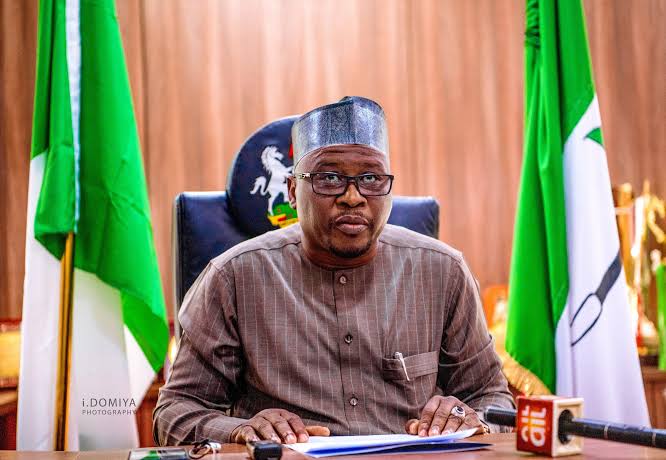
The Minister of State for Foreign Affairs, Amb.
Sola Enikanolaiye, stated this on Saturday in Bauchi at the ETLS sensitisation workshop for the North-East zone.The workshop was organised with the theme: “Increasing Intra-Regional Trade through the ECOWAS Trade Liberalisation Scheme (ETLS).
”Enikanolaiye urged local businesses and manufacturers to take advantage of the scheme to increase production, create jobs and boost wealth creation.
He said the sensitisation was aimed at creating awareness and improving businesses’ and manufacturers’ understanding of the ETLS and its benefits.
According to him, the scheme is designed to enhance economic cooperation and trade integration among ECOWAS member states and accelerate regional economic growth.
The minister said the ETLS would provide market access for manufacturers and businesses across the ECOWAS member states.
He added that the scheme would help businesses expand their customer base, increase revenue and contribute to Nigeria’s economic growth and prosperity.
Enikanolaiye described the ETLS as a cornerstone of regional trade integration and free trade, aimed at establishing a common economic union among member states.
He said the scheme sought to eliminate customs duties on qualifying products and promote the implementation of a unified customs policy within the subregion.
“The scheme will provide an opportunity to foster greater economic integration and unlock the potential of intra-regional trade.
“The ministry prioritises the wellbeing of Nigerians by involving people at the grassroots in its programmes and foreign policy formulation,” he said.
The minister urged businesses and manufacturers in the North-East to utilise the opportunities provided by the scheme to expand production and promote sustainable economic growth.
He also called for the processing of agricultural produce and raw materials in Bauchi and other parts of the region to support industrial growth and strengthen value chains.
According to him, improved value addition would promote exports, economic diversification and regional trade integration.
Enikanolaiye said the initiatives were part of efforts to support the government’s target of achieving a $1 trillion economy.
Inaugurating the workshop, Gov. Bala Mohammed of Bauchi State said the ETLS aligned with his administration’s development agenda of positioning the state as a trade hub in the region.
Represented by his Deputy, Auwal Jatau, the governor reiterated his commitment to job creation and economic diversification through Public-Private Partnerships (PPPs).
Mohammed said the scheme should create an enabling environment for the integration of the North-East trade corridor, attract investments and remove barriers to legitimate trade.
He assured that the state government would support programmes aimed at promoting manufacturing, businesses and trade.
The governor commended the Ministry of Foreign Affairs, ECOWAS Commission and other stakeholders for organising the workshop.
He called for stronger partnerships to mobilise greater participation in the scheme.
Also, the Permanent Secretary, Ministry of Foreign Affairs, Amb. Dunoma Ahmed, said the ETLS provided local manufacturers, farmers and entrepreneurs with opportunities to expand their businesses across the subregion.
Ahmed, represented by Amb. Ali Gombe, stressed the need for collaboration among stakeholders to ensure effective implementation of the scheme.
On his part, Aminu Ashimi, President of the North-East Chamber of Commerce, called for continuous training of businesses on the ETLS and the formalisation of informal trade to improve productivity and stimulate economic growth.
Ashimi pledged to sensitise members of the chamber on the scheme and encourage them to register under the ETLS and the African Continental Free Trade Area (AfCFTA).
The workshop was attended by manufacturers, entrepreneurs and government officials from Adamawa, Bauchi, Borno, Gombe, Taraba and Yobe. (NAN)
From Yagana Ali, Yola
The Adamawa State Government has renewed its commitment to improving the livelihoods of farmers by promoting safer, more sustainable agricultural practices and creating opportunities for local farmers to compete in both domestic and international markets.
The government made the commitment on Friday, September 4, 2026, during a capacity-building workshop on Good Agricultural Practices (GAP) and pesticide management organised by the Nigerian Export Promotion Council (NEPC), North-East Regional Office, Yola.
The training, held at the Government Lodge in Numan, Numan Local Government Area, brought together more than 60 smallholder farmers and other agricultural stakeholders from Numan and Demsa Local Government Areas.
Representing the State Commissioner for Commerce, Trade and Industry, Hon. Joab Haggai Sahma, at the event, the Assistant Director in the Department of Commerce, Aliyu Yahaya Shehu, said the state government recognised farmers as critical drivers of economic growth and food security.
Shehu said the government remained committed to supporting farmers through the provision of agricultural inputs and other interventions designed to improve productivity, strengthen livelihoods and make agricultural products more competitive.
He noted that the state government, in collaboration with NEPC, had also facilitated the free registration of potential exporters, describing the initiative as an important step towards opening the door for more farmers and entrepreneurs to participate in the international trade market.
He urged farmers to take advantage of the opportunities available through government agencies and adopt modern and responsible farming practices that would enable them to produce quality commodities that meet the standards required in both local and international markets.
“Farmers must see agricultural production not only as a means of feeding their families but also as a viable business capable of connecting them to larger markets,” he said.
Speaking on behalf of the Executive Director of NEPC, Mrs Nonye Ayeni, the Council’s North-East Regional Coordinator, Dr. Ben Anani Egon, said the workshop was designed to strengthen the capacity of smallholder farmers on the safe, responsible and effective use of pesticides.
According to him, the training focused on critical areas including the proper handling, storage and application of pesticides, personal safety, environmental protection and compliance with relevant agricultural standards and regulatory requirements.
Egon explained that Nigerian agricultural commodities destined for international markets had continued to face rejection at border control points because of contaminants, particularly pesticide residues such as dichlorvos, exceeding the maximum permissible residue limits.
He said such rejections could undermine farmers’ incomes, damage Nigeria’s reputation in international markets and discourage potential buyers from sourcing agricultural products from the country.
He stressed that improving farmers’ knowledge of pesticide management was therefore essential to ensuring that agricultural commodities produced in Nigeria were safe, healthy and acceptable to consumers around the world.
The NEPC coordinator said the workshop was part of the Council’s pesticide management project under its risk management initiative, which seeks to tackle the rejection of Nigerian agricultural exports arising from excessive pesticide residues.
He assured farmers of NEPC’s continued partnership and support, noting that the Council would continue to work with relevant stakeholders to improve the quality, safety and marketability of agricultural products from Adamawa State.
One of the resource persons, Hajara Adamu, who delivered a presentation on Good Agricultural Practices, took participants through practical approaches to pesticide application and other safe farming techniques.
Adamu encouraged farmers to embrace environmentally friendly and sustainable methods capable of protecting their health, preserving the environment and maintaining the long-term productivity of their farms.
She also challenged participants to become ambassadors of safe agricultural practices by sharing the knowledge acquired with other farmers in their communities.
For the participants, the training provided more than just technical knowledge; it offered a clearer understanding of how improved farming practices could translate into better-quality produce, stronger incomes and greater access to lucrative markets.
Two participants, Clara Heman and Ark Audu, described the workshop as timely and impactful, saying the lessons had improved their understanding of safe pesticide use and modern agricultural practices.
They pledged to share the knowledge with other farmers in their respective communities to ensure that the benefits of the training extended beyond the participants.
The workshop concluded with the distribution of agricultural inputs, including knapsack sprayers, protective boots and other farming tools, to support participants in applying the lessons learned and boost agricultural productivity.
The initiative is expected to contribute to safer farming practices in Adamawa while strengthening the state’s capacity to produce quality agricultural commodities capable of meeting the growing demands of both domestic and international markets.
From Francis Sadhere, Delta
The Delta State Government has commenced reforms aimed at liberalising the state’s power sector, attracting private investment and boosting electricity generation and distribution across the state.
The State Commissioner for Works (Rural Roads) and Public Information, Charles Aniagwu, disclosed this on Friday in Asaba while addressing journalists at a press conference.
He was accompanied by the Executive Assistant to the Governor on New Media, Felix Ofou.Aniagwu said the reforms were designed to deepen private-sector participation in the power sector through liberalisation and public-private partnerships (PPPs), stressing that the government could no longer shoulder the responsibility of running businesses alone.
He said the state was exploring its abundant gas resources as a major source of fuel for power generation, particularly at the Kwale Free Trade Zone, which is part of the state’s special economic zone.
According to him, potential investors were taken to the zone during the recent Delta State Economic and Investment Summit to enable them assess first-hand the availability of gas for electricity generation.
The commissioner explained that increased power generation within the state would reduce pressure on the national grid and free up electricity for other consumers.
Aniagwu cited the 8.5-megawatt Independent Power Plant located behind the state Secretariat in Asaba as an example of the government’s efforts, noting that the facility had enabled the Secretariat complex to operate independently of the national grid.
The commissioner also revealed that the state government had entered into a partnership with Supply Power for the generation of an additional 120 megawatts of electricity for the national grid.
He said the initiative was intended to strengthen electricity supply and provide a more reliable power base for small and medium-scale businesses, many of which depend on electricity for their operations.
Aniagwu said the state government had also intervened in areas traditionally regarded as the responsibility of electricity distribution companies, explaining that the administration was determined to prevent inadequate power supply from stifling economic development.
He identified the extension of the electricity grid from Abraka towards the Ndokwa axis as one of the interventions, saying the project was aimed at bringing more communities into the electricity network.
The commissioner, however, criticised the practice whereby communities are compelled to provide transformers and other electricity infrastructure, only for distribution companies to take over the facilities and subsequently collect electricity bills without adequately recognising the investments made by the communities.
He said the state would continue to support initiatives aimed at energising communities because reliable electricity would stimulate businesses, create jobs and provide opportunities for young people.
According to him, reducing unemployment and idleness could also contribute to addressing some security challenges across the state.
Aniagwu further disclosed that the government was working with the Ministry of Energy and a committee established to develop an appropriate regulatory framework for the state’s emerging power sector.
He said the proposed energy commission would be responsible for regulating new power producers, determining appropriate tariffs and overseeing electricity distribution networks.
The commissioner explained that effective electricity distribution required careful planning, including determining the most suitable infrastructure for each location, whether overhead, underground or other forms of power lines.
He stressed that proper regulation was essential to protect residents from electrocution and other dangers while ensuring fair pricing and safeguarding electricity infrastructure from vandalism and other abuses.
Aniagwu said the ultimate goal of the reforms was to establish a more efficient, sustainable and investment-friendly power sector that would provide reliable electricity to businesses, communities and households across Delta State.


US Envoys Meet Zelensky in Ukraine after Talks with Putin in Russia
SharePresident Volodymyr Zelensky is holding talks with Donald Trump’s top envoys, in their first visit to Ukraine since Russia’s full-scale...


Court Sentences TV Presenter, 11 Others to Death in Egypt Drugs Case
ShareEgyptian television presenter Sarah Khalifa and 11 other people have been sentenced to death by hanging after being convicted of...
Amusan Misses Podium as Russell Wins Diamond League Crown
ShareAmerican hurdler Masai Russell claimed the Diamond League title in the women’s 100m hurdles after clocking a meet record of...
Fencing: Brou Wins 2026 FIE Satellite Sabre Viking Cup
ShareNigeria’s Inkosi Brou has won the 2026 FIE Satellite Sabre Viking Cup in Iceland, adding another international medal to the...
McColgan Wins London Big Half after Five Months Out
ShareEilish McColgan claimed her fourth victory at the Big Half in London on Sunday after returning to action following five...
Makinde Approves 32-seater, 18-seater Buses for Shooting Stars
ShareOyo State Governor, Seyi Makinde has approved the immediate release of two buses, a 32-seater and an 18-seater, to Shooting...
Ex-Leicester Striker Vardy Joins Burnley
ShareFormer Leicester City and England striker Jamie Vardy has joined Burnley until the end of the season. The 39-year-old, who...
Former Golden Eaglets Captain Tijani Joins Slovakian Club on Loan
ShareFormer Golden Eaglets captain Samson Tijani has joined Slovakian club FK Železiarne Podbrezová on loan for the 2026/27 season. The...
U-20 WWC: Falconets Ready to Make Big Statement— Aduku
ShareFalconets head coach Moses Aduku said his players are determined to make a big impact at the 2026 FIFA U-20...

FG Restates Commitment to Regional Trade Integration through ETLS
ShareThe Federal Government has restated its commitment to deepening regional trade integration and promoting exports through the ECOWAS Trade Liberalisation...