
Oil & Gas
Fuel Scarcity: FG to Sanction Depot Owners Selling Beyond Approved ex-depot Price -Sylva

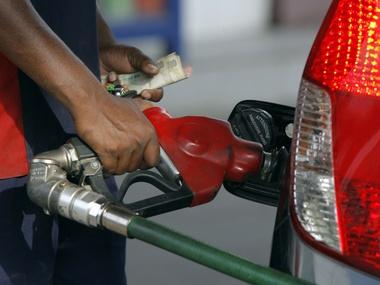
The Federal Government has declared that it will deal decisively with any depot owner caught selling petroleum products beyond the approved ex-depot price in the country. Chief Timipre Sylva, Minister of State, Petroleum Resources, made this known on Thursday in Abuja while briefing newsmen on its effort to resolve the issue of fuel scarcity in the country.
Sylva urged the public to report any one who tried to take advantage of the situation for sanctioning as required by the law.
“We are aware, just like President Muhammadu Buhari said in a statement, that there are some depot owners who are taking advantage of the situation by increasing the Ex-depot price. “I can assure you that there will be sanctions for any of those depots that continues to increase the ex-depot price as approved. We are going to deal decisively with anyone who tries to take advantage of this situation. “Its been a difficult few weeks; few weeks ago, we had issue of petroleum product shortage. I have already addressed that matter which coincided with the geopolitical tension in Ukraine and Russia. “Prices of crude oil went up exponentially beyond levels expected.As you all know, when crude oil prices rise to that level, it can also affect the derivatives of crude oil. “Nigerians are suffering because of the high diesel prices, including everywhere else globally. “This is not peculiar to us at all. Diesel is a deregulated product and therefore when the prices go up internationally it affects the price also in Nigeria,” he said. As a result, the minister said the trucks that could move petroleum products, that ran on diesel were impacted and could not really cope with the high diesel prices.
Though he said the products were available in the depots, the trucks could not move the product because of the high cost of transportation. This, he said, brought in another dimension to the crisis. “If any deport owner increases price or any fuel station tries to take advantage of the situation, the public should report immediately. “If we do not get the report, we cannot know what is going on or sanction them,” he said. He said that so far, the management of the Nigerian National Petroleum Company Ltd. (NNPC) and Nigeria Midstream and Downstream Petroleum Regulatory Authority (NMDPRA), had been working very hard.
According to him, the situation is gradually being controlled. Sylva said that supply is being increased especially that of Abuja. “We are not resting; we share the pains of Nigerians. “We will continue to ensure that the situation is controlled. Queues are coming down in Lagos and other parts of the country. Very soon, this will be a thing of the past,” he assured. (NAN)



From Dan Amasingha, Minna.
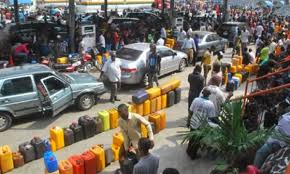
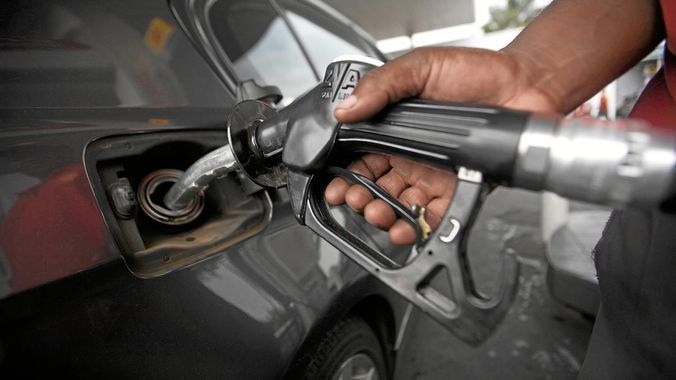
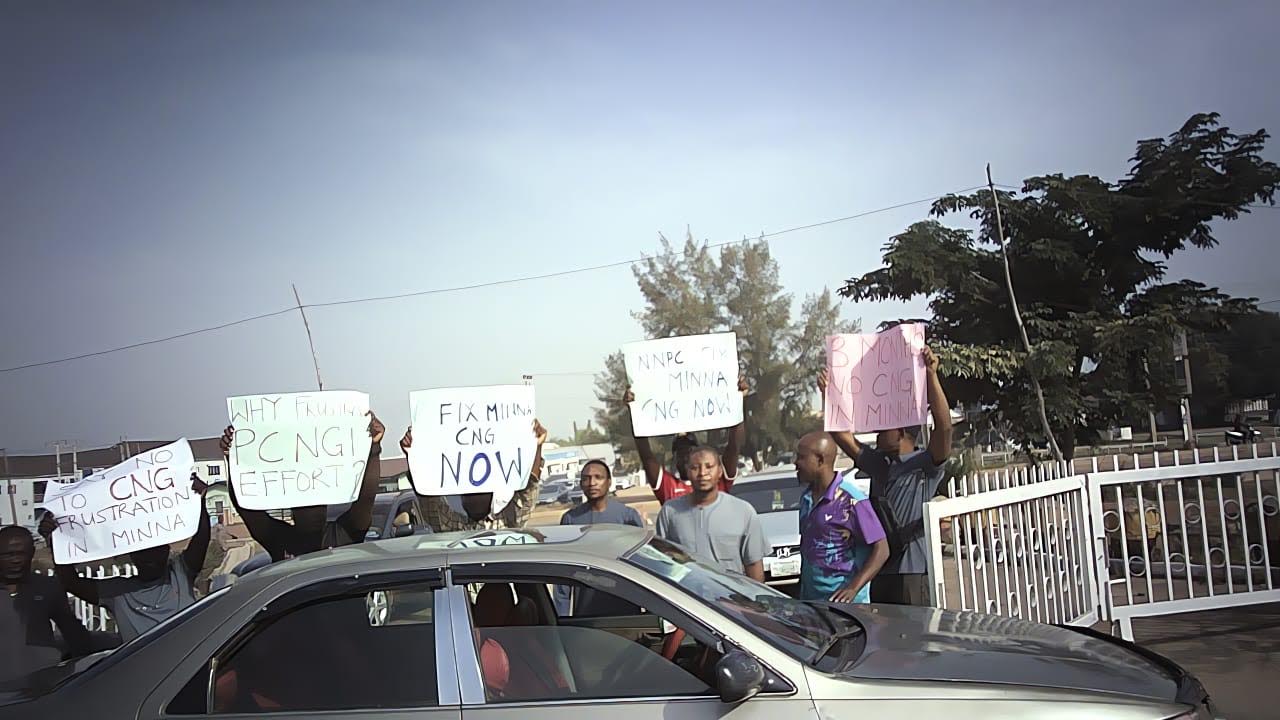
Angry vehicle owners on Sunday staged a peaceful protest at the NNPC Mega Station along the Western Bypass in Minna, Niger State, over the alleged three-month shutdown of the facility’s Compressed Natural Gas (CNG) dispensing service.
The protesters, who accused the station’s management of failing to address the persistent shortage, said the development had frustrated the Federal Government’s initiative to promote CNG as a cheaper alternative to Premium Motor Spirit (PMS), popularly known as petrol.
They lamented that despite investing hundreds of thousands of naira and, in some cases, over ₦1 million to convert their vehicles to run on CNG, they had been unable to access the product in the state capital for months.
Findings indicated that a component of the station’s CNG dispensing equipment had reportedly developed a fault but had allegedly remained unrepaired, leaving motorists who rely on the alternative fuel with little choice but to return to the more expensive petrol.
The persistent outage, the protesters said, had not only undermined the economic benefits of converting their vehicles but had also imposed additional financial burdens on vehicle owners already grappling with rising transportation and fuel costs.
Speaking during the protest, one of the motorists, Engr. Israel Ogbonnaya, described the situation as discouraging, alleging that repeated visits to the station to obtain explanations from the management had yielded no meaningful response.
“It is so discouraging that for three months now, the CNG station at NNPC Minna has not functioned. Imagine that since January, some people did conversion and have not recovered their money,” he said.
Ogbonnaya expressed disappointment that motorists had allegedly received no satisfactory explanation regarding the prolonged breakdown.
“The CNG broke down, nobody has spoken to us. We have come here several times demanding answers from the management, and nobody is talking.
“So, for now, we want to bring the attention of Nigerians and those in authority to the situation in Minna.
CNG is the heartbeat of the President. He commissioned a committee to look into this scheme, and these people are taking us for granted,” he added.
Another protester, Mohammed Doko Saidu, questioned the rationale behind encouraging motorists to convert their vehicles to CNG without ensuring the availability of adequate dispensing facilities to meet demand.
Saidu disclosed that he had spent more than ₦1 million converting his vehicle, only to discover that the product was unavailable in Minna.
“The frustrating aspect of all is that I just installed CNG, spending over a million naira, without a single gas in Minna; hoping that it is going to be fixed today, it is going to be fixed tomorrow, and up till this moment, there is nothing.
“Nobody is saying anything. The station is just lying fallow. In short, I had to disconnect some of the cylinders installed in my car because there is no gas.
What kind of government are we in? It is frustrating,” he said.
The protesters called on the NNPC Mega Station’s management and other relevant stakeholders to urgently repair the faulty equipment and restore CNG supply to Minna.
They warned that failure to resolve the problem could trigger another protest involving a larger number of aggrieved motorists, including commercial tricycle operators who also depend on CNG to reduce their operating costs.
The motorists maintained that the prolonged unavailability of the product had defeated the purpose of the conversion programme, forcing them to bear the cost of installing CNG systems while continuing to spend more on petrol.
The development raises concerns among affected motorists over the reliability of CNG supply infrastructure and the need for prompt maintenance of facilities established to support the Federal Government’s alternative-fuel initiative.
Efforts to obtain comments from the manager of the NNPC Mega Station were unsuccessful as of press time, while attendants on duty declined to speak on behalf of the management.
From Sylvia Udegbunam Enugu
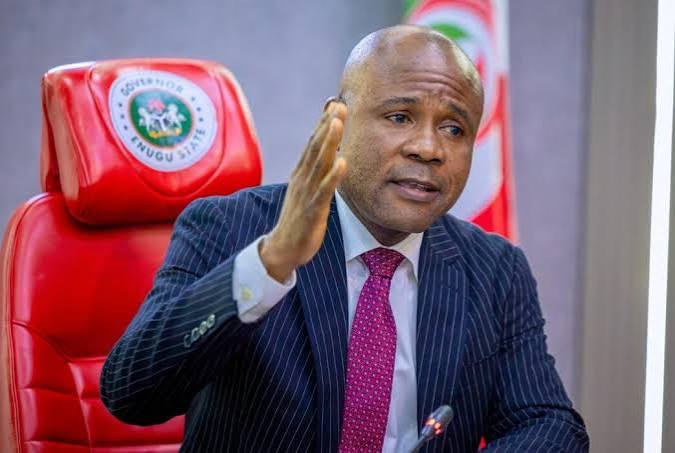
Governor of Enug State, Dr. Peter Mbah, has doubled down in his support for the removal of fuel subsidy by President Bola Tinubu’s administration, saying it was undebatable and inconceivable for anyone to imagine a return to the old order.
Mbah spoke at the “Meet the Candidates” town hall meeting organised by Afia TV in Enugu on Wednesday, where he also said that his administration had delivered good governance to the people of the state across all sectors.
He described it as a pathetic misconception of the country’s situation and the direction it was headed for anyone to talk about the reintroduction of fuel subsidy.
“If you reintroduce fuel subsidy today, we will lose ten times whatever we are currently trying to gain in terms of the removal of subsidy. The poverty rate that you are going to experience will be very high because the naira would be automatically devalued.
“We cannot go back to subsidy. And I do not think it is in the interest of the country for us to even debate that.
“Again, we should not even debate it because we do not want to send a signal to prospective investors that we are contemplating it. That would take us back. It is going to create panic in the system. It is going to get investors to pull back.
“Those that are coming in today to invest in that sector will become jittery. So, it is not even a subject to debate. It is something that we have moved on from, and we should be thinking about how to ensure that the natural benefits cascade to the households, create jobs and generate wealth for our people,” he said.
He said the nation should focus on how to further encourage private capital to flow, noting the growth the nation had experienced in the stock exchange space.
He added that Tinubu’s policies had stabilised the macro indicators, thus encouraging foreign direct investment.
“You can see quite a lot of funds coming into our country, not just portfolio investments, but also direct investments. It is also going to strengthen because the macro indicators are right,” he stated.
Mbah maintained that whereas fuel subsidy removal enables the government to target the less privileged, fuel subsidy as earlier practised benefited the rich more.
“By the way, I do not think the subsidy we practised before the President removed it was even the right one for the country because even the people we were looking at benefiting from it were only insignificantly benefiting from it. It was largely beneficial to our wealthy folks.
“But now, you can almost notice that the government is doing that in targeting the poor, using proceeds from subsidy removal. The government is aggressive on cash transfers. There is also the programme where the government is targeting 1,000 persons per ward across the entire country to be able to provide seed capital for them to become productive,” he added.
Meanwhile, on his stewardship so far, Mbah said his administration had kept faith with the people of Enugu State, delivering good governance across all sectors in line with his campaign manifesto.
He said the people of the state only needed to imagine where the state was before his inauguration as governor and where it is currently headed.
“Let us imagine the Enugu we knew four years ago. Let us just imagine an Enugu without Hotel Presidential. Let us imagine an Enugu without the International Conference Centre. Let us imagine an Enugu without Enugu Air. Let us imagine Enugu without the transport terminals, the 268 Smart Green Schools, 260 Type 2 Primary Healthcare Centres.
“You do not want them to imagine an Enugu without the International Hospital. You do not want them to imagine an Enugu without the CNG buses, the Nigergas. I think the list is endless.
“But I even think that we can stretch that imagination further because the work ahead will be more profound. Just imagine an Enugu where our children are receiving education that prepares them for the world because they have been imbued with evolving 21st-century skills. Imagine again an Enugu where you do not have any part of the city with an unpaved road.
“Also, imagine an Enugu in four years’ time that generates 660 megawatts of electricity; where we are able to provide 24-hour power supply; where you cannot come into your house and have the light off; and where people can run their businesses for a whole week without worrying about the cost of diesel. Just imagine an Enugu where you generate electricity and the people of Enugu are buying that at 120 naira because they own the coal that feeds the power plant.
“Imagine an Enugu where you now have to ride, not just on our CNG buses, but you have the monorail that can take you from point A to point B. Imagine an Enugu where you can fly from here to the United Kingdom, to the United States and other parts of the world,” he charged the electorate.
He urged the people to keep faith with the journey of greatness, growth and development, defending the gains of his first term and guaranteeing the promises of his second term by working for his re-election.
“If these imaginations capture our fancy, then we have a duty to fight for it. We do have a duty to continue to make sure that the bar does not come down and that the standard we have set in Enugu is sustained,” he concluded.
The Nigerian Upstream Petroleum Regulatory Commission (NUPRC) has opened discussions with Indonesia on petroleum investments, with Indonesian national oil company Pertamina expressing interest in Nigeria’s 2026 Licensing Round.
The development followed a meeting between the NUPRC Chief Executive, Oritsemeyiwa Eyesan, Indonesia’s Vice Minister of Foreign Affairs, Arif Havas Oegroseno, and Toriq Abdat, Vice President, Upstream Business Development, Pertamina.
Head, Corporate Communications and Media, NUPRC, Eniola Akinkuotu, made this known in a statement on Sunday.
Nigeria and Indonesia shared similar priorities, including energy security, resource utilisation and investments into the sector as both countries seek to increase oil production, with Nigeria targeting three million barrels per day (bpd) by 2030.
Nigeria currently produces about 1.6 million to 1.7 million bpd, while Indonesia produces about 600,000 bpd and is also seeking to increase output.
Abdat said Pertamina had been mandated to expand its operations internationally and was exploring opportunities in countries including Malaysia, Iraq and Nigeria.
“In Indonesia, we are producing only around 600,000 barrels. We are working on exploration towards deepwater but we found more gas than oil.
“That is why we go outside Indonesia, Malaysia, then the Middle East, Iraq and Nigeria,” he said.
Abdat said Pertamina was seeking producing assets, projects nearing production or opportunities ahead of Final Investment Decision (FID).
He said the company was open to both competitive bidding and bilateral arrangements with governments.
“We would like to be in projects with governments, producing assets, near production or before FID.
“Now we are looking at how we can help you reach the three million, and also help us provide more energy for our own consumption,” Abdat said.
He expressed interest in opportunities beyond crude oil and natural gas, particularly in the fertiliser sector, adding that Pertamina was developing a fertiliser plant to reduce Indonesia’s dependence on supplies from the Middle East amid disruptions caused by global conflicts.
He linked food security to the oil and gas sector, noting the importance of phosphate and other elements used in fertiliser production.
Responding, Eyesan said Nigeria’s production target was ambitious, adding that the 2026 Licensing Round was one of the strategies being deployed to achieve it.
“We have very aggressive targets, three million barrels per day by 2030, and today we are at 1.6, 1.7.
“We are committed to the objective and the licensing round is one of the strategies we are utilising,” she said.
Eyesan said licensing rounds had become a recurring exercise in Nigeria rather than an occasional process, following their institutionalisation under the Petroleum Industry Act (PIA) 2021.
She said the most recent commercial bid conference, held in July, featured 50 assets, with 37 awarded.
The NUPRC boss said Nigeria had also reviewed its fiscal terms in response to competition for the same pool of global investment capital.
She said the country had reduced entry barriers, including signature bonuses, to encourage investment in the upstream sector.
Nigeria, in turn, is diversifying its phosphate sources, including through a long-term transatlantic pipeline project with Morocco aimed at serving West Africa.
The meeting ended with both sides agreeing to sustain commercial and diplomatic engagements on potential areas of cooperation.(NAN)



Ekpo Empowers Women, Supports Hospital Patients at 50
ShareBy Tambaya Julius, Abuja The All Progressives Congress (APC) flag bearer for Karu/Gitata Constituency in the Nasarawa State House of...


Ebola: Bayelsa Activates Emergency Response
ShareFrom Mike Tayese, Yenagoa The Bayelsa state government has intensified disease surveillance and emergency preparedness following reports of an Ebola...

FG Disburses N38.93bn to Tertiary Institutions
ShareBy Tony Obiechina, Abuja The Federal Government has disbursed N38.93 billion to 166 public tertiary institutions nationwide under the Needs...
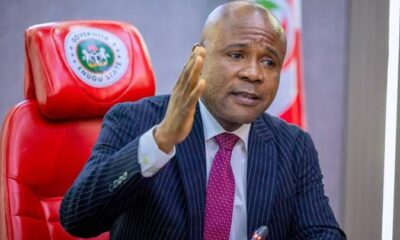

Mbah Unveils Multi-billion Naira Pharmaceutical Company in Enugu
ShareFrom Sylvia Udegbunam, Enugu Governor Peter Mbah of Enugu State has commissioned Anchorage Pharmaceutical Industries Limited, a multi-billion naira pharmaceutical...
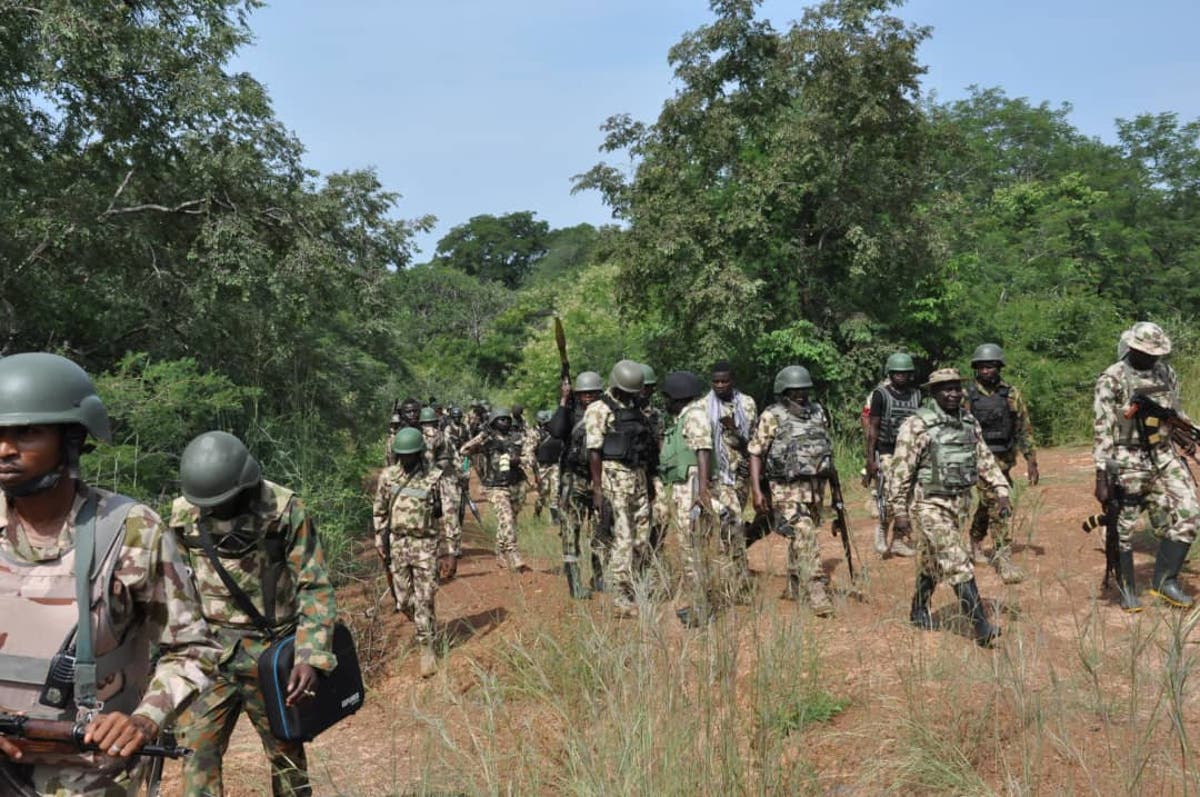
Troops Rescue Three Kidnap Victims in Kebbi
ShareTroops of Sector 2, Operation FANSAN YAMMA, have rescued three kidnapped victims following an operation in Sakaba Local Government Area...


Troops Neutralise Six Terrorists, Arrest 11 Suspected Collaborators in Borno
ShareTroops of the Nigerian Army have neutralised six terrorists, arrested 11 suspected collaborators and received the surrender of a Jama’atu...

JPMorgan’s Entry into Nigeria: Turning Global Finance into a National Development Opportunity
ShareBy Uche Joe Uwaleke The proposed establishment of JPMorgan Merchant Bank Nigeria Limited presents Nigeria with an important opportunity to...

Commissioner Hails Akwa Ibom Governor over Peace Initiatives
ShareVeteran Sports Journalist and Commissioner for Sports Development in Akwa Ibom State, Paul Bassey, has hailed the state Governor, Pastor...

Kogi Probes Mega Electronic Store Inferno
ShareFrom Joseph Amedu, Lokoja The Kogi State Government has commenced investigation into the fire incident that gutted Pee Links, a...

Delta Police Arrest School Bus Driver over Minor’s Kidnapping, Assault
ShareA 28-year-old school bus driver, Onome Ughagha, has been arrested by operatives of the Delta State Police Command for allegedly...