
Agriculture
560 Rural Famers to Get Inputs in Kogi

From Joseph Amedu, Lokoja
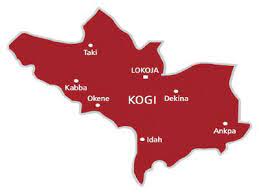
No fewer than 560 vulnerable rural farmers in Kogi State would benefit from the Rural Poor Stimulus Facility (RPSF), aimed at cushioning the effects of COVID-19 pandemic on rural farmers.
The RPSF is an initiative of the Federal Government of Nigeria through the Value Chain Development Programme, supported by International Fund for Agricultural Development (FGN/IFAD-VCDP).
Speaking to newsmen in Lokoja, Prof. Aminu Suleiman, who led the team on a Supervision Mission to Kogi, said they were in the state to access the level of preparedness towards the implementation of the RPSF.
According to him, the RPSF is a grant given to rural rice farmers to cushion the shock of COVID-19 pandemic across the States of the federation including Kogi State.
Suleiman expressed satisfaction with the preparation on ground in Kogi, and commended the State Government for its commitment to supporting the IFAD programmes in the state.
He further applauded the State’s Programme Coordinator, Dr Stella Adejoh and her team for always put in all their best to see to the successful implementation of all IFAD-VCDP projects in the state.
On her part, Dr Stella Adejoh, State Programme Coordinator of IFAD/VCDP, said lots of people lost their means of livelihood during the COVID-19 pandemic, and consequently faced with hardships.
She explained that the IFAD decided that such vulnerable persons affected by the pandemic in the society should be helped in order to bring them out of their poverty situation.
She said the farmers would be provided with grant inform of inputs by IFAD such as fertilizer, certified rice seed, selective and non selective herbicides, among others.
She noted about 80 per cent of the farmers’ beneficiaries are women and youths who have been profiled and validated by a team of consultants from IFAD who came to the state in 2021.
She said a total of 560 rural farmers cut across the four rice producing local government areas of Lokoja, Ibaji, Ajaokuta and Kabba/Bunu, in the state.
According her, the inputs include: 1400 bags of NPK fertilizer, 461 bags of Urea fertilizer, 186 pieces of both selective & non-selective herbicides, and 340 bags of 50kg (17 tonnes) of certified Rice seed Faro-44.
Dr Adejoh added that the State Government provided IFAD with warehouse at Kogi ADP office where those inputs were being stored.
“We want to thank Kogi State Government who has provided the enabling environment for the IFAD/VCDP programmes to thrive in the state.
“I feel very excited because of the feedback we are getting and the support the programme is receiving from the Kogi State Government.
“I am very happy and grateful to His Excellency, Governor Yahaya Bello, for always supporting Agricultural Development Programmes in the state,” she said.
She assured that IFAD is collaborating with the International Fertiliser Distribution Company, who would give support in the area of inputs’ distribution, monitoring and supervision to ensure proper utilisation the intended purpose.
“We will monitor the beneficiaries down to their farms for effective utilisation of the inputs,” Adejoh said.
Earlier, the team paid a courtesy visit to the state’s Commissioner for Agriculture, Hon. David Apeh, where they thanked the State Government for fully supporting VDCP activities in the state.
Apeh assured the team of the commitment of His Excellency, Governor Yahaya Bello, to continue to give the needed support to the program for the benefits of Kogi rural farmers.

The Federal Government has called for a stronger agricultural value chains, increased agro-industrialisation and improved market access to boost food security in Nigeria.
The Permanent Secretary, Federal Ministry of Agriculture and Food Security, Dr.
Marcus Ogunbiyi, made the call on Monday in Enugu during the Technical Session of the National Council on Agriculture and Food Security.The theme of the event is “Enhancing Agricultural Value Chains, Agro-Industrialization and Market Access for Economic Growth.”
Ogunbiyi, who doubled as the Chairman of the Technical Session, said that the country must move beyond subsistence farming and embrace a commercially driven agricultural system capable of supporting industries, improving farmers’ incomes and expanding export opportunities.
“Our task goes beyond increasing the volume of food produced.
“We must build an agricultural economy that creates wealth, supports industries, generates decent employment, expands exports, improves rural livelihoods and contributes meaningfully to national economic growth,” he said.
The Permanent Secretary identified inadequate storage and processing facilities, limited access to finance, poor logistics and weak links between farmers and processors as major challenges affecting the competitiveness of agricultural products.
He called for increased investment in agro-processing facilities, rural roads, irrigation, electricity, cold-chain infrastructure and modern technologies to reduce post-harvest losses and promote local value addition.
“Agro-industrialisation is central to the transformation we seek to achieve. It provides the bridge between agriculture and industry.
“It also enables agricultural production to serve as a reliable source of raw materials for manufacturing and other productive sectors of the economy.
“The value of this Council will ultimately be determined by the quality of its resolutions and the extent to which those resolutions are implemented,” Ogunbiyi stated.
He also urged state governments to identify priority commodities, establish clear production and processing targets, attract private-sector investment and strengthen partnerships with research institutions and development partners.
In his remarks, the Enugu State Commissioner for Agriculture and Agro-industrialisation, Patrick Uburu, said that the state government was committed to agro-industrialisation to boost farmers’ income, create jobs and generate wealth.
Uburu, who described the technical sessions as a platform for translating policies into practical solutions, urged delegates to prioritise farmers and agribusiness operators in their deliberations.
He emphasised the need for stronger collaboration among state governments, federal agencies and development partners to address food security challenges, noting that recommendations from the meeting should be measurable and implementable.
The commissioner called for practical policies and investments that would improve farmers’ productivity and expand market access for agricultural produce.
Technical Lead Policy Advisory, GIZ ECOWAS & Nigeria, Dr Abiodun Ihebuzor, advocated for stronger partnerships and increased investment in agricultural value chains to reduce post-harvest losses and improve food security in Nigeria.
Ihebuzor noted that previous engagements at the 46th Council in Calabar and the 47th Council in Kaduna had provided opportunities to advance agricultural development.
He expressed optimism that the current meeting would strengthen collaboration among government institutions, development partners and private-sector operators.
According to him, healthy soils, efficient markets and improved storage systems were essential to sustainable food security.
On her part, Geraldine Onu, Deputy Director, Administration and Supply, Enugu State Ministry of Agriculture and Agro-Industrialisation, disclosed that the State Government had intensified efforts to transform agriculture from subsistence farming to commercial and mechanical farming as part of its economic development agenda.
She noted that investments in irrigation, storage, processing and agricultural infrastructure were aimed at increasing production, attracting private investment, reducing post-harvest losses and improving farmers’ livelihoods.
“In Enugu State, under the visionary leadership of Gov. Peter Mbah, agriculture occupies a strategic position in the state’s economic transformation agenda.
“The initiatives include the 300,000-hectare agricultural land bank, the development of Smart Farm Estates across the 17 Local Government Areas, the 260 Farm Estate Programme and the establishment of a tractor assembly plant,” Onu added.(NAN)

Some residents in Lagos State have expressed concern over the recent surge in the price of tomatoes, forcing many households to adopt alternatives.
The residents made their views known in separate interviews on Wednesday in Lagos.
A market survey showed that a 50kg basket of tomatoes now sells between N115,000 and N125,000, compared to between N35,000 and N40,000 recorded last month.
Olachi Igwe, a resident of Ago Palace, said the scarcity and high cost of tomatoes had disrupted her household’s meal plans.
“I contacted my usual vendor, but she said tomatoes were scarce and difficult to source.
“A small bowl we used to buy for between N3,500 and N4,000 now sells for as high as N6,000 to N7,000, when available.
“For now, my family will resort to palm nut stew (ofe akwu) until prices stabilise,” she said.
Another resident, Mercy Okeleye of FESTAC, said although her family prefers fresh tomatoes, rising prices have forced her to consider cheaper options.
“I cannot do without fresh tomatoes because of the taste, but I may have to buy broken ones, popularly called ‘esha’, which are relatively cheaper.
“I do not consider tomato paste a suitable substitute because it is not purely made from tomatoes,” she said.
Also speaking, Tope Babalola from Dopemu, said she might adjust her cooking methods if prices remain high.
“I have not bought tomatoes in over a month, but if the price is still high, I will use more onions and peppers.
“I will not resort to artificial additives; I prefer natural ingredients for my meals,” she said.
Joan Ogugua, another resident, said she had already switched to tomato paste to cope with the situation.
“I asked my son to buy tomato paste for our meals. I cannot justify spending excessively on fresh tomatoes when other basic needs must be met,” she said.
Also, Oge Ugwu, a civil servant at Lekki, said she would resort to cucumber stew with the recent price hike.
The Tomatoes Growers and Processors Association of Nigeria (TOPAN) has predicted a steady increase in the price of the produce between May and June 2026.
The Kaduna State Chairman TOPAN, Rabiu Zuntu, disclosed this in an interview recently in Lagos.
Zuntu noted that although there is no particular time for tomatoes planting season up north, seasonal weather variations can affect the production of the produce.
“Although we can plant tomatoes all-year-round, we cannot assure quality harvest all-year-round.
“Some farmers are harvesting now, while others are transplanting, and others are harvesting.
“Tomatoes are still available for sale but the price of the produce is gradually on the increase.
“Come May/June, the prices of tomatoes will be very expensive, so now is a good time to stock up the produce. There’s always a scarcity within that period.
“This is because of the nature of the weather in the north around that period, the weather is usually very hot and tomatoes cannot resist such hot temperature,” he said.
Zuntu said the price of tomatoes have started rising up in the north.
“A 50kg rafia basket of tomatoes sells from N20,000 as against N7,000 to N10,000 that was sold earlier in the year.
“While a crate of tomatoes up north is sold between N10,000 and N15,000 as against N5,000 to N6,500 sold earlier in the year.
“In most part of Kano State, where there is bumper harvest, they are rounding off their harvest. So, tomato is not that available there and most buyers have turned to where they can find it now, mostly within Kaduna State and some parts of Plateau State.
“So, that’s why the supply has decreased and the tomato supply and cost is determined by the law of demand and supply,” he said.
A 50kg basket of tomatoes in Lagos, at the moment, sells between N40,000 and N60,000 depending on the size and quality.




Will new entrant, ESDIAC, ease Nigerians’ international call worries?
ShareBy David Torough After decades of frustration in accessing telephone services, Nigerians were relieved when in 2001, the then President...


AHF Launches Comic Book on Menstrual Health Education in Abuja
ShareFrom Attah Ede, Makurdi The Aids Healthcare Foundation (AHF) Nigeria, has revealed that nearly 2 billion people menstruate, with 500...


BBNaija’s Dorathy Begins Breast Reduction Journey
ShareFormer Big Brother Naija housemate, Dorathy Bachor, has taken the first step towards breast reduction surgery, three years after first...


They Planted Juju in my Jacket at Davido’s House – Peruzzi
ShareSinger Peruzzi has narrated how a charm was planted in his jacket during his stay at Davido’s house. Peruzzi was...


Withdraw all Charges within Two Weeks, Speed Darlington Appeals to Burna Boy, Apologises
ShareControversial Nigerian singer Speed Darlington has appealed to Grammy-winning artiste Burna Boy to withdraw all charges against him within two...
AFSNET Business Conference Kicks off in Calabar
ShareFrom Ene Asuquo, Calabar The 6th African sub – sovereign Governments Network Investment Conference has started in Calabar the cross...
NAFOWA Empowers 18 Widows, Donates Tricycles in Bayelsa
ShareFrom Mike Tayese, Yenagoa The Nigerian Air Force Officers’ Wives Association (NAFOWA), Mobility Command, Yenagoa, has empowered 18 widows of...


RMAFC Advocates Fair Share of 13 Per Cent Revenue Derivation Among Oil Producing States
ShareBy Tony Obiechina, Abuja The Revenue Mobilisation Allocation and Fiscal Commission (RMAFC) has advocated a fair distribution of the 13...


Customs CG Tasks Officers on Discipline, Integrity
ShareBy Tambaya Julius, Abuja The Comptroller-General of the Nigeria Customs Service (NCS), Bashir Adewale Adeniyi, has called on officers and...


2027: ADC Asks EFCC, INEC to Probe Alleged APC Cash Distribution
ShareBy Mvendaga Orjime, Abuja The African Democratic Congress (ADC) has called on the Economic and Financial Crimes Commission (EFCC) and...