
NEWS
FG Approves N67bn for Ajaokuta Bridge, Ikot Ekpene

Road Repairs
By Mathew Dadiya, Abuja
The Federal Government Wednesday, approved N67 billion for road projects across the country.
Minister of State for Works and Housing, Abubakar Aliyu said this while briefing State House correspondents in Abuja after the weekly Federal Executive Council (FEC) meeting presided over by President Muhammadu Buhari at the Aso Rock Villa.
The contracts includ the dualisation of outstanding portion of Odupkani-Itu-Ikot Ekpene road across Cross River and Akwa Ibom States for N50.
55bn; some roads and bridges in Karin Lamido and Jalingo, Taraba State for N6.9bn; and rehabilitation of expansion joints on the Ajaokuta Bridge at a cost of N1.5bn; while N6.8 billion will be spent on construction of new bridges in Oyo State.Also the Minister of Education, Adamu Adamu, announced FEC’s approval of a contract worth N6.34billion for the procurement of text books for Primary 1 to 3 pupils across the country.
Still under his Ministry was an approval for the perimeter fencing of the main campus of the University of Maiduguri in Borno State with a completion period of 24 weeks at a cost of N1.39bn.
Security equipment to further boost the fencing works and security around the campus perimeter will be procured at a cost of N1.88bn, the minister stated
Minister of State for the Federal Capital Territory, Mrs. Ramatu Tijjani Aliyu, announced the FEC’s approval 5,000 affordable housing units in Abuja, for which 30,000 hectares of land will be secured in each of the six area councils of the FCT.
Additional 30,000 hectares for staff housing scheme in Karshi, a suburb of the FCT.
The FCT Administration will also relocate some indigenes of Abuja to Wasa district where urgent and massive development of about 7,000 housing units will be constructed, the Minister added.
The minister said, “We were able to shed more light on the assignment of creation of 5,000 affordable housing units in the Federal Capital Territory (FCT).
“This has gone a long way already because we have ensured, regulated and profiled investors already and have been able to secure land and make adequate provision for this 5,000 units.
“We have 30 hectares of land in each area council, multiply by six that will give you about 180 hectares of land.”
Earlier, the Minister of Niger Delta Affairs, Godswill Akpabio, presented a score card of his 100 days in office, to the FEC and highlighted the major achievements recorded so far.
He disclosed that the ministry has empowered over 3,000 people in the Niger Delta.
He said that the bidding for the forensic audit has begun in all the states of the Niger Delta would serve as tender centers adding that the cleaning of the Ogoniland was in progress.
FEC approved the award of contract for the construction of Jalingo-Karim -Lau -Padang-Lamido road phase II, which is about 28 kilometers in Taraba State at the cost N6,916,180,860,32 inclusive of VAT.
“This is the phase II of the project, the phase I was completed earlier.
Council also approved a second memo with three projects at the total cost of N58,938,111,892.28,” the minister said.
The first project, according to the minister, was the dualization of the outstanding portion of Odukpani-Itu-Ikot Ekpene Road in Cross River/Akwa Ibom states at the cost of N50,527,447,708.82 with a completion period of 36 months.
“The second project is the rehabilitation of a bridge in Ajaokuta. The bridge which showed an opening at the expansion joint raised public concern. Work has commenced but the contract was approved today at the cost of N1,534,677,588.25. The expansion joint of a bridge is meant to be maintained from time to time.
“The third project is the rehabilitation of the outstanding section of Iseyin-Okeho road including two bridges in Oyo State at the cost N6,875,987,097.21 with a completion period of 18 months,” he explained.




From Abel Zwànke, Lafia
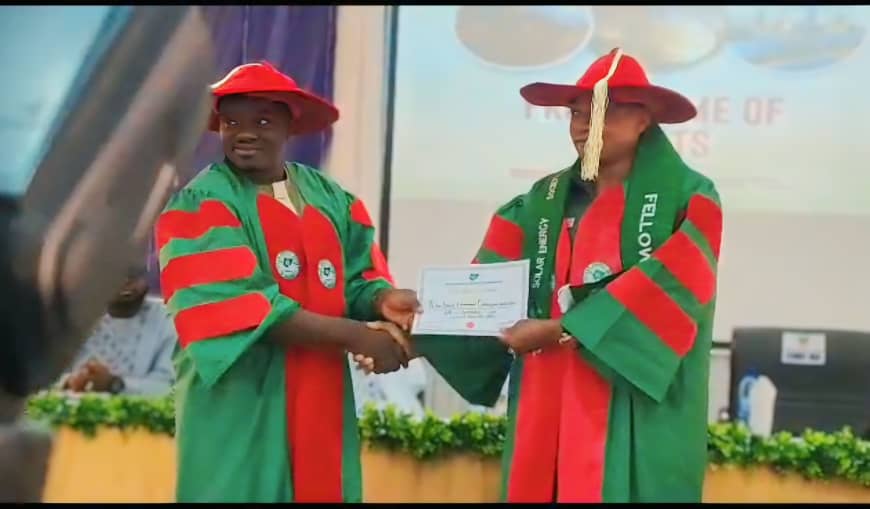
The 2023 gubernatorial candidate of the People’s Democratic Party (PDP) in Nasarawa State, His Excellency Rt. Hon. David Emmanuel Ombugadu, has been decorated as a Fellow of the Solar Energy Society of Nigeria (SESN). Ombugadu received the Fellowship Award of Excellence during the 41st National Solar Energy Forum (NASEF) 2024, held on December 10 at the Nigerian Defence Academy (NDA) Postgraduate School, Kaduna.
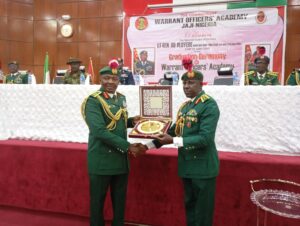
The award, presented by the NDA Commandant, Major General John Ochai, recognized Ombugadu’s exceptional contributions to renewable energy advocacy and sustainable development in Nigeria.
Speaking to journalist yesterday after receiving the award Ombugadu expressed gratitude for the honour.“I am deeply honourd to receive this prestigious Fellowship Award from the Solar Energy Society of Nigeria in collaboration with the Nigerian Defence Academy. This recognition highlights the importance of renewable energy in addressing our nation’s energy challenges and fostering sustainable development,” he said.
Ombugadu advocated for increased investments in renewable energy, noting that over 80 million Nigerians lack access to electricity. “This award is a call to action. Renewable energy is essential for our national development, and we must commit more resources to this transition to empower communities and combat climate change,” Ombugadu stated.
Reading Ombugadu’s citation, the organizers described him as a philanthropist, entrepreneur, and visionary leader. Known for his contributions to healthcare, education, and water supply in rural areas, Ombugadu has drilled over 1,500 boreholes and enrolled more than 12,000 people in the National Health Insurance Scheme (NHIS).
Themed “Advancing Solar Energy Solutions for Sustainable Development,” the forum brought together energy experts, policymakers, and industry stakeholders to strategize on enhancing Nigeria’s energy security through solar technology.
Major General Ochai, who was also conferred as a Fellow, highlighted the NDA’s strides in adopting renewable energy for sustainability. “Earlier this year, the NDA established the Biodiversity and Conservation Centre, targeted at conserving the environment. In a few days, we will inaugurate a 2.5-megawatt solar farm, which will take the NDA off the national grid, help decarbonize the environment, and cut energy costs,” Ochai said.
He emphasised the academy’s commitment to community support, adding, “Whatever energy we generate through solar power will also benefit the Afaka community as part of our corporate social responsibility. Solar energy is the future, and we are proud to champion this cause.”
The Minister of Housing and Urban Development, Ahmad Dangiwa, represented by Aishatu Yusha’u, emphasized the role of solar energy in urban development. “Solar energy can reduce greenhouse gas emissions, enhance energy efficiency, and promote sustainability in urban planning,” she said.
Prof. Magnus Onuoha, President of the Renewable Energy and Energy Efficiency Associations Alliance (REEEAA), praised the NDA’s bold step in constructing its solar power plant. “The NDA’s solar farm will serve as a shining example of what can be achieved when institutions prioritize sustainability and renewable energy,” Onuoha said.
He called for comprehensive policies to address Nigeria’s energy challenges. “Our alliance is committed to promoting the growth of renewable energy and transitioning from fossil fuels to cleaner, more sustainable sources,” he added.
The Rural Electrification Agency (REA), through its Managing Director, Abba Abubakar, represented by Timothy Shekari, reiterated its commitment to providing energy access to underserved communities, highlighting initiatives that have energized markets and impacted over 1.2 million people.
The forum concluded with renewed commitments from stakeholders to advance renewable energy initiatives across Nigeria, with solar energy taking center stage in the nation’s sustainable development goals.
Other distinguished recipients included Kaduna State Governor Senator Uba Sani, represented by the Managing Director of the Kaduna State Power Supply Company, Aminu Idris, and Mrs. Olanike Olugboji-Daramola, CEO of the Women Initiative for Sustainable Environment (WISE).
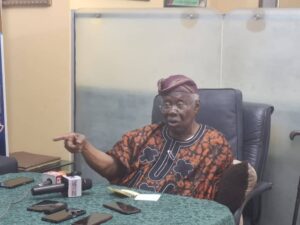
Chief Bode George, a former Deputy National Chairman of the Peoples Democratic Party (PDP), has urged President Bola Tinubu to reduce the price of petrol to N300 per litre ,to make things easy for Nigerians during the festive season.
George, the Atona Oodua of Yorubaland, made this plea at an interactive session with newsmen on Wednesday in Lagos.
The price of Premium Motor Spirit, popularly known as petrol, is currently above N1,000 per litre.
According to the elder statesman,Nigerians are going through hardship, the President should give an order to reduce fuel price, specifying time frame the people will enjoy such window of relief.
He said that the federal government as well as well- meaning individuals and businesses could bear the cost of such price slash , to bring happiness to all Nigerians.
The PDP leader, who noted that December and January are special months , said that such gesture could start from the middle of December and run through January.
“I have been thinking, as a Nigerian, what can we do because the anger and the hunger are almost equal on the streets of Nigeria.
“What am I suggesting is that Mr President should sit down with his managers and give an order that from the middle of December to the end of January, the cost of petrol will be N300 per litre.
“The government can absorb the losses in the interest of the suffering people.
“If they (government) want others to contribute, let us know how much that is going to cost and ask people to donate, to bear the cost.
“We will be sending a lot of messages of happiness across the tribes and homes.
“Everybody in Nigeria will be happy because it will positively impact on this period of the year. It is a challenge and he (Tinubu) can do it.
“We need this in this December and January to put smiles on the faces of Nigerians, ” George, a PDP Board of Trustees (BOT) life member, said.
Advising the President to take further measures to bring relief to the people, he said that the gesture would crash prices of essential commodities and services for the benefit of all .
He said that government’s efforts should be concentrated on reducing high inflation rate, unemployment, poverty and youth restlessness in order to create a better future for Nigerians
Speaking on the recent presidential election in Ghana, George noted that Nigeria’s electoral system needed reforms to guard against electoral frauds and manipulations.
According to him, the nation will continue to grope for development if the system fails to encourage best candidates to emerge.
Stating that election must reflect the wishes of the people and be devoid of religious and tribal sentiments, George said that Ghana election should be a wake up call for Nigeria.
“INEC performance must improve. The commission must make sure that the voice of the people is heard in elections.
“Electoral offenders should be made to face the music and sent to jail. We must be very firm about due process, credibility and transparency in elections,” he said.
Urging the President to revisit resolutions in the 2014 Constitutional Conference, George said that the current constitution was not federal in principle and practice.
“We should not deceive ourselves, the constitution is a problem. It is a military constitution, it is not democratic,” he said.
George called on the National Assembly to ensure devolution of powers and electoral reforms that would do away with manual collation of election results and mandate electronic transmission of election results from polling units.
George disagreed with political watchers saying no vacancy in presidency in 2027.
On the dwindling strength of the former ruling party, George, who noted that all organisations had its ups and downs, said that selfish interests and disregard for party rules remained PDP’s major challenge.
He said that PDP could bounce back and win presidential election if the leadership decided to elevate national interest above selfish interests and adhere to the party’s constitution.
“We will tell ourselves some serious old truth. We messed ourselves up. ” he said.
Stating, however, that the PDP was not dead, George said that lack of justice, equity, fairness and the inability to adhere to the party’s zoning and rotational principle cost the party victory in 2023.
Calling on the party’s founding fathers alive to wake up and rescue the party, George said that Nigerians were still waiting for the former ruling party to take over power and put things right. (NAN)
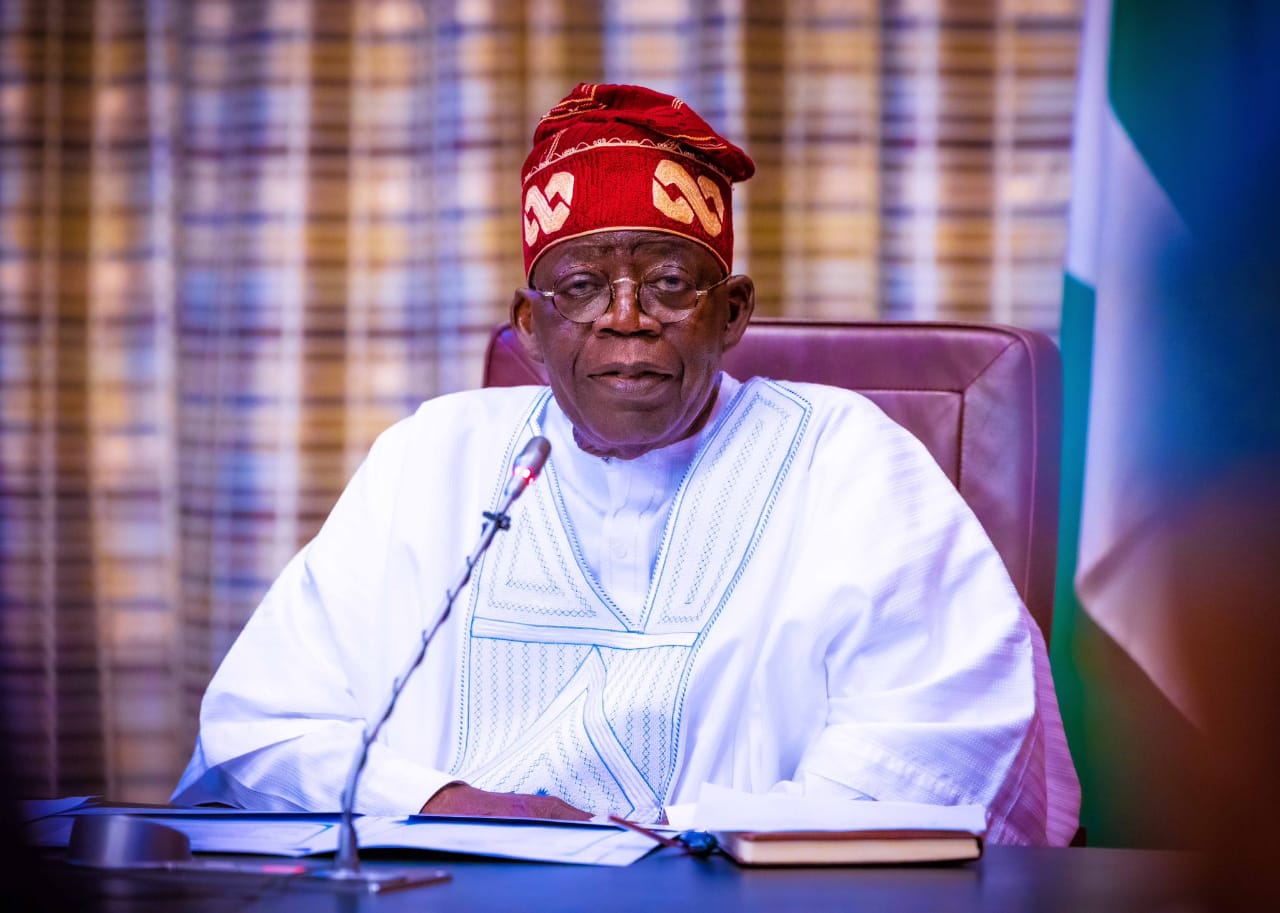
President Bola Tinubu, is set to perform the groundbreaking of 2,000 housing units of the Renewed Hope City in Ibeju Lekki, Lagos, in the next few weeks.
Mr Ahmed Dangiwa, Minister of Housing and Urban Development, announced this during an official assessment visit, on Wednesday in Lagos
Dangiwa said Lagos would represent the South-west, while the president would do that of the North-West in Kano, before doing that of the four other regions.
“Arrangements is already on ground, we have gotten sites, and work has commenced for 2000 houses in the Renewed Hope City that we intend to build in Ibeju-Lekki,” he said.
Towards achieving the set goal, the minister said the visiting team also paid a courtesy visit to Gov.
Babajide Sanwo-Olu to discuss area of collaboration between the federal and state governments.He disclosed that the federal and Lagos state governments had agreed to set up a Tripartite committee and ensure all the issues of concerns between the parties were resolved amicably for the benefit of all.
Earlier, the Minister embarked on an assessment visit of deplorable Federal Government buildings and assets across Lagos state in a bid to commence rehabilitation on them in a few months.
Dangiwa said the rehabilitation was necessary as the deplorable buildings posed a challenge and security concerns to the Lagos state government. (NAN)


NDA Commandant Decorates Ombugadu, Others as Fellows of Solar Energy Society of Nigeria
ShareFrom Abel Zwànke, Lafia The 2023 gubernatorial candidate of the People’s Democratic Party (PDP) in Nasarawa State, His Excellency Rt....

Yuletide: Bode George Urges Tinubu to Reduce Petrol Price
ShareChief Bode George, a former Deputy National Chairman of the Peoples Democratic Party (PDP), has urged President Bola Tinubu to...

Tinubu Set for Groundbreaking of Renewed Hope City in Lagos
Share President Bola Tinubu, is set to perform the groundbreaking of 2,000 housing units of the Renewed Hope City in...
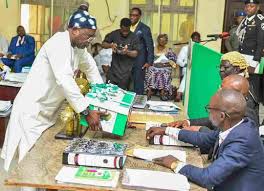

Gov. Alia Presents N550.1bn as 2025 Budget Estimate to Benue Assembly
ShareGov. Hyacinth Alia on Wednesday presented the sum of N550.1bn as the 2025 appropriation bill to the Benue State House...
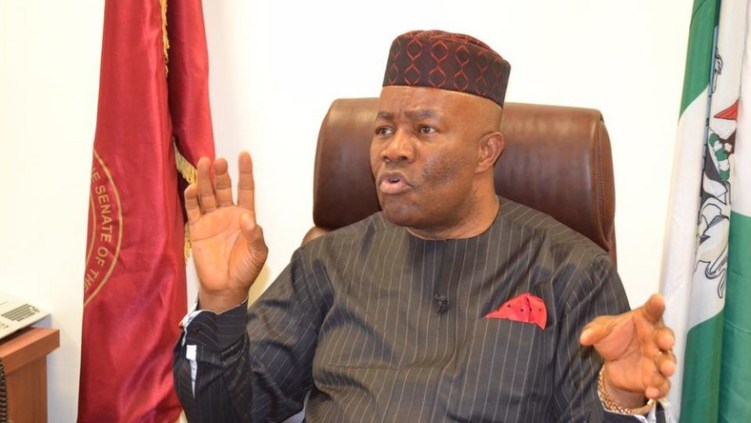
Tax Bills: NASS will not Betray the Trust of Nigerians, says Akpabio
Share The President of the Senate, Sen. Godswill Akpabio, says the National Assembly will prioritise the interest of all Nigerians...

Alia Has Demonstrated Capacity, Courage to Entrench Good Governance—Speaker
Share The Speaker, Benue Assembly, Mr Hyacinth Dajo, has said that Gov. Hyacinth Alia has so far demonstrated capacity, courage,...


Investors Gain N183bn on NGX
Share The Nigerian Exchange Ltd. (NGX) continued its bullish trend on Wednesday, gaining N183 billion. Accordingly, the market capitalisation, which...

Energy, Solid Minerals Top Priority, Tinubu Tells German Businessmen
Share President Bola Tinubu, on Wednesday, assured the German government and businessmen of Nigeria’s preparedness to expand frontiers for investors...

Nigerian Who Wrote WASSCE 17 Times Bags Distinction from London School
Share Dr Emmanuel Ahmadu, a Nigerian who wrote the West Africa School Senior Certificate Education 17 times, has earned a...


INEC Staff Welfare Association Warns Members Against Manipulating Election Results
Share The Abia Chapter of the INEC Staff Welfare Association (ISWA) has warned its members to uphold the integrity of...