
NEWS
IPMAN Tasks Marketers on Local Refineries for Product Sourcing


The National President of the Independent Petroleum Marketers Association of Nigeria (IPMAN), Alhaji Abubakar Shettima, has urged independent petroleum marketers to rely on local refineries for product sourcing.
Shettima made the call in a statement issued on Thursday in Abuja, saying greater reliance on domestic refineries would optimise supply and guarantee long-term price stability for consumers.
He said embracing the country’s domestic refining capacity was a patriotic obligation that would eliminate costly freight and port charges, stimulate local employment and provide the quickest path to achieving national energy independence.
The IPMAN president also called on members to capitalise on the opportunity to evolve from mere off-takers of petroleum products into equity owners of primary production infrastructure.
According to him, such investment will strengthen the collective capacity of independent marketers to guarantee affordable and unhindered fuel distribution across all 36 states, while ensuring stability in pump prices.
Shettima also commended the management and board of the Dangote Petroleum Refinery and Petrochemicals on the planned commencement of its Initial Public Offering (IPO) and public share sales.
He described the development as a monumental paradigm shift from a privately held visionary project into a democratised national asset.
“As an association that controls over 80 per cent of Nigeria’s downstream petroleum retail infrastructure, operating more than 150,000 retail outlets across the nation, we recognise the strategic importance of this development.
“The Dangote Refinery’s robust operational capacity not only secures our domestic energy needs but also conserves vital foreign exchange.
“IPMAN believes that investment in the Dangote Refinery is a direct stake in the energy security and economic sovereignty of Nigeria,” he said.
Shettima, however, appealed to the management of the Dangote Petroleum Refinery not to discontinue its direct allocation of Premium Motor Spirit (PMS) to independent marketers.
He urged the refinery to expand its direct allocation framework to cover every registered independent marketer nationwide, rather than limiting access or cutting off selected distribution channels.
He also urged the Federal Government to implement stringent policies to discourage the continuous importation of PMS.
He said that continued reliance on imported fuel would deplete the country’s foreign reserves and undermine domestic industrial growth.(NAN)






By Tambaya Julius, Abuja
The Nigeria Labour Congress (NLC) has threatened possible nationwide industrial action following the failure of talks with the Federal Government over workers’ welfare, petrol prices and other outstanding labour demands.
The warning came after a meeting between the government and organised labour at the Ministry of Labour in Abuja on Thursday, October 22, ended without an agreement.
The congress has given the Federal Government until Tuesday, October 27, to make meaningful progress on the issues, warning that its relevant organs would decide the next line of action if the next meeting fails to produce concrete commitments.
The NLC has also directed its affiliates, state councils and civil society allies to begin mobilising members for possible nationwide action.
In a statement issued after the meeting, the NLC Acting General Secretary, Benson Upah, expressed disappointment over what he described as the government delegation’s lack of preparedness for the negotiations.
According to the congress, organised labour presented its demands in good faith but left the meeting without any concrete commitments from the government.
The demands include a reduction in petrol prices to 2024 levels, renegotiation of the national minimum wage, implementation of agreed tax relief measures and resolution of the terms of settlement involving the Joint Health Sector Unions (JOHESU).
The congress also called for the resolution of issues raised by the Joint Public Service Negotiating Council (JPSNC) over peculiar allowances, wage awards and hazard allowances.
The NLC said the government delegation lacked the necessary authority to engage meaningfully on the issues presented by labour representatives.
“The meeting between the Federal Government and organised labour, convened at the Ministry of Labour in Abuja on 22nd October 2026, has ended without resolution,” the statement said.
It added that the Minister of Labour requested that the meeting be adjourned until October 27 to allow the government to prepare adequately for further discussions.
The preparations, according to the statement, would include bringing relevant ministers and heads of departments and agencies to the negotiating table.
The congress said it remained open to dialogue but would not accept continued delays in addressing workers’ concerns.
“We will report back to our organs, and if no meaningful progress is made on Tuesday, the relevant organs of the NLC will decide the next line of action,” it said.
The labour body urged workers and members of the public to remain calm while the negotiations continue, even as it directed its affiliates and allies to prepare for possible industrial action.
“However, we urge all affiliates of NLC and TUC; all state councils and our civil society allies to be alert and start mobilising for a possible action across the nation while we hope that the tenets of our demands are met by the government,” the statement added.
The October 27 meeting is expected to provide another opportunity for both sides to address the outstanding issues and prevent a possible escalation of the dispute.
However, the NLC’s decision to begin mobilisation suggests that tensions could rise if the next round of talks fails to produce meaningful progress.
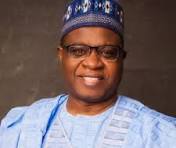
Alh. (Dr) Umaru Kwairanga, Group Chairman, Nigerian Exchange Group (NGX Group), has been named as the Top10 Magazine’s Man of the Year 2026. He emerged from among many other distinguished personalities in a multi-stage rigorous selection and screening process.
He succeeds Alh. Nasiru Haladu Danu, OFR, Chairman of Casiva Ltd, who was the magazine’s Man of the Year for 2025. He joins a club of distinguished Nigerians who have won the crown since the inception of the award over 10 years ago, with Dr. Herbert Wigwe, the late Group Managing Director of Access Bank, as the pioneer winner of the award in 2016. Also on the magazine’s roll of honour are Umar Abdullahi, Chairman, Cosgrove Group (2020); Chief Samuel Onyishi, Chairman of Peace Mass Transit (PMT) and Founder of Maduka University (2022); Muhammad Nami, former Chairman, Federal Inland Revenue Service, FIRS (2023), Senator George Akume (2024), among others.In a letter conveying Alhaji Kwairanga’s selection as the Man of the Year 2026, the Board of Editors of the Magazine said it was in recognition of his towering leadership as custodian of Nigeria’s capital market, his role in driving national economic development, his championship of corporate governance, transparency, integrity and influence that defined Nigeria’s economic narrative in 2026. These, the givers of the award said, clearly stand him out as a man of excellence worthy of celebration, “hence the decision of our management to accord you this special recognition as the Top10 Magazine’s Man of the Year 2026,” the letter said.
In a year marked by economic reforms, market volatility and renewed investor search for trust and transparency, Dr. Kwairanga stood tall as a symbol of stability, integrity and visionary leadership. Under his watch, the Nigerian Exchange has emerged as one of Africa’s best performing markets, restoring investor confidence, attracting foreign inflows and providing capital for enterprise growth that creates jobs for millions of Nigerians.
As overseer of NGX Regulation, he has championed board accountability, shareholder protection, ESG compliance and global best practices, elevating Nigerian corporate governance to world standard. His influence goes beyond the trading floor of Marina. He is a trusted counsel to regulators, a respected voice in the Presidency’s economic circle, a bridge between the private sector and government, and a mentor to a generation of investors and entrepreneurs who see in him the embodiment of ethical capitalism.
A man of unblemished integrity, quiet philanthropy and profound intellect, Dr. Kwairanga represents the best of Northern and Nigerian leadership – humble yet powerful, principled yet pragmatic, traditional yet globally minded. In a nation in search of role models who prove that one can be successful without cutting corners, powerful without being oppressive and wealthy without losing humanity, Alhaji Kwairanga stands as a beacon.
“For his towering leadership as custodian of Nigeria’s capital market, his role in driving national economic development, his championship of corporate governance and transparency, his integrity and influence that defined Nigeria’s economic narrative in 2026, the Board and Management of the Top10 Magazine unanimously select Alh. (Dr.) Umaru Kwairanga as Man of the year 2026”, stated publishers of the Top10 Magazine.
The Top10 Magazine is a monthly publication established over ten years ago as a platform to celebrate excellence and people of excellence from all human endeavours.
The Top10 Man of the Year Award was also instituted the same year as an annual award by the magazine as the highest honour reserved annually for one distinguished Nigerian whose leadership, integrity, influence and national impact have defined the year.
This year’s recipient, Alhaji Umaru, a man of untainted character and impeccable reputation, is renowned for his unwavering commitment to success. Dr. Kwairanga has 25 years’ cognate experience in the banking, pensions, investment, manufacturing and commercial sectors. He has served previously as a Council member of the Nigerian Stock Exchange and is currently a Council member of the Institute of Directors of Nigeria; and an active director on the boards of many quoted/listed and unquoted companies including Ashaka Cement Plc where he served for over ten years, first as a director and later as chairman of the Board. He is currently the GMD/CEO of Finmal Finance Services Limited.
He is a Fellow of Chartered Institute of Stockbrokers, Fellow of Certified Pension Institute Nigeria (2005) and Fellow of Institute of Directors of Nigeria. He is Chairman – Commerce, Trade and Investment subcommittee of Gombe State transition committee.
Dr. Kwairanga has a B.Sc (Hons) Business Administration (1991) and MBA (1995) both from University of Maiduguri and M.Sc. Finance & Governance from Liverpool John Moores University (2007).
Mr. Tony Iji, Publisher/Editor-In-Chief of the Top10 Magazine, said the award will be presented to Alhaji Umaru at the Top10 Magazine’s Annual Excellence Awards night slated for November 22, 2026 which will be graced by crème de la crème of the society.
To mark this high-profile event, the magazine is putting together a special award edition to celebrate him and other awardees. The edition which will comprehensively chronicle his achievements, leadership journey, and contribution to Nigeria’s capital market and the economy in general.

By Tambaya Julius, Abuja
The Independent National Electoral Commission (INEC) has completed nine of the 14 activities on its timetable for the 2027 general elections, while addressing complaints from political parties over alleged omissions and discrepancies in candidates’ lists.
The development emerged at a youth engagement programme in Abuja, where electoral stakeholders also called for measures to protect young voters from violence and strengthen public confidence in the electoral process.
The INEC Chairman, Prof. Joash Amupitan, represented by the National Commissioner for Information and Voter Education, Dr.
Mohammed Haruna, said the commission was reviewing its preparations and working to resolve outstanding issues ahead of the polls.The event, titled “The Electorate: A Youth Dialogue with INEC,” was organised by Abuja Global Shapers Community (AGC) in partnership with Nigeria Youth Futures Fund, Yiaga Africa Abuja and Enough is Enough Nigeria, under the theme, “Let’s Talk About the 2027 Elections.”
Haruna said the commission had made progress on key activities, including the publication of candidates nominated by political parties for elective positions.
He acknowledged that the publication had generated complaints from some parties over alleged omissions and discrepancies, adding that INEC had invited the affected parties to submit petitions for consideration before finalising the list.
He described the voters’ register as central to the electoral process, noting that it would serve as the basis for identifying and accrediting eligible voters on election day.
Haruna also said INEC had increased the frequency of its meetings to review preparations, assess progress and take decisions necessary for the smooth conduct of the elections.
He explained that the commission comprises a chairman and 12 national commissioners responsible for policy decisions, alongside resident electoral commissioners across the 36 states and the Federal Capital Territory.
The Curator of Abuja Global Shapers Community, Solape Sonuga, urged participants to engage INEC on its readiness for the elections and the measures needed to ensure credible polls.
Sonuga described the 2027 elections as particularly important to young Nigerians, saying the engagement was designed to promote youth participation, strengthen voter education and encourage civic responsibility beyond election day.
The Programme Manager for Governance at Yiaga Africa, Yetunde Bakare, called for deliberate efforts to ensure that young Nigerians could participate safely and meaningfully in the elections.
Citing Yiaga Africa’s voting intention survey, Bakari said 84 per cent of Nigerians surveyed were likely or very likely to vote in 2027. She said 61 per cent feared electoral violence could prevent them from participating, while only 40 per cent of young respondents said they were very likely to vote.
She described the figures as a concern for electoral stakeholders, stressing that voter mobilisation alone would not be sufficient without a safe and accessible environment for participation.
Bakare commended INEC’s preparations, including online voter registration, printable Permanent Voter Cards, planned nationwide mock accreditation exercises and efforts to strengthen the governance of electoral technology and artificial intelligence.
She urged the commission to communicate promptly with voters when technical or operational challenges arise, ensure transparency in the use of electoral technologies and make adequate provisions for eligible voters in hard-to-reach communities.
She also encouraged young Nigerians to seek credible information, reject electoral violence and misinformation, and hold elected officials accountable beyond election day.
Bakari said transparency, effective communication and credible electoral processes were essential to building public trust and ensuring that the 2027 elections reflected the will of Nigerians.



2027: Don’t Call Benue People Shenanigans, Alia not answerable to you- Ex- Amb, Tarzoor Tells Ortom, Wike.
ShareFrom Attah Ede, Makurdi Ex -Nigeria’s Ambassador to Namibia, Terhemen Tarzoor, has warned the immediate past Governor of Benue State...

DBN Signs $61m Credit Deal With AfDB, Unveils Support Initiative Report
ShareBy Tony Obiechina, Abuja The Development Bank of Nigeria Plc (DBN) has launched DAWN: DBN Action for Women in Nigeria,...

NLC Threatens Nationwide Action as Talks With FG Collapse
ShareBy Tambaya Julius, Abuja The Nigeria Labour Congress (NLC) has threatened possible nationwide industrial action following the failure of talks...

Top10 Magazine Names Umaru Kwairanga as Man of the Year 2026
ShareAlh. (Dr) Umaru Kwairanga, Group Chairman, Nigerian Exchange Group (NGX Group), has been named as the Top10 Magazine’s Man of...

UK, Nigeria to Deepen Defence, Security Cooperation
ShareThe United Kingdom has reaffirmed its commitment to deepening defence and security cooperation with Nigeria, with emphasis on military training,...


2027: INEC Steps Up Preparations, Completes Nine Activities
ShareBy Tambaya Julius, Abuja The Independent National Electoral Commission (INEC) has completed nine of the 14 activities on its timetable...

2027: Tinubu Accords Benue Security Top Priority, Tompolo Tells Supporters
ShareLeader of the PBAT Door-to-Door Movement, Government Tompolo, has called on the people of Benue state to come out enmasse...


Senate Demands Compulsory Screening of Foreign Arrivals
ShareBy Eze Okechukwu, Abuja The Senate yesterday ordered mandatory health screening for every international passenger arriving Nigeria airports, seaports, land...

Reps Summon Telecom Operators over Poor Network Services
ShareBy Ubong Ukpong, Abuja The House of Representatives on Wednesday, summoned telecommunication operators in the country to appear before it...


Bill to Design, Manufacture, Commercialize Drones Passes Second Reading in Reps
ShareBy Ubong Ukpong, Abuja A bill for an Act to move the nation to developing the capacity to design, manufacture...