
Foreign News
DR Congo: UN Calls on Militants to ‘Immediately Cease’ Civilian Attacks


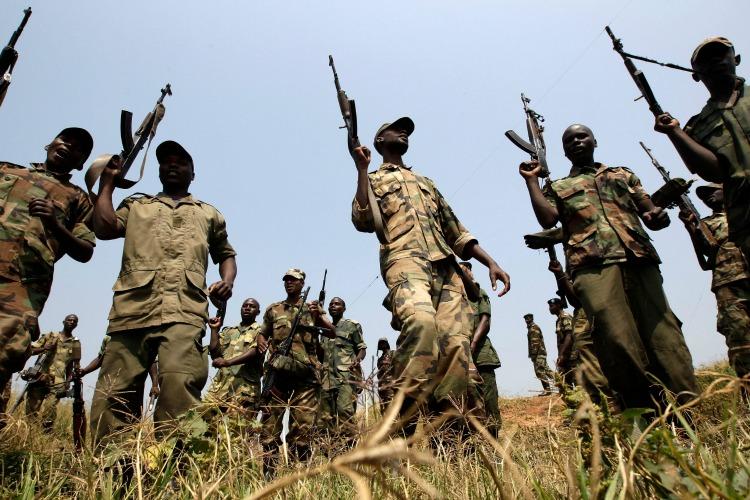
The UN on Saturday called for immediate cessation of attacks on civilians by multiple armed groups in eastern Democratic Republic of the Congo (DRC).
Spokesperson Stéphane Dujarric said the UN was “concerned over the deteriorating security situation…and the increase of attacks against civilians.
Dujarric said UN was worried over increased attacks by the Cooperative for Development of the Congo (CODECO) and the M23 as well as the on-going presence of other foreign armed groups.
He said the organisation was also concerned by the presence of foreign armed groups, including the Allied Democratic Forces (ADF), Red Tabara and the Forces Démocratique pour la libération de Rwanda (FDLR), which continued to pose a threat to regional stability.
The FDLR is a largely Rwandan Hutu armed group operating inside DRC, some of whose members took part in the 1994 genocide, and Rwanda had reportedly alleged that the Congolese army was collaborating with it, in the border area.
He urged armed militants to end violence and to begin participating “unconditionally” in the Disarmament, Demobilisation, Community Recovery and Stabilisation Programme (P-DDRCS) and called on “foreign armed groups to immediately disarm and return to their countries of origin”.
“We reaffirm our strong commitment to the sovereignty, independence, unity and territorial integrity of the DRC and strongly condemn the use of proxies,” Dujarric said in a statement.
The increase in attacks across the volatile region was the focus of a Security Council meeting at the end of May.
The brutal M23 rebel group – which began as a renegade force of army mutineers in 2012 committing many atrocities and war crimes – have launched their biggest offensive against government forces in a decade, according to news reports.
Assistant Secretary-General for Political Affairs and Peace Operations, Martha Pobee, said it was “imperative” for the Council to throw its full weight behind efforts to defuse the uptick in violence, in particular by the M23 group, which had seen thousands displaced, many fleeing across the border to Uganda.
“We welcome and support ongoing national and regional political efforts to accompany the disarmament of armed groups, including by President Félix Tshisekedi of the DRC and President Uhuru Kenyatta of Kenya through the Nairobi process,” Dujarric said.
He stressed that the UN peacekeeping Mission in DRC, MONUSCO was also working closely with the Office of the Special Envoy for the Great Lakes region, to promote non-military measures for the disarmament of foreign armed groups.
The Spokesperson also welcomed the nomination of President João Lourenço of Angola by the African Union (AU), “to defuse tensions” between the DRC and Rwanda.
According to him, the UN fully supports these political efforts.
He noted that in the restive provinces of North Kivu, South Kivu and Ituri, MONUSCO was “impartially and robustly protecting civilians and helping to neutralise armed groups, as mandated by the Security Council.”
In delivering on its protection of civilians mandate, MONUSCO is continuing to maintain its support to the Congolese Armed Forces, while ensuring that it was in strict compliance with the UN Human Rights Due Diligence Policy.
“This is to ensure that the Mission’s support to non-United Nations security forces is consistent with the organisation’s purposes and principles as set out in the Charter of the United Nations and obligations under international law,” Dujarric said.
“We are deeply concerned about reports of increased hate speech in the country against some particular communities, including in the context of the M23’s resurgence. Hate speech must be confronted proactively.”
He noted MONUSCO and the UN Country Team in DRC had consistently and unconditionally condemned hate speech in the public square.
By Eze Okechukwu, Abuja
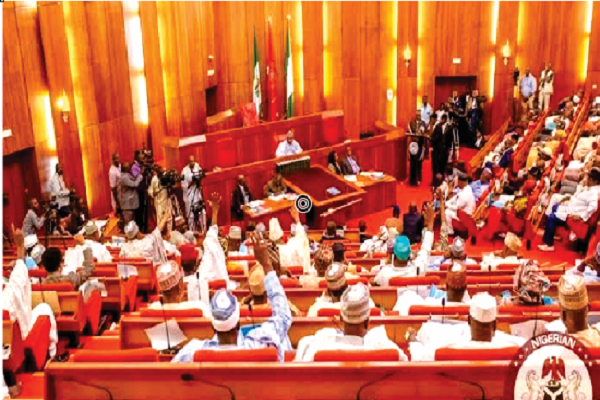
The Senate yesterday ordered mandatory health screening for every international passenger arriving Nigeria airports, seaports, land borders as Ebola resurfaces in the Democratic Republic of Congo with a scare case reported in the FCT.
The resolution followed an urgent motion by Senator Francis Fadahunsi, who warned that with Lassa fever already ravaging states, Nigeria cannot afford another outbreak.
“Protecting our entry points is far cheaper than managing Ebola,” Fadahunsi told the chamber.
Lawmakers insisted screening must be total and indiscriminate — no exemptions based on nationality or departure country because infected travellers can transit through safe-listed nations.
Senator Diket Plang raised the stakes further, demanding immediate funding for NCDC and Port Health Services, including release of withheld funds and emergency budget.
Senate President Godswill Akpabio said the Federal Government has started releasing Ebola response funds but ordered relevant committees to track every kobo.
“Ascertain whether the funds were released and judiciously utilised. Any outstanding debt must be released by the Finance Ministry without delay,” Akpabio directed.
At least 72 civilians who had been prospecting for gold in a border region of Sudan have been killed in air strikes, a regional rights group said.
Emergency Lawyers, based in the Sudanese capital, Khartoum, said jets targeted the so-called artisanal miners at a popular gold mining site on Saturday.
Neither the Egyptian government nor the de facto Sudanese authorities have so far commented.
Cairo has previously faced accusations of deadly strikes on gold prospectors as part of a crackdown on illicit activity along its southern border.
Emergency Lawyers noted the previous alleged attacks and said they represented not only a violation of Sudan’s sovereign territory but demonstrated the government’s lack of control over the region.
“The deliberate targeting of unarmed civilians violates international humanitarian law and the right to life,” it said in a statement on Sunday. “These acts may constitute war crimes.”
It noted that its death toll was provisional and could rise.
The Paris-based Sudan Tribune reported that the death toll could far exceed the number reported by Emergency Lawyers, citing a survivor of Saturday’s attack who said many more people had been injured.
Eyewitnesses said the attack began around 06:00 local time (04:00 GMT), with the aircraft firing more than five missiles directly at the miners’ camps, destroying them and excavation pits with people still inside, the newspaper wrote.
The Sudan Tribune reported claims in June that Egyptian forces had used drones and artillery to target artisanal mining sites in the same region, killing several, after sporadic incidents of Egyptian border guards of burning equipment, torching temporary shelters, and firing live ammunition to disperse mine workers.
Days later, Egypt’s border agency announced that it and the military had begun a sweeping security campaign along the border to foil illegal migration, drug smuggling and illegal mining.
At the same time, Sudan’s de facto leader announced an investigation into the alleged strikes, which were said to have killed dozens.
Gold lies at the core of the border tensions.
Sudan’s ongoing civil war has led to a surge in artisanal mining – and often risky practice conducted by civilians with rudimentary tools and without official permission – particularly in remote areas near its borders.
Gold-rich areas lie along porous borders in terrain historically associated with cross-border smuggling routes, with artisanally mined gold potentially feeding into those channels.
Egypt’s border force said in June that it had seized 86 tonnes of gold ore along with amateur prospecting equipment.
Artisanal mining has also reportedly continued in Sudan’s conflict zones and smuggled gold may be a source of income for armed insurgent groups.
This has raised concerns of illicit Sudanese gold undermining the legitimate Egyptian gold market.
Several German fighter jets will take part in the Northern Atlantic Treaty Organisation (NATO) annual nuclear defence exercise this week as troops from 17 countries take part in the Steadfast Noon drill.
The German Air Force said three Tornado jets will take part in the exercise hosted by Italy, which starts Tuesday and runs for about a week and a half.
The jets are normally stationed in Büchel in the German state of Rhineland-Palatinate.
NATO has not revealed the exercise scenario but said its scale would be comparable to last year’s drill, which involved around 2,000 personnel and more than 70 aircraft.
Last week, NATO’s head of nuclear policy, Nassima Barrows, said the exercise was designed to demonstrate the alliance’s readiness and ability to defend its territory.
No real nuclear weapons will be used, she added.
NATO said the exercise was not linked to current events or directed at any specific country.
Military experts say the drills, held regularly in October, include practising the safe transport of weapons from underground storage facilities to aircraft and mounting them on fighter jets.
Only practice bombs without real nuclear warheads are used during the drills.




A Guide to IFRS S1 and S2 Sustainability Implementation (4)
ShareBy Innocent Okwuosa The implementation of IFRS S1 and S2 must not be approached strictly from a regulatory compliance perspective....


2027: Reward Tinubu with Votes for Federal University – Wike
ShareBy Laide Akinboade Abuja The Minister of the Federal Capital Territory, Nyesom Wike, has said the Ogoni people of Rivers...


FCSC, Soft Alliance Explore IPPIS Integration to Improve Civil Service Management
ShareThe Federal Civil Service Commission (FCSC) and Soft Alliance and Resource Ltd. are exploring ways to integrate the commission’s statutory...


Tinubu Presides over FEC Meeting
SharePresident Bola Tinubu is presiding over a meeting of the Federal Executive Council at the Council Chamber of the State...
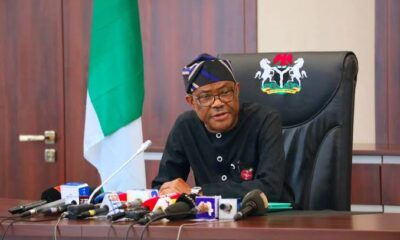

Wike Question Atiku, Obi, Contributions to Rivers State
ShareBy Laide Akinboade Abuja Minister of the Federal Capital Territory, Nyesom Wike, has challenged former Vice-President Atiku Abubakar and former...


Police Arrest NSCDC Officer for Firing Gun at Abuja Market
ShareThe Federal Capital Territory Police Command has arrested a Deputy Superintendent of Corps with the Nigeria Security and Civil Defence...


World Bank Projects 23 Per Cent Surge in Global Commodity Prices
ShareBy Tambaya Julius, Abuja The World Bank Group has projected a 23 per cent increase in global commodity prices in...


NELFUND Mounts Tight Monitoring System over Students Loan Payment
ShareBy Tambaya Julius, Abuja The Nigerian Education Loan Fund (NELFUND) has announced plans to strengthen its payment and monitoring systems...

TUC Rejects FG Wage Award, Demands N300,000 Minimum Salary
ShareBy Tambaya Julius, Abuja The Trade Union Congress of Nigeria (TUC) has rejected the Federal Government’s proposed N70,000 wage award,...

NCS Warns Drug Smugglers After N5.8m Seizure
ShareBy Tambaya Julius, Abuja The Nigeria Customs Service (NCS), Sokoto/Zamfara Area Command, has intercepted unregistered pharmaceutical products worth ₦5.8 million...