
NEWS
Subsidy Removal: Reps Approve N500bn Presidential Request for Palliatives


A bill for an Act to authorise the issuance of N500 billion from the 2022 Supplementary Appropriations for the provision of palliatives to Nigerians to cushion the effect of fuel subsidy removal, has passed second reading in the House of Representatives.
The bill, sponsored by the Executive, was presented on the floor of the house by the Majority Leader, Rep.
Julius Ihonvbere at plenary on Thursday.Leading the debate, Ihonvbere said that at a certain point, each nation took time out to reflect on its programmes and policies.
He said that many members of the parliament had moved motion for the provision of palliatives to cushion the effects of subsidy removal.
The rep said that the request of the executive was a clear indication that “we have a government that listens”.
Ihonvbere saith that the bill, when passed into law, would provide support for Nigerians to weather the effect.
He urged members to support the passage of the request in the spirit of collaboration with the executive.
Ihonvbere said that everyone was feeling the effect of subsidy removal, saying that Nigerians were waiting to see how the matter would be handled and if the parliament had the interest of the people at heart.
Rep. Ahmed Jaha (APC-Borno) commended the executive for taking the bull by the horns and for taking a painful decision to remove the subsidy in the interest of Nigerians.
The lawmaker said that it was one to provide funds and another for the funds to be used for the purpose it was meant.
He said that budget and supplementary budget were passed yearly but it was not often used for the purpose intended.
Jaha said that as soon as it e passed, the house should ensure the money was used and implemented accordingly, saying that all 360 constituencies should no longer feel the effect of the subsidy removal.
Rep. Akin Adeyemi (APC-Oyo) said that government had done the needful and that the monster subsidy was gone.
“We should not only be supporting this initiative but also be looking at providing additional funds to cushion the effect of the removal.”
He commended labour unions and opposition parties for understanding with the government on the matter.
Rep. Beni Lar (PDP-Plateau) said it was not in doubt that Nigerians were going through unbearing hardship and commended the president for the initiative.
“But what is the nature of the palliatives, how will the 500 billion be spent.
“I move we set up an ad hoc committee to recommend the nature of the palliative and how it should be implemented,” she said.
Rep. Olumide Osoba (APC-Oyo) said that the parliament should do its job and ensure proper oversight when the funds were released.
Also, Rep. Regina Akume (APC-Benue) said that there was need for the house to form an ad hoc committee to oversight it.
“I have confidence in Presidnet Bola Tinubu, he has demonstrated capacity over time.”
Rep. Sani Madaki (APC-Kano State) commended President Bola Tinubu for the initiative.
He said he had called for palliatives and the president had acted, urging the parliament to do the needful for constituents to enjoy the outcome.
The Minority Leader, Rep. Kingsley Chinda, said the yardstick to measure any government was its responsiveness.
He commended the president for being responsive, saying that the house would want to see a palliative that would make possible impact.
“We want living wage not minimum wage; do not suffocate us, school fees are high, electricity bill is high and so on.
“We do not want to see N5,000 handout to Nigerians on the street; this is a fast case for the administration and we do not want them to fail,” he said.
He however, urged the house to pass the bill with the speed of light.
The Speaker of the house, Rep. Tajudeen Abbas, called for voice votes on the bill and members unanimously voted and the bill was passed. (NAN)
By Isaac Asabor
Since the All-Progressives Congress (APC) assumed political leadership of Nigeria in 2015, the country has witnessed two presidential administrations, several policy declarations, numerous reform programmes and countless political promises.
Yet, as the country approaches another general election in 2027, one uncomfortable question deserves serious national consideration: What exactly has changed in the lives of ordinary Nigerians?This question is particularly important because the APC came to power in 2015 on the strength of an elaborate promise of change.
Its campaign was built around the expectation that a new political leadership would rescue Nigeria from the perceived failures of the Peoples Democratic Party (PDP), which had governed the country for 16 years.Nigerians were promised improved security, economic prosperity, employment opportunities, reliable electricity, infrastructural development and a decisive war against corruption. The party’s message resonated with millions of voters who believed that changing the political leadership would translate into a fundamental transformation of the country.
Eleven years later, however, the distance between those promises and the everyday experiences of citizens raises legitimate questions about the meaning of the change Nigerians were promised.
Indeed, the emergence of President Muhammadu Buhari in 2015 was celebrated as the beginning of a new political era. His administration enjoyed considerable goodwill, particularly because of his reputation as a former military head of state who had repeatedly presented himself as an uncompromising opponent of corruption.
Unfortunately, the expectations that accompanied his emergence were not sufficiently matched by the results of his administration.
The economy experienced recession, unemployment remained a serious national concern, inflation eroded household purchasing power, and insecurity spread across several parts of the country. Banditry, terrorism, kidnapping and communal violence became persistent threats to lives, livelihoods and national stability.
Electricity supply remained unreliable, while the country’s dependence on imported petroleum products exposed the economy to external shocks and foreign exchange pressures.
Although the Buhari administration eventually left office in 2023, many of these problems were not only unresolved but had become more deeply entrenched.
Consequently, the emergence of President Bola Tinubu was accompanied by another wave of expectations. His Renewed Hope Agenda was presented as an opportunity to correct previous mistakes, restore economic confidence and reposition Nigeria for sustainable development.
Yet, more than three years into the Tinubu administration, Nigerians are still grappling with many of the same structural challenges that confronted them under Buhari.
Granted, the removal of the petrol subsidy, foreign exchange reforms, tax restructuring and other economic measures represent significant policy departures from previous arrangements. The government has also pointed to improvements in GDP growth, foreign reserves and other macroeconomic indicators as evidence that its reforms are beginning to produce results.
However, economic growth figures and foreign reserve accumulation cannot, by themselves, constitute sufficient evidence of successful governance when millions of households continue to struggle with the cost of food, transportation, accommodation, healthcare and education.
What does economic recovery mean to a family that can no longer afford three decent meals daily? What is the practical value of improved foreign reserves to a small business owner whose operating costs have become almost unbearable? What does GDP growth mean to an unemployed graduate who has spent years searching for a meaningful job?
These are not questions that government officials should dismiss as politically motivated criticism. They are legitimate questions arising from the lived experiences of citizens.
The argument that Nigerians must endure present economic difficulties because reforms require time is also becoming increasingly difficult to sustain. Reforms are not ends in themselves. Their justification lies in the benefits they ultimately deliver to the people.
Indeed, the APC cannot indefinitely ask Nigerians to evaluate its performance through the promises of tomorrow while avoiding accountability for the realities of today.
More troubling is the continuity of Nigeria’s security challenges. Eleven years after the APC promised to defeat terrorism and restore confidence in the country’s security architecture, communities in different parts of the federation continue to live under the threat of attacks, kidnappings and displacement.
Farmers cannot confidently access their farmlands in some areas, businesses operate under security uncertainties, and families continue to worry about the safety of their loved ones.
It is difficult to reconcile this reality with the assurances that the country is moving towards a more secure future.
The electricity sector provides another illustration of the country’s disappointing governance trajectory. Despite successive promises of improved power supply, millions of Nigerians and businesses remain dependent on generators and alternative energy sources.
This situation has consequences beyond household inconvenience. It increases production costs, discourages investment, undermines industrial competitiveness and makes Nigerian businesses less capable of competing with counterparts in countries where electricity supply is more dependable.
Similarly, the fight against corruption, which featured prominently in the APC’s 2015 campaign, remains an important test of the party’s credibility. Nigerians are entitled to demand transparency, consistency and accountability in the management of public resources, irrespective of the political affiliation or status of those involved.
The perception that political loyalty sometimes receives more attention than institutional accountability undermines public confidence in the anti-corruption campaign.
Perhaps one of the most disturbing manifestations of this continuity is the country’s political culture. Politicians continue to move between political parties, often without sufficiently explaining how their ideological convictions or governance philosophies have changed.
Former critics of the APC have become its supporters, while some founding members have expressed dissatisfaction with the direction of the party. Such developments reinforce the impression that political calculations and the pursuit of power frequently take precedence over clearly defined ideological commitments.
The movement of politicians from one party to another is not necessarily evidence of wrongdoing. However, when political defections occur without corresponding explanations of policy differences or governance convictions, voters are left wondering whether Nigeria’s political parties represent genuinely different visions or merely competing platforms for accessing political power.
This is particularly relevant as opposition parties explore coalition arrangements ahead of the 2027 elections. Their proposed unity should not be celebrated merely because it presents an opportunity to challenge the APC. Nigerians have suffered enough from political experimentation to deserve something more substantial than another alliance built principally around the ambition of defeating an incumbent government.
The opposition must demonstrate that it has learnt from the failures of previous administrations. It must articulate credible alternatives on security, electricity, economic management, education, healthcare, employment creation and institutional accountability.
Changing the occupants of government offices without changing the philosophy and practice of governance will only reproduce the same disappointments under different political identities.
This is why the APC’s argument for continuity deserves particularly close scrutiny. Its supporters contend that the Tinubu administration should be allowed to consolidate its reforms rather than return the country to what they describe as unsustainable policies of the past.
But continuity cannot become an excuse for escaping accountability. Neither should the fear of returning to previous economic arrangements be used to discourage Nigerians from demanding better leadership.
After all, the APC has governed Nigeria since 2015. It cannot indefinitely campaign against the failures of the PDP while presenting itself as a political newcomer still waiting for an opportunity to demonstrate its capacity.
The party has had more than a decade to establish a distinguishable record of governance. Its performance must therefore be judged against the promises it made, the resources available to it and the conditions under which ordinary Nigerians live.
Former President Goodluck Jonathan’s warning about the possibility of post-election instability in 2027 also deserves attention. Political intolerance, electoral violence, thuggery and declining public confidence in democratic institutions cannot be treated as peripheral concerns. Democracy becomes endangered when citizens lose faith in the ability of the political system to deliver meaningful change through peaceful and credible elections.
Ultimately, Nigeria’s problem is not simply that one political party has governed for too long. It is that the country has struggled to translate successive changes in political leadership into fundamental improvements in governance.
The APC promised change in 2015. Buhari’s administration failed to sufficiently deliver on that promise. Tinubu subsequently promised renewed hope, but the ordinary Nigerian is still waiting for that hope to become a tangible reality.
This is not to suggest that nothing has happened in Nigeria since 2015. Governments have undertaken projects, introduced policies and implemented reforms. Rather, the argument is that the fundamental conditions that made Nigerians demand change in 2015 remain stubbornly present, despite eleven years of APC leadership.
The 2027 elections must therefore be about more than political alliances, presidential ambitions, defections and campaign slogans. They must provide Nigerians with an opportunity to interrogate the country’s governance record and demand a credible alternative built around measurable results.
Whether the APC retains power or an opposition coalition succeeds at the polls, the country needs a fundamental departure from politics as usual.
Nigerians do not need another promise of change that eventually becomes an excuse for continuity of failure. They need leadership that understands that political power is a responsibility, not an entitlement; that economic reforms must improve human welfare; and that public office must be measured by the quality of lives it transforms.
Until that happens, the uncomfortable conclusion will remain difficult to dispute: Since 2015, Nigeria may have changed presidents, political slogans and economic policy directions, but it has not sufficiently changed the character and outcomes of governance.
Eleven years after the APC promised change, Nigerians are still waiting for the change they voted for.
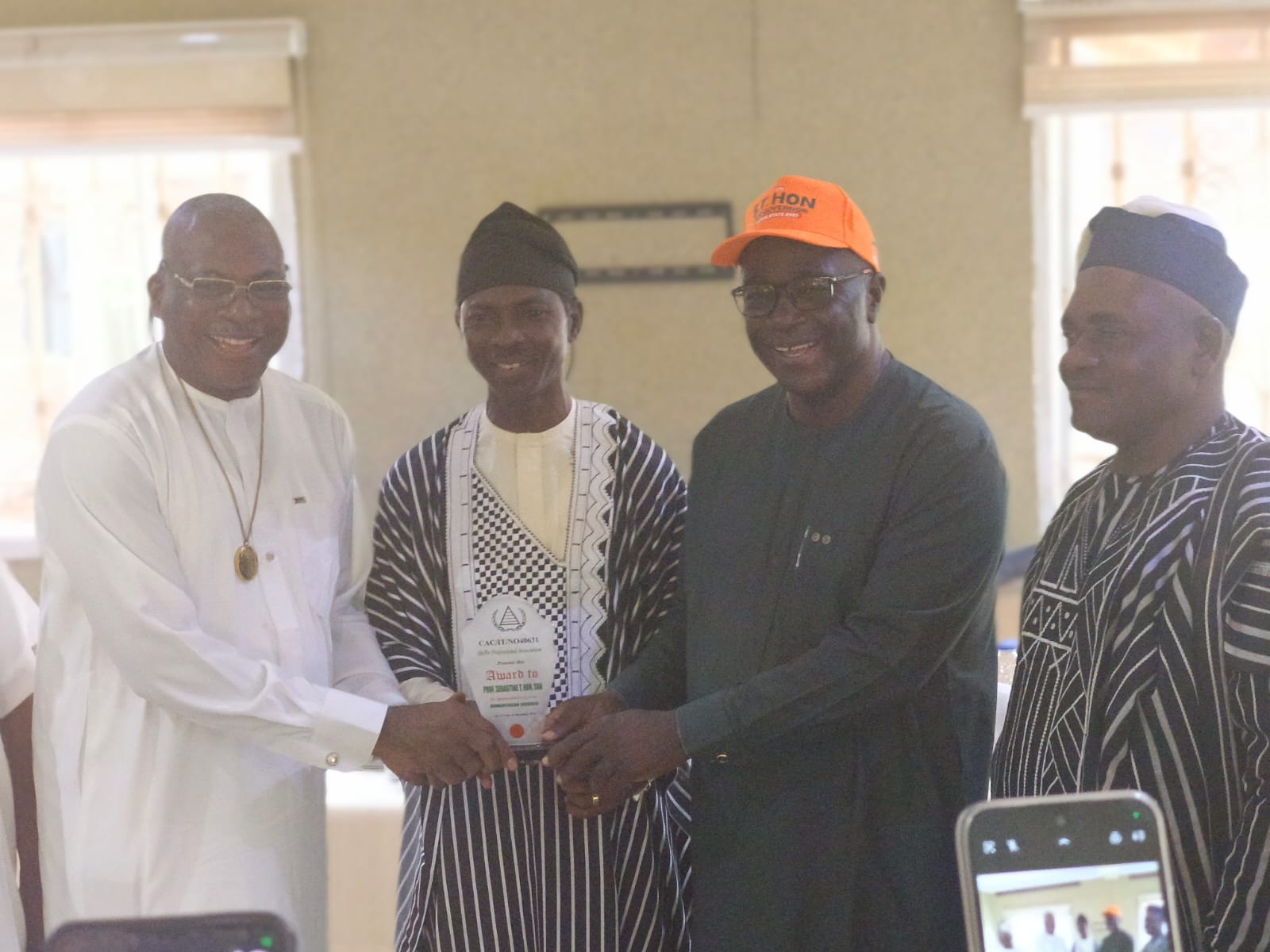
Vows legal, political action against alleged encroachment on Tiv territories
By Orjime Moses, Abuja
A Senior Advocate of Nigeria (SAN), Sabastin Tartenger Hon, has vowed to pursue legal and political avenues to protect Tiv ancestral lands, historical identity and cultural heritage, insisting that the people must not become strangers in their homeland.
Hon, a law professor and Social Democratic Party (SDP) governorship candidate in Benue State for the 2027 election, made the pledge on Saturday at an award presentation ceremony organised by OnTiv Professionals, an Abuja-based group, where he was honoured alongside five other Tiv personalities for their professional achievements and contributions to the development of the Tiv people.
He expressed concern over what he described as attempts to distort the historical settlement patterns, population strength and ancestral claims of the Tiv people, particularly in parts of the North-East.
The senior lawyer disputed demographic classifications that reportedly placed the Tiv as Nigeria’s seventh-largest ethnic group, insisting that historical records supported their position as the country’s fourth-largest ethnic group.
“We are the fourth-largest tribe, but now everybody is taking us to the seventh. We don’t know where those demographics are coming from. There is very wrong data,” he said.
Explaining his interest in Tiv history and territorial rights, Hon said his position was informed by years of research into the people’s migration, settlement patterns, archival records and development prospects.
He recalled his legal practice in Gembu, on the Mambilla Plateau in Taraba State, where he encountered historical documents relating to communal conflicts and competing claims of ancestral ownership involving the Mambilla, Kaka, Fulani and other communities.
According to him, a commission of inquiry established after the 1982 communal conflict examined competing claims of original settlement and reportedly made findings that challenged assertions of exclusive ancestral ownership by some communities.
He argued that environmental and agricultural conditions on the Mambilla Plateau also influenced the historical movement of Tiv communities towards the Benue Valley.
Hon said his investigations further extended to archival records of the defunct Gongola State, which, he maintained, documented a significant Tiv population in the area.
He warned against the distortion or disregard of historical records in resolving questions of ethnic identity, ancestral settlement and territorial rights, saying such actions could worsen existing disputes and trigger communal clashes.
He also expressed concern over alleged encroachment on Tiv communities in parts of Taraba State, including Takum and Kashimbilla.
Hon said continued encroachment and failure by relevant authorities to address longstanding grievances could heighten inter-communal tensions, calling for the resolution of competing territorial claims through lawful processes and respect for the rights of all communities.
He disclosed that representatives of Tiv communities had previously approached him for legal intervention over boundary disputes with Taraba State.
He said he subsequently assembled archival materials and other documentary evidence and prepared a legal action intended for the Supreme Court.
However, he explained that disputes between states seeking to invoke the Supreme Court’s original jurisdiction require government-to-government proceedings, adding that the proposed action was overtaken by subsequent developments involving the state government.
Despite the setback, Hon said the underlying grievances remained unresolved, insisting that the defence of Tiv ancestral interests should not be misconstrued as hostility towards other ethnic groups.
“I am a defender of the Tiv nation. If you give me governmental power, I will do it,” he declared.
He said his commitment to the Tiv cause was aimed at preserving the people’s identity and heritage and ensuring that future generations were not deprived of their historical inheritance.
Hon also urged communities to celebrate their identities without diminishing those of others, saying mutual respect and recognition were essential to peaceful coexistence.
“When we celebrate one another, it shows the humanity in us. It shows the godliness in us. But when we despise ourselves, it shows the animal in us,” he said.
The senior advocate further called for responsible leadership, fairness and selflessness in governance, maintaining that political authority should be used to address citizens’ needs, promote development and provide essential infrastructure.
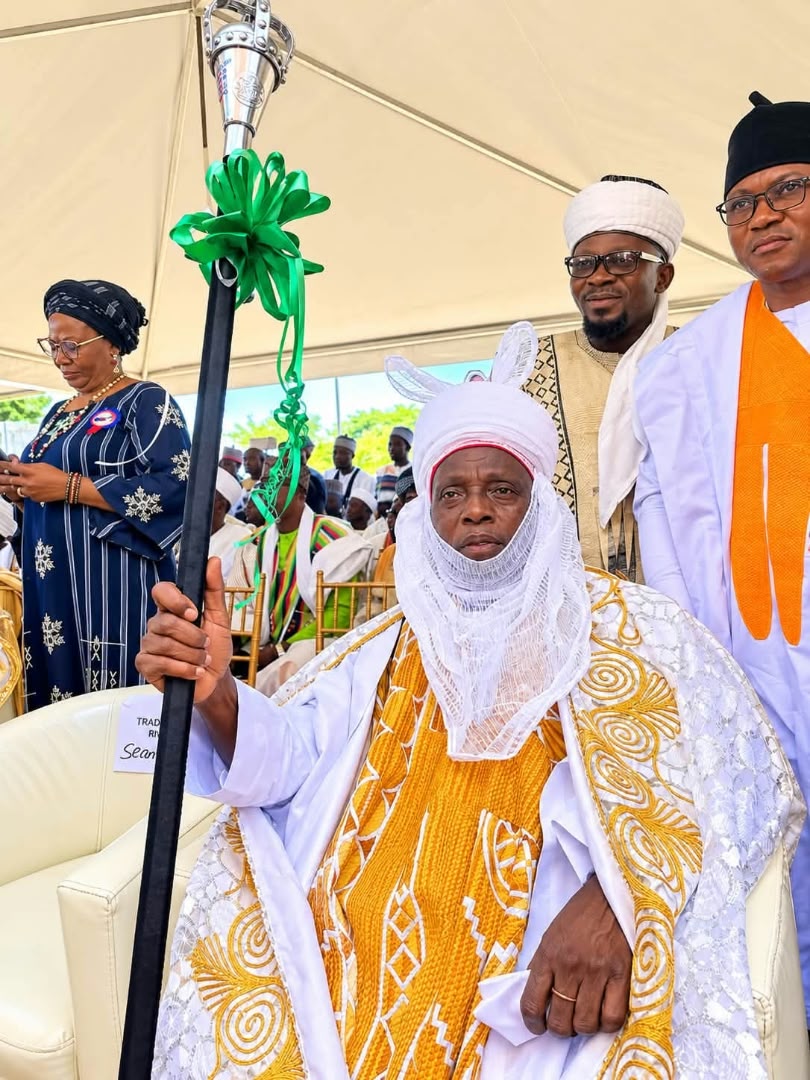
By Raphael Atuu, Abuja
The Hakimi of Garki Shakwope, TPL. Chief. Hon. Ambassador Stephen Shekwonce Yakubu, has congratulated the Sa’peyi of Garki and Chairman of Garki Chiefdom, His Royal Highness Alhaji (Dr) Usman Nga Kupi, on his elevation from Third-Class to Second-Class Chief.
Yakubu described the elevation as a well-deserved recognition of the traditional ruler’s leadership qualities, commitment to peace, unity and the development of Garki Chiefdom.
He spoke shortly after the presentation of the staff of office to the newly upgraded traditional rulers of the Federal Capital Territory (FCT), during which some Chiefs were elevated from Second-Class to First-Class status and others from Third-Class to Second-Class.
He noted that the Sa’peyi stool of Garki had a long-standing traditional history dating back to the 17th century, making the latest recognition significant to the people and the traditional institution of Garki.
The Hakimi said the elevation was long overdue, given the Sa’peyi’s dedication to the people, maturity in leadership and efforts towards sustaining peace and promoting community development.
He commended the Minister of the Federal Capital Territory, H.E. Barr Nyesom Wike, for facilitating the recognition of the traditional rulers, noting that the elevation would further strengthen traditional institutions and their roles in grassroots governance.
Yakubu urged the people of Garki to continue supporting the Sa’peyi and other traditional leaders, stressing that unity, cooperation and respect for traditional authority were essential for the progress of the chiefdom.
He expressed optimism that the new status would encourage stronger engagement with government and other stakeholders to address the developmental needs of Garki and its surrounding communities.
The Hakimi prayed for wisdom, good health and strength for the Sa’peyi, wishing him a long and peaceful reign marked by unity, progress, cultural preservation and service to humanity.




CBN, NCC Raise the Alarm over AI-powered Attacks
ShareThe Central Bank of Nigeria (CBN) and the Nigerian Communications Commission (NCC) have raised the alarm over the growing threat...
Since 2015, Nigeria Has Changed Governments, Not Its Governance
ShareBy Isaac Asabor Since the All-Progressives Congress (APC) assumed political leadership of Nigeria in 2015, the country has witnessed two...


Tiv People Must Not Become Strangers In Their Ancestral Homeland – SAN
ShareVows legal, political action against alleged encroachment on Tiv territories By Orjime Moses, Abuja A Senior Advocate of Nigeria (SAN),...

Hakimin Garki – Shakwope Congratulates Sa’peyi of Garki on Elevation to Second-Class Chief
ShareBy Raphael Atuu, Abuja The Hakimi of Garki Shakwope, TPL. Chief. Hon. Ambassador Stephen Shekwonce Yakubu, has congratulated the Sa’peyi...

TAJBANK, Lagos Sign MoU on Infrastructure Financing
ShareBy Tony Obiechina, Abuja TAJBank Limited on Monday signed a tripartite Memorandum of Understanding (MoU) with the Lagos State Government...

Nigeria Launches Fresh Offensive against Drug Cartels
ShareBy David Torough, Abuja The Federal Government has unveiled a comprehensive five-year strategy to intensify Nigeria’s war against illicit drugs,...

Gunmen Attack Omo-Agege’s Campaign Team, Kill Four in Delta
ShareBy Francis Sadhere, Delta Four persons have reportedly been killed and several others wounded following a gun attack on the...

Establishment of Development Commissions, Tinubu’s Best Decision for Nigeria, Says Momoh
ShareBy David Torough, Abuja The Minister of Regional Development, Engr. Abubakar Momoh, has described the establishment of the Regional Development...


OPHK Air Strikes Kill 37 Terrorists, Destroy Four Vehicles in North-East
ShareBy David Torough, Abuja The Nigerian military says air strikes conducted by the Joint Task Force, Operation HADIN KAI (OPHK),...

2027: Akwa Ibom opposition ‘ll Vote Tinubu, says Akpabio as Tompolo Donates 31 Campaign Vehicles
SharePresident of the Senate, Godswill Akpabio, says the All Progressives Congress (APC) in the state and other opposition political parties...