
Business News
Enhancing The Nigeria Customs Service Through Partnerships

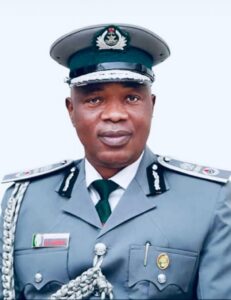
By Mark Longyen
Analysts believe that the Nigeria Customs Service (NCS) is strategic to not only achieving the nation’s economic development but also to ensuring national security.
That explains why many stakeholders argue that the Service can be radically enhanced through collaborative engagements and international partnerships.
The NCS is tasked with three core mandates, which are: robust revenue generation, suppressing smuggling and trade facilitation.
Going forward, they say, these core mandates can be optimally achieved through deliberate, revolutionary, collaborative engagements with stakeholders, home and abroad, besides leveraging the deployment of cutting-edge technology.
Some solicit stepping up the Service’s operations by drastically deepening its existing partnerships with local stakeholders and partners, such as security agencies, government agencies (MDAs), border communities, anti-corruption agencies and the media.
They are of the view that prioritising domestic collaborations and deepening partnerships with international organisations using cutting-edge technologies are critical transformative initiatives that would enhance effectiveness and overall service delivery of the NCS.
Adewale Adeniyi, Ag. Comptroller-General of Customs (CGC), on assumption of office, captured this in his inaugural speech, titled: ‘Embracing a New Era of Excellence’.
This, he intends to achieve by engaging with stakeholders, who will be treated as partners, and adopting technology to streamline processes and revolutionise revenue generation.
“As we embark on this new journey, we recognise the need for collaborations and partnerships.
“We value the relationships we have built with our partner government agencies and the private sector. These collaborations have been vital to our adoption of technology as a tool to streamline processes and enhance revenue generation.
“We will strengthen these partnerships and engage with stakeholders through revitalized platforms.
“By promoting dialogue, we can resolve disputes and advance mutually beneficial solutions that lead to more efficient and effective service’’, he said.
According to him, NCS will continue to treat its esteemed stakeholders as partners, who have a stake in their success.
“It is crucial for us to recognize the modern realities and challenges to Customs operations. In today’s interconnected and technologically advanced world, we face emerging threats that require our utmost attention.
“E-commerce, global supply chains, and transnational criminal networks pose challenges to our role as custodians of trade facilitation and enforcement”, he said.
Adeniyi said NCS will adapt to changing landscapes, leverage emerging technologies, intelligence-led operations, and effective risk management strategies.
He added that collaboration with international partners, local law enforcement agencies and other countries’ customs administrations are critical to combating illicit trade and securing Nigeria’s national interests.
Corroborating Adeniyi’s commitment and determination to change the narrative at the Customs, Abdullahi Maiwada, a Chief Superintendent of Customs, and NCS spokesman, says Adeniyi is imbued with the requisite pedigree to change the Service.
Maiwada assured that under Adeniyi’s leadership, NCS will be on an “exciting journey” towards enhanced efficiency and unlocked potential.
“Through international collaborations, engagements with the World Customs Organization (WCO), exploration of AI-driven solutions, and strategic discussions, the NCS is pioneering innovative projects that will shape the future of Customs practice in Nigeria.
“The Acting CG has engaged in topical discussions within the global Customs community, advocating for the exploration of AI-driven solutions, including Generative Artificial Intelligence (AI) solutions like ChatGPT and advanced geo-spatial intelligence approaches such as GEOINT.
“The NCS has already established a GEOINT unit, leveraging geospatial data, mapping techniques, and satellite imagery to gain valuable insights for customs operations’’, he said.
Maiwada said Adeniyi’s engagements with strategic partners are already getting support for the establishment of a Customs Laboratory, which is a significant milestone in enhancing Customs operations and trade facilitation.
Some of the partners are World Customs Organization, WCO, Japan International Cooperation Agency (JICA) and Japan Customs Administration (JCA),World Trade Organization (WTO), UN Conference on Trade and Development (UNCTAD), UN Office on Drugs and Crime (UNODC), World Bank, and IMF
“Amid the current landscape of evolving global trade dynamics, the NCS laboratory will provide comprehensive solutions to address challenges, such as counterfeit goods, smuggling, and non-compliant imports, thereby bolstering revenue generation and ensuring the protection of public health and safety.
“With its advanced analytical capabilities, the laboratory is expected to deliver precise identification, verification and classification of goods.
“This would enable efficient enforcement measures and informed decision-making towards achieving seamless customs operations, trade competitiveness and national economic growth in line with the vision of the President Bola Tinubu-led administration,” he said.
Joshua Eze, a stakeholder, for instance, recalls that prior to his elevation, Adeniyi won the exemplary CGC Award for his unprecedented seizing of $8,065,612 million cash at the Murtala Mohammed International Airport, Lagos, in January 2020.
According to him, the new dispensation entails striking a delicate balance between trade facilitation and revenue collection.
He said it offers an opportunity to redefine priorities through collaborative engagements and cutting-edge technology to steer the organization towards the path of efficiency, transparency, and modernisation.
“The new Nigeria Customs Service envisioned by the new helmsman needs collaboration and stakeholder engagement.
“Therefore, the new Comptroller-General must actively engage and collaborate with other government agencies, the private sector, international organisations, and regional trade bodies.
“It is expected that CGC Adeniyi will recognise the need to re-balance the priorities of the NCS, placing emphasis on trade facilitation alongside revenue generation.
“He should focus on optimising Customs processes, embracing technology, and streamlining procedures to facilitate legitimate trade flows, while revenue collection remains crucial,” he said.
Leonard Ogamba, President of Shippers’ Association, Lagos, blamed wrong policies over the years for trade facilitation challenges in the country.
He therefore argued that the success of NCS under Adeniyi would depend largely on whether or not the new Customs boss would do things differently.
He urged the new Customs boss and the entire NCS management to collaborate with domestic and international partners, and operate within the confines of domesticated international conventions.
Frank Ogunojemite, President, Africa Association of Professional Freight Forwarders and Logistics in Nigeria, (APFFLON), describes Adeniyi’s appointment as a “rebirth” of the NCS.
He identified modernisation as key to achieving trade facilitation, and agrees with other observers on the need for constructive engagements and collaborations with local and international partners towards attaining a robust Customs Service.
“The modernisation of Customs is very important as this is one of the several factors that will increase trade facilitation, and until we get those things right, we will still not be able to take our place in the comity of maritime nations,” he said.
Ogunojemite also advised that NCS under Adeniyi should engage domestic and foreign stakeholders, such as customs brokers and stakeholders, professional bodies and leaders of thought in the Service’s operations.
Similarly, collaborations and engagements with stakeholders by the NCS under the new dispensation is mandatory for it to attain optimal operational success.
This is the position canvassed by Dr Kayode Farinto, Acting President, Association of Nigerian Licensed Customs (ANLCA.
He said that Adeniyi, being a career officer, must ensure that he is always accessible and regularly engages critical stakeholders in line with the WCO 2013 Handbook.
The document mandates every Customs formation to collaborate with Customs brokers and stakeholders.
Yusuf Malanta, a former Comptroller, Apapa Area Command, NCS, explains that collaboration with other MDAs plays a great role in the high revenue haul.
He, therefore, underscores the role of interagency collaboration in boosting revenue generation, particularly against the backdrop of an unprecedented revenue generation of over N1 trillion by the Command under him in 2022.
Interestingly, the CGC is getting positive feedback from leading stakeholders.
The Accountant General of the Federation, Dr Oluwatoyin Madein, expressed her readiness to collaborate with NCS to increase revenue generation, when the CGC visited her recently.
Madein pledged to collaborate with the NCS and other federal government revenue generating MDAs, by establishing a robust working relationship with them.
The new Customs boss also recognises the place of border communities in the efficiency of the Service.
“One fair commitment I will like to give to you is that we will do better in recruitment from people in border communities because we believe that they are stakeholders.
“Customs-border community relationship is stronger when you know that you have your sons and daughters in the NCS.
“We are also not unmindful that where we have this kind of critical operations, we should also be talking about the kind of corporate social responsibility programmes that we are going to be doing,” Adeniyi said during a visit to border communities.
In line with its commitment to collaborative engagements to enhance its operations for effective service delivery, the NCS has also identified the media as an indispensable partner in progress by seeking collaboration with the Nigeria Union of Journalists, NUJ.
The CGC, who made the pledge at a recent award ceremony of the NUJ in Lagos, explained that such a partnership was necessary because the media informs and educates the public on Customs’ operations.
“The Service requires the support and guidance of the media to consolidate the progress made in trade facilitation and revenue collection aspects of its mandate.
“Smuggling activities, for instance, can be curtailed to a large extent through partnership with the media,” he said.
As Adeniyi marks his first 100 days in office, stakeholders are of the view that NCS should scale up its local inter-agency collaborative engagements and international partnerships leveraging technologies to achieve its core mandates. (NANFeatures)

Sunbeth Treenuts and Sesame Limited, a subsidiary of Sunbeth Agro HoldCo, announces the completion of its acquisition of UAC of Nigeria Plc’s 73.29% shareholding in Livestock Feeds Plc, following approval from Nigeria’s Securities and Exchange Commission.
The completion establishes Sunbeth as the majority shareholder of Livestock Feeds Plc and marks the beginning of a new phase focused on preserving the company’s heritage, strengthening its operations and supporting its long-term growth.
Sunbeth’s immediate priority is to support business continuity, working closely with the Board, management and employees to strengthen operations and maintain dependable service to customers and partners.
Commenting on the completion, Peeyush Karnani, Chief Strategy Officer of Sunbeth Agro HoldCo, said:
“Livestock Feeds is an established business with a proud heritage, trusted brands and longstanding relationships across Nigeria’s livestock industry. We recognise the responsibility that comes with becoming its majority shareholder.
“Our approach is to build on these foundations. Our immediate focus is continuity, operational stability and supporting the people and partnerships behind the business. We intend to combine Sunbeth’s strength in sourcing soya and other key feed ingredients with Livestock Feeds’ manufacturing expertise and established distribution network to improve supply reliability, strengthen competitiveness and create sustainable value for all shareholders.
“This acquisition also provides an important foundation for Sunbeth’s long-term strategy to build an integrated protein business spanning animal nutrition, poultry and cattle production, and meat processing. We will pursue this strategy through disciplined, phased investment, with a clear focus on strengthening Livestock Feeds and supporting the growth of Nigeria’s livestock industry.”
Sunbeth has also announced the appointment of five new directors to the Board of Livestock Feeds Plc, effective 17 November 2026.
The newly appointed directors are Mr Sam Okuwlehi, Mr Seyi Ebenezer, Professor Franklin Nnaemeka Ngwu, PhD, Mrs Mary Mulili, and Mr Farrukh Siddiqui. They will join three existing directors who will continue to serve on the Board: Mr Joseph I.D. Dada, Mr Adegboyega Adedeji, and Mr Abayomi Adeyemi.
Employees remain central to the company’s future. Sunbeth intends to work collaboratively with the Livestock Feeds team, drawing on its experience and knowledge as the business enters its next phase.
For customers, distributors and suppliers, the priority is to sustain trusted relationships, maintain product quality and strengthen supply reliability. Future improvements will be introduced through a structured and carefully managed process.
As majority shareholder, Sunbeth is committed to supporting sound governance, operational resilience and disciplined investment to build lasting value for Livestock Feeds Plc and all its shareholders.
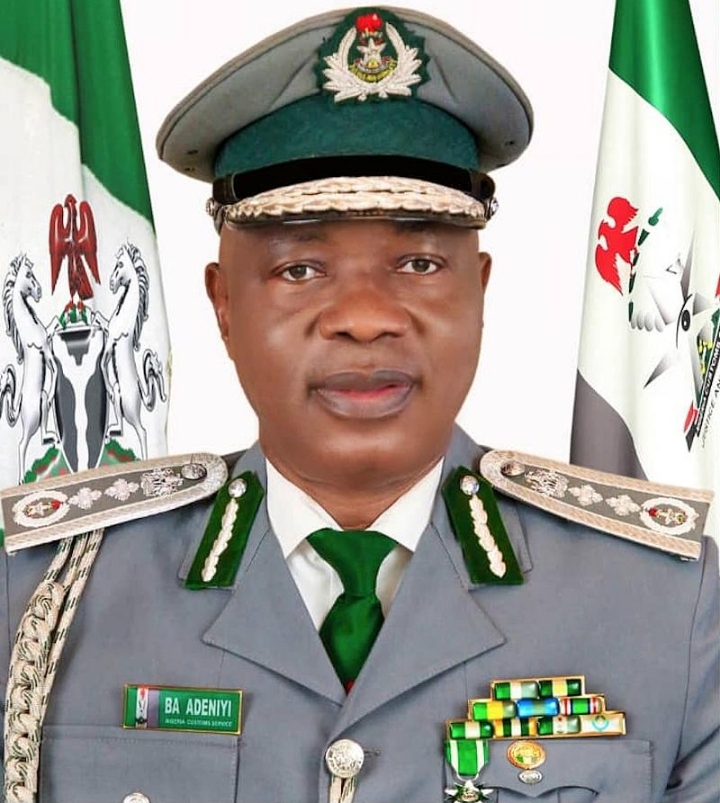
By Tambaya Julius, Abuja
The Comptroller-General of the Nigeria Customs Service (NCS), Bashir Adewale Adeniyi, has called on officers and men of the Customs Police Unit (CPU) to uphold discipline, professionalism and integrity, stressing that accountability must begin within the Service.
Adeniyi made the call while delivering the keynote address at the inaugural Customs Police Summit 2026, held at the NAF Conference Centre and Suites, Abuja.
The summit, with the theme, “Reimagining Customs Policing: Learning From the Past, Responding to the Present, and Preparing for the Future,” brought together customs personnel and representatives of security and law enforcement agencies to discuss ways of strengthening the unit and preparing it for emerging enforcement challenges.
The Customs boss, who is also the Chairperson of the World Customs Organization (WCO) Council, said the Service must first demonstrate the discipline and integrity it expects from traders and members of the public.
He described the Customs Police Unit as a critical part of the Service’s internal control system, noting that its responsibility goes beyond investigating misconduct to ensuring that officers exercise their powers within the confines of the law.
According to him, the unit, formally inaugurated in July 2019, was established to investigate erring personnel, prevent crime and promote compliance, guided by the principle that no officer is above the law.
He said the experience of the Service over the years had reinforced three important lessons: integrity must begin at home, enforcement powers must be exercised responsibly, and effective policing requires cooperation among relevant institutions.
The Comptroller-General expressed concern over the growing sophistication of criminal networks, which he said were increasingly exploiting legitimate trade routes and digital platforms to move illicit goods, including firearm components, narcotics, counterfeit medicines, protected wildlife and proceeds of illegal activities.
He maintained that tackling these threats required more than aggressive enforcement, calling instead for smarter, intelligence-driven operations supported by technology and international best practices.
Adeniyi pointed to several World Customs Organization instruments, including the SAFE Framework, Authorised Economic Operator (AEO) Programme, advance rulings, Time Release Study and Revised Kyoto Convention, as important tools for promoting compliance, facilitating legitimate trade and reducing opportunities for corruption.
He also highlighted the role of technology and data management in strengthening customs operations, citing the B’Odogwu platform, which integrates declarations, valuation, risk management and AEO processes.
He added that the INTERPOL Data Centre at Customs Headquarters had provided the Service with access to global criminal databases, while the Nigeria Customs Service Act 2023 had strengthened the legal foundation for intelligence-led operations, joint border activities and mutual administrative assistance.
The CGC identified Consolidation, Collaboration and Innovation as the three pillars that must shape the future of customs policing.
He explained that consolidation would require stronger operational procedures, improved investigations, properly documented cases for prosecution and continuous professional development of personnel.
He called for closer working relationships with the Nigeria Police Force, Armed Forces, National Drug Law Enforcement Agency (NDLEA), National Agency for Food and Drug Administration and Control (NAFDAC), Department of State Services (DSS), Independent Corrupt Practices and Other Related Offences Commission (ICPC), Nigeria Agricultural Quarantine Service (NAQS), neighbouring countries and border communities.
He also encouraged the Service to take advantage of emerging technologies, including artificial intelligence, advanced scanners, geospatial tools and electronic cargo tracking, to improve investigations and strengthen enforcement operations.
Adeniyi urged participants to use the summit to develop practical recommendations, including a Customs Police doctrine based on the NCS Act 2023 and Revised Arusha Declaration, improved protocols for joint operations and evidence management, guidelines for the responsible use of artificial intelligence in investigations, and better training and welfare for CPU personnel.
Addressing officers of the unit, he reminded them that their red berets represented the confidence Nigerians placed in the Service and must therefore be worn with discipline, restraint and pride.
He stressed that integrity remained the greatest badge of honour for every customs officer.
The Acting Provost Marshal of the NCS, Deputy Comptroller TS Sanusi, described the summit as an important step towards strengthening the institutional capacity and repositioning the Customs Police Unit.
Sanusi said the unit was established to provide a dedicated structure for maintaining discipline, investigating misconduct and ensuring compliance with professional standards among personnel and stakeholders.
He observed that the Service could not effectively enforce laws and regulate international trade without having strong mechanisms to promote discipline and accountability within its own ranks.
He added that the increasing challenges of transnational organised crime, illicit financial flows, corruption and emerging security threats had made the work of the Customs Police Unit more important.
The Acting Provost Marshal expressed appreciation to the Comptroller-General for his leadership, support and approval of funds for the inaugural summit, noting that the gesture reflected management’s commitment to strengthening the unit.
He also recognised the contributions of former Provost Marshals and personnel who helped establish the unit’s operational structures and professional standards.
Sanusi urged serving personnel to lead by example, insisting that discipline must begin with them if they were to earn the respect and confidence required to enforce it among others.
In his remarks, Assistant Comptroller-General of Customs at Headquarters, MS Shuaibu, called for a renewed approach to customs policing, with greater emphasis on professionalism, intelligence gathering and institutional accountability.
Shuaibu said the summit provided an opportunity to reflect on the unit’s achievements, address existing challenges and develop strategies to respond to changing global trade patterns and security threats.
He acknowledged the unit’s contributions to internal discipline, investigation of infractions and the protection of the Service’s interests, but stressed the need to continually improve its operational capacity.
He identified intelligence gathering, surveillance, risk analysis, inter-agency cooperation and modern investigative techniques as key areas requiring attention.
The ACG further emphasised that the exercise of police powers must be guided by respect for human rights and due process, warning that enforcement must never become an excuse for unjust treatment.
He urged officers to remain firm but lawful, courageous but responsible, and impartial in carrying out their responsibilities.

A graduate of the University of Maiduguri, Shianya Ebwaseh, said the Nigerian Education Loan Fund (NELFUND) helped improve her Grade Point Average (GPA) to 3.50 through financial support that enabled her to concentrate on her studies.
Ebwaseh, who graduated from the Department of Zoology, Faculty of Life Sciences, said this in an interview on Monday in Maiduguri.
She said financial difficulties had previously affected her academic performance, as she struggled to meet her daily needs while pursuing her degree.
The graduate said she resorted to selling fried chips and groundnuts on campus to support herself, sometimes missing lectures because of the time and energy required to run the business.
According to her, the introduction of NELFUND’s student loan scheme relieved her financial burden through tuition support and a monthly N20,000 upkeep allowance.
“Before NELFUND, I struggled with my GPA because of financial challenges. I sometimes missed lectures after spending hours frying and packaging chips for sale.
“But when NELFUND came, I stopped the business and concentrated on my studies. My GPA improved to 3.50, which is Second Class Upper,” she said.
Ebwaseh said the financial support also enabled her to attend lectures regularly, purchase learning materials and prepare adequately for tests and examinations without constant worries about money.
She added that her examination scores improved significantly after she began receiving the support, attributing the change to increased concentration and financial stability.
The graduate, who said she accessed the scheme in her third year, described the application process as simple and encouraged other eligible students to apply.
She also said the programme had helped financially disadvantaged students remain in school, particularly those whose parents could not afford tuition fees and upkeep.
Ebwaseh appealed to the Federal Government to sustain the initiative, emphasising that withdrawing the support could expose many students to financial difficulties and possible dropout.
She said the scheme had given beneficiaries an opportunity to pursue their academic ambitions with fewer financial distractions.(NAN)


Afe Babalola Send Education Reform Proposals to Tinubu
ShareThe Founder and Chancellor of the Afe Babalola University Ado-Ekiti (ABUAD), Aare Afe Babalola has announced plans to forward proposals...


Sunbeth Treenuts & Sesame Acquires 73.29 Per Cent of Livestocks Feeds Plc
ShareSunbeth Treenuts and Sesame Limited, a subsidiary of Sunbeth Agro HoldCo, announces the completion of its acquisition of UAC of...

How Tinubu’s Reforms Halted Nigeria’s Economic Collapse – Mbah
ShareFrom Sylvia Udegbunam, Enugu Enugu State Governor, Dr. Peter Mbah, says Nigeria would have suffered total economic collapse but for...


Oborevwori Presents N1.23trn 2027 Budget
ShareFrom Francis Sadhere, Delta Delta State Governor, Rt. Hon. Sheriff Oborevwori, on Monday presented a proposed N1.23 trillion 2027 budget...

Sanwo-Olu Gifts Flamingos N10m Each over World Cup Triumph
ShareLagos State Governor, Babajide Sanwo-Olu, has rewarded each member of Nigeria’s Flamingos with ₦10 million and an iPhone 18 Pro...

UniAbuja Land Tussle: Wike Only Implemented What His Predecessor Approved – FCTA
ShareBy Laide Akinboade, Abuja The Federal Capital Territory Administration (FCTA) has described today’s protest by the Joint Action Committee (JAC)...

Obi to Publish Anambra Achievements in 10-day Series
ShareThe 2027 presidential candidate of the Nigeria Democratic Congress, Peter Obi, has announced plans to publish a 10-day account of...


NiMet Predicts Dust Haze, Thunderstorms Nationwide
ShareThe Nigerian Meteorological Agency (NiMet) has predicted dust haze and thunderstorms across the country from Monday to Wednesday. NiMet’s weather...

INEC Debunks Claims of Remote BVAS Log-Out, Lost Election Results
ShareBy Orjime Moses, Abuja The Independent National Electoral Commission (INEC) has dismissed claims that presiding officers can be remotely logged...
Needless Diplomatic Brawl
ShareNigeria and South Africa do not need another quarrel. They have had too many already — xenophobic attacks, trade disputes,...