
Education
FG Approves Partial Reopening of Schools, Inter-state Movement


By Mathew Dadiya, Abuja
The Federal Government has announced a partial reopening of schools but only pupils in Primary 6 and students in JSS 3 and SS3 are allowed to resume to prepare for their examinations.
But all schools including primary schools and daycare centres across the nation remain closed until further evaluation while arrangements will be made for students taking NECO, WAEC and other exams.
The Coordinator of the Presidential Tasks Force (PTF) on COVID-19, Dr.
Sani Aliyu announced the directives on Monday during the National daily briefing in Abuja.Aliyu emphasized that the use of face masks remains mandatory, adding that in government and commercial premises, “no mask, no entry.”
He said: “For educational activities, all day cares and primary schools are to remain closed until further evaluation. Schools are encouraged to continue with e-learning and visual teaching but pupils may proceed to take the national common entrance as soon as is feasible, provided there is compliance with issued non-pharmaceutical interventions.
“For secondary and tertiary institutions, all schools remain closed till further evaluation. Arrangements are to be made for exiting graduating students in JSS3 and SS3 to resume at both boarding and day schools as soon as possible for intensive revision exercises.
“All educational establishments are to conduct exhaustive reviews to ensure compliance with the issued guidelines on COVID-19 before they open up for this purpose and just to clarify they will open up only for the purpose of exiting students.
“Arrangements are to be made for students taking part in the Natural Area Protection Tax Exemption Program (NAPTEP), Business and English Certification (BEC) exams, West African Examinations Council (WAEC) examinations, National Examinations Council (NECO) and sub-exams respectively.
All schools must comply with the six recommended steps and required measures to be issued by the Federal Ministry of Education before an institution is reopened in the timeline to be provided.”
Chairman of the Task Force on COVID-19 and Secretary to Government of the Federation (SGF), Boss Mustapha, explained why some categories of schools had to be reopened.
He said: “It is not an easy decision but we are mindful of the fact that even prior to COVID-19, we have 15 million children out of school.
“So what do we do with those that are in school, do they constitute part of this now or do we do something. We measured the risk and see how best we can help the graduating ones. We are not talking about everybody going back to school, we are talking about the graduating classes, the primary six, if we don’t do something about them, they can’t proceed to secondary school. So, they would not lose a year.
“The same thing with JSS3, if you don’t do anything, because they can only qualify to move if they pass a certain examination. So, if you stop them, it means we would not have the prospect of people graduating.
“The same with SS3, there is a certain examination that qualifies you to go into the university, that is WAEC, in addition to JAMB or whatever qualifying examination that you have.
“WAEC is not under our exclusive control. The five Anglophone West African countries constitute WAEC. If other four are ready and we start the examination say in the month of August, Nigeria cannot isolate itself. It means that those that are to graduate to the universities next year would not be able to graduate.
“So, we say these classes that would be graduating, can we do something to accommodate them in such a way that they would just show up for the purposes of the examination.”
Funerals, weddings reduced to 20 people
The National Coordinator also said attendance of funerals and weddings have been reduced to 20 people including family members.
Aliyu said: “So I’ll be taking you through some of the changes, as the chairman said we are extending Phase 2 of the response with slight modifications.
“The PTF has identified certain areas of concern that require attention and which will undergo a further revision.
“These are particularly areas involved with international air travel, entertainment activities, educational sector, services and public and private sector services.
“The PTF in the past has stated that the aim of phase two was to sustain the gains from earlier steps and faces in terms of the pandemic control.
“It’s also important to state that we relaxed the response partly to enable additional sectors of the economy restart activities.
“In this regard we seek to consolidate the gains in the areas of the economy while trying to ensure better compliance with the health-based response.
“Specifically therefore, the following areas will be sustained and modified under the extended phase of the eased locked down as approved by Mr. President:
The current nationwide curfew would remain. We will maintain restrictions on mass gatherings and sporting activities.
“Domestic Aviation Services will recommence. Movement across state boundaries will be allowed but only outside curfew hours.
“Federal and state government offices will maintain their current timing with only essential staff allowed at the same level of grade level 14 and above resume work.
“The use of face masks remains mandatory and we will be enforcing this at all levels including linking up with state governments.
“Access to government and Commercial premises will not be allowed if you are not wearing a face mask, in other words no mask no entry, no mask no services will be provided in government premises and Commercial premises.”
The Coordinator also explained in details some of the areas that not much has changed.
He said: “So the curfew for instance remains at 10 p.m. to 4 a.m. nationwide. People are allowed to go out for work and to buy food and exercise as well as continue to move between local governments, especially in areas that are not high burden local governments, but we still strongly recommend avoiding unnecessary contact with people.
“For the aviation industry, the aviation industry is allowed to resume domestic operations as soon as practicable in line with existing international and local guidelines on covid-19.
“For Interstate travel, movement across state borders will be allowed only outside curfew times effective from the 1st of July to allow the industry to prepare over the next 24 hours.
“In particular, we expect the transport industry to adhere to the Federal Ministry of Transportation safety protocol and guidelines that will be released, specifically in relation to parks and terminals that will be restricted access with disinfection and sanitization. Waiting area for passengers must have social distance in measures, there has to be posters and notices on conduct of persons, temperature checks, if you are not wearing a mask, you will not be allowed entry into the parks and terminals.
“We also expect transporters to arrange for crowd control, buses should have a maximum of 50 percent capacity each bus trips.
“We strongly urge windows to be kept open particularly for short trips and face mask is mandatory.
“State governments through their commissioners of transport shall undertake inspection of facilities and confirm compliance as a precondition to resumption of interstate travel and non-compliance with the guidelines would result in withdrawal of permission to operate Interstate mass transit. The PTF expects this to be enforced at the state level.
“For Interstate travel, we will maintain the occupancy level for buses to 50 percent and two passengers for taxes, but we will restrict movement in high burden-local government areas to essential travel only. This will be part of the hotspot strategy that will be introduced.
“For industry and labour, they will maintain normal working hours based on the curfew arrangements apart from government offices that will have a separate working hour schedule and offices must maintain working at 75 percent capacity.
“For banks and financial institutions, they will operate normal working hours with no change. For government offices there is no specific change, working hours remain 9 a.m. To 2 p.m. from grade level 14 and above.
“But personalized services, mechanics, artisans, hair salons etc who own their workshops, workstations and can clearly adhere to non-pharmaceutical interventions will be permitted to operate as normal.
“For markets, there is no specific change to what we already have in Phase 2 and this will be driven by local authority arrangements.
“For hotels, restaurants and eateries there is no specific change. Hotels must observe all mandatory non-pharmaceutical interventions, restaurants to remain closed for eating with strict cleanliness guidelines except for restaurants that are serving Hotel residents.
“Bars, gyms, cinemas, event centers and nightclubs remain closed and this will be enforced.
For churches and mosques, no specific change phase 2 remains.
For recreational parks /communal Sports, restriction on communal Sports remains as well as the restriction on recreational parks until further evaluation.
For funerals and weddings no particular change, funerals and weddings to be limited to 20 people including close family members.
“In summary, the PTF has recommended to Mr. President and Mr. President has approved the extension of phase 2 of the response with minor modifications.
“We are requesting for full compliance by the general public. We have to get this right and this time around we really need to stop playing Russian roulette with our life because if we continue to expose ourselves to covid there’s no doubt that people will die.
The Presidential Task Force on Covid-19, therefore, called on all political, community and religious leaders to continue to support them to make sure that the communities are aware of the risks of the viral pandemic and improve the level of compliance.


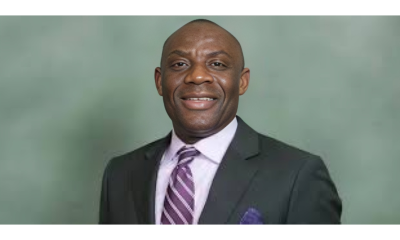





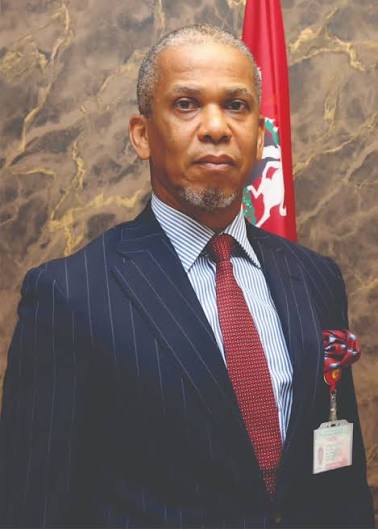
The University of Agriculture, Orerokpe Bill, sponsored by Senator Ede Dafinone, representing Delta Central Senatorial District, has passed through its third reading in the Senate.
Dafinone announced the development in a statement, describing the passage of the bill as a major step towards expanding access to education, promoting agricultural development and creating opportunities for young people in Delta State.
The senator said the proposed institution would help unlock the agricultural potential of the area while providing greater educational opportunities for future generations.
“This is more than the passage of a bill; it is a statement of purpose, a promise of progress, and an investment in generations yet unborn,” he said.
Dafinone urged constituents and other stakeholders to sustain their support for the proposed university, stressing the need to translate the legislative milestone into lasting benefits for the people.
He said the initiative was aimed at strengthening education, encouraging agricultural innovation and creating opportunities that would benefit generations to come.
“The future of our children is too important to leave to chance. Together, let us champion education, drive agricultural innovation, create opportunities, and build a legacy that generations will celebrate,” the senator said.
He described the passage of the bill as a significant milestone in the effort to advance development in Delta Central and expressed optimism about the vision behind the proposed institution.

A Kwara based Public Affairs Analyst, Comrade Ishowo Olanrewaju, weekend called on the Kwara State government to urgently convert the recently established Kwara State University of Education (KWASUED) to a specialised medical university to address the worsening and chronic shortage of doctors and other healthcare professionals in the state hospitals.
He therefore cited the Bayelsa Medical University in Bayelsa State, the state University of Medicine and Applied Sciences in Enugu State, and the University of Medical Sciences in Ondo State as existing examples.
Ishowo made the call in Ilorin while speaking with newsmen on the sidelines of the incessant strike embarked upon by medical doctors in the state hospitals.
Ishowo however expressed concern over the shortage of medical personnel in the state, noting that the available doctors were already overstretched and overwhelmed by the sheer volume of patients they were required to attend to daily.
He lamented that this situation made industrial action embarked upon by the doctors particularly troubling.
He argued that the state government should have prioritised a medical university over a university of education, insisting that Kwara’s more pressing challenge was the severe shortage of healthcare professionals rather than educators.
According to him, existing institutions, including the University of Ilorin, Kwara State University (KWASU) and Al-Hikmah University, already have faculties of education that produce graduates annually.
He added that several public and private colleges of education across the state also train teachers.
“The number of educators we produce far exceeds what we need or can employ. Our challenge is not a lack of teachers. It is a dangerous shortage of doctors, nurses and other medical professionals.
“That reality should have informed the government’s decision when it was considering establishing a new university,” he said.
Ishowo maintained that establishing a specialised medical university would help build a steady supply of doctors and other healthcare professionals to meet the state’s needs and serve other parts of the country.
“To address the persistent shortage of doctors and other medical personnel, I am calling for the conversion of KWASUED into a specialised medical institution,” he said.
He also proposed scholarships for Kwara indigenes admitted to the proposed institution, with beneficiaries required to sign a five-year service bond to work in the state after graduation before seeking opportunities elsewhere.
Ishowo said the arrangement would help retain locally trained medical professionals and strengthen the state’s healthcare system.
“Let the government provide scholarships for Kwara indigenes who want to study medicine and other related health courses, and bond them to serve the state for five years post-graduation.
“This is how we begin to systematically solve the shortage of medical personnel that has plagued us for years,” Ishowo noted.
He further stated that some state governments across Nigeria had already recognised the value of dedicated medical universities and taken steps to establish them.
According to Ishowo, “The Lagos State government is also pursuing plans to establish a standard one university of medicine and health sciences to tackle the doctor and healthcare worker deficit in the state.
“These states identified a need and responded to it strategically. Kwara can and should do the same. The conversion of KWASUED into a specialized medical university will be a response to a documented crisis that is costing Kwarans their health and their lives.”

The Joint Admissions and Matriculation Board (JAMB) has warned universities against issuing admission letters to candidates, insisting that only admissions processed through its Central Admissions Processing System (CAPS) are legally recognised.
The Board said universities had no statutory authority to issue official admission letters, warning that candidates who accept admission offers outside the approved system risk obtaining documents that may not be recognised for official purposes, including mobilisation for the National Youth Service Corps (NYSC).
JAMB Registrar, Prof. Segun Aina, gave the warning when he received a delegation from Veritas University, Bwari, Abuja, during a courtesy visit to his office.
Aina said the Federal Ministry of Education had expressly directed that all admissions into tertiary institutions be processed through CAPS, stressing that any admission conducted outside the platform was illegal and invalid.
He explained that JAMB remained the only body statutorily empowered to issue official admission letters to candidates seeking entry into universities, polytechnics and colleges of education across the country.
The registrar expressed concern that candidates often assume admission letters purportedly issued by universities are authentic simply because they carry the institutions’ identities.
He urged universities engaging in the practice to desist, while directing them to ensure that candidates obtain the appropriate admission documents from JAMB.
Aina further stressed that institutions could not substitute their own admission letters for the official documents issued by the Board after candidates had accepted their offers on CAPS.
He warned that admissions not processed through the approved platform would not be recognised for purposes such as NYSC mobilisation, underscoring the need for institutions and candidates to comply with established admission procedures.



NDDC Officials, Journalists Inspect 600-Metre Otuogori Bridge Project in Bayelsa
ShareFrom Mike Tayese, Yenagoa Officials of the Niger Delta Development Commission (NDDC), and journalists on Monday inspected the ongoing construction...


WAHO Seeks Uniform Standards for Health Professionals’ Education in ECOWAS
ShareBy David Torough, Abuja The West African Health Organisation (WAHO) has reaffirmed its commitment to harmonising the training, accreditation and...

2027: INEC Engages Adamawa PWDs on Electoral Process
ShareThe Independent National Electoral Commission (INEC) in Adamawa has sensitised Persons Living with Disabilities (PWDs) on the electoral process ahead...
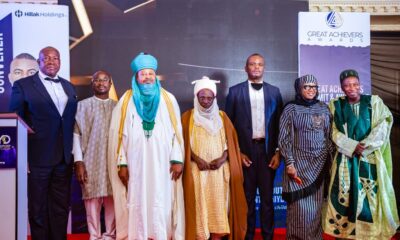

GAIYD Reaches 49,585 People, Targets 100 Per Cent Growth in Youth Devt Impact
ShareBy David Torough, Abuja The Great Achievers Initiative for Youth and Community Development (GAIYD) says it reached more than 49,585...


NUPRC Offers 40 Oil, Gas Blocks to Prospective Investors
Share By Tony Obiechina, Abuja The Nigerian Upstream Petroleum Regulatory Commission (NUPRC) has called on international oil and gas investors...
Ebola: NCDC Defends N10bn Health Security Fund
ShareBy Laide Akinboade, Abuja The Nigeria Centre for Disease Control and Prevention (NCDC) has clarified that the N10 billion emergency...
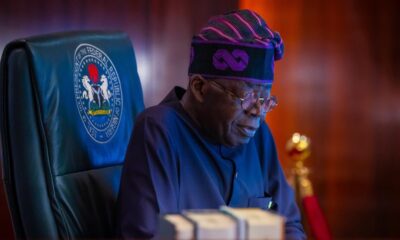

After Sacred Ka’abah Visit in Makkah, Tinubu Recommits to Peace, Prosperity.
ShareBy David Torough, Abuja President Bola Tinubu has reaffirmed his commitment to national development, peace and prosperity, declaring that he...
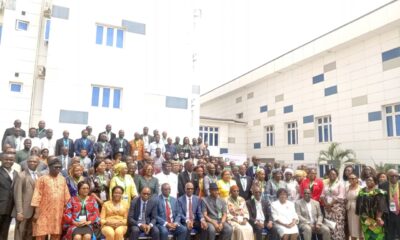

WAHO Seeks Uniform Standards for Health Professionals’ Education in ECOWAS
ShareBy David Torough, Abuja The West African Health Organisation (WAHO) has reaffirmed its commitment to harmonising the training, accreditation and...


Firm Promises No Storage Charges On Subscribers’ Wallets
ShareBy David Torough, Abuja A telecommunications firm, ESDIAC Global, has said it does not impose storage charges on subscribers’ wallets,...


GIGM Brings hireX, PASS to Abuja Nov 4
ShareBy Tony Obiechina, Abuja Premium vehicle hire and all-in-one travel booking are coming to Nigeria’s capitalGIG Mobility (GIGM) has announced...