
POLITICS
Ondo Guber Polls: APC Stakeholders Task Party On Internal Democracy

As the All Progressives Congress (APC) concludes arrangement to organize primary election to pick its gubernatorial flag-bearer for the Ondo State governorship poll, which comes up later in the year, party stakeholders in the State have challenged the national caretaker committee of the party to ensure that the rules of internal democracy were followed.
They believe that the new executives of the party led by Governor Mai Mala Buni of Yobe State, was better positioned to promote internal democracy by ensuring a level playing field for the array of aspirants seeking to fly the party’s flag in the forth coming elections.
Against this backdrop, the APC stakeholders, who spoke with DAILY ASSET commended the National Executive Committee of the party for dissolving the Adams Oshiomhole-led National Working Committee and putting in place a neutral caretaker committee, which is expected to give equal opportunities to the various political tendencies in the party, including Ondo State.
The dissolution of the All Progressives Congress National Working Committee, and the setting up of a Caretaker Committee by the National Executive Committee, NEC, has been roundly applauded by many, as a step in the right direction.
This decision, in addition to the other resolutions that the NEC made, has no doubt opened another chapter in the history of the ruling party, particularly at the critical point of grappling with the preparations for the two major elections in Edo and Ondo in quick successions.
While it may seem that the coast is now clear for the party to put its house in order, and work in unity to confront the challenges posed by the two major elections for the governorship seats in the two states, care must be taken by the new Committee with the way it handles the conduct of the Edo election, and more importantly, the nomination processes for the Ondo election.
The internal division among party members in Ondo State is alarming and presents a threat to the victory of the party in the coming governorship election.
DAILY ASSET checks revealed that there are plots by some interest groups to unseat the incumbent so as to secure control of the party structure in the State, which will allegedly pave the way for the presidential ambition of the national leader of the party.
However, the incumbent is reportedly relying on extra-party forces particularly, the National Union of Road Transport Workers (NURTW), which is reputed for its use of militancy to influence political outcomes in the state.
Other aspirants are finding ways to unseat the incumbent and through undemocratic means to achieve the purpose.
If things continue this way, it is feared that the party may lose the State to the opposition led by the Peoples Democratic Party (PDP).
Party stakeholders have therefore, have insisted that the nomination processes for the Ondo governorship election should be done on a level playing ground, devoid of thuggery, and skirmishes.
They advised the caretaker committee of the APC to closely monitor the process of the nomination and ensure that internal democracy was allowed to prevail.
They advised the incumbent, Chief Akeredolu to jettison the idea of employing thuggery through the NURTW to silence assumed threats from his opponents.
Also, the Stakeholders advised the caretaker committee to boost the confidence of aspirants and the entire party members in the election process by ensuring that the primaries conducted in a free and fairness atmosphere.
“Providing a level playing ground for all the aspirants is the only way to ensure that the most popular candidate emerges; thereby ensuring that the party remains intact after the elections,” they said.










By David Torough, Abuja
The Independent National Electoral Commission (INEC) has removed 1,608,660 confirmed invalid registrations from Nigeria’s voter register following a nationwide clean-up exercise ahead of the 2027 general elections, while identifying 54 officials across 10 states for possible disciplinary action and prosecution over alleged registration irregularities.
INEC Chairman, Professor Joash Amupitan (SAN), disclosed this on Monday in Abuja while briefing journalists on the outcome of the review of the Preliminary Register of Voters generated from the 2025/2026 Continuous Voter Registration (CVR) exercise.
The commission also confirmed the removal of 873 additional records belonging to deceased persons, bringing the total number of deceased voters’ records removed to 1,749, including 876 identified during an earlier stage of the exercise.
Amupitan said INEC received 11,088,238 registration records from the three phases of the CVR exercise. Its Automated Biometric Identification System (ABIS) initially flagged 1,545,052 records for further examination, although he stressed that being flagged did not automatically render a registration invalid.
According to him, 1,277,052 registrations were confirmed invalid and excluded before the preliminary register was displayed to the public. Following complaints, claims and objections submitted during the nationwide display exercise between October 9 and 15, another 268,000 cases underwent adjudication.
Of these, 217,722 were found to be invalid and removed, while 50,278 were cleared and retained.
Further screening identified an additional 113,886 invalid registrations, bringing the number of invalid records removed after the public review to 331,608. Together with the 1,277,052 previously excluded entries, the exercise resulted in the removal of 1,608,660 invalid registrations.
The chairman explained that the removal of deceased voters’ records was treated separately from the invalid-registration figure.
The clean-up followed widespread public concerns over the integrity of the preliminary register, with Nigerians and civil society organisations drawing attention to suspected multiple registrations, unusual names, manipulated photographs, including images allegedly generated using artificial intelligence, and entries belonging to deceased persons.
Amupitan acknowledged that the findings exposed weaknesses in the registration process, some of which dated back several years.
He noted that the national register had evolved through successive registration and continuous voter registration exercises since 2011, involving different technologies, operational arrangements and quality standards. Consequently, some of the irregularities currently attracting public attention relate to historical records captured between 2011 and 2023 rather than exclusively to the latest registration exercise.
He said the commission had also uncovered deliberate attempts by some personnel to circumvent established registration procedures, including the misuse of provisions designed to accommodate exceptional registration circumstances, particularly those relating to persons with disabilities.
The 54 officials identified across 10 states are being investigated for alleged complicity, with INEC promising appropriate administrative sanctions and possible prosecution where criminal conduct is established.
On the controversy surrounding suspected AI-generated photographs in the register, the chairman said the commission had identified cases of manipulated images and was introducing additional safeguards to prevent a recurrence.
He disclosed that INEC had directed its Director of Information and Communication Technology to discontinue external webcam-based image uploads for voter registration, insisting that photographs must henceforth be captured through an approved application.
The commission has also approved a comprehensive Artificial Intelligence Governance Framework to regulate the responsible deployment of AI in its operations. The framework, developed in collaboration with partners, including the Institute for Security Studies and the British High Commission, has undergone peer review and received INEC’s approval.
Amupitan further disclosed that security agencies were conducting independent investigations into the irregularities, adding that cases involving suspected criminal offences would be referred to the appropriate law enforcement authorities.
He said INEC was strengthening its information technology infrastructure and cybersecurity systems ahead of the 2027 elections.
Despite the scale of the irregularities uncovered, the chairman maintained that existing electoral safeguards, particularly the Bimodal Voter Accreditation System (BVAS), would help prevent multiple accreditation and voting.
He explained that voters would be required to appear physically at their designated polling units for biometric authentication through fingerprint or facial recognition, with the system designed to verify identities and prevent multiple accreditation.
The chairman also cautioned that the latest clean-up should not be interpreted as a complete resolution of all integrity concerns surrounding the national register, noting that historical irregularities would require sustained attention.
He said INEC had resolved to address outstanding duplications in the historical register, directing that entries already flagged through public complaints and obvious cases identified internally should be removed after proper verification.
Amupitan also advised voters who discovered that their names were missing from their current polling locations to check their previous registration centres, explaining that some people who relocated registered afresh instead of formally transferring their existing registrations. In such cases, biometric screening could invalidate the new registration while leaving the original record at the former location.
Meanwhile, the chairman said the commission was yet to receive the formal court order directing him to appear as a defence witness in the ongoing criminal trial of activist and African Action Congress presidential candidate, Omoyele Sowore.
A Federal High Court sitting in Abuja had issued a subpoena directing Amupitan to produce electoral documents relating to President Bola Tinubu’s 1999 Lagos State governorship election and the 2023 presidential election.
The documents are connected to Sowore’s trial over his description of the President as a criminal.
Amupitan said INEC would study the subpoena and comply with its provisions upon formal receipt.
On the controversy surrounding the Federal High Court judgment on the leadership of the African Democratic Congress (ADC), involving former Senate President David Mark and former Vice President Atiku Abubakar’s political ambitions, the INEC chairman said the commission was yet to receive and examine the relevant court processes.
He maintained that INEC would not act on reports circulating on social media, insisting that certified court documents must first be obtained and studied before the commission determines its position.
The chairman also addressed calls for early voting arrangements for journalists and electoral officials who may be unable to vote on Election Day because of official assignments.
He said early voting was not currently recognised under the existing electoral law, explaining that previous efforts to secure legislative backing for the proposal through amendments to the Electoral Act had not received the necessary support from the National Assembly.
He, however, expressed support for continued advocacy on the issue, noting that journalists and electoral personnel should also have the opportunity to exercise their voting rights.
INEC said final reconciliation, quality assurance and publication checks were ongoing, with the cleaned-up Final Register of Voters scheduled for publication on December 15, 2026, in line with the Electoral Act, 2026.
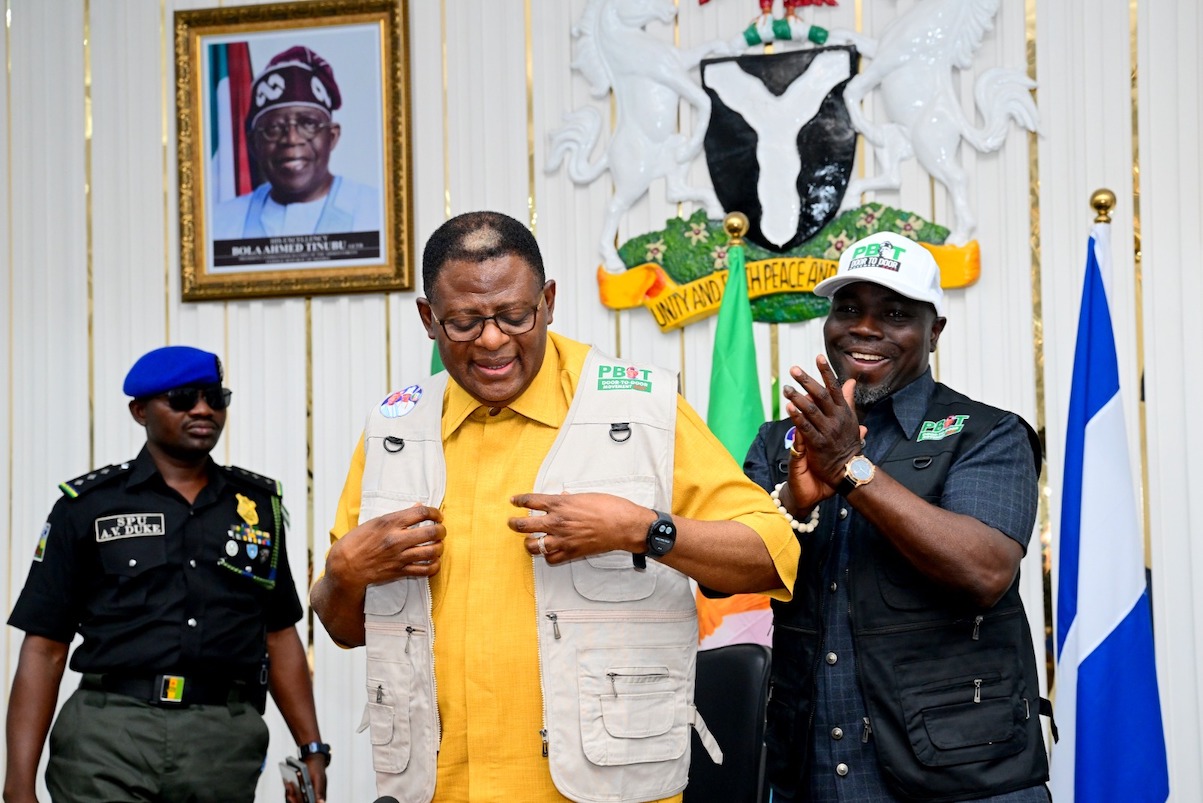
Grand Patron of the PBAT Door-to-Door Movement, High Chief Oweizidei Government Ekpemupolo, has donated 50 vehicles for President Bola Tinubu’s reelection campaign in Enugu and Cross River states.
The vehicles were donated at separate campaign rallies in the two states, on Monday, during the inauguration of the state chapters of the Movement and distribution of campaign materials to the state coordinators.
The two states got 25 vehicles each.In Cross River State, the government pledged that it will mobilise voters in the state to deliver no less than 1.5 million votes for President Bola Tinubu’s reelection in 2027.
According to latest data from the Independent National Electoral Commission (INEC), Cross River state has 1,928,978 registered voters.
Governor Bassey Otu who was represented the deputy governor, Peter Odey, said the entire Cross River state was for Tinubu as a mark of appreciation for the developments he had brought to the state, including the Lagos-Calabar Super Highway, increased federal allocation which had ensured prompt salary payment and infrastructure development, among others.
He said it was also important to reelect the president so that the state can regain its status as an oil producing state and the actualisation of the Bakassi Deep Sea Port which the president will commission on November 13, 2026.
“If we don’t support Tinubu to be reelected, we will miss a lot so, a support for Tinubu is a support for ourselves.
“If we were to give the president 1 million votes, the PBAT Door-to-Door Movement has made it 1.5 million because of the logistics support which will enable us go deep into the corners of the state to campaign at every door,” the governor stated.
In Enugu, the State Governor, Peter Mbah, represented by his deputy, Ifeanyi Ossai, commended the Movement for its investment in grassroots mobilisation, particularly its recruitment of members across electoral wards and provision of platforms to communicate the party’s message.
He said the Tinubu administration is working to address the challenges facing Nigerians, adding that the achievements recorded in the last three and a half years provided a basis for continuity.
Earlier, leader of the Movement, Government Ekpemupolo, also known as Tompolo, called on the people of Cross River to come out enmasse and vote for Tinubu and all other APC candidates in the 2027 election.
Tompolo, who was represented by Kestin Pondi, Managing director of Tantita Security Services, likened ongoing reforms to plant and harvest season and human gestation, saying it takes time but is sure to yield positive results provided the right steps are taken.
“Today, we no longer have fuel queues. We like to compare Nigeria with Asian countries that are doing well, like Malaysia and Indonesia, but one thing we forget to remember is that in those countries, reforms took over 25 or 35 years in some cases.
“Given the same conditions as we have in Nigeria, under which President Tinubu is operating, they may not have achieved what he has achieved in four years.
“If you want reforms like NELFUND which is guaranteeing tertiary education for your children, more federal allocation to your state for projects and so on, you must reelect Tinubu to continue,” he said.
Continuing, Tompolo added: “We cannot start development and truncate it. We want you to vote APC candidates in all elections,” he added.
Tompolo, who emphasised that the vehicles donation was to support the state in its campaign, said: “we’ll stand by you in this campaign. If the plan was to deliver 80%, this should help you take it to 99%.”
He described President Tinubu as a courageous leader who has taken difficult decisions from the beginning of his administration to reposition the Nigerian economy, expressing confidence that the ongoing reforms would deliver a brighter future for the country.
Tompolo said the campaign will cover wards, polling units, churches, mosques, markets and other public places, ensuring that the achievements and policies of the present administration are properly communicated to people across the country.
He also commended Governor Mbah for projects and initiatives in the state, including road infrastructure
By David Torough, Abuja
The crisis rocking the African Democratic Congress (ADC) has intensified following the Federal High Court judgment nullifying the David Mark-led leadership of the party, as National Secretary, Rauf Aregbesola, has appealed the ruling, while Minister of Aviation and Aerospace Development, Festus Keyamo, insists that the party will participate in the 2027 general elections, although candidates produced by the affected faction, including former Vice-President Atiku Abubakar, may be excluded from the ballot.
The unfolding political and legal developments have heightened uncertainty over the ADC’s leadership, the validity of its 2027 presidential nomination and its readiness for the forthcoming general elections, with the opposition party also raising concerns over alleged political violence, intimidation and the neutrality of electoral and security institutions.
Keyamo, in a statement posted on his verified X handle on Sunday, dismissed claims that the judgment had effectively barred the ADC from participating in the 2027 elections, arguing that the court’s decision concerned the legitimacy of the Mark-led leadership and not the continued existence or electoral eligibility of the party.
He, however, warned that the candidacies of individuals who emerged through the Mark-led faction, including Atiku Abubakar, could be affected by the outcome of the pending judicial proceedings.
“For the education of the public, those raising false alarm that the court judgment on ADC means the party will not be on the ballot are spreading misinformation.
“The ADC will be on the ballot. It is the David Mark faction of candidates, including Atiku Abubakar, that may not be on the ballot, depending on the final judgment of the Supreme Court,” Keyamo stated.
The minister also questioned the protests surrounding the judgment, arguing that Nigerians who participated in primaries conducted under the party’s original leadership structure should not be treated as less entitled to political participation than candidates produced by the Mark-led faction.
The controversy followed Thursday’s judgment by the Federal High Court in Abuja, presided over by Justice Peter Lifu, which nullified the Mark-led leadership and invalidated decisions taken by the faction, including the presidential primary that produced Atiku as the ADC’s candidate for the 2027 election.
The judgment arose from suit No. FHC/ABJ/CS/1819/2025, instituted by former ADC Deputy National Chairman (North-East), Nafiu Gombe, who challenged the process through which Mark and other members of the caretaker committee assumed control of the party.
Gombe argued that following the resignation of former National Chairman, Ralph Nwosu, he was constitutionally entitled to take over the party’s leadership, insisting that the emergence of the Mark-led leadership violated the ADC constitution and relevant electoral provisions.
The ruling has since generated fresh legal and political battles, with the affected leadership rejecting the decision and promising to challenge it.
In the latest development, Aregbesola has filed an appeal at the Court of Appeal, seeking to overturn the judgment on grounds that the Federal High Court lacked jurisdiction to determine the issues surrounding his emergence as national secretary and the validity of the resolutions of the party’s 99th National Executive Committee meeting.
In the notice of appeal filed on Friday through his counsel, Mohammed Sheriff, SAN, Aregbesola named Gombe, the ADC, Senator David Mark, the Independent National Electoral Commission (INEC) and former National Chairman, Ralph Nwosu, as respondents.
He asked the appellate court to set aside the judgment, strike out the claims against him and invalidate the findings affecting his emergence as national secretary.
Alternatively, he urged the court to dismiss the claims or order a retrial before another judge if it upholds the jurisdiction of the lower court.
Aregbesola’s legal team argued that the trial judge failed to distinguish between an election to fill a vacant party position and an interim appointment authorised by the ADC constitution.
Specifically, the counsel maintained that Article 23(4) of the party’s constitution empowered the appropriate executive organ to appoint an eligible replacement pending an election at the next convention or congress.
He further argued that the trial court wrongly applied Section 82(3) of the Electoral Act 2022 and Section 223(1)(a) of the 1999 Constitution without first determining whether his emergence was an interim appointment rather than an election.
The ADC national secretary has also filed a separate motion at the Federal High Court seeking a stay of execution of the November 5 judgment pending the determination of his appeal.
He argued that the appeal raised substantial legal and factual questions, particularly concerning the jurisdiction of the trial court and the interpretation of the party’s constitution and applicable electoral laws.
Meanwhile, INEC has maintained that it would not take a position on the ADC leadership dispute until it obtains and studies the certified true copy of the judgment.
The commission’s position has added another layer of uncertainty to the party’s preparations, particularly as the legal battle could determine which faction is recognised to conduct valid party activities and nominate candidates for the 2027 elections.
Beyond the leadership dispute, the ADC Presidential Campaign Council (ADC-PCC) has accused the Federal Government and its alleged political allies of creating an atmosphere of intimidation and insecurity capable of undermining the 2027 electoral process.
The council declared that no amount of intimidation, violence or alleged manipulation of democratic institutions would prevent Nigerians from deciding the country’s political future, insisting that President Bola Ahmed Tinubu would lose the 2027 presidential election.
The Director of Media and Publicity of the ADC-PCC, Kola Ologbondiyan, made the position known on Sunday in Abuja, where he raised concerns over alleged attacks on opposition members and supporters in different parts of the country.
Ologbondiyan cited reports of the killing of several members of the Nigeria Democratic Congress (NDC) in Delta State, allegedly following an attack on the party’s campaign venue by suspected political thugs.
He also alleged that opposition parties, particularly the ADC, NDC and Allied Peoples Movement, had faced attacks and intimidation in Kaduna, Kogi, Katsina, Kebbi and Sokoto states.
The council described the incidents as a threat to democratic freedoms, warning that political violence should not be normalised or allowed to become part of the country’s electoral culture.
It also questioned the neutrality and preparedness of INEC, alleging that the commission’s voter register database had been compromised and that individuals sympathetic to the ruling All Progressives Congress had been placed in sensitive positions within the electoral body.
The ADC-PCC further accused security agencies of being deployed to harass, arrest and intimidate opposition members, raising particular concern over the alleged involvement of a serving director of a security agency in the APC Presidential Campaign Council as a co-director of National Security and Intelligence.
Ologbondiyan described the alleged development as a violation of the law establishing the agency, insisting that public institutions must remain politically neutral.
The council warned that alleged manipulation of judicial processes and electoral institutions would not guarantee President Tinubu’s re-election, adding that Nigerians would resist any attempt to impose a president through compromised judicial decisions or electoral fraud.
It consequently called on security agencies to remain loyal to the Constitution and the Nigerian people rather than any political party or individual.
The ADC-PCC also appealed to civil society organisations, the international community, religious leaders and traditional institutions to pay closer attention to the country’s political and security environment ahead of the 2027 elections.
The developments have placed the ADC at a critical crossroads, with the party’s participation in the next general elections appearing distinct from the question of which faction has the legal authority to nominate its candidates.
While Keyamo maintains that the ADC will be on the ballot, the fate of the Mark-led faction and its candidates remains subject to judicial determination.
With Aregbesola’s appeal, the Mark-led faction’s planned legal challenge and the pending determination of the leadership dispute, the Court of Appeal and ultimately the Supreme Court could prove decisive in determining the political future of the opposition party.
For Atiku and other candidates who emerged through the Mark-led structure, the stakes are particularly high, as the final outcome could determine whether their nominations survive the legal contest or are rendered invalid.
As the 2027 general elections approach, the ADC’s internal crisis, allegations of political violence and concerns over the credibility of electoral institutions are shaping an increasingly contentious political atmosphere, with the courts expected to play a defining role in determining the party’s direction.




Troops Neutralise over 60 Terrorists, Rescue70 Kidnap Victims in One Week
Share By David Torough, Abuja The Armed Forces of Nigeria (AFN) have neutralised more than 60 terrorists and rescued at...


Accident Victims’ Remembrance Day: FRSC Records 7,156 Crashes, 3,445 Deaths
ShareThe Federal Road Safety Corps (FRSC) has recorded 7,156 road traffic crashes, resulting in 3,445 deaths and 22,292 injuries across...

Mutfwang Inaugurates State-owned Security Outfit, Operation Rainbow
ShareFrom Jude Dangwam, Jos Plateau State Governor, Caleb Manasseh Mutfwang, has inaugurated 353 operatives of the state-owned security outfit, Operation...

Otu Woos Investors, Promises Incentives, Support for Businesses in C’River
ShareCross River State Governor, Bassey Otu has called on private-sector investors to invest in the state, with assurances of incentives,...
2027: Tompolo Deploys 50 Vehicles in Enugu, C’River for Tinubu’s Re-election
ShareGrand Patron of the PBAT Door-to-Door Movement, High Chief Oweizidei Government Ekpemupolo, has donated 50 vehicles for President Bola Tinubu’s...

2027 Election: Wike Rallies Supports for Tinubu, Aduda
ShareBy Laide Akinboade, Abuja The Minister of the Federal Capital Territory (FCT), Nyesom Wike, on Monday, rallies supports for President...

NDIC Insists on Timely, Transparent Valuation of Failed Banks’ Assets
ShareBy Tony Obiechina, Abuja The Nigeria Deposit Insurance Corporation (NDIC) has raised concerns over the failure of some borrowers of...


Xenophobia: Nigeria’s Patience Running Out, Fani-Kayode Warns South Africa
ShareBy David Torough, Abuja Nigeria’s High Commissioner to South Africa, Femi Fani-Kayode, has warned that Nigeria’s patience is wearing thin...


2027 Polls: INEC Purges 1.6m Invalid Names from Voter Register
ShareBy David Torough, Abuja The Independent National Electoral Commission (INEC) has removed 1,608,660 confirmed invalid registrations from Nigeria’s voter register...
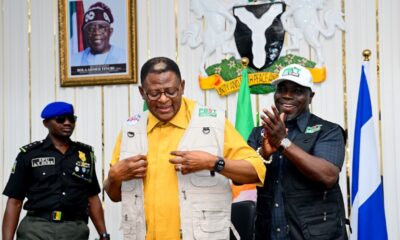

2027: Tompolo Deploys 50 Vehicles in Enugu, Cross River for Tinubu’s Re-election
ShareGrand Patron of the PBAT Door-to-Door Movement, High Chief Oweizidei Government Ekpemupolo, has donated 50 vehicles for President Bola Tinubu’s...