
POLITICS
Governorship: APC ‘ll Take over Anambra in 2025- Ngige

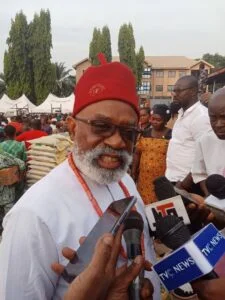
…..Governorship: APC ‘ll Take over Anambra in 2025- Ngige
The former minister of Labour and Employment, Sen.
Chris Ngige, says the All Progressives Congress (APC) will take over power from the ruling All Progressives Grand Alliance (APGA) in Anambra in 2025.Ngige, a former governor of Anambra said this on Saturday while speaking to newsman at his home in Alor, Idemili South Local Government Area, during the distribution of palliatives to party members, persons with disabilities and the aged.
He admitted that APC had two factions in the state but said the division would not stop the party from winning the 2025 governorship election as aggrieved members would be pacified before the election.
“Of course there is APC 1 and APC 2 in the state. I will not deny that. I am both the father and face of APC in Anambra. I am certain that there are some new comers who have joined us since 2021.
“Because the party is like a church which you do not stop people from entering; you do not stop people from entering the party to look for salvation or to support the government in power.
“But the challenge is that the new entrants do not want to reckon with old members who have laboured for the party.
“The old members laboured for the party from the time we were in the Social Democratic Party (SDP) to Advanced Congress of Democrats (ACD) to Action Congress (AC) to Action Congress of Nigeria (ACN) and finally birthed as APC.”
According to him, these are facts that are undeniable and palpable. But in politics you disagree to agree and if you do not agree, you bear the consequences. We did not agree in 2021 election and the repercussion was clear.
“But it will be remedied this time. The party leadership both at the governmental level and party levels are mature politicians who are versed with the intrigues,” he said.
Ngige, also a former governor of Anambra, said he was optimistic that APC would successfully resolved its crisis and work to take over the state in 2025.
He said that victory was not won on platter but needed extra hard work, warning that the era of writing election results in hotel rooms was over.
“Why won’t I be optimistic? If you are not optimistic in life, then suicide is the next option. I’m hopeful and optimistic that between now and 2025, we will put our house in order.
“We need to be steadfast as party members and you must live up to expectations of being a foundation member and demonstrate tolerance to others by showing them the light.”
Ngige, however, disclosed that he was still on sabbatical and resting, saying that by May 2025, he would decide on his next line of action.
Speaking earlier, Chief George Moghalu, former managing director, National Inland Waterways Authority (NIWA) and APC chieftain in Anambra, warned against imposition of candidates ahead of the 2025 governorship election in the state.
He also urged new party entrants to join the queue as anything contrary would frustrate chances of the party in producing Gov. Chukwuma Soludo’s successor.
According to Moghalu, it is an irony for a tenant to sack the landlord.
Reports says that the palliatives include bags of rice, and tubers of yam among others. (NAN)
…..Governorship: APC ‘ll Take over Anambra in 2025- Ngige
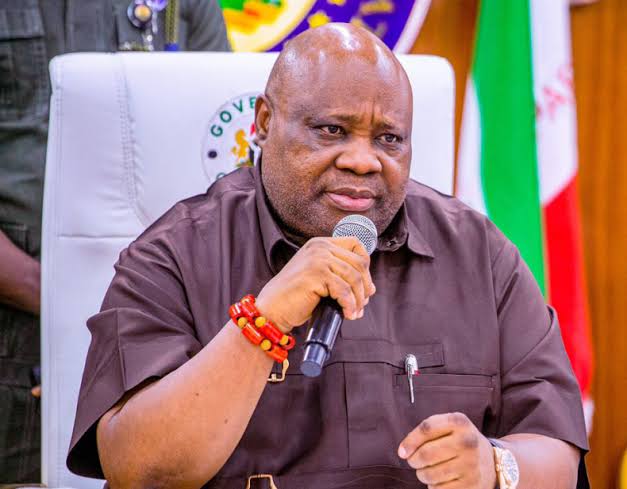
From Ayinde Akintade, Osogbo
As the August 15 Governorship election approaches, prominent chieftain of the Accord in Osun State, Hon Ismaila Kolawole has intensified calls for supporters and residents of Ila-Orangun and its environs to come out en-masse and demonstrate their unalloyed support to Governor Ademola Adeleke with their votes.
Kolawole while fielding questions from journalists on Tuesday however charged residents of Osun State to re-elect Governor Adeleke for a second term in office, while describing his administration’s record in infrastructure, workers’ welfare, education, healthcare, empowerment, and welfare of the aged as pace-setting, he also described the governor as a blessing saying he would do more if given another term.
His words, “Let us keep our Voter Cards till Saturday’s morning for us to bring Governor Ademola Adeleke back to the office for second term, he deserves our unalloyed support at this point in time and this is the period for us to appreciate all that he has done for us. Let us come out peacefully on Saturday and I want to assure you that you will not regret it.
“Governor Adeleke’s efforts on infrastructure projects like road construction and workers’ welfare reform including prompt salary payments cannot be over emphasized”.
Kolawole who is a former member of the House of Representatives, said the electorates should ignore threats or attempts at voter suppression while urging them to embrace peace before and after the governorship election.
The Ila-Orangun born politician emphasized the need for the people of Osun State to vote Governor Adeleke back to the office saying it will give them the opportunity to benefit from the people oriented programmes coming from the state government.
“Governor Adeleke has done well for the people of Osun, he has transformed the state, turning around the fortune of the state, better life for the rural dwellers, etc.
“Immediately he assumed the office for a second term, he will double his efforts in making life more bearable for the people.
“On Saturday, shun any intimidation or harassment by the opposition, that is the only thing they can do, don’t let that change your decision in voting for Mr Governor. Be law abiding and shun any act of political violence before, during, and after the election”, Hon Kolawole concluded.
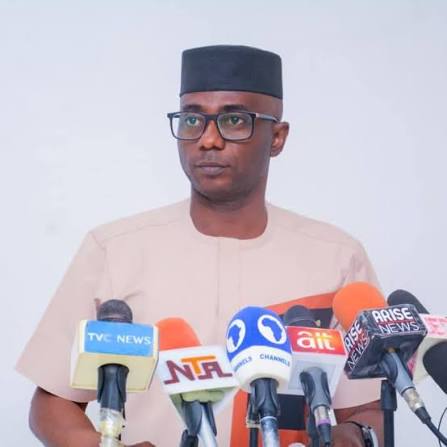
From Joseph Amedu, Lokoja
The Kogi State Government has approved official fees for the placement of billboards, posters, branded T-shirts, caps and other campaign materials by political parties and candidates ahead of the 2027 general elections and the October 2026 local government elections.
The Commissioner for Information and Communications, Kingsley Fanwo, disclosed this in Lokoja after a stakeholders’ meeting with operators in the signage and advertising sector, as campaigns for the Presidential and National Assembly elections are scheduled to commence on August 19.
Fanwo said the approved fees were designed to regulate political advertising across the state, ensure compliance with existing signage regulations and generate revenue for the development of Kogi State.
Under the approved structure, Presidential candidates will pay N150 million for campaign signage and related promotional materials across the state, while Senatorial candidates will pay N50 million.
Candidates for the House of Representatives will pay N30 million, while those contesting for the State House of Assembly will pay N5 million.
For the local government elections, chairmanship candidates will pay N2 million, while councillorship candidates will pay N300,000.
The Commissioner explained that the rates were arrived at after a peer review of applicable fees in other states, noting that the charges were considered affordable in view of the scale and reach of political campaigns.
He said the fees would also enable the government to properly regulate the proliferation of campaign materials across the state while ensuring that political advertising contributes to the state’s revenue base.
Fanwo warned that the placement of campaign materials without payment of the prescribed fees and compliance with the relevant regulations would constitute an offence, adding that offenders and anyone found aiding or facilitating such violations would be prosecuted.
He stressed that the regulations apply to all political parties and candidates without exception, including candidates of the ruling All Progressives Congress (APC).
“In Kogi, APC is the ruling party, but that does not exempt any APC candidate from complying with the law. If you are an APC candidate and you did not pay the prescribed fee before placing your billboards or posters, we will remove them and you will be prosecuted.
“The government is for everybody. All political parties and candidates are hereby enjoined to adhere strictly to the regulations governing the placement of campaign materials across the state,” he said.
Fanwo further explained that the Kogi State Signage and Advertisement Agency (KOSSAA), an agency under the Kogi State Ministry of Information and Communications, is responsible for regulating signage and outdoor advertising activities in the state and would coordinate the enforcement of the approved campaign signage regime.
He said the state government would ensure that the enforcement of the regulations was carried out fairly and without political discrimination.
The General Manager of KOSSAA, Richard Osaseyi, said the agency would commence full enforcement of the regulations from next week.
Osaseyi urged political parties, candidates, campaign organisations and billboard operators to register with the agency and obtain the necessary approvals before erecting or displaying campaign materials.
He cautioned that unauthorised campaign materials would be removed, while individuals or organisations found to have violated the regulations would face the appropriate sanctions.
Some stakeholders of the African Democratic Congress (ADC) in Adamawa have urged the Independent National Electoral Commission (INEC) to reject an alleged plot to substitute Omar Suleiman, the party’s governorship candidate with Tukur Modibbo.
The spokesman of the group, Bukar Dahi, made the call at a press conference in Yola on Tuesday.
He alleged that the national leadership of the party was under pressure by former Vice President Atiku Abubakar to substitute Suleiman with Modibbo, who came second at the governorship primary election.
The spokesman said Suleiman gained momentum from the ward level to broader political campaigns and became a threat to the established political order in the state.
Dahi therefore urged INEC to ensure that any alteration to Suleiman’s candidature complied with the party’s constitution and applicable electoral laws.
He said the commission should act in the interest of peace, fairness and justice, particularly given the political sensitivity surrounding the 2027 governorship election.
The spokesman noted that imposition and other forms of irregularities were allegedly responsible for the party’s unresolved governorship disputes in Adamawa, Sokoto, Imo, Kano and Borno.
Dahi called on the Sen. David Mark-led National Working Committee (NWC) of the party to demonstrate independence, resolve internal disagreements transparently and uphold the outcome of the party’s electoral processes.
He warned that substituting an elected candidate without any cogent reason could damage ADC’s credibility and undermine its claim of providing a democratic alternative ahead of 2027.
In a swift reaction, Atiku’s Senior Special Assistant on Public Communication, Phrank Shaibu, denied any involvement by his principal in the alleged plot to substitute Suleiman.



Troops Kill Terrorists, Rescue 39 Kidnap Victims in One Week – DHQ
ShareBy David Torough, Abuja The Armed Forces of Nigeria says its troops killed scores of terrorists, rescued dozens of kidnapped...

Nigeria’s Diversity, Our Greatest Asset, Says Idris
ShareBy David Torough, Abuja The Minister of Information and National Orientation, Mohammed Idris, has described Nigeria’s diversity as a source...

Groups Reject Grazing Reserves, Insist on Resettlement of IDPs in Benue
ShareFrom Attah Ede Makurdi The three Socio Cultural Organizations in Benue State(Mdzough U Tiv, Ochetoha K’ Idoma and Omi Ny’Igede,...
Babangida: Why I Could Not Save Vatsa From Coup Conviction
ShareBy Dan Amasingha,Minna. Former Military President, General Ibrahim Badamasi Babangida (rtd.), has broken his silence on one of the most...

FG Inaugurates New NSIWC Board, Tasks Members on Fair Wages, Productivity
ShareBy David Torough, Abuja The Federal Government has inaugurated a new Board of the National Salaries, Incomes and Wages Commission...

Nigeria’s Celebrity Golfer, Leo Edochie Shines at London’s Shire
ShareBy Julius Tambaya, Abuja Chief Leo Edochie, Nigeria’s number one celebrity golfer turned heads with a jaw-dropping appearance at The...

Fadahunsi, Osun and the Price of Political Rhetoric
ShareBy Willie Adegbite A video clip has placed Senator Francis Fadahunsi at the centre of a political firestorm. In it,...
What Investing in Africa Means to Aliko Dangote
ShareBy Ehi Braimah When conversations turn to investment in Africa, one name consistently dominates the discussion: Aliko Dangote. Over the...

It’s not Tinubu’, Femi Kuti Reveals Nigeria’s Real Problem
ShareAfrobeat legend, Femi Kuti has claimed that President Bola Tinubu is not the major problem facing Nigeria. He argued that...


Brain Jotter Cries out after Harassment by Lagos Touts
ShareNigerian content creator, Brain Jotter, has cried out on social media after being harassed by Lagos touts, popularly known as...