
NEWS
What Investing in Africa Means to Aliko Dangote

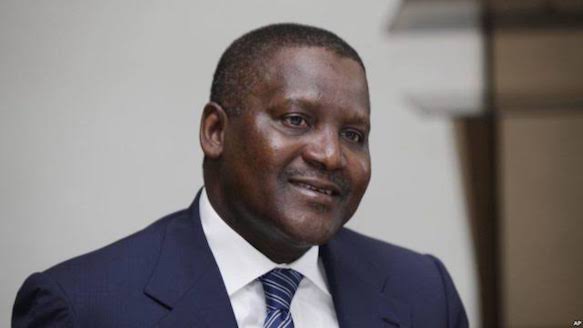
By Ehi Braimah
When conversations turn to investment in Africa, one name consistently dominates the discussion: Aliko Dangote. Over the past four decades, the Nigerian industrialist has become more than Africa’s richest businessman – he has emerged as one of the continent’s most influential advocates for industrialisation, value addition and economic self-reliance.
His investments tell a story that goes beyond profit; they reflect a philosophy that Africa can no longer afford to remain merely a supplier of raw materials while importing finished products at enormous cost.Dangote’s vision is rooted in a simple but transformative belief: Africa must produce what it consumes and trade more with itself.
This conviction aligns perfectly with the aspirations of the African Continental Free Trade Area (AfCFTA), which seeks to create a single African market and stimulate manufacturing, investment and intra-African trade.Unlike many investors who view Africa as a collection of disconnected national markets, Dangote has consistently viewed the continent as one vast economic space with immense potential. His strategy has therefore been to establish industries that solve critical supply gaps while creating jobs, developing local expertise and reducing dependence on imports.
His most visible success story is cement. Through the Dangote Cement Group, he transformed Nigeria from one of the world’s largest cement importers into a net exporter. Today, the company operates manufacturing plants in numerous African countries, including Ethiopia, Tanzania, Senegal, Zambia, Cameroon, Congo, South Africa and Ghana, among others. Collectively, these investments have created tens of thousands of direct and indirect jobs while supplying the materials needed for roads, bridges, schools, hospitals, housing and other infrastructure that underpin economic development.
Dangote has repeatedly argued that infrastructure is impossible without locally available cement. By manufacturing close to African markets, his company reduces transportation costs, conserves foreign exchange and builds domestic industrial capacity. The result is not merely commercial success but the strengthening of Africa’s productive economy.
Dangote’s US$45 billion capital expansion programme (2026–2030) across Africa clearly underscores his vision of prosperity for the continent. Dangote Cement alone has invested US$8.5 billion across Africa in 15 years. However, his commitment extends beyond cement into agriculture and food security. Through Dangote Sugar Refinery, he has invested heavily in integrated sugar production with the objective of reducing Africa’s dependence on imported sugar. The strategy combines cultivation, processing and refining, creating agricultural value chains that benefit farmers, transporters, processors and distributors.
Sugar, often overlooked in discussions of industrialisation, illustrates Dangote’s broader philosophy. Africa possesses fertile land, favourable climate and abundant labour. Yet, billions of dollars leave the continent annually to import products that could be produced locally. Dangote believes reversing this trend is essential for sustainable development.
The same philosophy explains his investment in fertiliser. The Dangote Fertiliser Plant in Nigeria is among the largest granulated urea fertiliser facilities in the world. Its significance extends well beyond Nigeria’s borders. Fertiliser is fundamental to improving agricultural productivity across Africa, where millions of smallholder farmers struggle with declining soil fertility and low crop yields.
By producing fertiliser locally, Africa reduces import dependence while making strategic input more accessible to farmers. In Ethiopia, Dangote has invested over US$4 billion in the country’s fertiliser plant to cut imports and reduce forex pressure. Higher agricultural productivity contributes directly to food security, export competitiveness and rural prosperity. For Dangote, industrialisation and agriculture are complementary pillars of economic transformation rather than competing priorities.
Perhaps no investment better illustrates his long-term vision than the Dangote Petroleum Refinery. For decades, Nigeria – despite being one of Africa’s largest crude oil producers – imported much of its refined petroleum products. This paradox imposed enormous costs on the economy and exposed the country to supply disruptions and foreign exchange pressures.
The refinery seeks to reverse this historical anomaly by refining crude oil domestically on an unprecedented scale. Beyond meeting Nigeria’s needs, it has the capacity to supply refined petroleum products to many African countries, reducing the continent’s dependence on imports from Europe, Asia and the Middle East. It also demonstrates that Africa can execute world-scale industrial projects despite enormous financial, technical and logistical challenges.
Dangote’s ambitions are increasingly continental. Reports of planned refinery investments and partnerships in Kenya reflect his broader vision of strengthening Africa’s energy security and industrial base beyond Nigeria. The proposed 700,000 bpd refinery in Kenya will cost about US$17 billion, and it is projected that it will take about three to five years to build. Whether through new investments, partnerships or strategic supply arrangements, the objective remains consistent: creating integrated African value chains capable of supporting economic growth across multiple countries.
The Dangote Petroleum Refinery in Ibeju Lekki, Lagos has significantly strengthened Nigeria’s energy security at a time of heightened geopolitical tensions in the Middle East, where conflicts have disrupted global oil supply chains and fuel markets. By refining crude oil locally, Nigeria has reduced its dependence on imported petroleum products, making the country less vulnerable to external supply shocks, freight disruptions and price volatility.
Had the refinery not come on stream, Nigeria would likely have faced acute petrol shortages, steeper pump prices and intensified pressure on scarce foreign exchange needed for fuel imports. Increased demand for U.S. dollars would have placed further strain on the naira, worsening exchange rate instability and fueling inflation across the economy. While Nigeria remains exposed to global crude oil price movements, the Dangote Refinery has provided a vital buffer, enhancing energy resilience, conserving foreign exchange and reinforcing the country’s economic stability during a period of global uncertainty.
Central to Dangote’s philosophy is his confidence in Africa’s future. He has frequently encouraged both African and international investors to stop seeing Africa through the narrow lens of political instability, poverty and risk. Instead, he points to the continent’s rapidly growing population, expanding middle class, abundant natural resources and entrepreneurial energy as compelling reasons to invest.
He often reminds audiences that every successful economy was built by investors willing to take calculated risks. In his view, Africa’s challenges should not discourage investment; rather, they represent opportunities to create solutions that generate both commercial returns and lasting social impact.
His message to African governments is equally consistent: sustainable development requires policies that encourage industrial investment, protect legitimate businesses, improve infrastructure and create predictable regulatory environments. Investors need confidence that long-term projects will receive stable policy support.
Dangote also believes that African capital should play a leading role in Africa’s development. While foreign direct investment remains valuable, local investors understand African markets more deeply and are often willing to commit for the long term. Their success, he argues, inspires confidence among international investors.
The emergence of the AfCFTA makes Dangote’s vision even more relevant. A continent-wide market of over 1.4 billion people offers manufacturers unprecedented opportunities to achieve economies of scale. Companies producing cement, fertiliser, sugar and refined petroleum products can increasingly serve multiple African markets under a more integrated trading framework. This is precisely the future Dangote has anticipated through decades of cross-border investment.
Ultimately, Aliko Dangote’s legacy will not be measured solely by his wealth but by the industries he has built and the confidence he has inspired in Africa’s economic potential. His investments demonstrate that African entrepreneurs can conceive, finance and execute projects of global significance. They show that industrialisation is not an abstract aspiration but a practical pathway to jobs, technology transfer, export growth and shared prosperity.
As global investors gather at Africa-focused business summits from Abuja to Nairobi, Accra, Kigali, Lome, Abidjan, Johannesburg, London, New York, Washington DC, Paris, Dubai, Beijing, Moscow, Singapore and beyond, Dangote’s journey offers an important lesson: investing in Africa is not an act of charity; it is a strategic economic decision grounded in the continent’s vast opportunities.
His life’s work is an enduring reminder that Africa’s greatest wealth lies not only beneath its soil but also in its capacity to manufacture, innovate and create value for its own people and for the world.
Ehi Braimah is a public relations specialist, marketing strategist and publisher/editor-in-chief of Naija Times and Lagos Post. He is a strong advocate for African prosperity and can be reached through: ehi.braimah@neomedia.com.ng.
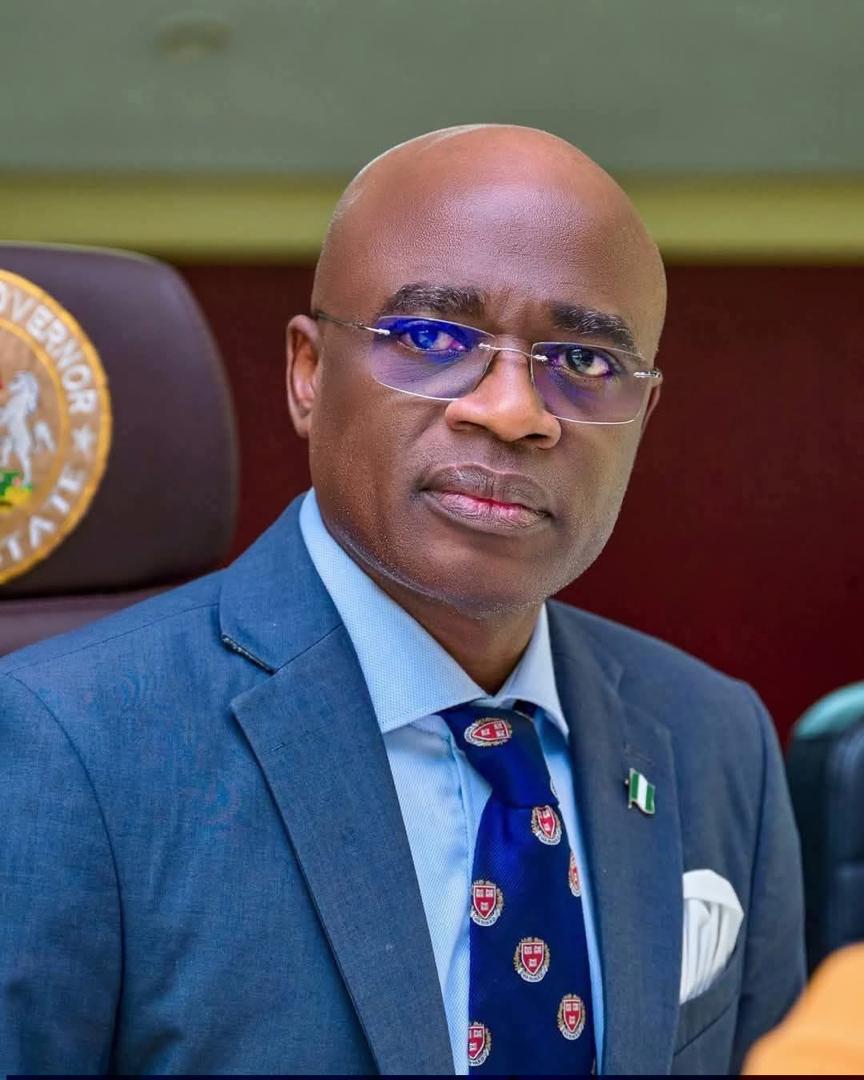
From Attah Ede, Makurdi
Benue State Governor, Rev Fr Hyacinth Alia has commended youths of the State for their tremendous support being given to his administration to strive for effective development
He enjoined them to be in the vanguard in transforming and re-sharpening the nation by continuous support for purposeful leadership.
Alia, who gave the commendation at the celebration of the 2026 International Youth Day held at the Ibrahim Badamoshi Babagida (IBB) Square, Makurdi.
He noted that young people are partners in building a virile society in every aspect, stressing that since they possess the capacity to transform the nation, their voice must be heard loudly.
Represented by his Deputy Samuel Ode, he charged the youths to always ask questions, provoke challenges and seek solutions.
The Governor said, the International Youth Day affords them the chance to reflect and celebrate creativity and ingenuity in different areas especially sports.
He maintained that his administration has created sound ambience for the youths, urging them to grab it and prosper
He noted that several youths are found in artisanship, agriculture, sports and other fields, pledging that his government will continue to be youth friendly and provide a good atmosphere as well as enabling an environment for them to strive.
According to him, youths are strategically located in the heart of this administration and government look unto them towards building the society through innovation, farming, among others, with the capacity to create jobs.
Alia however called on Benue youths to grab the opportunities provided by his administration by acquiring the necessary skills, embracing agriculture, technology, and participating actively in politics, as well as rejecting social vices to achieve the Benue of their dreams regardless of background.
The chairman of the occasion and Member of House of Representatives for Apa/Agatu Federal Constituency, Pastor Ojotu Ojema, noted that the youths remain viable partners in development and custodians of the future the state desire, alluding that they must the critical question, “what kind of Benue do we want to inherit and what kind leadership would help us build it?
He lamented that high unemployment remains the greatest monster confronting the youth, adding that insecurity has continued to pose a big threat to our co-existence.
Ojema who is the House Committee Chairman, Inland Waterways called on Benue people especially the youths to rise above political, ethnic, religious and personal differences and champion the fight against insecurity with one voice, one purpose and direction
“Together we can build a safer, more peaceful and more prosperous Benue where every young person can live, work and pursue their dreams without fear”, Ojoma said.
In his address, the Senior Special Assistant to the Governor on Youth Mobilization and Illegal Levies, Comrade Terver Gbenda revealed that over 90 percent of appointees and political officers in the Stata are youths.
According to him, over 9,700 youths including 2,000 and another 5,000 were engaged directly and indirectly respectively by the Benue Investment and Property Company Limited BIPC.
Gbenda said 10,000 youths were trained in ICT, 2,000 employed by the Benue State University Teaching Hospital, BSUTH while 5,000 have so far benefited from the Alia Cares Program.
While appealing to the governor to appoint a youth as substantive commissioner for youth, sports and creativity, urged the youths to avoid been used and dumped and passionately appealed for the appointment of a youth Commissioner for Youth Affairs
Group Managing Director Benue Investment and Property Company Limited, BIPC Dr Raymond Asemakaha frowned at the high rate of graduates from higher institutions in the State intimating that in 2026, over 60,209 young persons graduated who perhaps do not have skills to be engaged in.
Asemakaha said most of them refused to be relevant and as such, we have a wasted generation of youthful population and admonished youths to adopt skills so as to be problem solvers.
New CP, Ajao Saka Adewale, Assume Duty in Bayelsa
From Mike Tayese, Yenagoa
Newly deployed Commissioner of Police, Ajao Saka Adewale has assumed duty in Bayelsà State, promising to fight against cultism, armed robbery, maritime crimes, illegal firearms, drug offences,crime and criminality in the state.
Ajao Saka Adewale takes over from AIG Iyamah Daniel Edebor who has been elevated to the rank of Assistant Inspector-General of Police (AIG).
The Police Commissioner, in his maiden address to newsmen in his office, assured the people of Bayelsà State of his commitment to quality service delivery in protecting lives and property, maintaining law and order, and delivering professional, responsive policing.
He said despite the fact that the State is predominantly a riverine terrain and waterways which present unique security challenges, he will adopt strategies to tackle security threats such as cultism, armed robbery, maritime crimes, illegal firearms, drug offences, oil bunkering, pipeline vandalism, and other organised criminality.
He noted that the perception index viz-a-viz the IGP policy direction of giving trust back to the community will provide us a guide in our operational strategy hence my immediate directive to my Officers and men to decisively tackle pipeline vandalism, crude oil theft, illegal refining activities and other acts of economic sabotage.
CP Ajao Saka Adewale also outlined his strategy to be intelligence-driven, proactive, with robust community engagement, effective multi-agency collaboration with zero tolerance for crime and misconduct.
He said the mission of the State Police Command under his leadership will be to: enhance public safety, combat crime proactively, build trust and confidence as well as promote accountability and professionalism.
According to him, “the Police will strengthen intelligence gathering, crime mapping, targeted operations against cultists, kidnappers, armed robbers, pirates, and drug traffickers. We will also dismantle their leadership, funding, and logistics networks.”
“Given the State’s riverine nature, marine and waterways security will be prioritised through patrols, intelligence operations, and collaboration with the Armed Forces and maritime stakeholders.”
“We will also improve inter-agency and inter-state coordination to block criminal movement. Protection of oil and gas infrastructure will be strengthened through partnerships with relevant agencies, operators, and host communities.”
“The Command will enhance high-visibility policing, rapid response, and intelligence-based patrols in crime-prone areas. We will continuously adapt our strategies to emerging threats. Our focus is not only to respond to crime but to prevent and disrupt it before it occurs.”
He said the men and officers of the Bayelsà State Police Command will approach security by strengthening
Intelligence gathering, crime mapping and analysis to identify crime hotspots, emerging threats and criminal networks, while sustaining targeted operations against cultists, armed robbers, pirates, drug traffickers and other violent criminals.
He also added that given the Bayelsa’s peculiar riverine geography, marine and waterways security will receive particular attention through,”
“Increased patrols and intelligence-led operations. The protection of critical national infrastructure, particularly oil and gas facilities, will receive renewed attention through stronger collaboration with relevant government agencies, operators and host communities to prevent vandalism, crude oil theft, illegal bunkering and other acts capable of undermining the State’s economy and national security.”
The CP also advocated for inter-agency collaboration, declaring that under his leadership, the police will strengthen operational coordination, intelligence sharing and joint responses with the Armed Forces, sister security agencies and other relevant stakeholders, in addressing criminal activities.
On the issue of community policing, Ajao Saka Adewale noted that effective policing cannot be achieved by the Police alone; security is a collective responsibility, “We shall deepen partnerships with traditional institutions, community leaders, youth and women groups, religious organisations, the private sector and the media.”
HFA Director Appreciates President Tinubu for Appointment
By Raphael Atuu, Abuja
The Director of Housing Finance and Account at the Federal Housing Authority (FHA), Dr. Vincent Iorja Gisaor, has expressed appreciation to President Bola Tinubu for appointing him to the position.
Dr Gisaor stated this while speaking with a DAILY ASSET at his office in Abuja recently.
The Director pledged not to disappoint the President, expressing gratitude for the confidence reposed in him and for finding him worthy of the appointment.
The former Secretary of the Benue State Independent Electoral Commission (BSIEC) also said that his success in the new position would depend largely on the cooperation of staff of the Authority and the prayers and support of members of the public.
“I appreciate the Daily Asset Newspaper for the reportage it has always given me and the organisation,” he said.
Dr Gisaor also expressed satisfaction with the developmental efforts of the Benue State Governor, His Excellency, Rev. Fr. Dr. Hyacinth Alia, and called on the people of the state to support the Governor’s re-election bid.
“While I drum up support for the President and the Benue State Governor for their re-elections, I also appeal to the people of Benue State, especially the youths, to mobilise for their victory,” he said.

Nigerian musician Ruger has reacted to a TikTok user who wished him dead.
It all started when the female user criticised Ruger’s song, describing it as “misogynistic and homophobic.”
Speaking in a viral video, the lady stated in Pidgin English, “Ruger gats die na the only thing wey fit help my mental health.
”Sharing the video on his X page, Ruger rejected the death wish and wrote, “I think I get a pass for her wishing me dead.
”“I think I get a pass for her wishing me dead. So apologies to the feminists and body positivity activists.
But this girl is worried about the wrong thing. Instead of her to be worried about her high intake of okpa. She is on the verge of getting a triple chin”, he said. (sic)
The National Insurance Commission (NAICOM) said seven additional insurance companies have been verified for the minimum capital requirements under Nigerian Insurance Industry Reform Act (NIIRA 2025).
The management of NAICOM, said this in a statement issued on Thursday in Abuja.
The licence number name of insurer category are LIC 042 emPLE General Insurance Limited Non-Life, LIC 043 emPLE Life Assurance Limited Life, LIC 044 Sovereign Trust Insurance Plc Non-Life.
Others are LIC 045 Tangerine Life Insurance Limited Life, LIC 046 Alliance & General Insurance Plc Non-Life LIC 047 Guinea Insurance Plc Non-Life and LIC 048 Regency Alliance Insurance Plc Non-Life.
Forty-eight insurance companies and two reinsurance companies were confirmed and verified as compliant with the minimum capital requirements stipulated under NIIRA 2025.
The companies were also issued applicable insurance laws and guidelines by the commission, bringing the insurance industry recapitalisation exercise to a successful conclusion.(NAN)


What Investing in Africa Means to Aliko Dangote
ShareBy Ehi Braimah When conversations turn to investment in Africa, one name consistently dominates the discussion: Aliko Dangote. Over the...

It’s not Tinubu’, Femi Kuti Reveals Nigeria’s Real Problem
ShareAfrobeat legend, Femi Kuti has claimed that President Bola Tinubu is not the major problem facing Nigeria. He argued that...


Brain Jotter Cries out after Harassment by Lagos Touts
ShareNigerian content creator, Brain Jotter, has cried out on social media after being harassed by Lagos touts, popularly known as...


Ayra Starr’s Mother Promotes ‘Starr Girl’ Album on Lagos Streets
ShareThe mother of Afrobeats star, Oyinkansola Aderibigbe, popularly known as Ayra Starr, Nene Aderibigbe, has promoted her daughter’s forthcoming ”Starr...

Int’l Youth Day: Alia Lauds Youths for Support, Pledges More Opportunities
ShareFrom Attah Ede, Makurdi Benue State Governor, Rev Fr Hyacinth Alia has commended youths of the State for their tremendous...


Finance Ministry Blames NNPCL for Failure to Answer $3b, $722m NEITI Queries
ShareBy Eze Okechukwu, Abuja The Federal Ministry of Finance has heaped blames on the Nigerian National Petroleum Company Limited (NNPCL)...


Nollywood: Villain Roles My God-given Niche, Says Patience Ozokwor
ShareVeteran Nollywood actress, Patience Ozokwor, popularly known as Mama G, says she believes God gave her a niche to effectively...


Ruger Fumes as TikToker Wishes Him Dead over Song Lyrics
ShareNigerian musician Ruger has reacted to a TikTok user who wished him dead. It all started when the female user...

No Nigerian Singer has More Hits than Me, Davido Boasts
ShareAfrobeats singer, David Adeleke, popularly known as Davido, has claimed that no Nigerian artiste has more hit songs than him....

Kenneth Okonkwo Slams Claims Regarding His Financial Ties to Peter Obi
ShareNollywood veteran-turned-politician, Kenneth Okonkwo has reacted to claims that he asked the Nigeria Democratic Congress (NDC)presidential candidate, Peter Obi, for...